Paul P at Sans titre

The show is organised by the project space Judy’s Death and part of the exhibition program “Sans titre invites”, through which the gallery invites a different gallery or project space to take over the second room of Sans titre.
––
Paul P. is an artist whose work centers on the representation of the homosexual model, with a keen awareness of the doubling of lived experience within homosexual history. By this I mean that it is – at least, it has been, for me – necessary never to dissociate the experience of Paul P.’s work from the experience of homosexuality: mine, his, ours. This stance toward the artist’s work is decisive, insofar as Paul P. employs a system of representation proper to Queer narrative – at once intimate and collective – within spatial situations that redirect each represented subject toward his inner consciousness. I am speaking, of course, of that homosexual familiarity with dream and fear; of that space in which we remain, throughout our entire lives, existentially alone.
I know little about him. Only that he was born in 1977 in Hamilton, a city in Ontario, Canada, and that he grew up in Toronto, where he still lives today. I know that he is the son of a pastor who emigrated from Peru, and that he, too, must very early on have sought to emancipate himself from his own history. Writing about him recently, I wondered whether it would have been necessary to ask him to speak to me about this; whether it would have been consequential to ask him to confirm what is, in reality, intrinsically familiar to me. I know his childhood. I know his adolescence; his relationship to history, to family, to his body, to inquiry, and to fear as well. In the homosexual experience, there is always this: a constant doubling in relation to the other homosexual. I would therefore never have needed to look at Paul P.’s art to know this either – nor, ultimately, to read about it. There has always been, undeniably, this self-evidence: I recognize the gaze of the models in his paintings, I know their postures, the empty and profound space in which they seem lost, alone, undeniably in search of themselves. Every homosexual boy recognizes, in the work of Paul P., his own face, his own body, and the course of his own life.
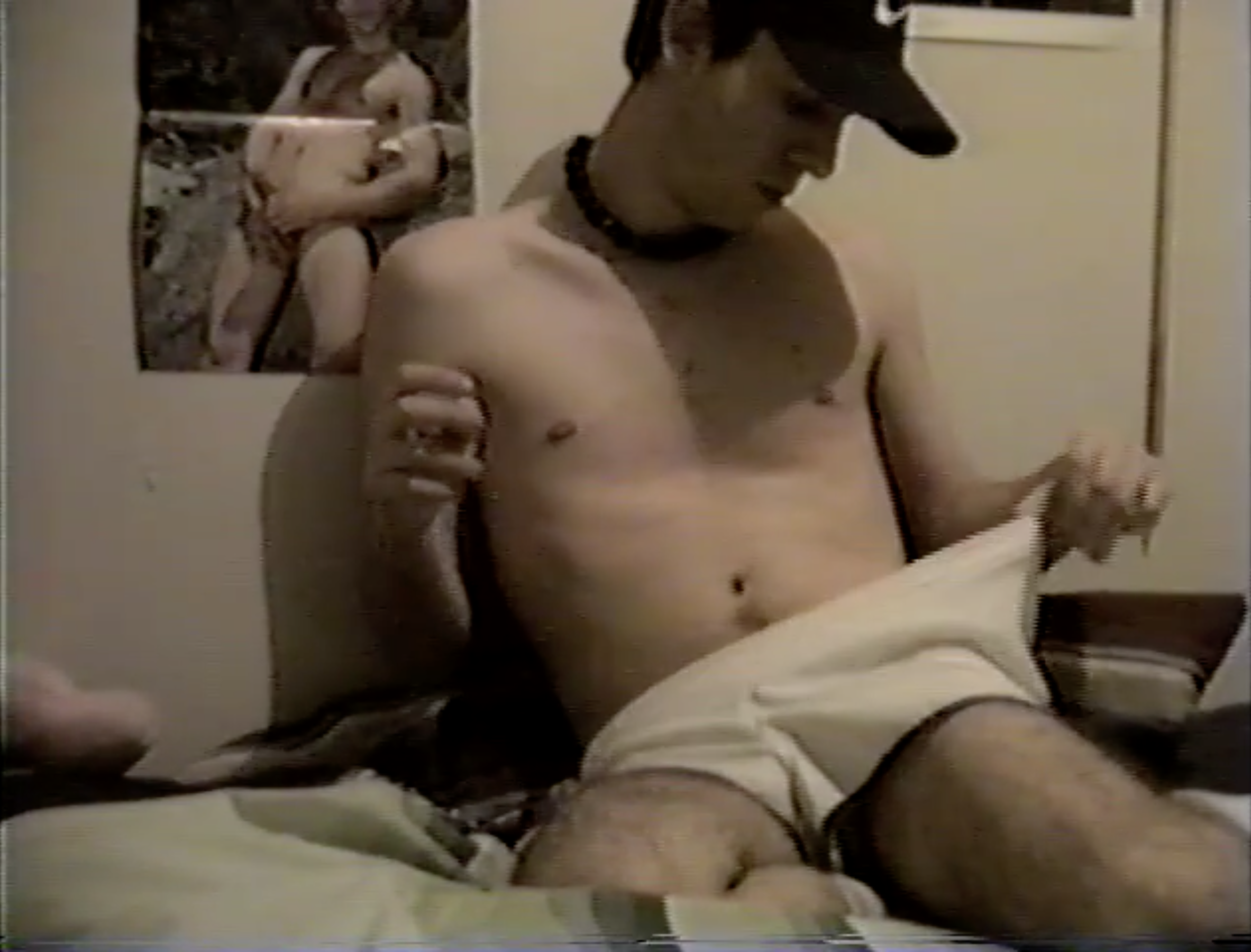
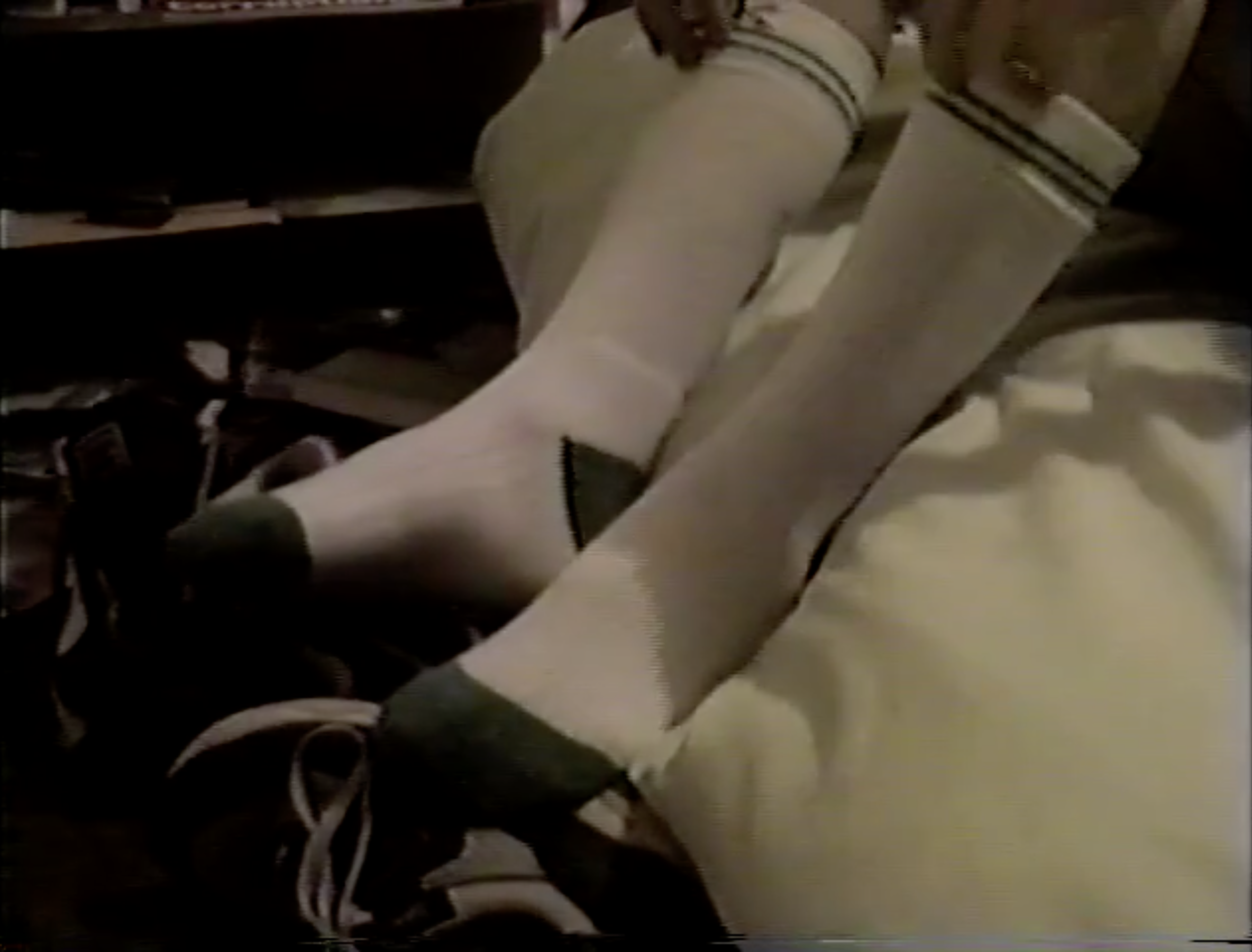
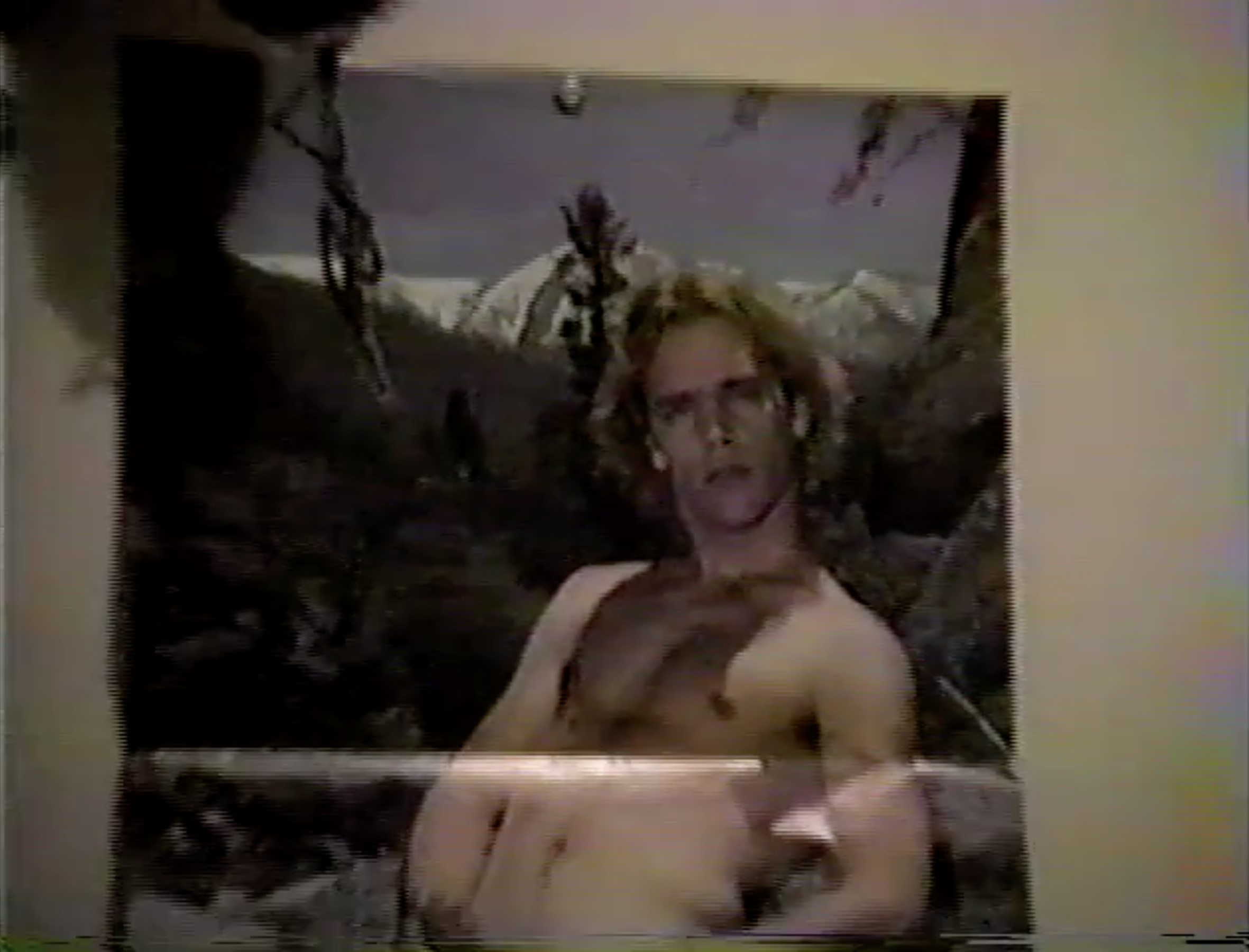
He thus came to inversion too late, spending the years of his adolescence attempting not to contract AIDS – already having understood the infinite bond that the homosexual experience forges between sex and death. “Full of life, prepared for doom; this was the pervading atmosphere in which gay men in Toronto lived during the mid-90s, as I encountered it,”(1) he recalls. His bedroom – the main context of Snapping Off – is one where he is fully able to express his homosexuality, having moved out from his parents’ home, and now living in a run-down apartment with other students. It is filled with posters and erotic magazines, which he buys in adult bookstores in downtown Toronto. These same objects occupy the entirety of his imagination; the photographed male body becomes the first point of contact with the other, and ultimately with oneself. He admires pornographic photographs from the early 1970s, though he experienced none of that era himself. It is at that moment, in 1997, that he places a camera in front of his bed to film his own body for the first time, and in the context of a course at the school he attends. He appears almost naked, wearing a black Nike cap, a thick necklace that seems to be made of wood, and high white-and-green Calvin Klein socks. His body is pale, juvenile. He frantically repeats movements of stretching, then snapping his underwear against his skin. Behind him hangs a poster of a naked Kip Noll with an erect penis, and James Dean with a pistol. Beside him, a pink plush pig toy. On the floor, sneakers, books, and piles of clothes in disarray. The curtains are drawn. Perhaps it is not even night. Paul sits up, lies down, and at times moves closer to the camera.
In the years that follow, he commits himself to developing a practice of drawing and painting grounded in his experience of the homosexual body as image – its almost faded flamboyance, fin-de-siècle. Literature and cinema will be the most important documents in the construction of this imaginary world: Gregg Araki, Robert de Montesquiou, Pier Paolo Pasolini, Bruce LaBruce, G.B. Jones, Marcel Proust, James Abbott McNeill Whistler. Paul P. admires the nocturnal paintings of London by the English painter – Nocturne: Blue and Silver – Chelsea, for example, from 1871; the light mist over the Thames, and the transparency of each layer in the landscape, an hour before sunset. This was Whistler’s first nocturne, whose title was suggested by the British collector Frederick Leyland for its experience of moonlight and that faint familiarity, within this sensation, with music. Whistler himself later elaborated on the title’s relevance to his desire to suspend space within itself, stripping away all exterior information foreign to the scene, and attending instead to the arrangement of lines along each horizon and to the sublime contrasts of light upon their floating surfaces. The question of the model, for Paul P., concerns is as much about the experience of the other as it does a tradition specific to painting and to the history of art. This constancy also belongs to Queer history: the reference to places, times, and images; the pleasure found in the fantasy of what has not been touched by one’s own body; the dream, and this kind of inner wandering. The model from whom one learns. The homosexual learns in silence, in the most absolute silence. It is the only way for him to remain alive – not to die entirely. He thus learns without words, deprived of language. This is a very powerful moment: learning how to step outside the world. The experience of painting, at that moment, is of crucial importance. This feeling is entirely contained with Snapping Off — the only video within his oeuvre, and thus we suppose the only frontal trace of himself.
The men he admires in these pornographic magazines may already be dead of AIDS, he tells himself. In the drawings he produces from these same models, they are stripped of erotic charge: Paul P. confines himself to their faces and to certain parts of their bodies. They seem to pass through a profound melancholy They too are outside the world, of course. The operation here is directly tied to the artist’s own experience of the body. Each subject is represented on the page as within himself. The erasure of landscape is total; each subject finds himself alone, in a half-sleep, an almost-dream, a little death. Observation here is inseparable from a psychoanalytic awareness of looking at the other as a movement toward oneself – the years that define these models as much as the execution of the drawings themselves containing as much volatility as fear, confinement within one’s own solitude, and a form of wonder. These figures are thus not in this place precisely, but rather within the immensity that might be the other world: an azure blue, a fuchsia pink, fireflies, the bats of Goya’s engravings, Victorian fans, tall grasses among the reeds, the flowers painted by Manet on his deathbed, or the masks placed before one’s face. This zone might be that evoked by Montesquiou – and which inspired Proust – an “colourless anxiety”; “the thousand and one, perhaps the thousand and three reasons why they were designated, among all others, and forever, to represent the double sign of Dissimilarity and Melancholy.”(2)
Hugo Bausch Belbachir
(1) Quote from the artist.
(2) Robert de Montesquiou, Les Pas effacés, 1923.
—
Paul P. (b. 1977) lives and works in Toronto. Recent solo and two-person exhibitions have been held at Greene Naftali, New York (2024–25); KW, Berlin (2024); National Gallery of Canada, Ottawa (2023); Hordaland Kunstsenter, Bergen, Norway (2022); and Oakville Galleries, Ontario (2022). His work was included in the 2014 Whitney Biennial and the 2018 FRONT International Cleveland Triennial for Contemporary Art. Other significant group exhibitions have been held at the Vancouver Art Gallery (2024); Brooklyn Museum, New York (2023); Hammer Museum, Los Angeles (2021); Martin Gropius-Bau, Berlin (2011); and The Museum of Modern Art, New York (2009).
His work is in the collections of The Museum of Modern Art, New York; National Gallery of Canada, Ottawa; Los Angeles County Museum of Art; San Francisco Museum of Modern Art; Brooklyn Museum, New York; Art Gallery of Ontario, Toronto; Hammer Museum, Los Angeles; Aïshti Foundation, Lebanon; Henry Art Gallery, Seattle; Princeton University Art Museum, New Jersey; Rhode Island School of Design Museum, Providence; Speed Art Museum, Louisville, Kentucky; and the Whitney Museum of American Art, New York, among others.
%20Paul%20P.%2C%20Snapping%20Off%2C%202026%2C%20exhibition%20view%2C%20Sans%20titre%2C%20Paris-2.jpg)