Lydia Ourahmane at Galerie Chantal Crousel

Dear Lydia,
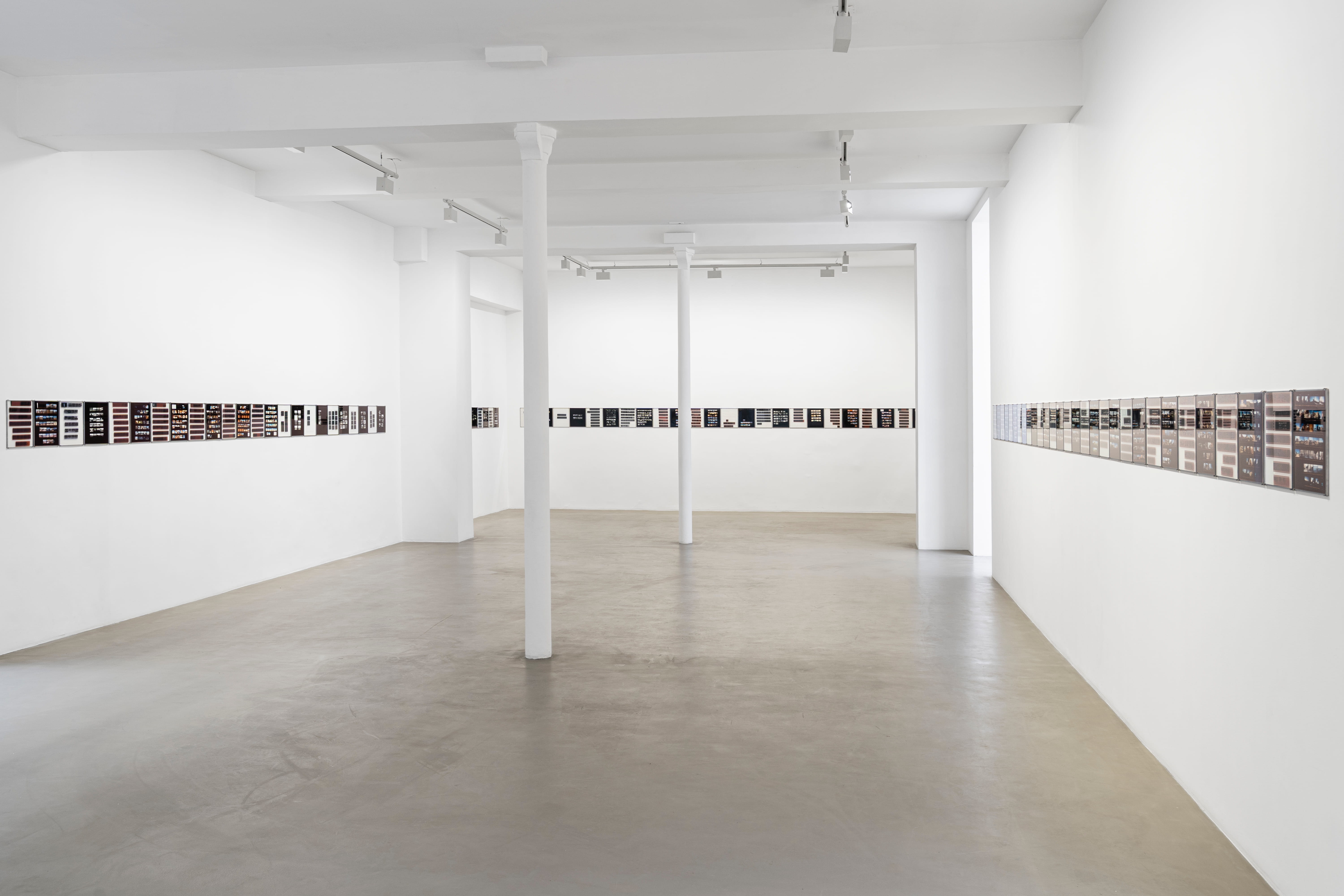
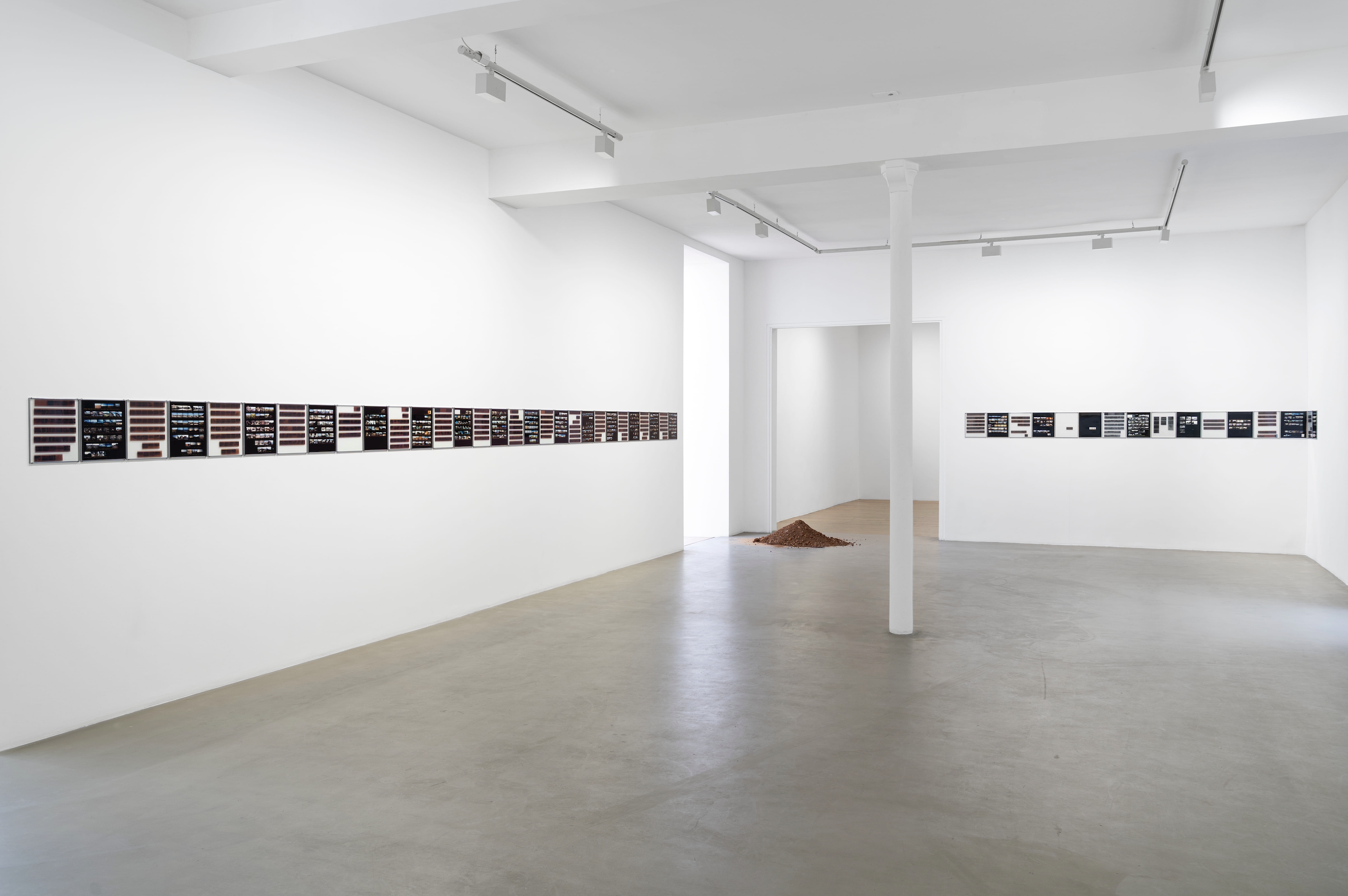
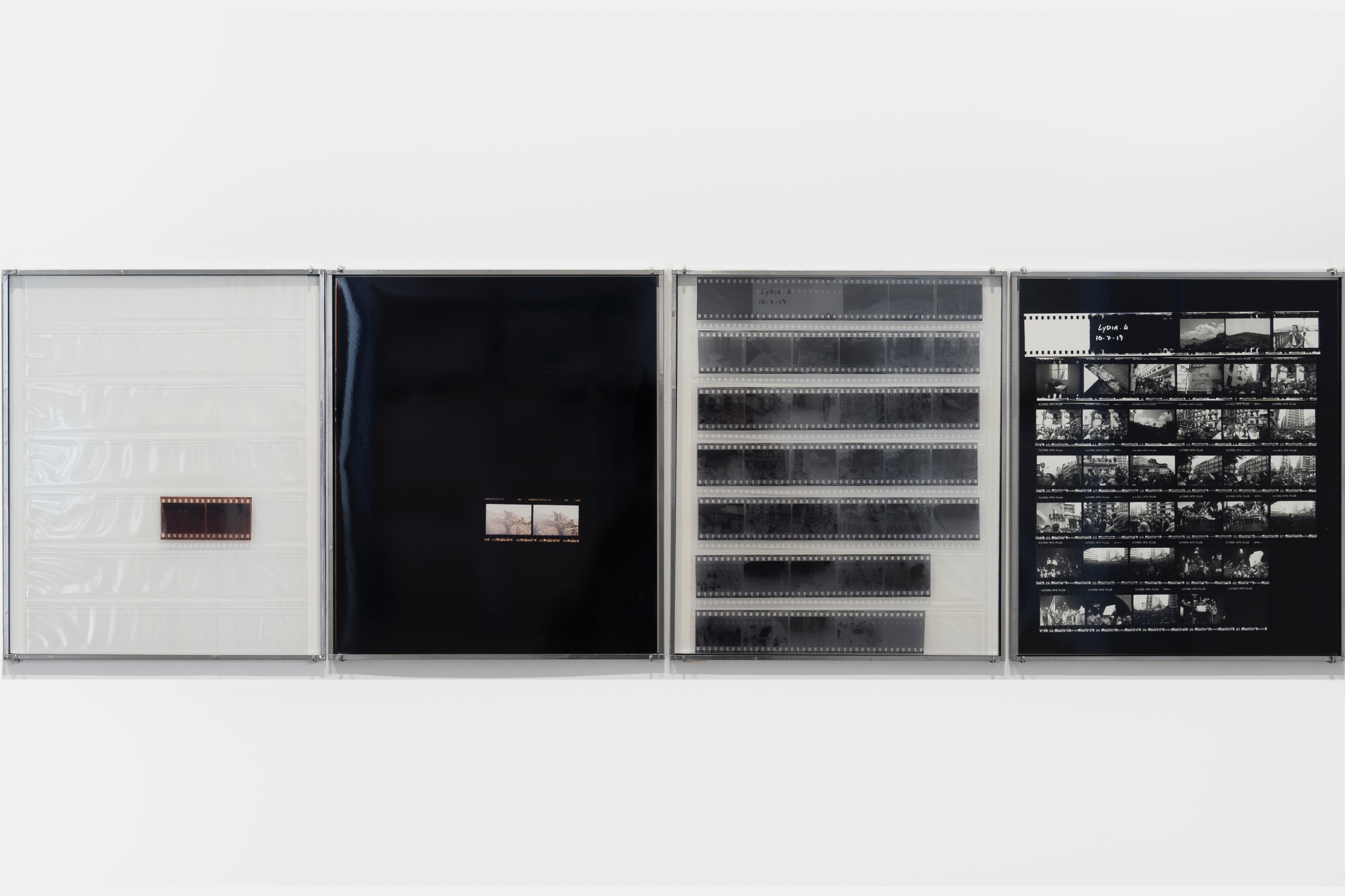
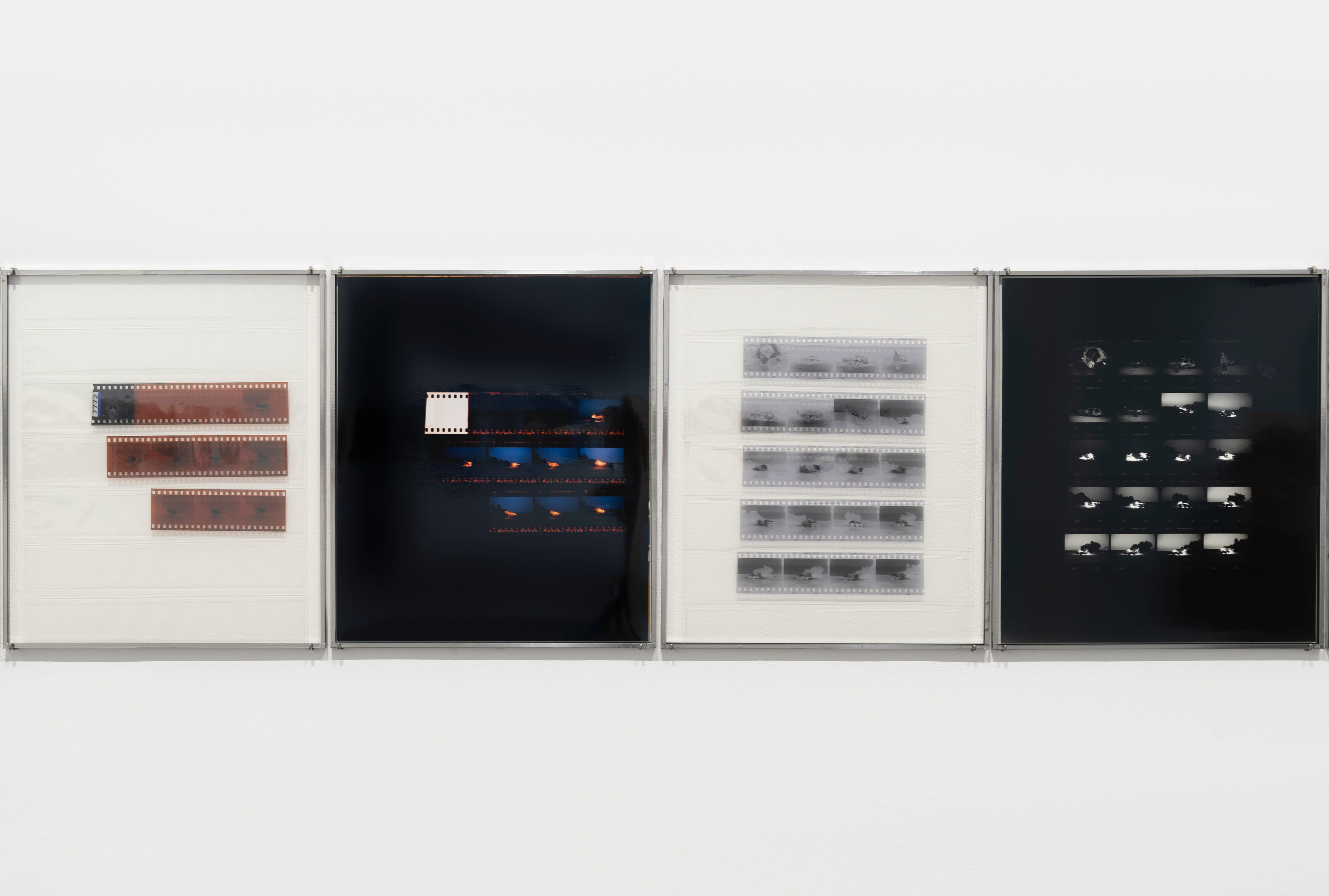
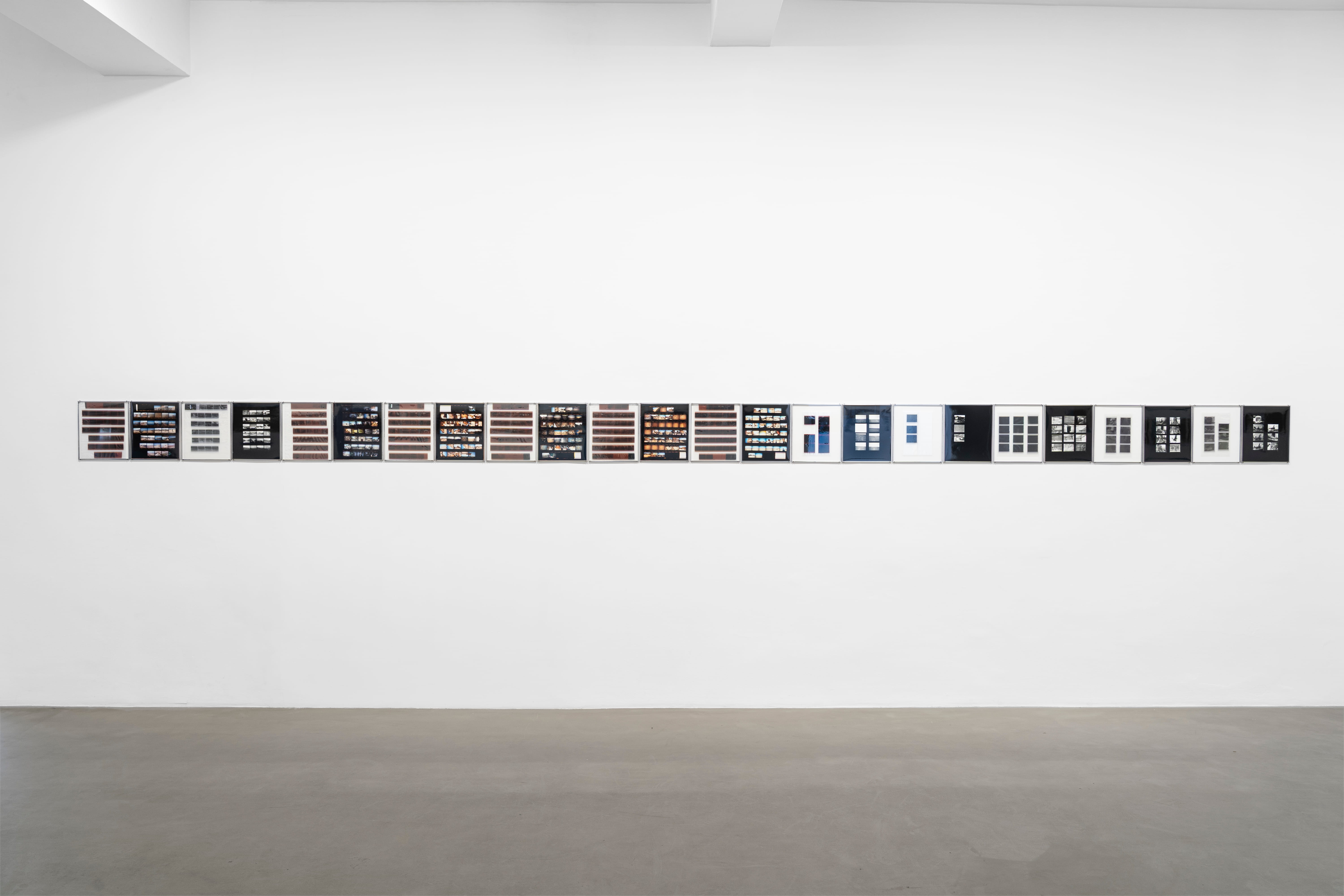
What does it mean to exhibit images that were never meant to be seen? Filed away in boxes, gathering dust—in occultation.
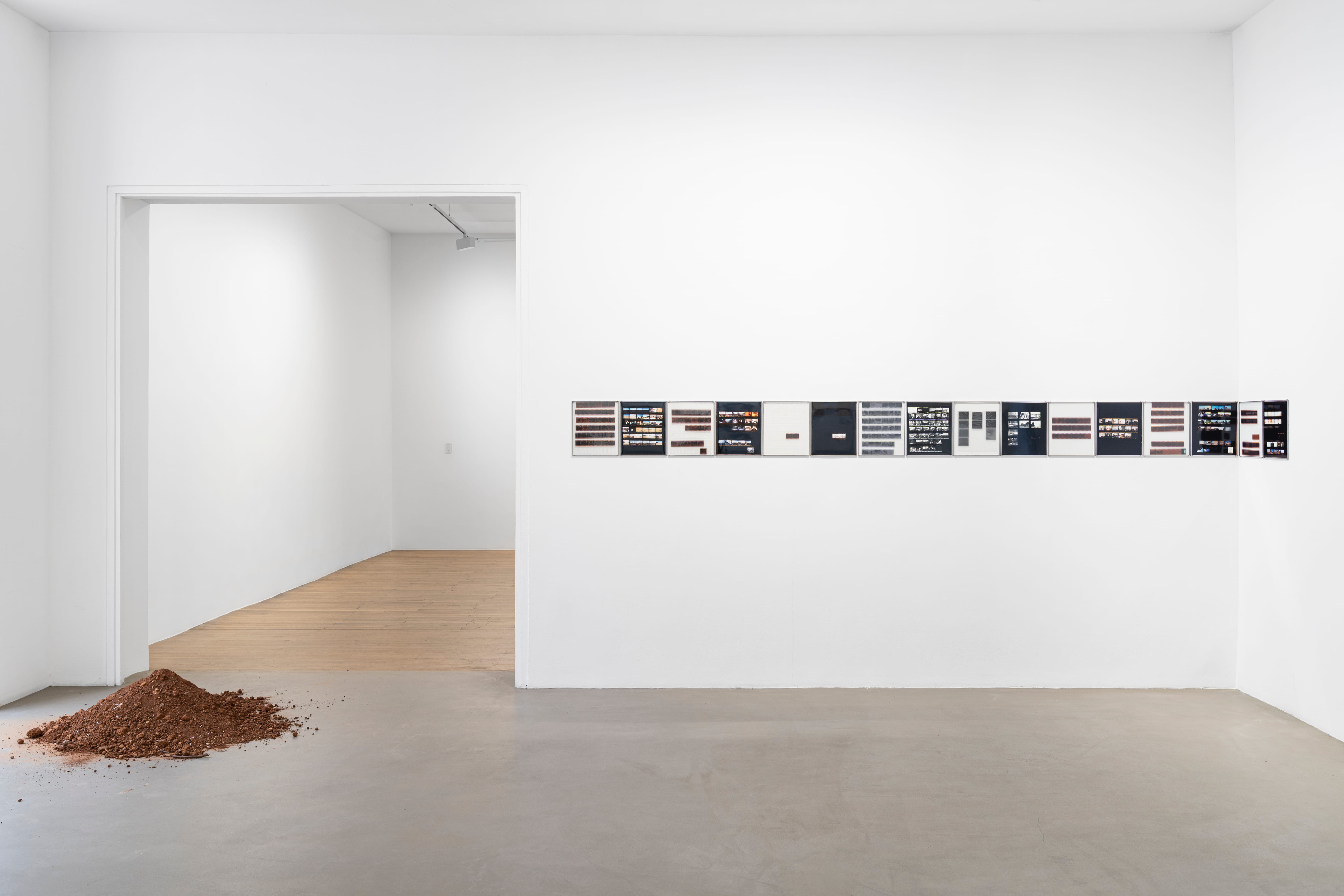
Pressed between two pieces of glass, they are the opposite of entombed. (The words museum and mausoleum are forever twinned, says Douglas Crimp.) They are porous, open, transparent. A picture of possibility. Is that fair to say?
These images: traces of places, textures and colors. The experience of looking at them is a little like groping for meaning the morning after a dream. Arranged in horizontal rows as contact sheets—negatives and positives both—they suggest a riddle and its clever retort. A riposte to the authority of the singular image; films rather than monumental moments. Taken together, they constitute a sort of map of your life. A map composed of traces. Of course, you being you, one has to move up close to make out the images. Like hieroglyphs to decipher, they are elliptical, occasionally inscrutable, perfumed by mystery.
Didn’t you once tell me that you started out as a photographer? Your missionary parents were always documenting their lives and you believed that photography would be your art, too. Your first photos were taken with an old Canon – a gift from your father. A camera you continue to use, two decades later. Duct tape holds together its fraying parts.
Yours is an art of possibility, open-endedness, accident. Of uncommon alchemy. What is the inverse of linear? Zigzag. That’s you, Lydia. How fitting that these images were taken around the edges of past projects. Projects realized and others not. Among those not realized: a series of images of young boys posing by the sea. One of them had stolen your dog, right? You hunted him down and you thought it might be interesting to make a film about him and his friends. A form of redemption? (My understanding is that you abandoned the project when one of them died.) Elsewhere: a car on fire in the desert and its charred remains; traces of an elaborate effort to secure French nationality for your father.
My favorite image in the mix: an airplane made from concrete. I remember the vague outlines of a story. A man from a village had long dreamt of airplanes but had never set foot in one. He built this one with his own hands. That he died while trying to finish one of the wings is bittersweet. A martyr to a dream. So mad. So Fitzcarraldo. Please do something with this.
Elsewhere, a patch of sea. An embarkation point, you tell me, for persons smuggled across the Mediterranean. A space of not knowing what lies on the other side. A gamble. A lot like the experience of entering your work. I think you took this picture around the time you were researching In the Absence of our Mothers, the first work of yours that captured my attention—or I should say, that captured my heart.
I was endeared when I learned that this work was an ode to your Algerian grandfather, a man who as a youth had pulled out his own teeth one by one in order to get out of serving in the French army. The story goes, if I recall, that you made new teeth by melting down a gold chain you had bought from a little boy by the sea. One of those gold teeth resides inside of your mouth. The sum you paid, 300 euros, is roughly the amount one might pay for passage across the Mediterranean. That boy may or may not have used the money you gave him in this way. It’s nice to imagine.
The more I look at these photos, I notice that they hover over specific geographies. Mostly in Algeria, the country of your birth. There’s El Ayaïda, where your parents ran their first underground commune; Oran, the seaside city where you grew up; Algiers, the capital city you moved to in your late 20s; and Tassili N’Ajjer, the prehistoric cave painting-filled desert which has resisted taming for millennia and from which you have staged works.
This show is taking place in France. Do you think about that? From an Algerian point of view, France is obviously a font of oppression. A former colonial power that has strenuously avoided acknowledging its crimes; its efforts to erase, pulverize, invisibilize. Is part of this about making visible what has been obscured? Probably not. But a byproduct, at least.
I keep coming back to smuggling as a theme. Smuggling is a leitmotif throughout your art; smuggling ideas, histories, all manner of contraband. It seems to run in the family. How perfect that eight years ago you and your father smuggled 85L of soil from Oran so that it could be emptied and walked upon in the gallery today. Like a carpet full of holes. An omen? Or a wish. It’s the soil that has soiled your hand, rendered it red, in one of the images on show. Soil is elemental. Soil is fertile. Oran is where it all began. Among other things, this is a show about beginnings.
Love,
Negar
—Negar Azimi
––
Born in 1992 in Saïda, Algeria.
Lives and works in Barcelona, Spain.
Lydia Ourahmane is a conceptual artist. Her installations, sculptures, moving image and sound work create situations that have consequences beyond the walls of the institution, while negotiating the terms within. Exploring landscapes of displacement and community, she revises how the movement of objects and people are influenced by factors such as state restrictions and invisible barriers. Her recent presentations have involved the audience as material, subject, and author.
From May 2026, the Nicoletta Fiorucci Foundation in Venice will host a solo exhibition by the artist.
Her work has been exhibited in numerous international institutions including: Tate Britain, London (2025, 2023); Castello di Rivoli, Turin (2025); MACBA, Barcelona (2024); Julia Stoschek Foundation, Berlin (2023); The National Museum of Art, Osaka (2023); Museion, Bolzano (2023); SculptureCenter, New York (2022); rhizome, Algiers (2022); S.M.A.K., Ghent (2022); Fondation Louis Vuitton, Paris (2022); KW Institute of Contemporary Art, Berlin (2022); Portikus, Frankfurt (2021); Kunsthalle Basel, Basel (2021); Renaissance Society, Chicago (2021); Triangle France, Marseille (2021); WIELS Contemporary Art Centre, Brussels (2020); Wattis Institute for Contemporary Art, San Francisco (2020); Kunstverein München, Munich (2018); Chisenhale Gallery, London (2018).
Her work will be included in the Doha Quadrennial (2026) and was included in the 60th Venice Biennale (2024); the 15th Gwangju Biennale (2024); the 34th São Paulo Biennial (2021); Manifesta 12, Palermo (2018); and the 15th Istanbul Biennial (2017).
Ourahmane was the recipient of the Rosa Schapire Art Prize (2024); the Arts Foundation Fellowship Award (2018); among others.
Lydia Ourahmane’s works have joined the collections of Stedelijk Museum, Amsterdam; Tate, London; KADIST Art Foundation, Paris; Musée d’art contemporain de la Haute-Vienne — Château de Rochechouart, Rochechouart; British Museum, London; Fondation Galeries Lafayette, Paris; Frac des Pays de la Loire, Nantes; among others.