Galerie Tenko Presents at Reena Spaulings

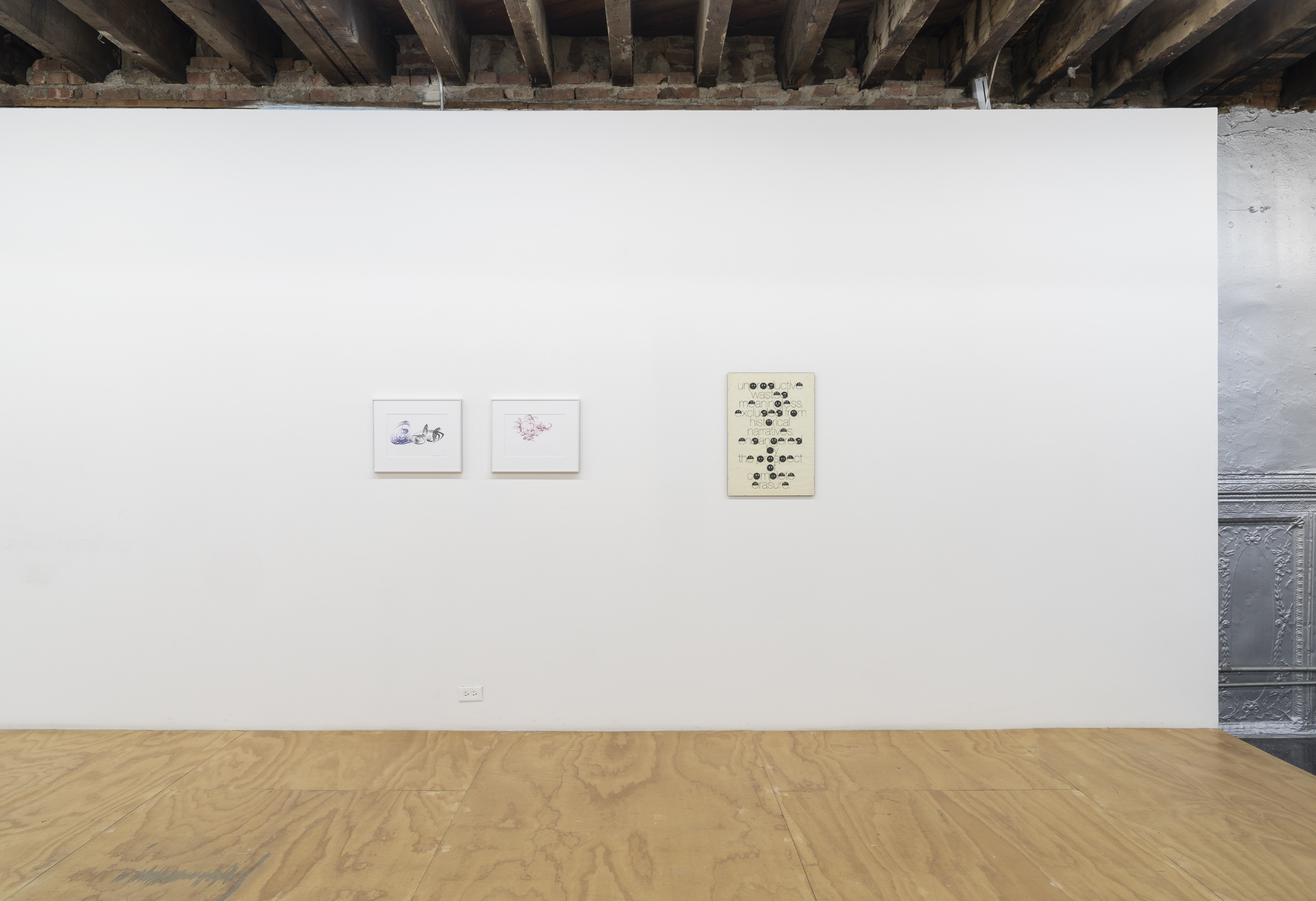
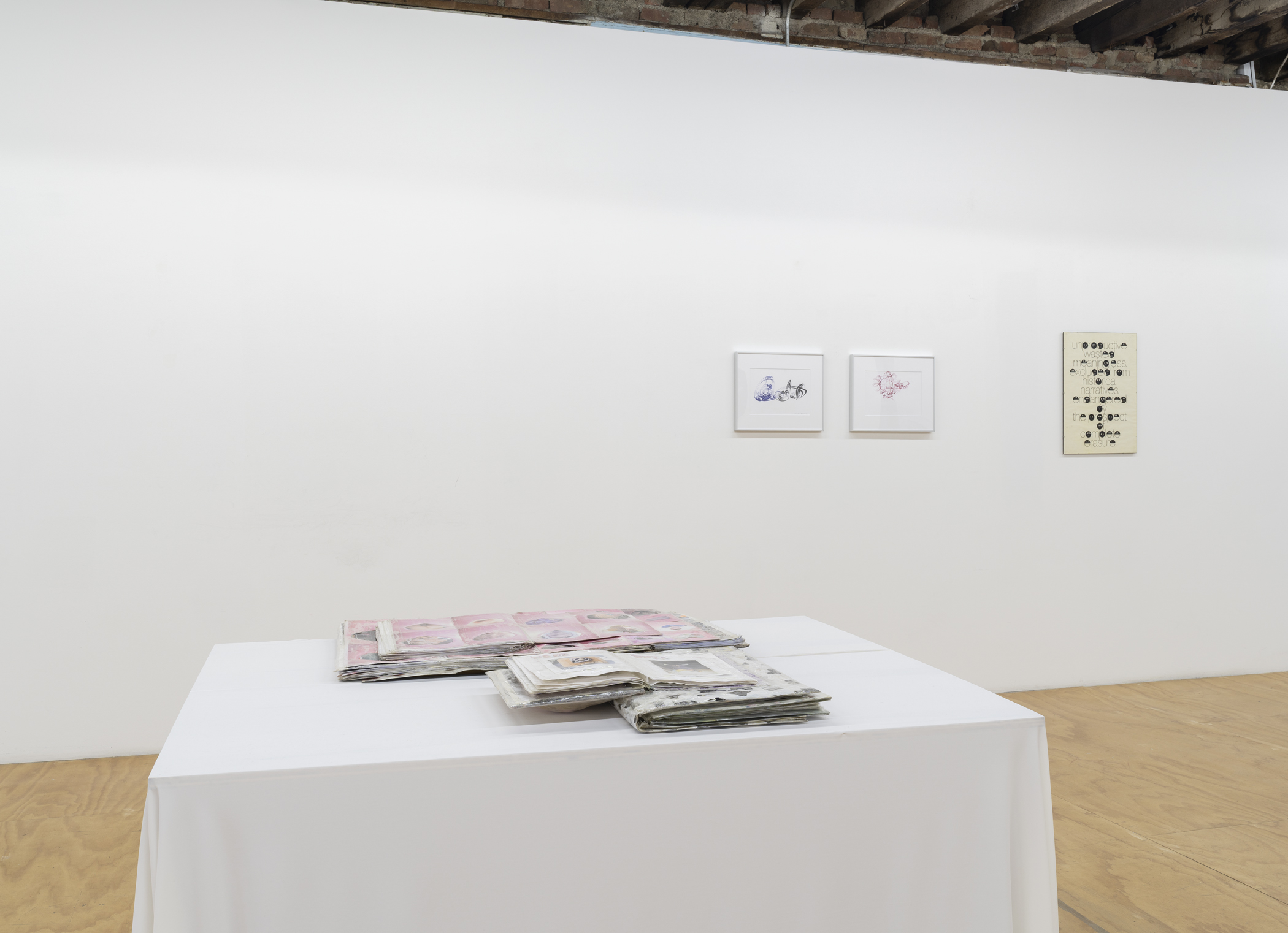
Backdrops of sedative blues and Prozac pinks permeate the screens, calligraphic forms, prints, and costumes illustrated in the diverse series of works by Sabina Maria van der Linden, ranging from the late 1990s to the present, created during her time in Berlin. A cacophony of fetish, idol worship, advertising gloss, fashion imagery, and vintage porn emerges from these works. Through choreographed gestures and staged personas, van der Linden constructs characters caught between discipline and excess. The figures perform a kind of uniform beauty, bodies presented as surfaces of control and desire. Yet beneath the elegance lies a studied superficiality: narcissistic figures admiring themselves, rehearsing fantasies of perfection that feel both seductive and faintly unsettling.
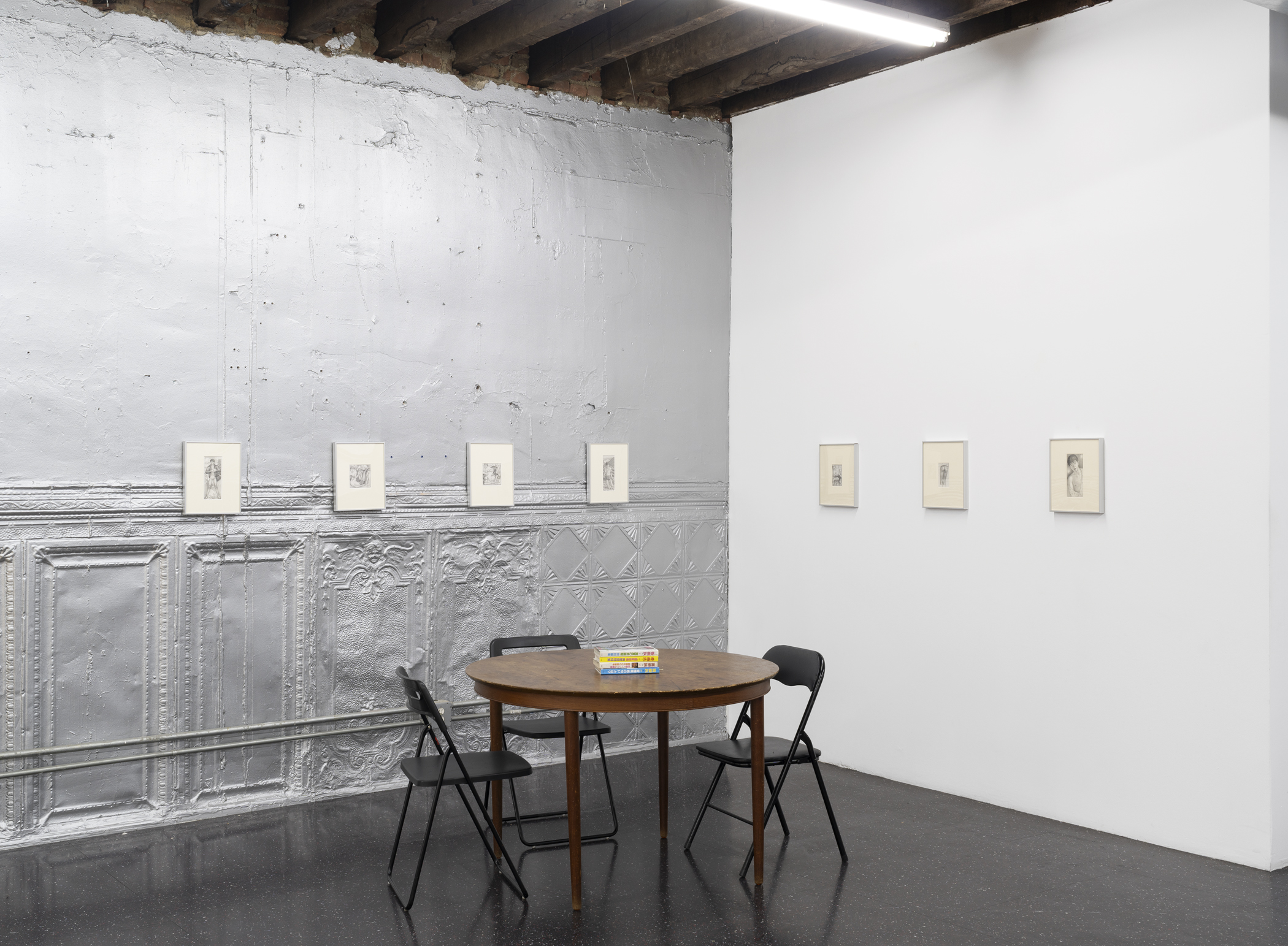
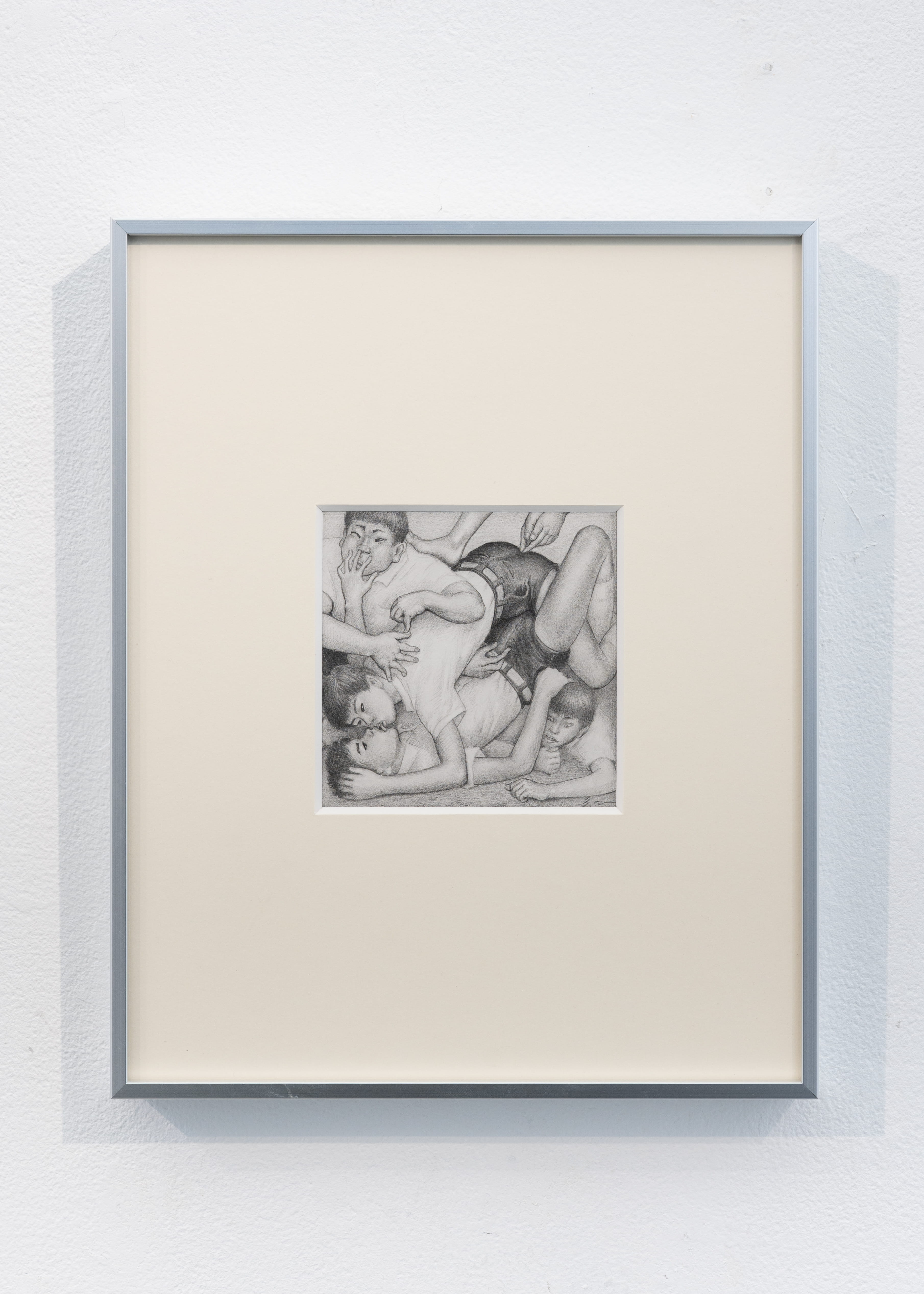
In the silver corner of the exhibition hang the graphite drawings of Seiji Inagaki, produced between the 1990s and early 2000s. Through careful layers of pencil, Inagaki produces soft tonal gradations in which the body slowly emerges from the paper. Each stroke is controlled and precise, yet the final images remain fragile, moments of intimacy that threaten to disappear the longer one looks. These works feel like intimate studies, unguarded observations of bodies existing in quiet vulnerability. The delicate surfaces seem almost too sensitive to confront directly, capturing an innocence that feels nearly impossible to sustain in the world outside them.
The books of Thomas Cap de Ville introduce another taste of innocence; enlarged pages filled with digital high ISO photographs of cemeteries near his childhood home and fragments of narcotic teens in the French seaport town where he grew up. Friends, objects, empty landscapes, sometimes pale and withdrawn, and small traces of everyday life appear taped together into loose sequences that resemble a private archive. Within this playground of memory, innocent gazes and violent gestures are side by side.
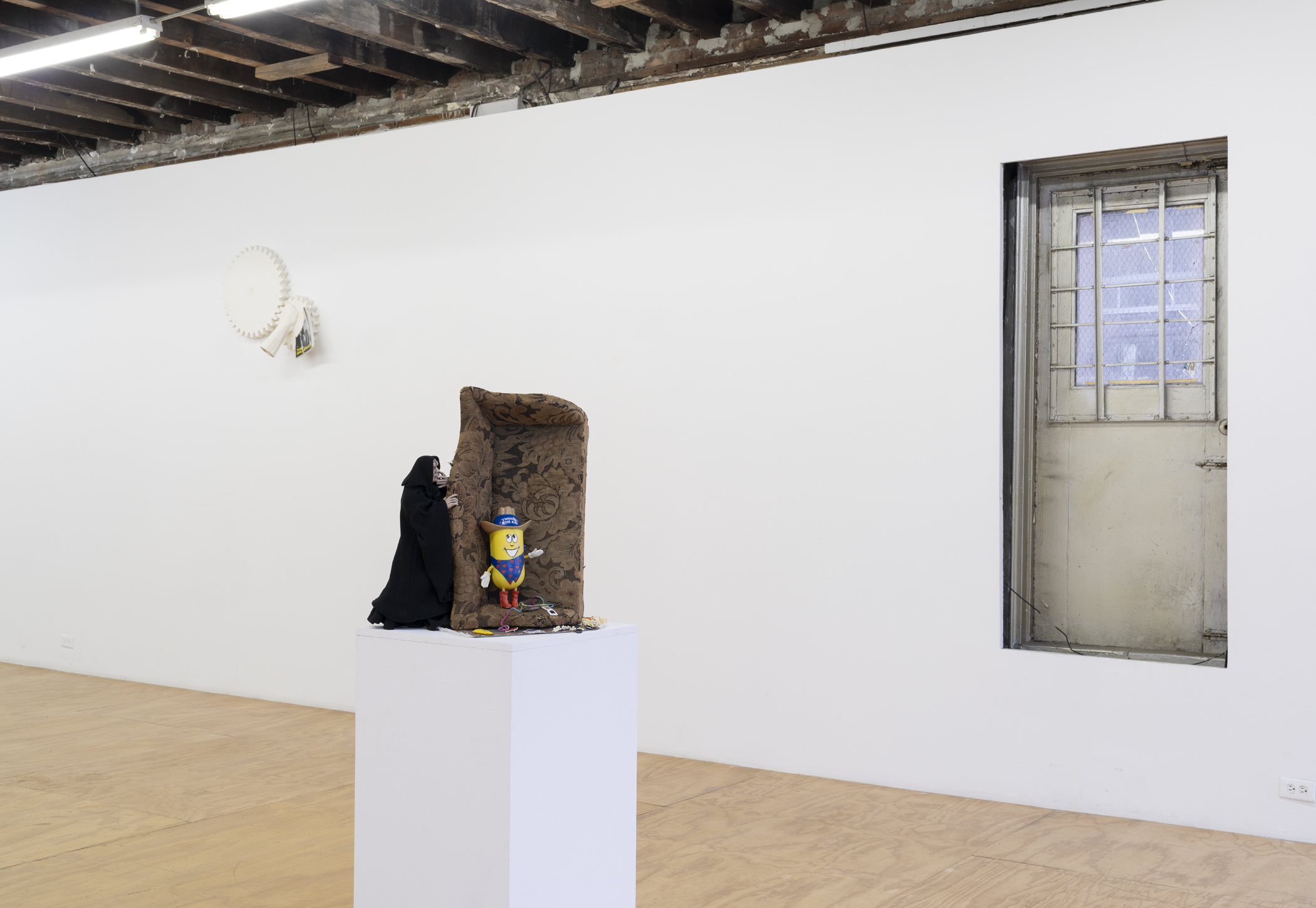
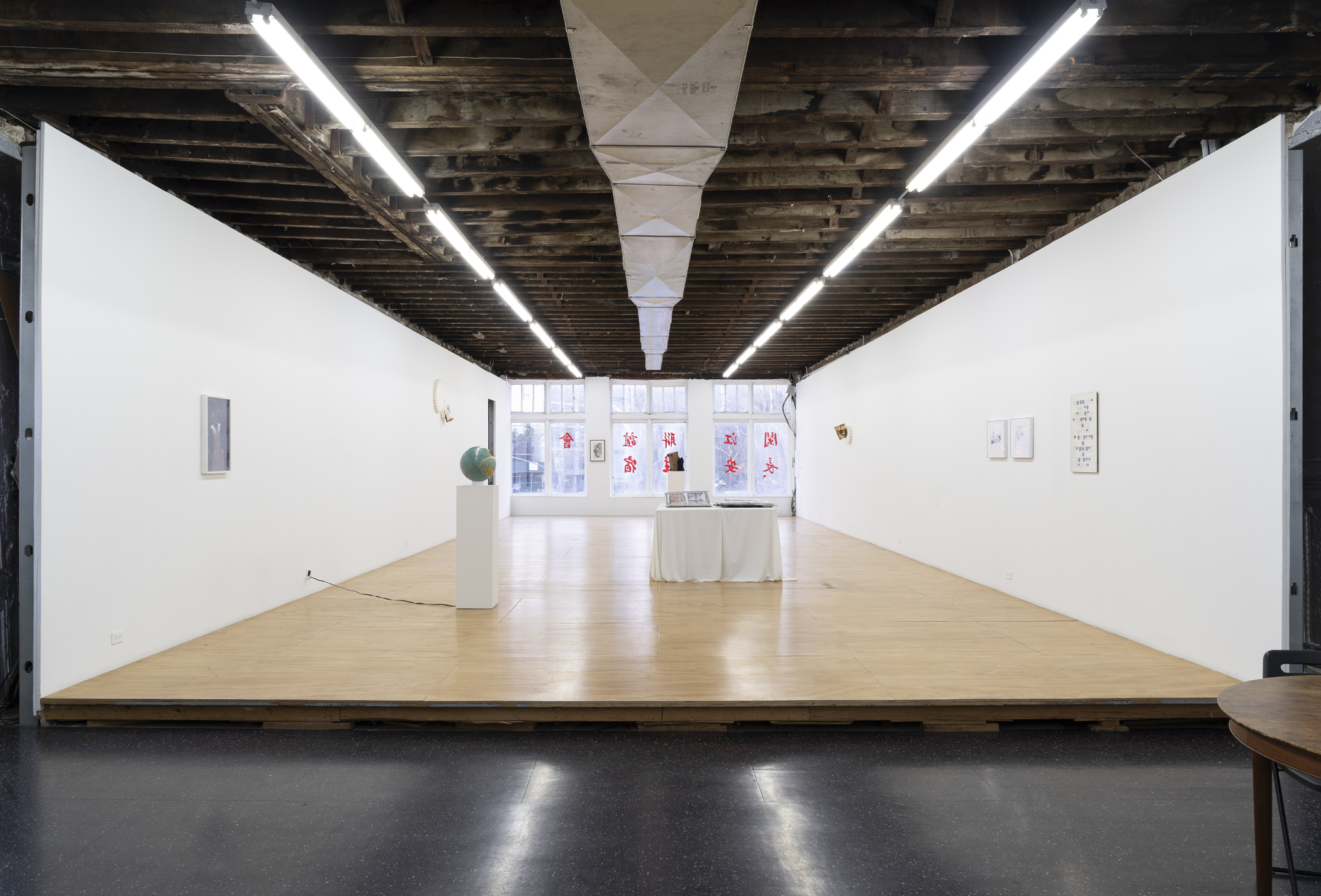
Not all toys are pedagogical, yet the world of Danny McDonald is strangely instructive. Within small theatrical constellations, childhood objects begin to perform, tiny actors staged inside miniature scenes. Emperor Palpatine appears the headmaster of a school of darkness, looming behind the plastic figure of a Twinkie enjoying a midnight snack and the globe with the red light blinking alarmingly.
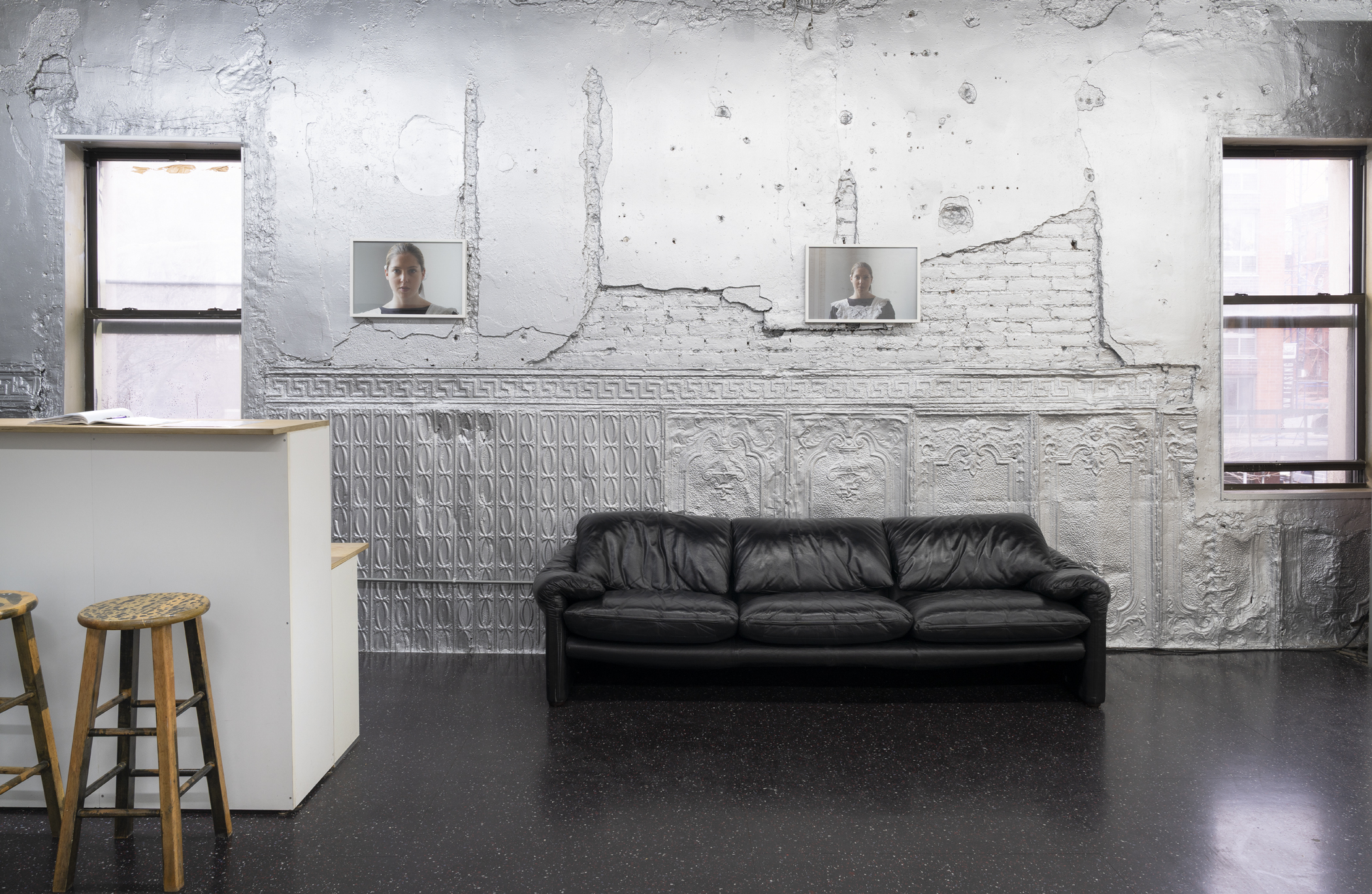
Josephine Pryde constructs a scenario that feels equally unsettling. In Just What Is Aura Anyway?, photographs of a young woman wearing a Victorian maid costume unfold within a banal interior. Her stare is direct but distant. The room appears ordinary, yet the atmosphere is strangely cold, as if the image were documenting the aftermath of an event that has already passed. The camera zooming into the maid, with her prosaic stare, like a horror film far from the costumed girls in van der Linden’s video Perfectly you’.
Stephan Dillemuth’s sculptures appear almost incidentally, plaster casts of cogwheels installed just out of comfortable view. Dillemuth has long treated the exhibition space itself as a site of disassembly, peeling surfaces, casting bodies, and allowing materials to circulate through processes of repetition and rupture. Here the gears remain strangely inert, hanging like relics of production or forgotten instruments of movement. Stripped of their function yet still suggestive of rotation and force, they hover in the gallery like quiet reminders of the system of the city that continue to grind away.
At the far end of the room, the chaotic waiter collapsing in the drawing seems to embody the the show. Across these works runs a shared tension between opposing forces: control and collapse, innocence and corruption, theatrical self-presentation and quiet psychological exposure. The miniature worlds create a landscape in which fantasies of beauty, youth, guilt and debt persist, end never ever cease to exist.