WangShui at White Cube

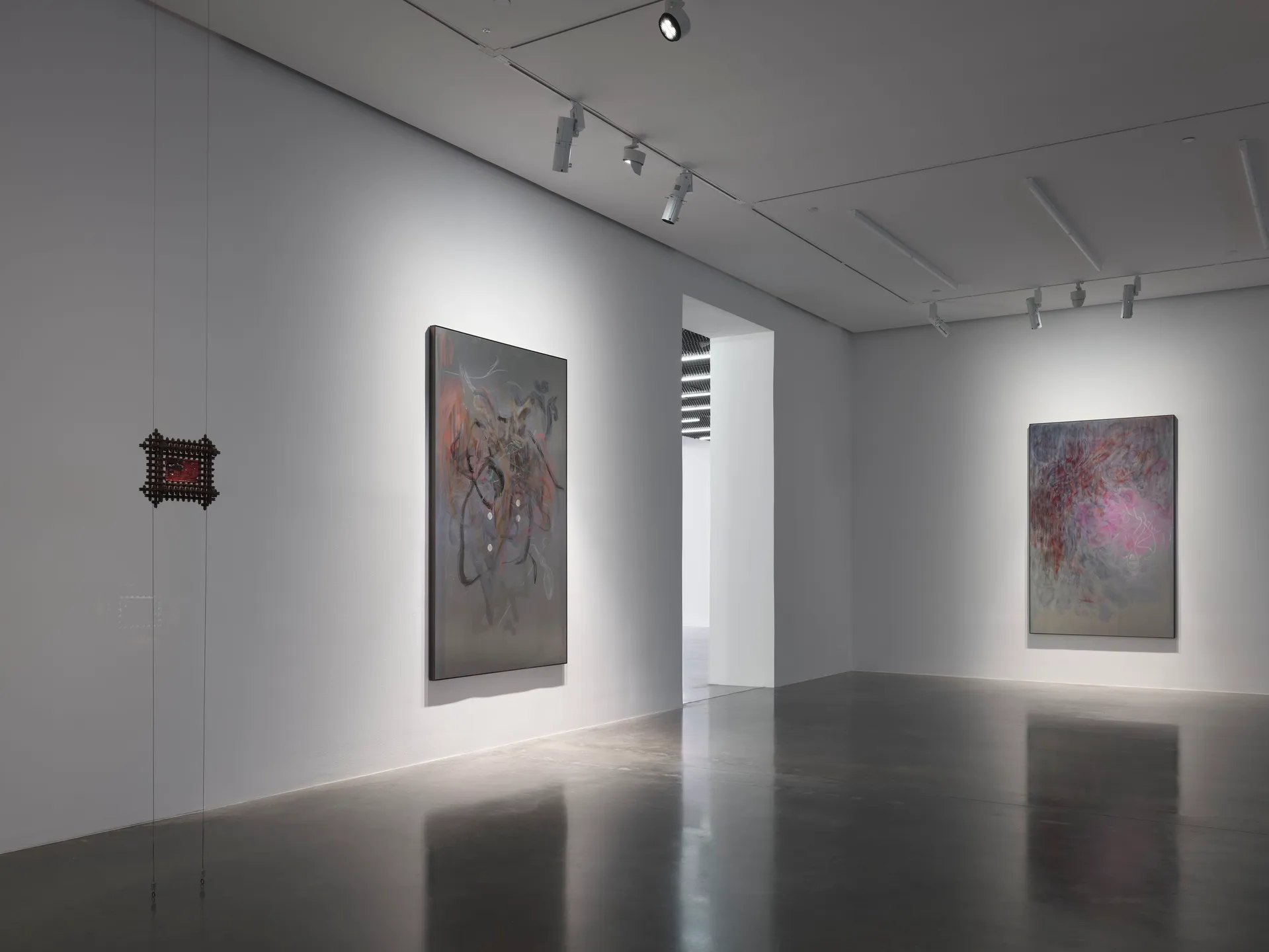
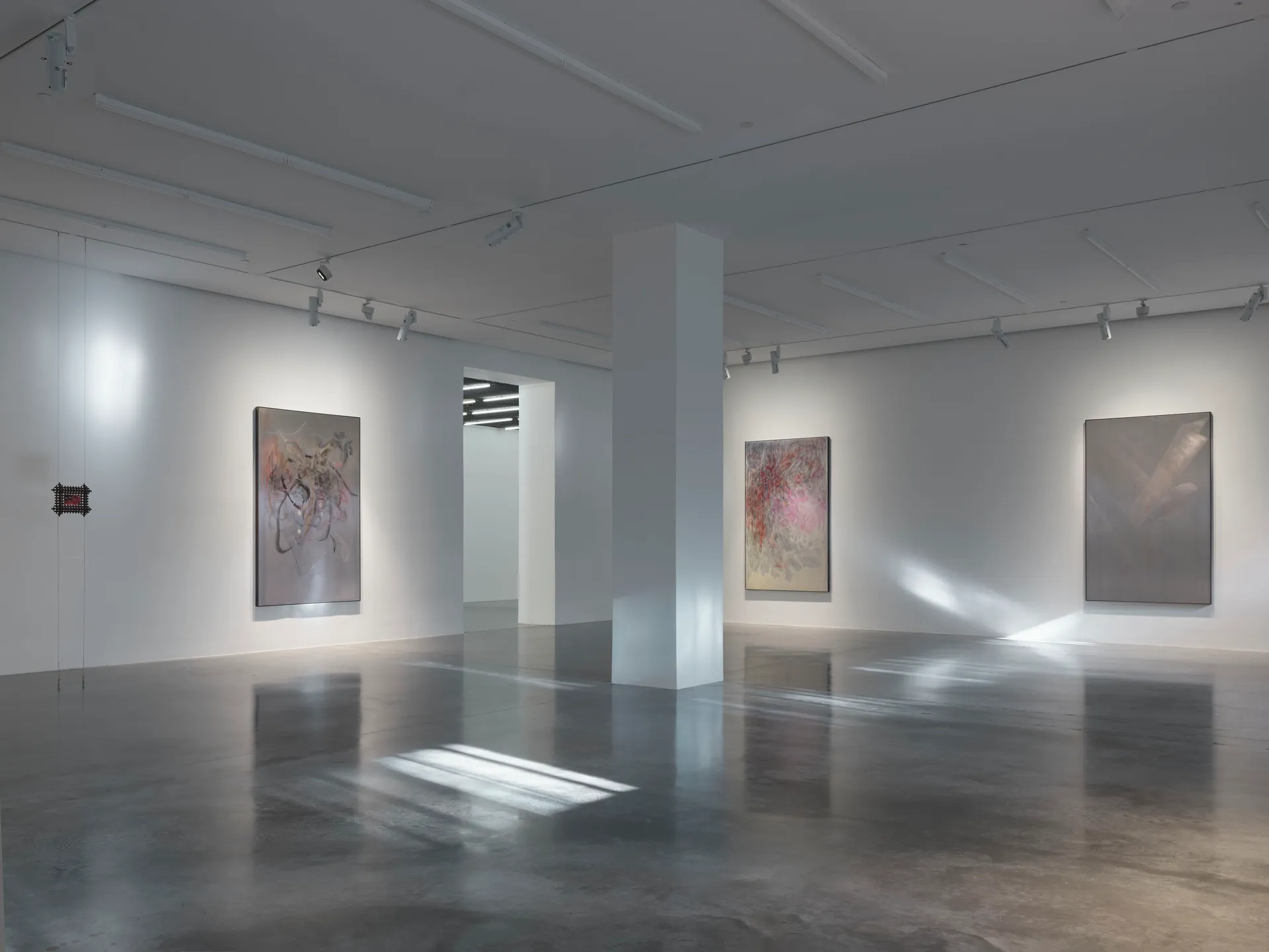
In ‘Night Signal’, WangShui presents a new body of work where dreaming forms the conceptual ground from which questions of consciousness, perception and technology emerge. Rather than approaching painting as a purely representational, planar image, WangShui treats it as a suspended and relational field, one that only coheres through its intersections with light, movement and coexisting sensory systems. Taking the dream as a generative system – one that reorganises sensation, memory and meaning – the exhibition draws parallels between the structures of dreaming and machine learning, both of which operate through feedback, pattern recognition, and iterative transformation.
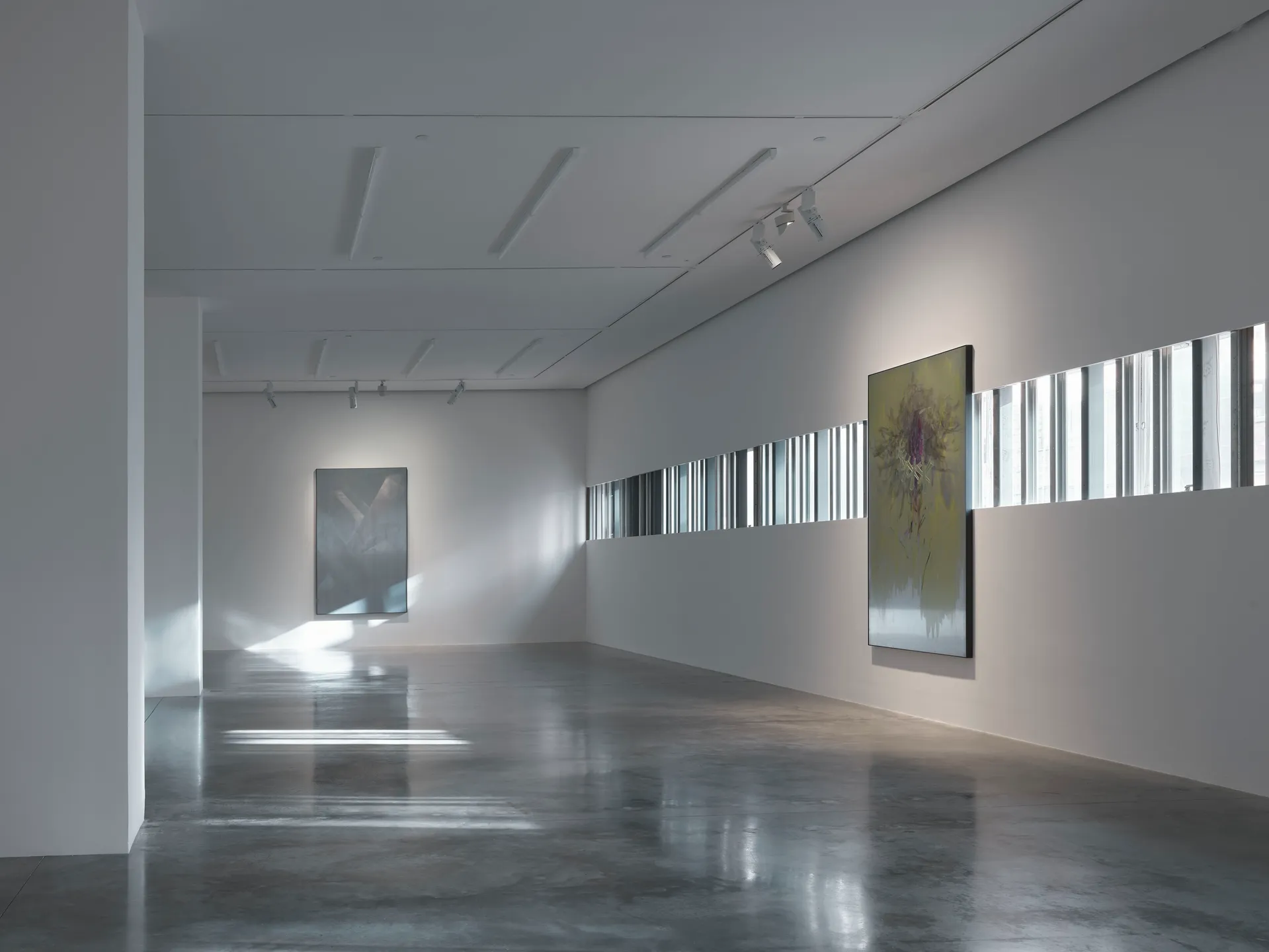
WangShui’s process merges machine vision with embodied gesture. The aluminium panel supports of ‘Night Signal’ recall the interfaces of touchscreens and sensors, absorbing and reflecting light as viewers move through the space. Digital tools and algorithmic structures are used alongside sandpaper and dental instruments to inscribe the aluminium – extending, rather than replacing, the intuition of the hand. This labour-intensive process generates a heightened physical attunement to sound, vibration, and resistance. Through the layering of translucent inks and oils, the artist approaches the surface alchemically, drawing the image out through touch. Hand-etched into shallow relief, the panels shift between image and atmosphere, responding to daylight and artificial illumination. Diaphanous layers of pigment hover across these etched grounds, producing an artistic register that is neither fully sculptural nor conventionally painterly. Here, painting functions less as depiction than as a responsive field – one that reveals perception to be unstable and open to continual recalibration.
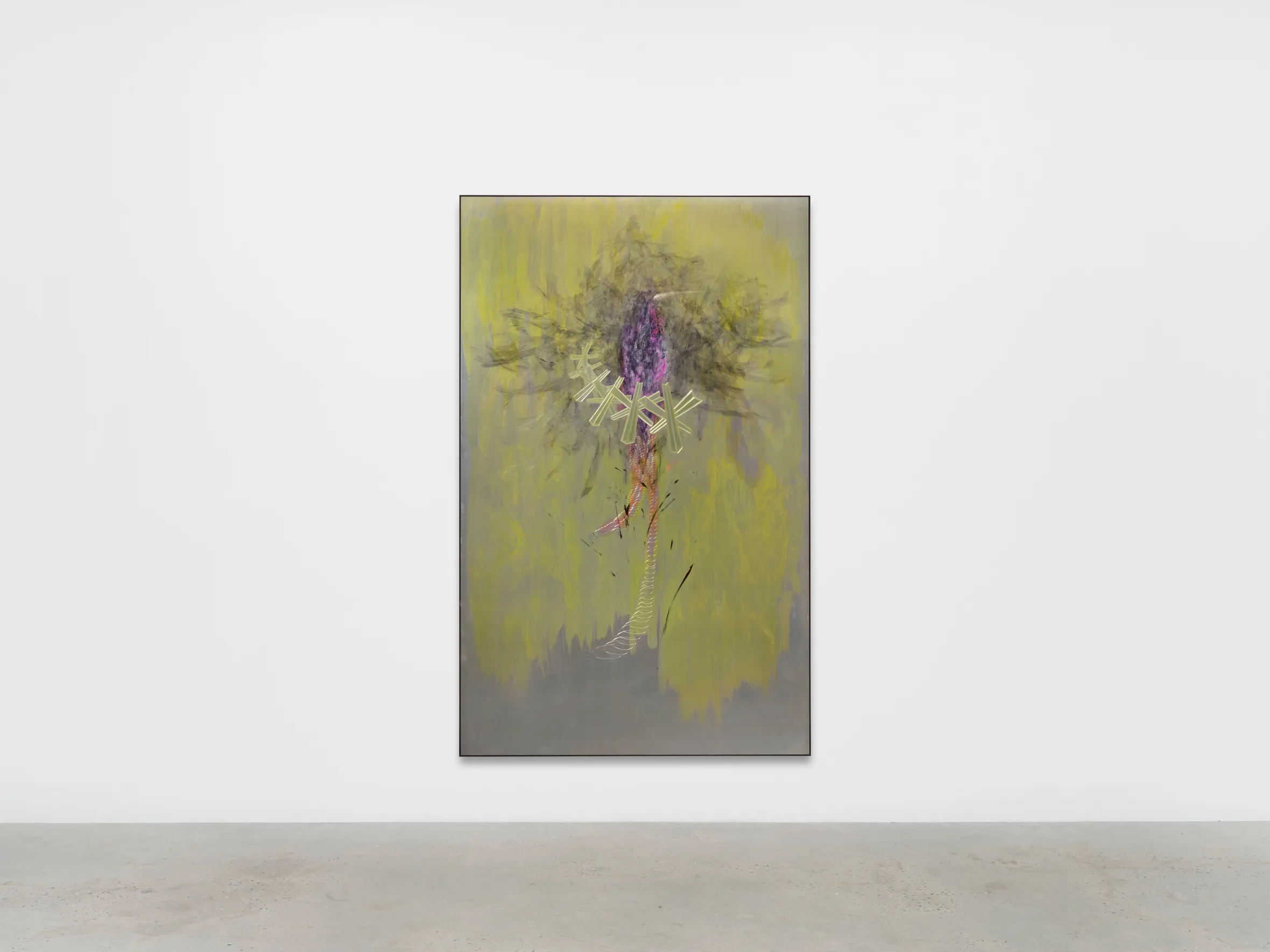
At the centre of the exhibition is a vertically oriented painting titled Myelin Sheath (2026), based on recurring forms from the artist’s dreams. A dark violet hummingbird – regarded across cultures as a messenger between worlds – emerges from an acidic green fog. Etched into the surrounding metal are repeated isotropic forms reminiscent of Czech ‘hedgehogs’: welded steel structures shaped like open asterisks. Originally developed in inter-war Czechoslovakia as passive anti-tank obstacles, Czech hedgehogs are self-righting, non-directional structures designed to halt force through geometry rather than impact. In the painting, this form spirals into a DNA-like fortification around the bird, taking on a role akin to the insulating function of a neuron’s myelin sheath.
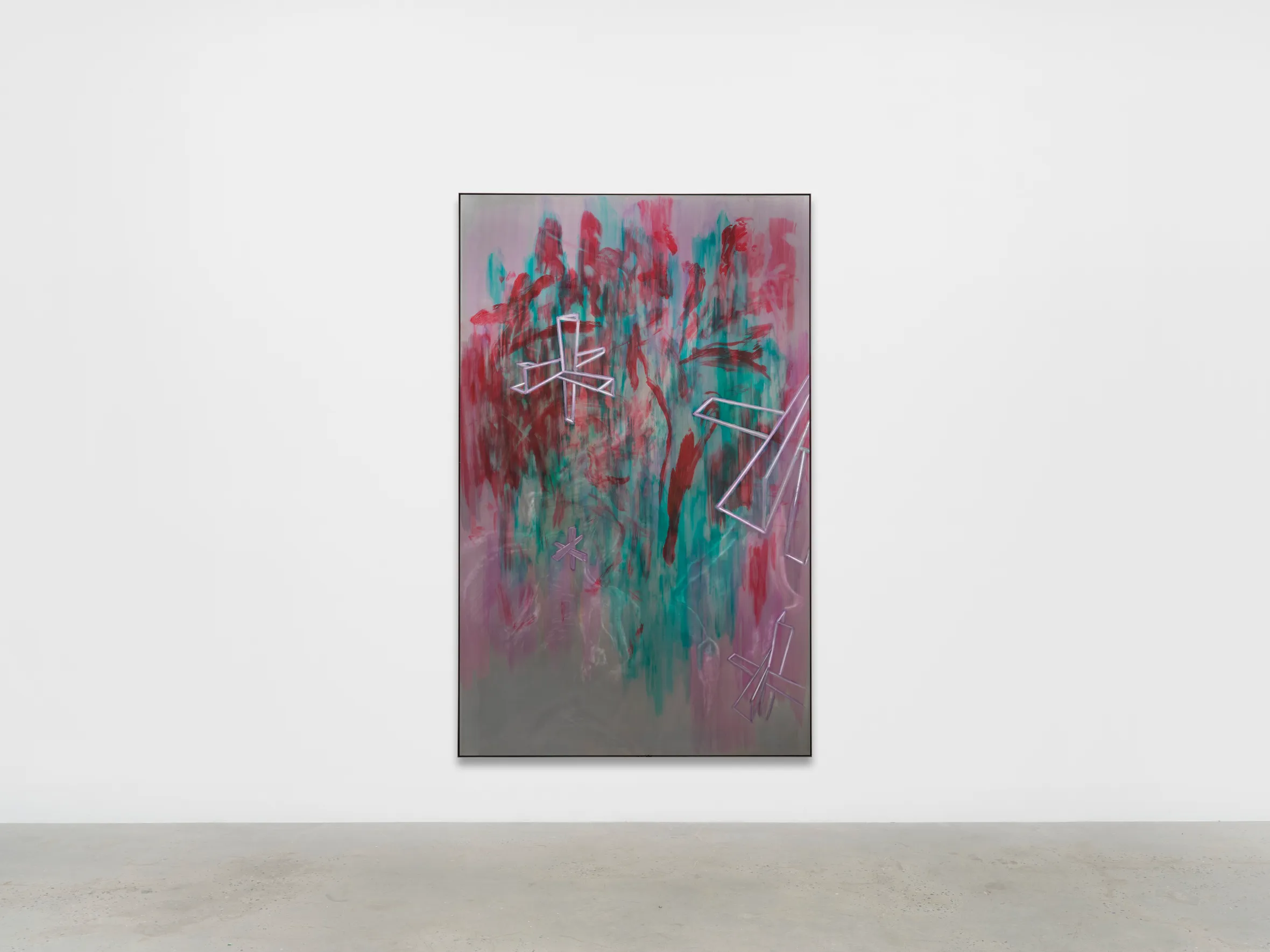
WangShui’s research into dream interpretation was further informed by a trip to the Ecuadorian Amazon rainforest in spring 2025. There, the artist encountered Indigenous communities that conducted ‘morning dream councils’, where dreams are interpreted collectively and used to guide decisions around hunting, travel, alliances and conflict avoidance. This experience prompted the question: what can our dreams show us about our current predicaments? In Indifferent Darkness (2026), the Czech hedgehogs reappear as what the artist describes as ‘symbols of resistance’ amidst a deluge of bluish greens and red gashes, creating moments of relief within a besieged field of violence. In Holding Pattern (2026) the forms are etched at a monumental scale, appearing and disappearing in parallax as the viewer moves, proposing that perception is never fixed and that altered viewpoints are capable of revealing additional information. This destabilising effect is an imperative to slow down and look more carefully, engaging the idea that the etched marks or oil washes are only fully materialised at the moment of their intersection. Here, WangShui posits a view of both painting and consciousness as relational models, whose meanings emerge through encounter rather than isolation. In Loss of Detail (2025), a gauzy flurry of painterly marks and etched strokes float in a state of suspension, as though mid-processing – the inscribed elements penetrating through the paint, suggestive of a holographic tensor. If machine learning offers new models for understanding perception, dreaming emerges here as its ancestral counterpart: a self-training system through which humans have long rehearsed simulation and pattern recognition. Yet accessing this knowledge requires attentiveness to frequency, pitch and pace.
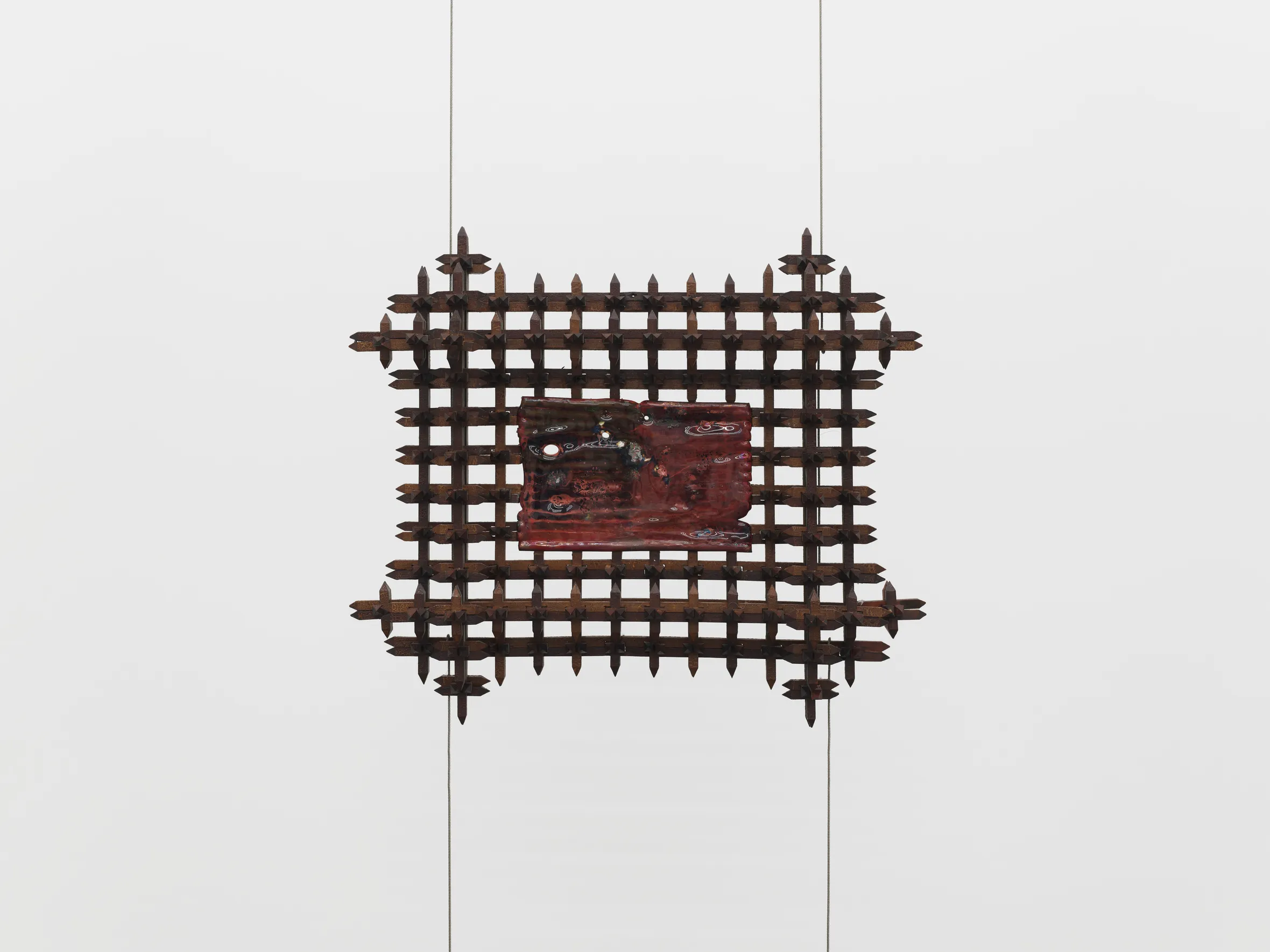
Light, in both its conceptual and material registers, operates as a structuring force throughout the exhibition. Suspended by two tensile stainless-steel wires, I am this place, and this place is terrible (2026) is encased in a tramp art frame whose intersecting vertices echo the Czech hedgehogs that recur across the exhibition. Composed of torched glass, colours strike, bleed and metastasise. Informed by its title, the work is conceived as a ‘psychic portrait’, operating as an abstracted flag – understood not as a fixed emblem but as a precarious signal articulated through light. As illumination penetrates the glass and its voids, light is refracted across the surface, while faint shadows are cast onto the wall behind. Suspended in space, the work activates both the field both in front of and behind the painting, producing an effect of layered depth that echoes the stratified surfaces of the aluminium panels.
Throughout ‘Night Signal’, painting becomes a record of perceptual attunement. The etched aluminium panels operate as interfaces rather than images, where gestures accumulate traces of learning, revision and response in the same way that neural networks are shaped through exposure. Drawing together etched surfaces and machine-mediated processes, the exhibition treats technology not as an external force but as a condition of becoming. In this space, dreaming and machine learning are understood as structurally related modes of perception, both provisional and adaptive. Across the exhibition, painting functions as a means of transmutation, absorbing the pressures and violences of the present moment and reconfiguring them into perceptual energy. WangShui’s work ultimately inhabits threshold states where feeling is re-structured, and where various dimensions of consciousness participate in the co-creation of experience.