Suleman Aqeel Khilji at White Cube

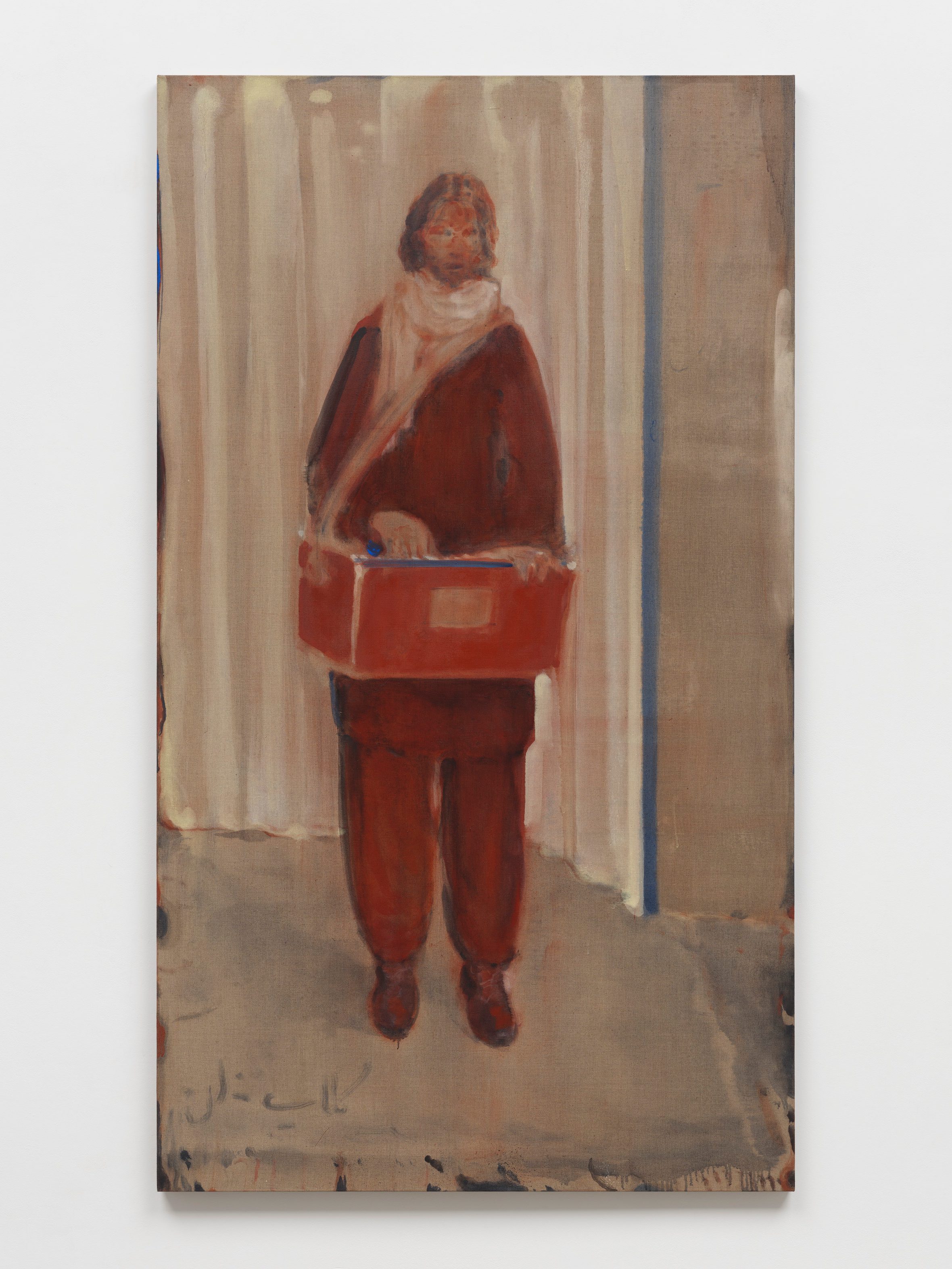
Dreamlike and spectral in quality, the figurative paintings of Suleman Aqeel Khilji’s exhibition ‘Transmission | نشریات’ express the indeterminate nature of memory and the passing of time. Painting on linen, found book covers and used cigarette packets, the artist further proposes recollection as provisional, composite and subject to interference. Drawing on ‘remembrances’ of his life in Quetta, Lahore, and the flickering light of train journeys through the Balochistan countryside, Khilji’s paintings understand landscape as vulnerable to the distortions of time and distance. His figures, meanwhile, appear as if to occupy a nether realm, neither resolving into identifiable individuals nor fully dissolving into the hazy ground of the pictorial field.
Created through the gradual accumulation of thin layers of distemper, Khilji’s handling of semi-translucent pigment generates an atmosphere of disquiet, with spaces, people and scenes that seem equal parts remembered and imagined. The practice is, for Khilji, ‘like excavating something’ – a process of uncovering the latent content of a photograph, gestural memory or imagined situation – though paradoxically, painting requires adding to the canvas surface.1 This logic of accumulation and inheritance extends into Khilji’s distinct palette, particularly the way he has selects and manipulates his primary colours blue, yellow, and red. Pozzuoli Earth, Persian indigo and lemon yellow are rooted in the geology and architecture of his native Pakistan, tethering his work to a specific landscape and region. Inspired by a lost photograph of the artist’s cousin, Elevation (Chiltan) (2025–26) appears to take place in a cave, passages of cobalt blue and indigo contrast with the acrid lemon yellow of the supernatural flames. The 4,000-year-old oil paintings on the walls of the Bamiyan caves in central Afghanistan were made using similar pigments, and place Khilji’s palette within a long lineage of ancient, local painting. As if speaking directly to this history, the artist often uses marble dust as a preparatory step, his surfaces thus becoming, like the cave walls, both substrate and archive.
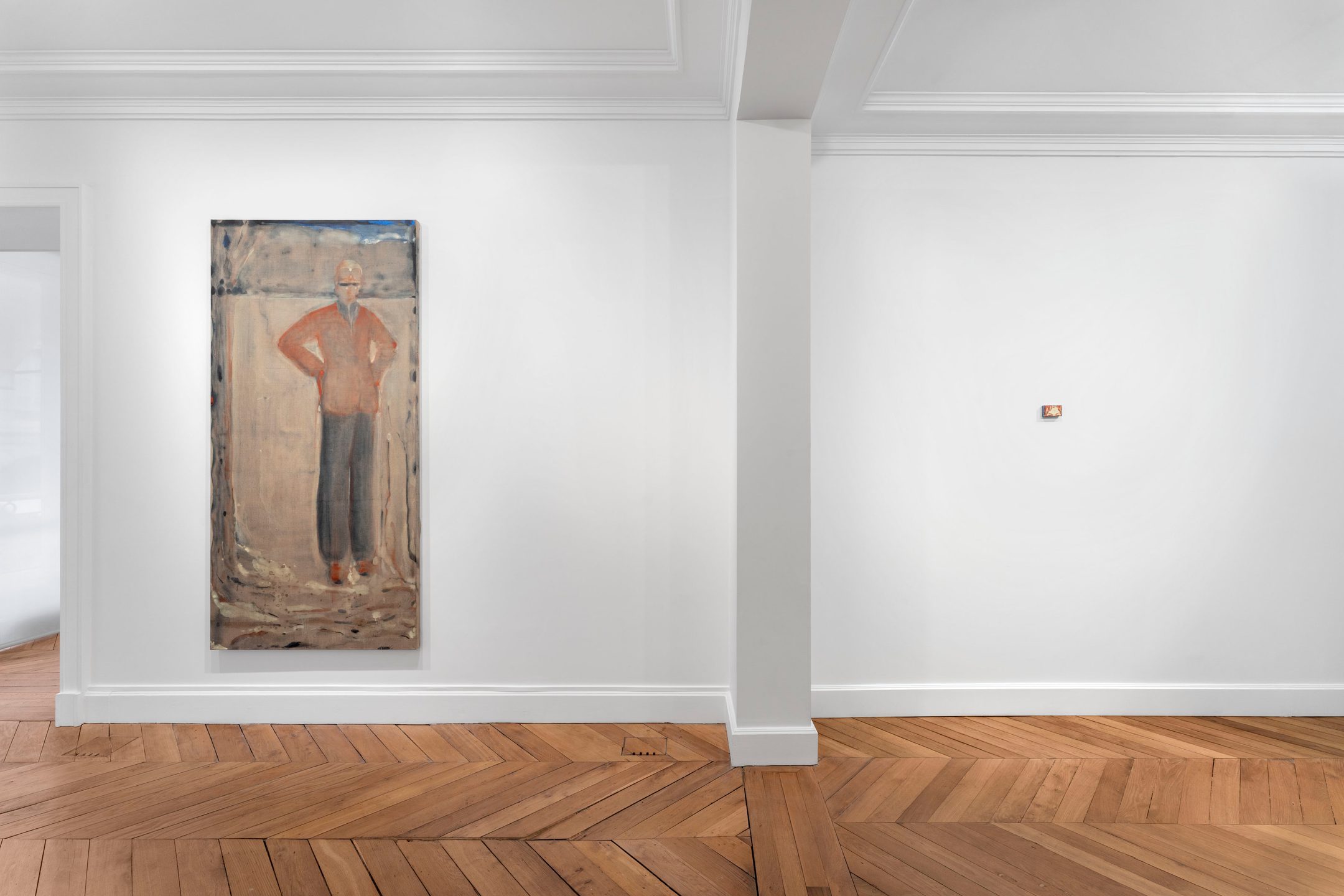
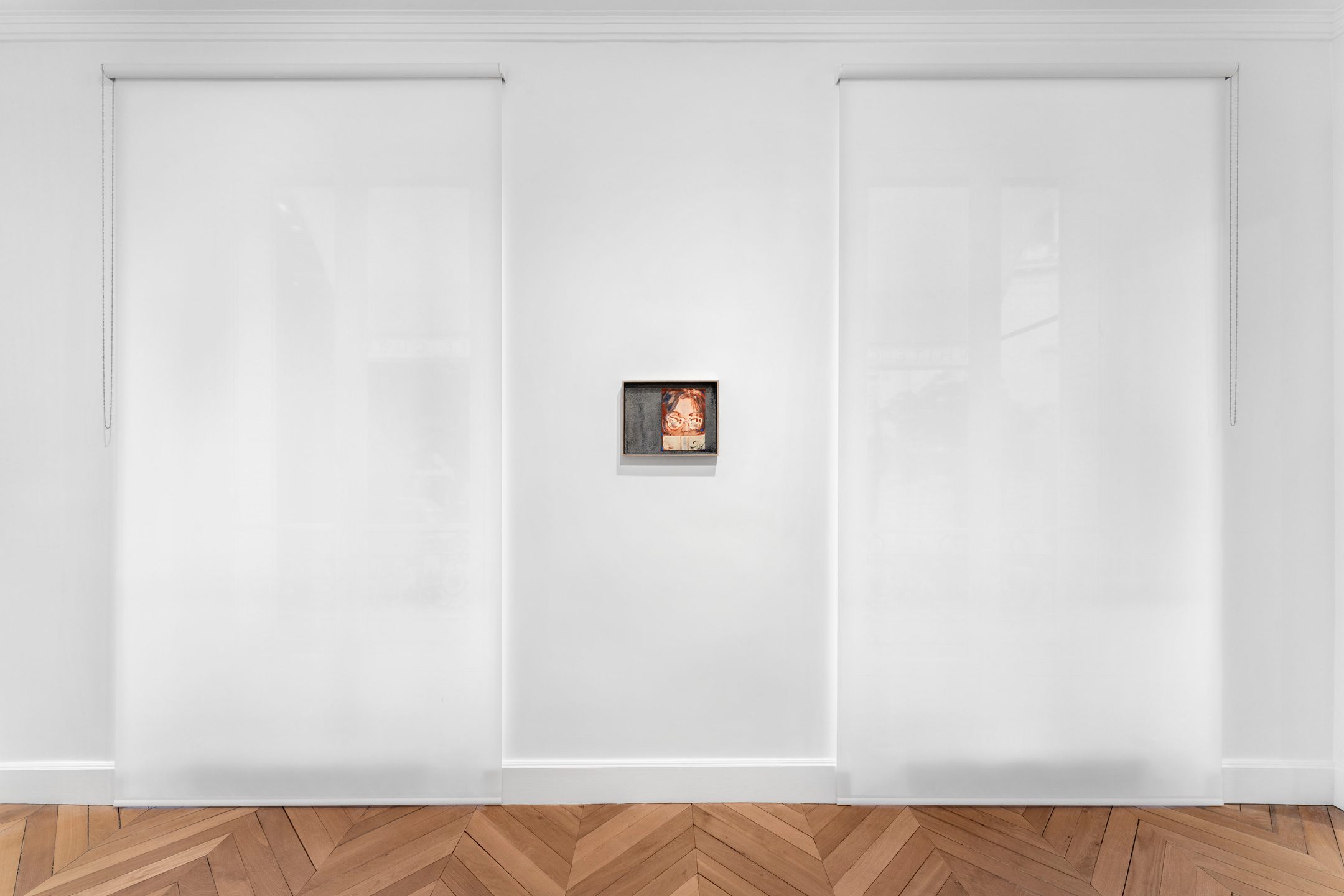
Teacher II (2025–26), a portrait on linen, is rendered in soft focus, the subject’s pale face carrying the essential anonymity that universalise Khilji’s portraits. Working from a combination of found photographs, film stills and sketches of strangers, as well as images of the writers, filmmakers and poets who have inspired his work, Khilji’s subjects are uncanny composites: constituted from multiple, irreconcilable sources, they cannot be fixed to a single identity. The slender form of Umpire II (2025–26), for example, draws from a photograph of the Jamaican cricket umpire Steve Bucknor, a friend who posed for Khilji during his studies at the Royal Academy in London, and his memory of a cricketing official from Lahore. A single figure-form comprised of three different men, Khilji’s umpire is at once a figure of authority yet one so stripped of individuality that it seems ‘the wind might blow him away’.2
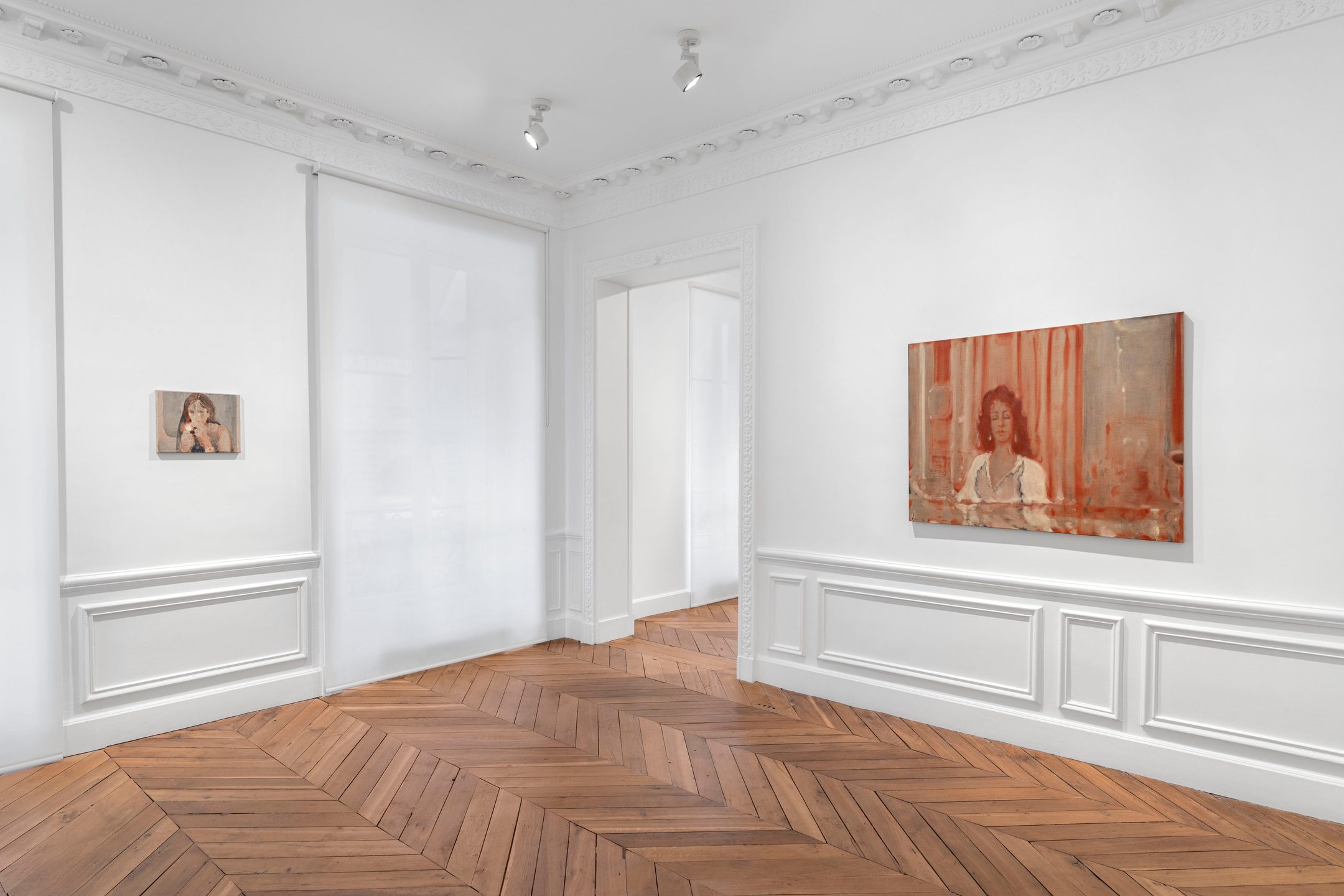
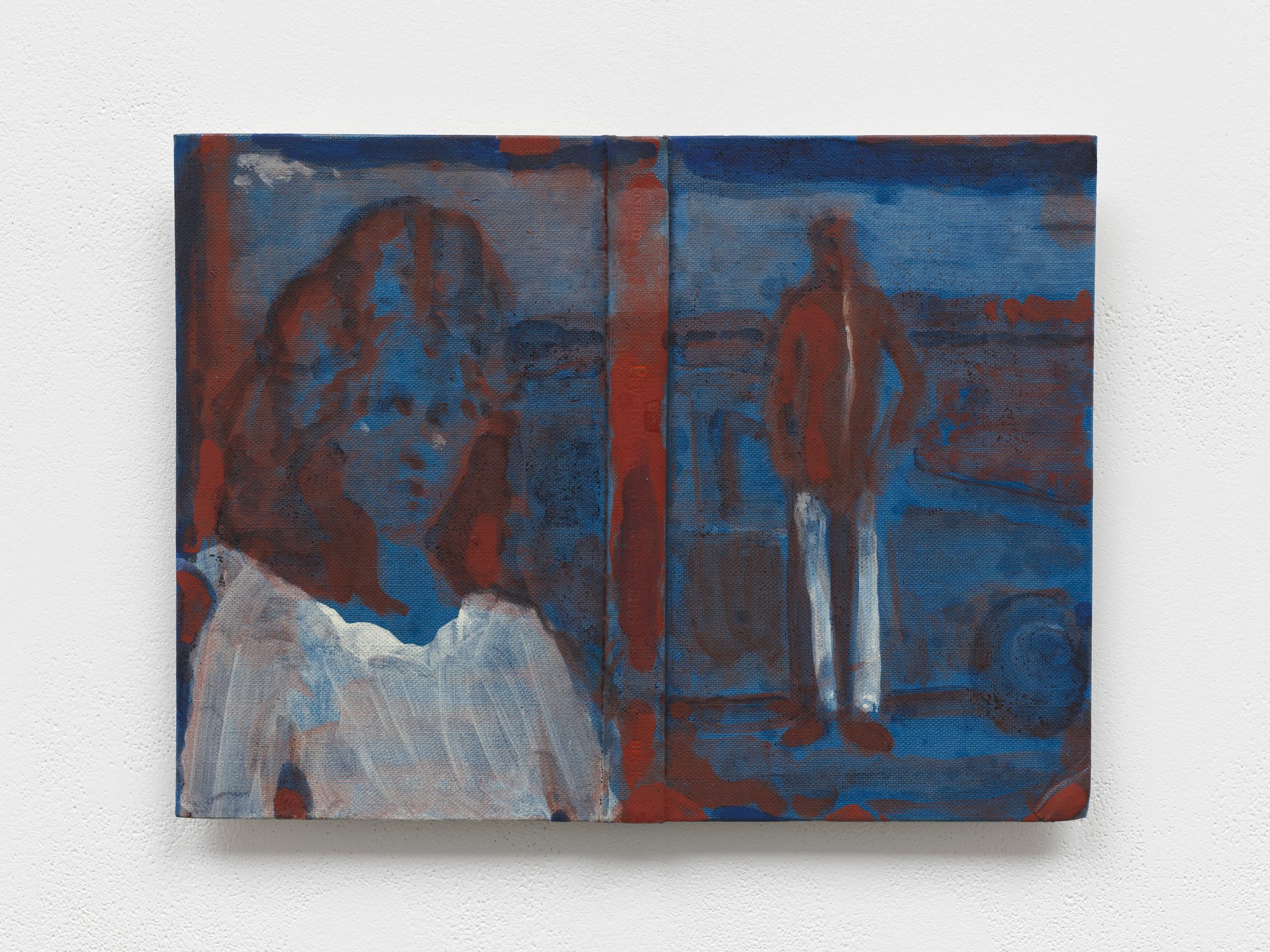
Elsewhere, Khilji’s miniature portraits on cigarette packets evoke the Mughal painting traditions of the 16th century, as well as the heteronymic personas of poet Fernando Pessoa. The pocket-sized totems represent ‘the ideas of the poets that I have consumed, inhaled and exhaled, the thought transforming in the smoke’.3 More explicitly referencing the written word as a carrier of meaning across time, in contrast to the temporariness of lived experience, Study of an umpire (2026) is painted on a found book cover and features the fleeting moment of a cricket umpire signalling mid-game. In Khilji’s work on canvas If I cannot carry it, then you must میرے سینے میں نہیں تو تیرے سینے میں سہی (2025–26) a woman lights a cigarette, the painting immortalising the bright spark of her lighter in the single moment of ignition. Inflected by the magical realism of Gabriel García Márquez and the traditions of Urdu and Persian storytelling, Khilji’s paintings across scale carry a narrative sensibility.
Nestled within several paintings are lexical fragments in Nastaliq calligraphy, words and phrases functioning less as legible inscription than as lyrically swooping forms, a transmission in dormancy. Formally derived from the ripple-pattern of water, Nastaliq’s characteristic diagonal drift shares the same fluid logic as certain examples of Khilji’s figural renderings. In Raag III راگ (2025–26) for instance, one of a series of works drawing upon footage of scientists creating artificial lightning, the word منتقلی (muntaqil: transmission, transfer) appears in Nastaliq script in the painting’s upper-left quadrant, as if governing the work’s compositional logic.
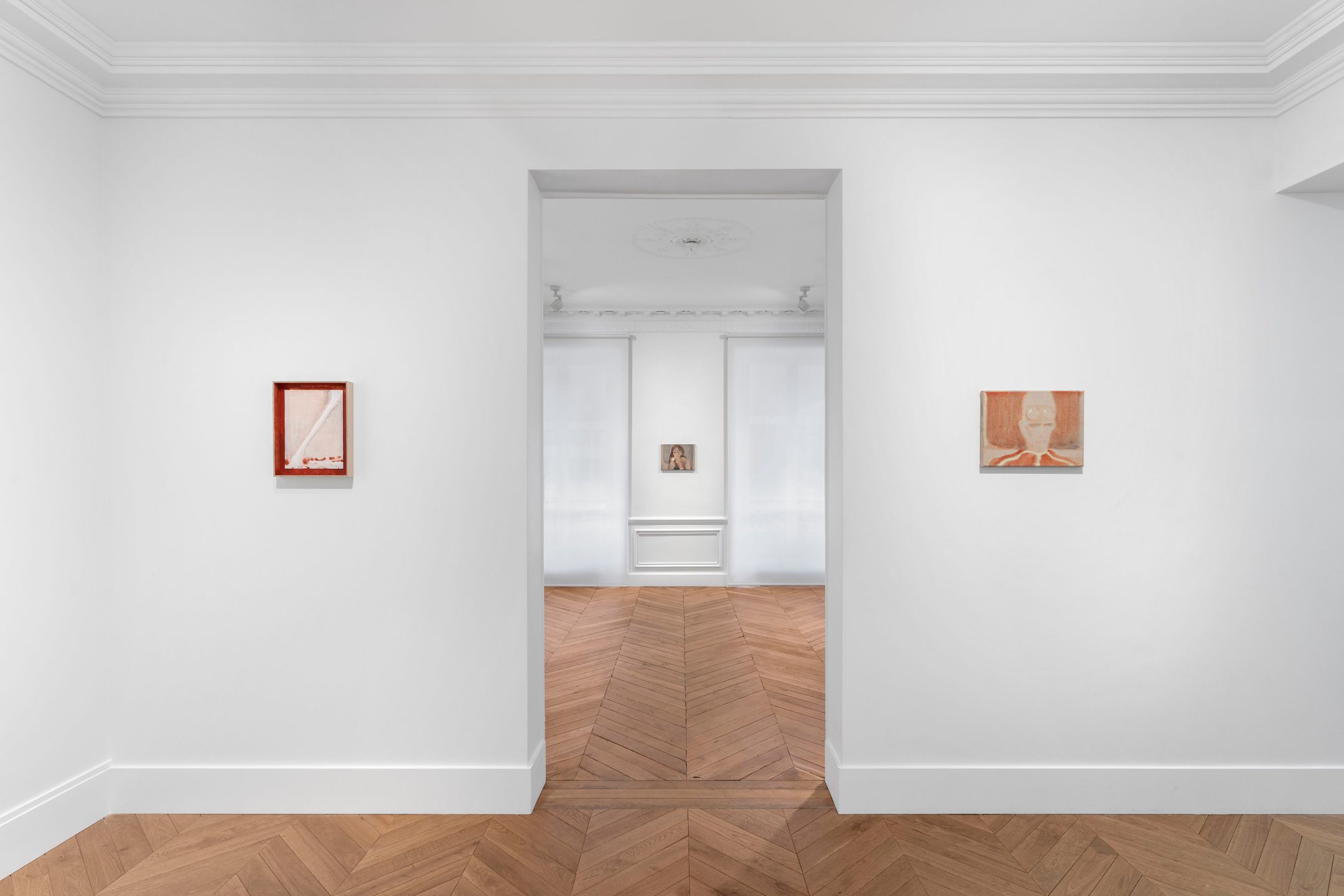
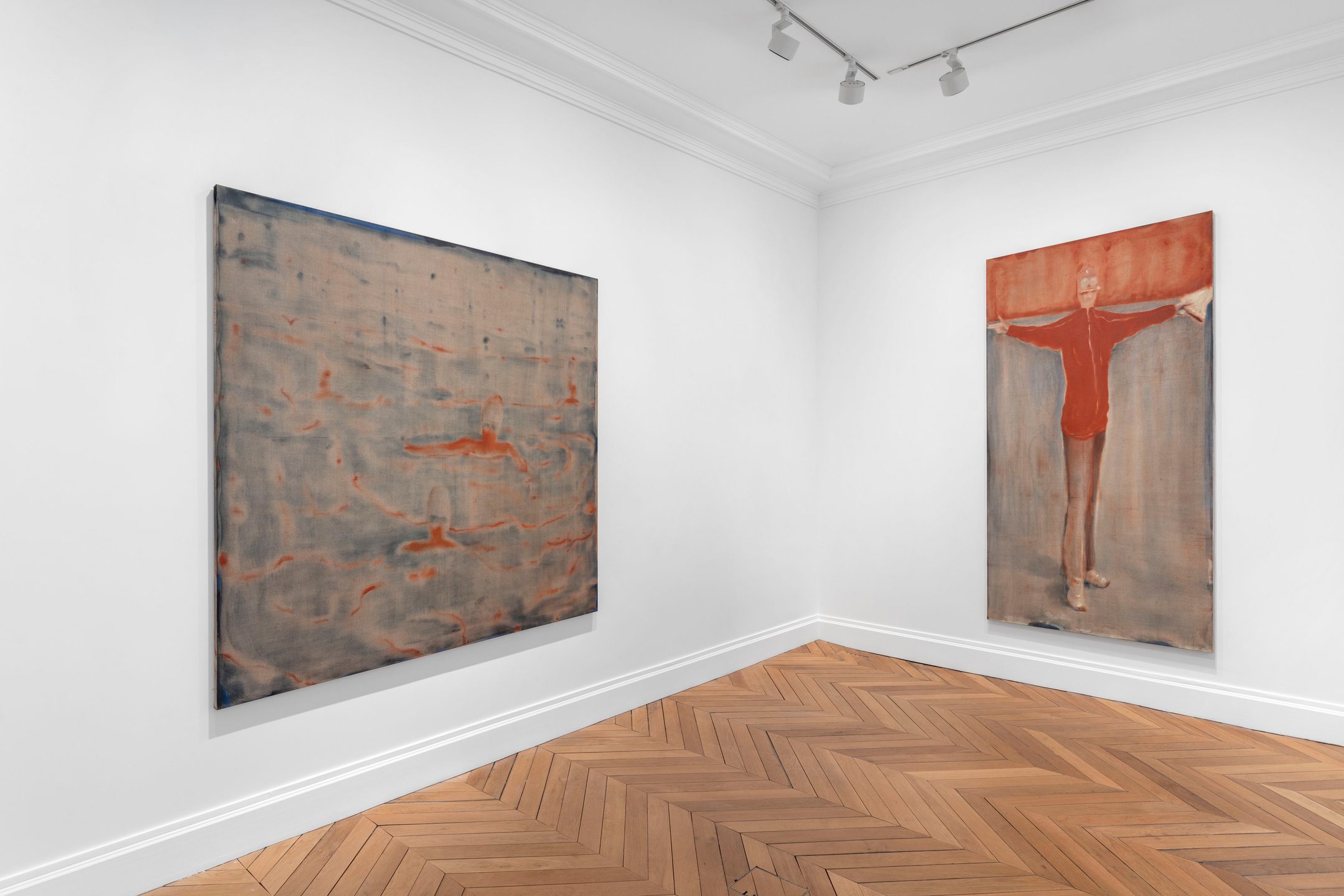
In Khilji’s work, the painting is never the destination, merely a resting place where meaning stalls before it continues to travel. Like the figures that inhabit them, the spaces that emerge in Khilji’s paintings are amorphous and ambiguous. Fluid gestures and gaseous movements again come to bear in the ‘Saraab’ paintings (2025–26), whose surfaces seem to warp and ripple around goggled human heads. Drawing on family photo albums from the 1960s to 1990s, capturing scenes of swimming at the Bolan Valley and Gondrani Caves – remote, untouched scenic destinations and archaeological sites in Balochistan – the series is titled with the Urdu word for ‘mirage’. Acknowledging the ephemerality of these painted scenes, ‘Saraab’ encapsulates Khilji’s wider enquiry into transmission and the instability of the image – how a person or place might be conjured, but just as easily dissolves.
1–3 Artist conversation, unpublished, April 2026