Stano Filko at Layr

To this day, the unproductive opposition between painting and conceptualism as two eternal adversaries in a mythical antagonism between painted/“bad” art market art and conceptually safeguarded/“good” exhibition art continues to have an effect. All the more surprising, then, is how much the debate over the pros and cons of painting—which reached its peak around 1980 with “wild” or “neo-expressionist” painting—still affects artists today who had only marginal involvement with that specific historical constellation.
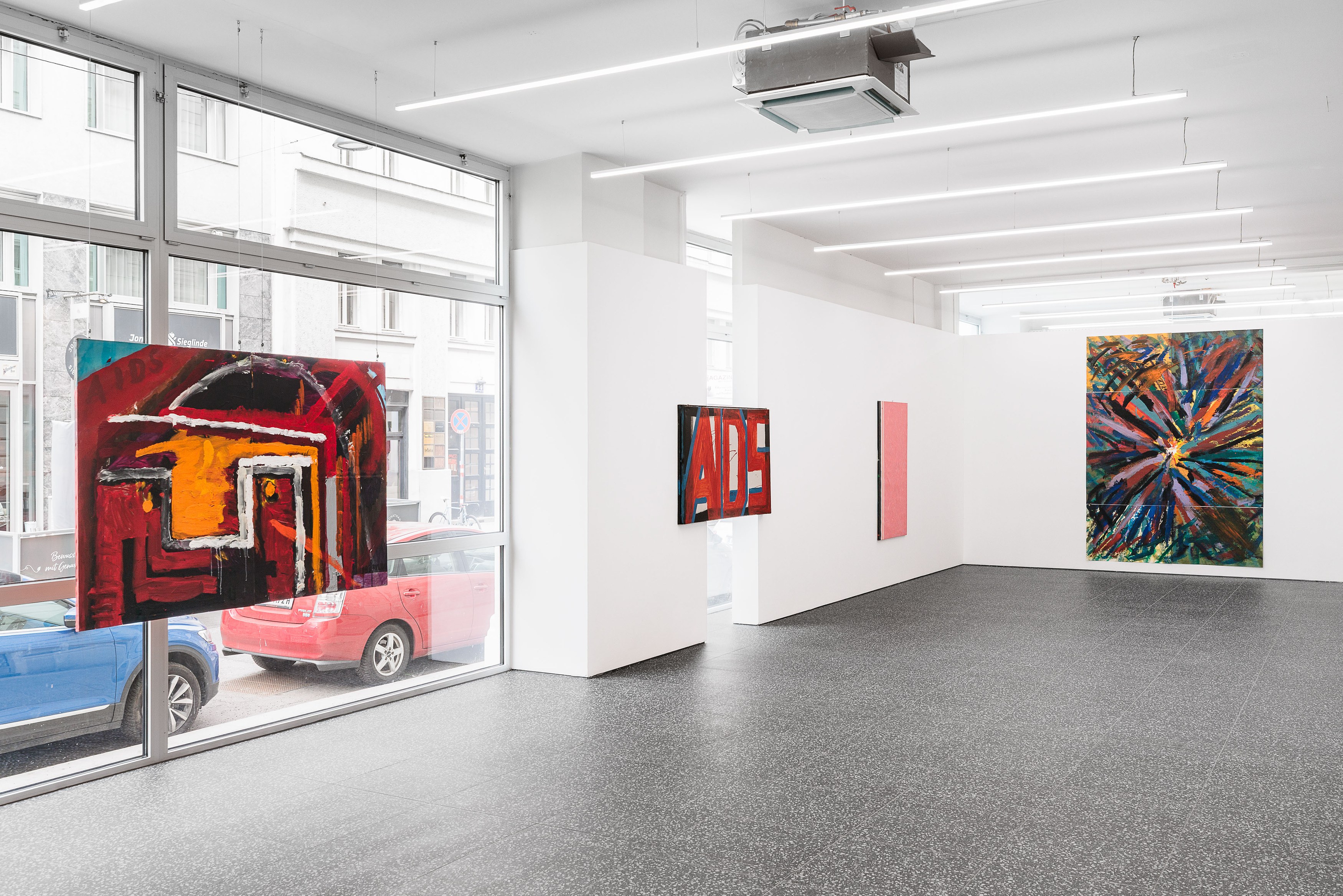
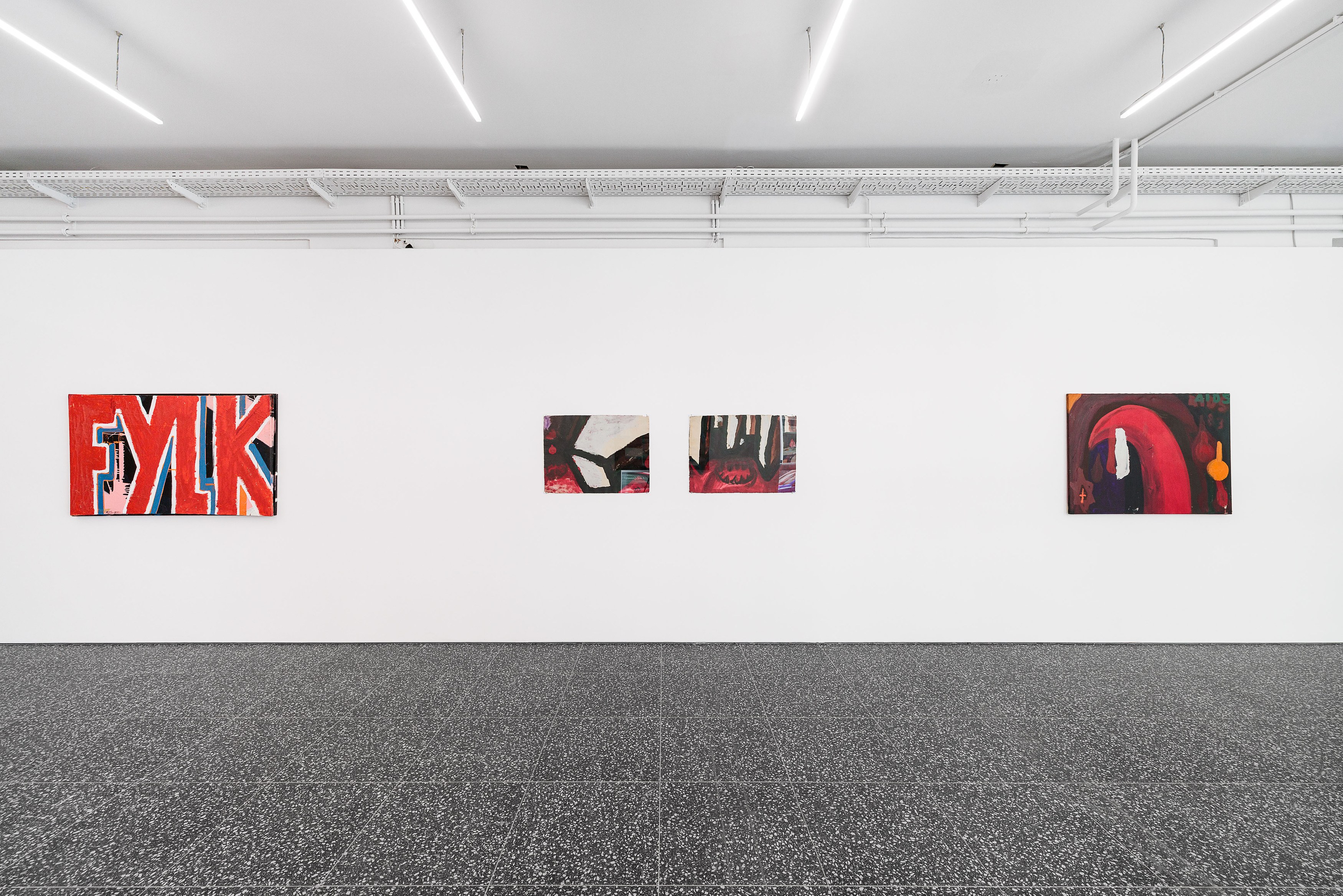
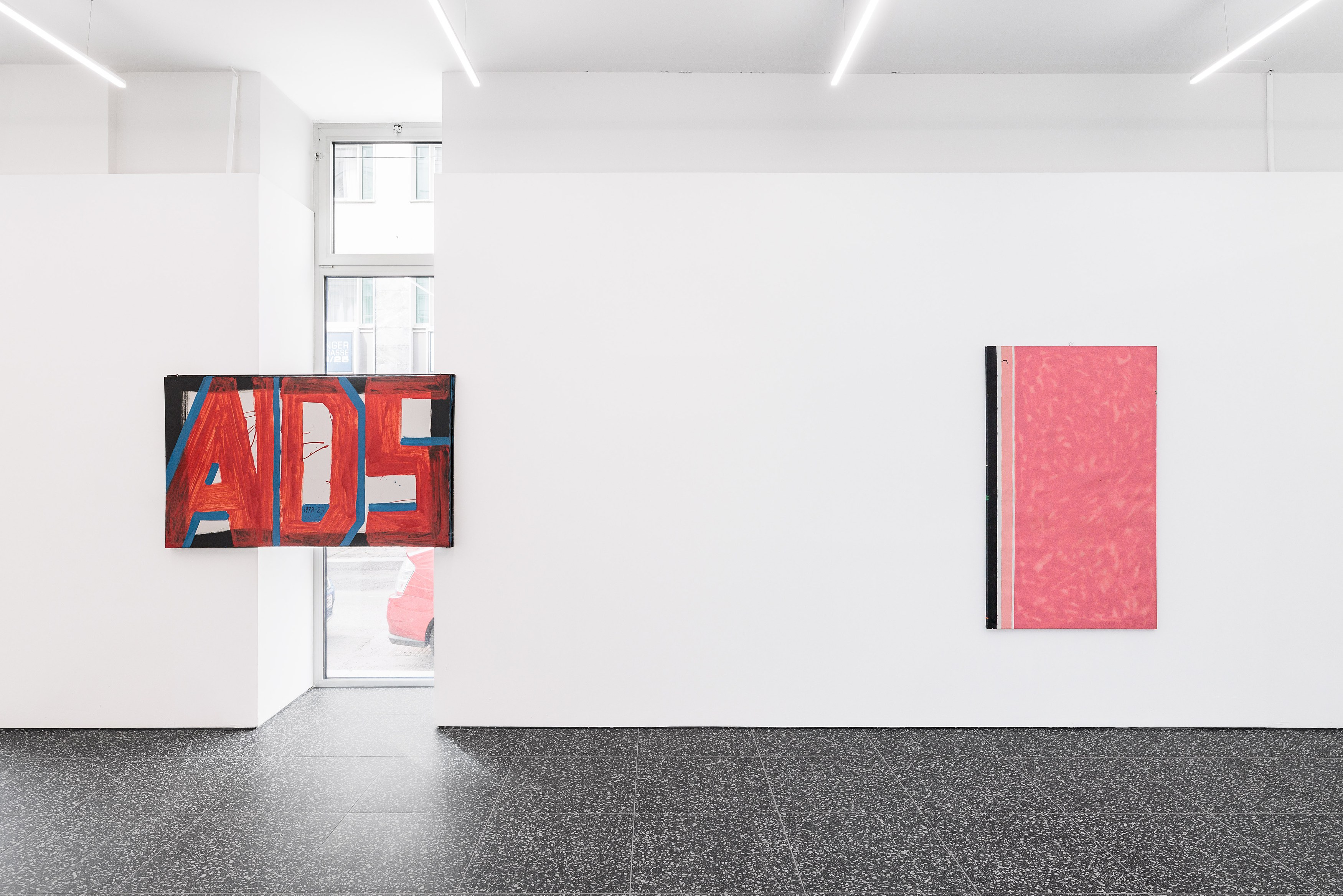
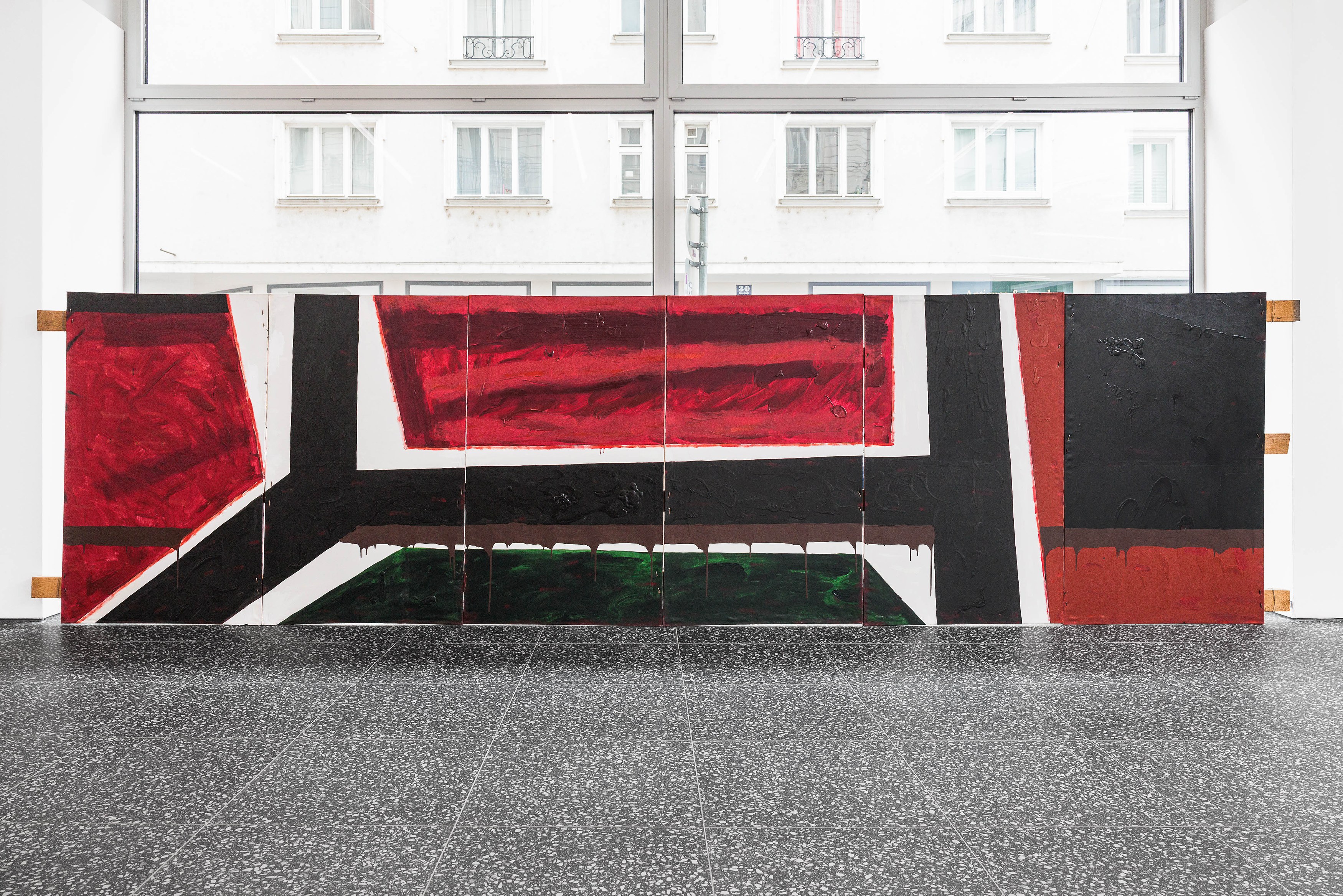
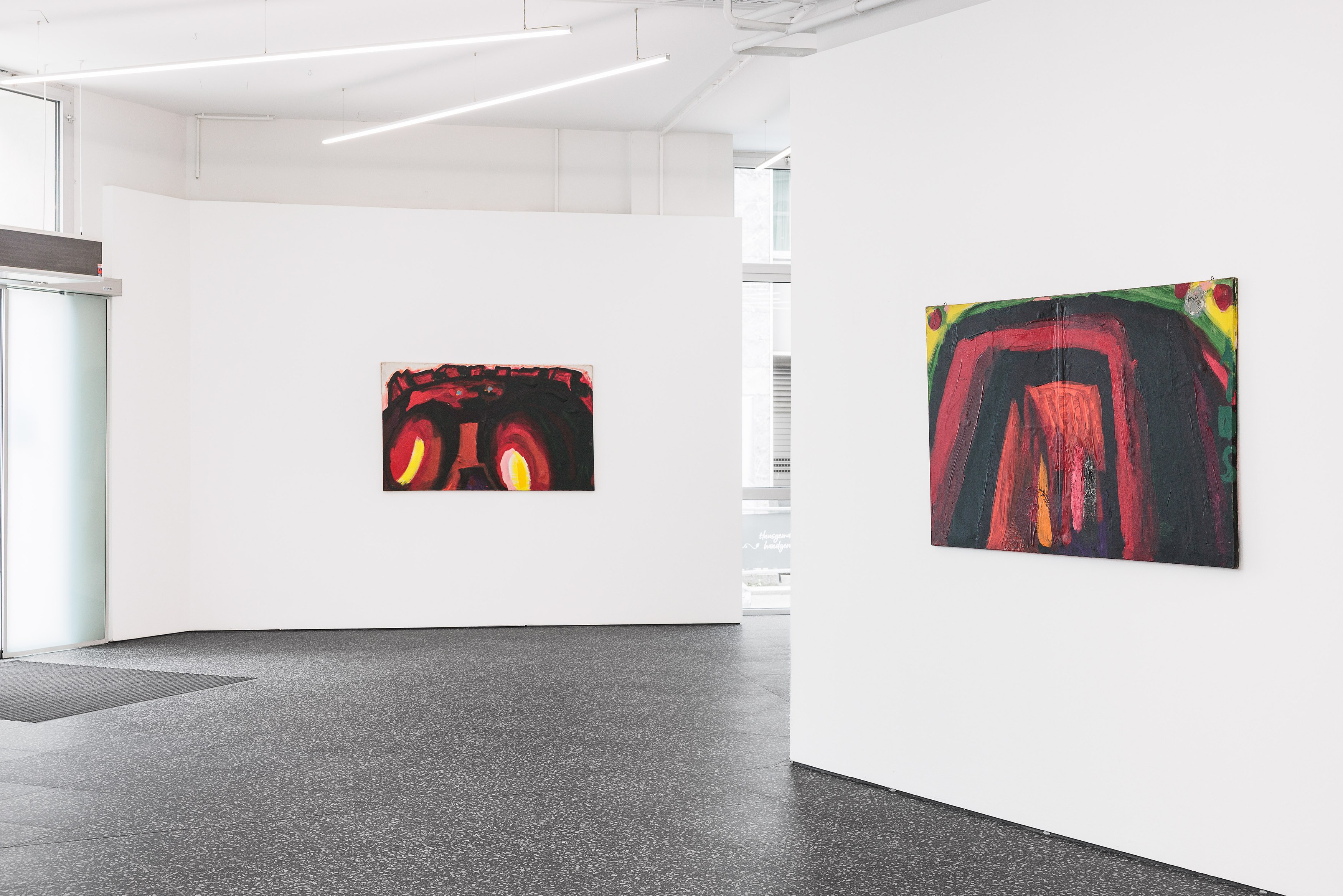
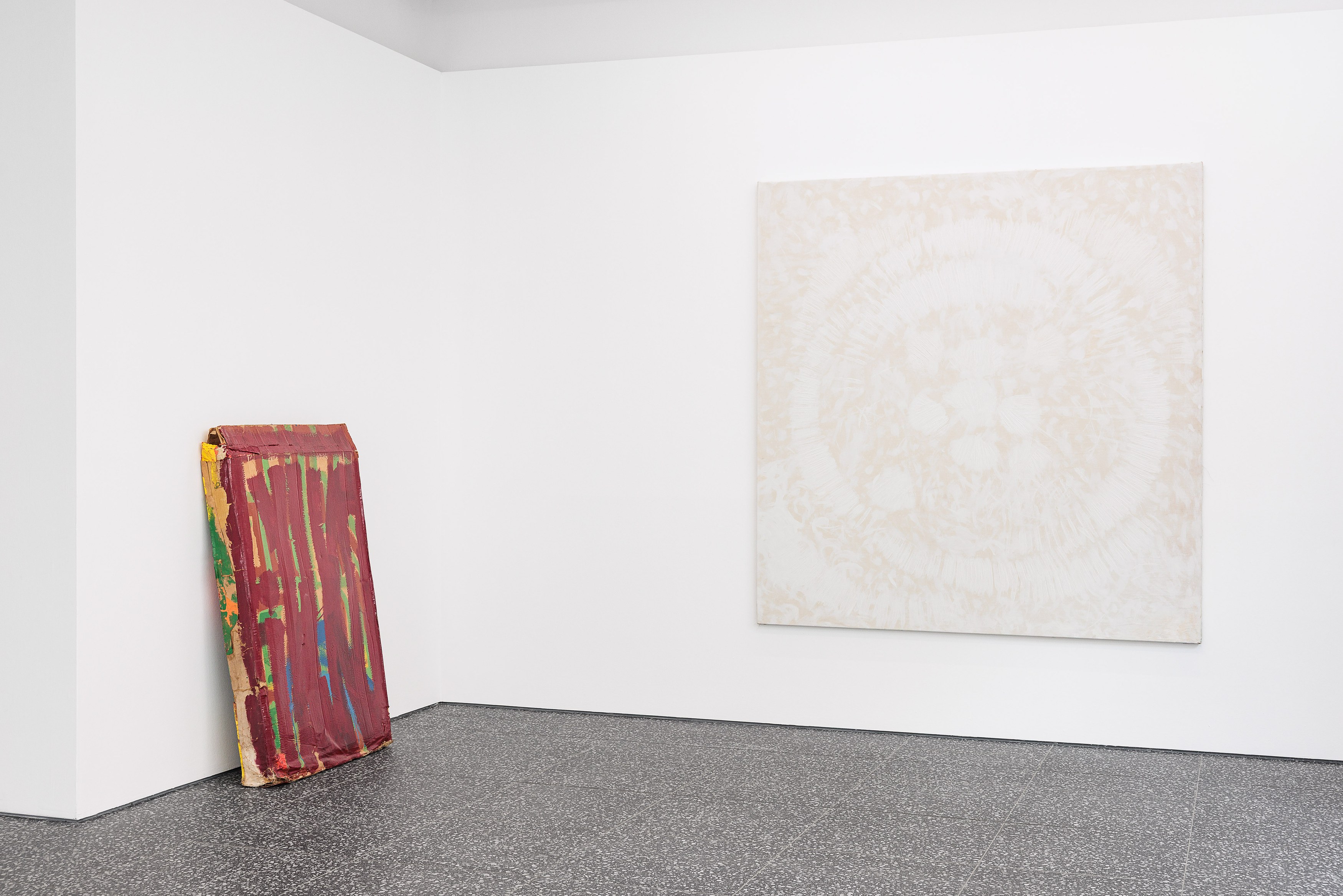
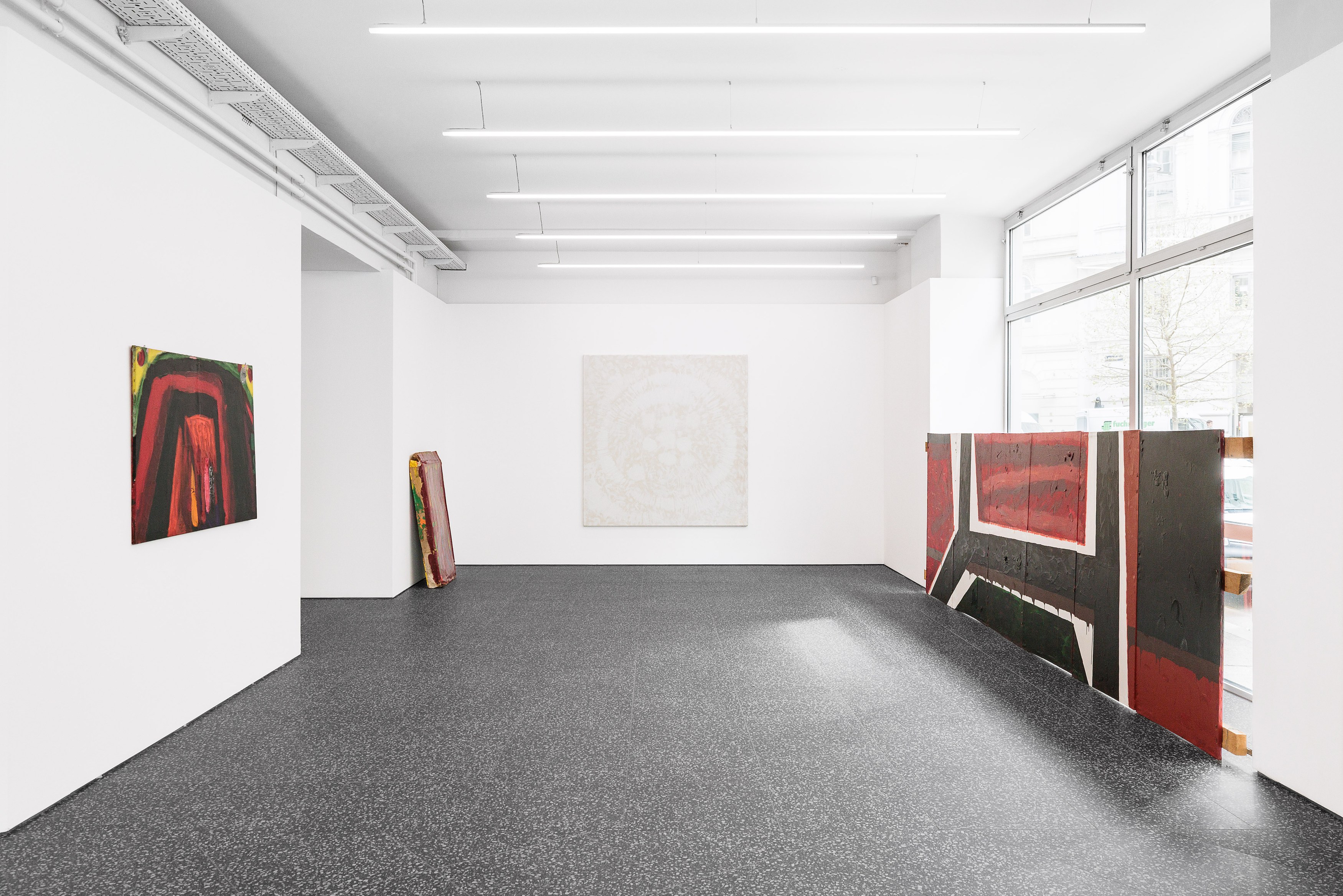
The works created between 1981 and 1990 by Stano Filko (1937–2015), which are the focus of this exhibition, are also often labeled “neo-expressionist” in their reception. In fact, these works—especially his installation Love of Ontology (1982), presented at documenta 7—are frequently placed directly in the context of the then-emerging “wild painting” as it was especially promoted by the Neue Wilde movement in Germany. Among these works are primarily paintings, but also assemblages, collages, and ensembles made from found objects of everyday (artistic) use, which, through the deliberate addition of color, are pushed into the domain of painting.
If one also considers the artist’s biographical situation—following his emigration from then-Czechoslovakia, with stays first in Duisburg and later, from December 1982, in Buffalo and New York, as well as the resulting, at times, precarious living and working conditions—it may even be possible to
argue for a certain exceptional status of these works (in the sense of an “American period”). This body of work stands out from an oeuvre that is other- wise extremely multifaceted but is generally understood—and rightly so—under the sign of conceptualism. What may seem quite plausible at first glance, however, appears more problematic upon closer inspection.
In fact, the paintings—often large- and medium-format, vividly colored, and worked on both sides, usually on self-constructed supports—are executed with great verve: “nasty” or even “bad” painting we could say. The works can be grouped thematically: there are images with more or less pornographic, in any case explicitly sexualized themes (male and predominantly female genitalia, fellatio); text-based works referring to the artist’s identity, origin, and condition, as well as formative impressions from his environment (FILKO, SLOVAK, STAN, AIDS). In addition, there are various hybrid forms that can be understood, on the one hand, as geometric-modular abstractions reflecting Filko’s lifelong interest in the utopian potential of “classical” modernism, as well as in the critical use of what Benjamin Buchloh termed “aesthetics of administration” as a structural feature of conceptual art. On the other hand, if we consider that the artist was forced to paint by circumstance, a clear sense of continuity emerges. These works demonstrate that Stano Filko’s conceptual ambition—to organize his oeuvre as a meta-discourse structured through both, objects and references, first elaborated in the 1960s—was not abandoned. Filko’s oeuvre, namely, does not simply result from the accumulation of art- works over time as the output of a lean, mean studio machine typical of the 1980s. Rather, it forms its own cosmos, so to speak secured by a semi-permeable boundary. As Jan Verwoert has pointed out, this cosmos has “the world as a medium” at its disposal only to suspend this/our world—its laws of matter, space, and time, as well as the actually prevailing social, cultural, economic, and political conditions—within an artistically autonomous counter-world. This also helped compensate for the limited demand for Filko’s works in the art market metropolis of New York. It is therefore hardly surprising that, faced with this modest reception, he began in the United States to develop his conceptual ambition into a fictitious institution, the Archive SF , which hewould later realize in Bratislava after 1990 as a Gesamtkunstwerk.
Even if Filko’s works from the 1980s may at first appear “expressive” and “wild,” they do not comfortably fit into the debate surrounding so-called “wild painting,” which at the time was marketed under various labels—such as arte cifra , Neue Wilde , Transavanguardia , or, more generally, Neo-Expressionism— and led to a veritable boom in painting that, in keeping with the period’s notion of “international,” remained largely confined to Western Europe and the United States.
What its supporters once enthusiastically celebrated as a full-on “rebirth of painting” (Zdenek Felix), in the spirit of a renewed subjectivity, in fact represented only a small segment—formally, conceptually, and stylistically—of what painting as a genre, discourse, and practice already encompassed at the time. Moreover, while “wild painting” derived its momentum from the claim that it had broken with conceptual art—dismissed as consisting of “drab forms and brittle thoughts” (“drögen Formen und spröden Gedanken”, Jochen Hohmeyer), time rejected it as a reactionary retour à l’ordre or, again following Buchloh, even as a regression.
It is therefore fitting that Tomáš Štrauss, a Slovak art historian and curator who, like Filko, emigrated to Germany and was at times his companion, largely ignored the conceptual dimension of Filko’s documenta contribution and, likely due to its overtly gestural painting, declared that “the long list of the Neue Wilde has now gained another name.”
Not only did painting have an increasingly difficult standing among progressives during the comprehensive conceptualization of art in the 1960s and 1970s. In the socialist countries of the Eastern Bloc, it was also tainted by its association with official state art. This makes Filko’s intensified use of painting in the 1980s all the more interesting—and certainly not in terms of adaptation, a “break,” or a “regression.”
As one of the central protagonists of conceptualism in the 1960s and 1970s, Filko’s oeuvre, in retrospect, appears almost exemplary of an intermedial, transdisciplinary, and context-aware artistic practice which—despite the vastly different conditions shaped by Cold War bloc politics on either side of the Iron Curtain—helped establish the foundations for our present-day, feature is to be “anywhere or not at all”—and no longer tied to specific genres, media, styles, or forms of objects or works. So why should someone like Filko, who has “the world as a medium” at his disposal, not also make productive use of the medium of painting—even if itdoes not currently fit?
Hans-Jürgen Hafner