Simon Dybbroe Møller at La Salle de Bains

More than a century after the publication of the groundbreaking manifestos of the artistic avant-gardes, and their absorption by capital, Simon Dybbroe Møller seems to propose an entirely new movement.
So what is Nouvelle Intériorité? A new impetus, something that can help us emerge from a certain lethargy. Is it a “new” art? A manifesto?
Simon Dybbroe Møller's work is often said to reveal the all-encompassing role images play in our online and networked lives - how we perceive reality through photographic images before experiencing it physically. Not limited to photography his practice shifts between sculpture (often ready-made), image, video, sound, and writing, emphasizing exactly these transitions between different representational realities - from 2D to 3D, from the screen to haptic materiality.
His work always deals with the individual in its environment, its relationship to things. It deals with the logic of late capitalism; its persuasion and its pressures masked as benevolent oversight. Subjects such as sport, food, sex, commerce, post-Fordist labour, death - everything that imposes itself on the individual today surfaces throughout his works. While his works are often initially very «21st century seductive», Simon Dybbroe Møller often disrupts this artifice by associating it with corruptible bodies in decomposition, stains, or visions of horror. Nouvelle Intériorité is a distillation of the artist's approach. Individuals and objects coexist here, each exposing their actual inner selves - or at least their photographic reproductions.
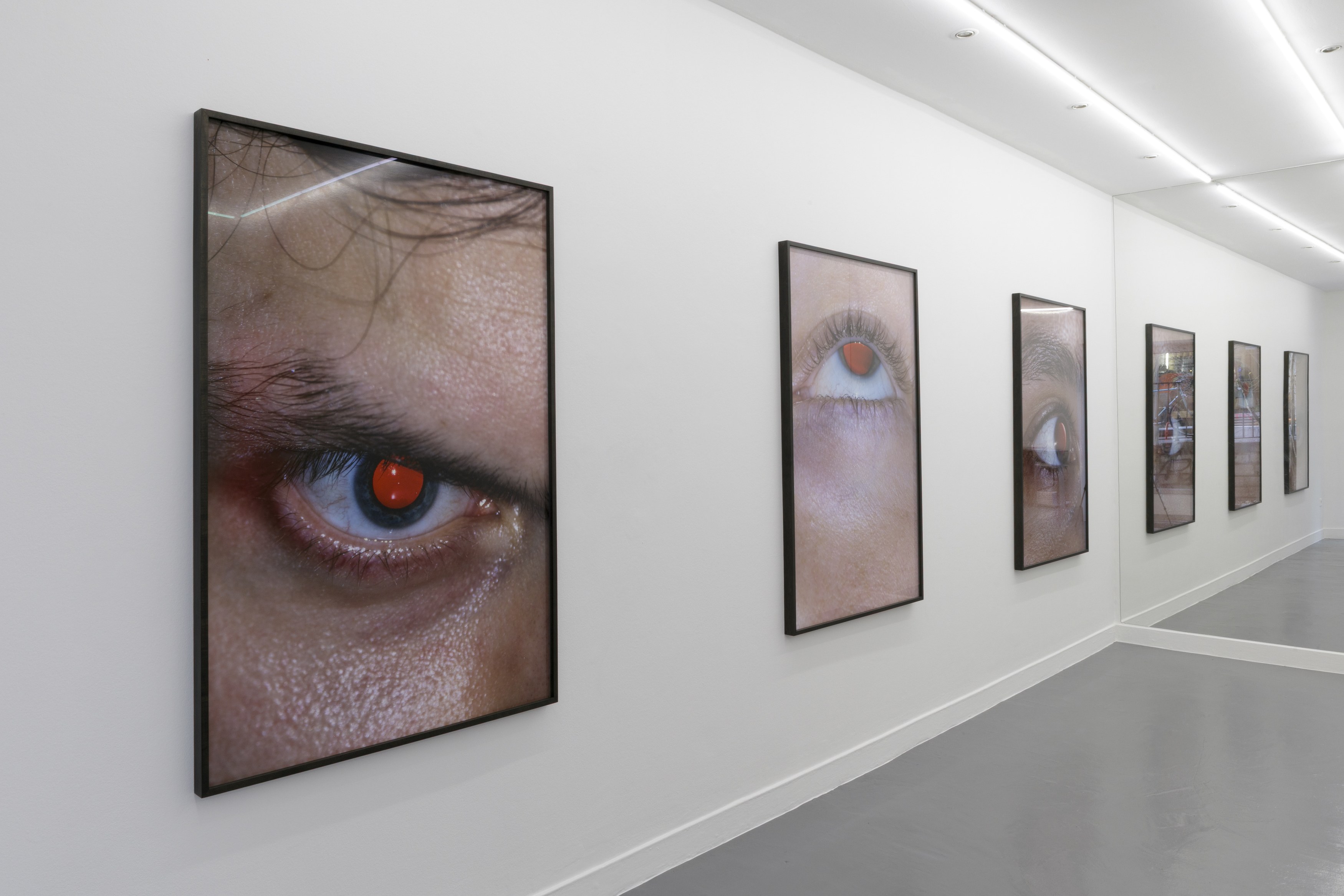
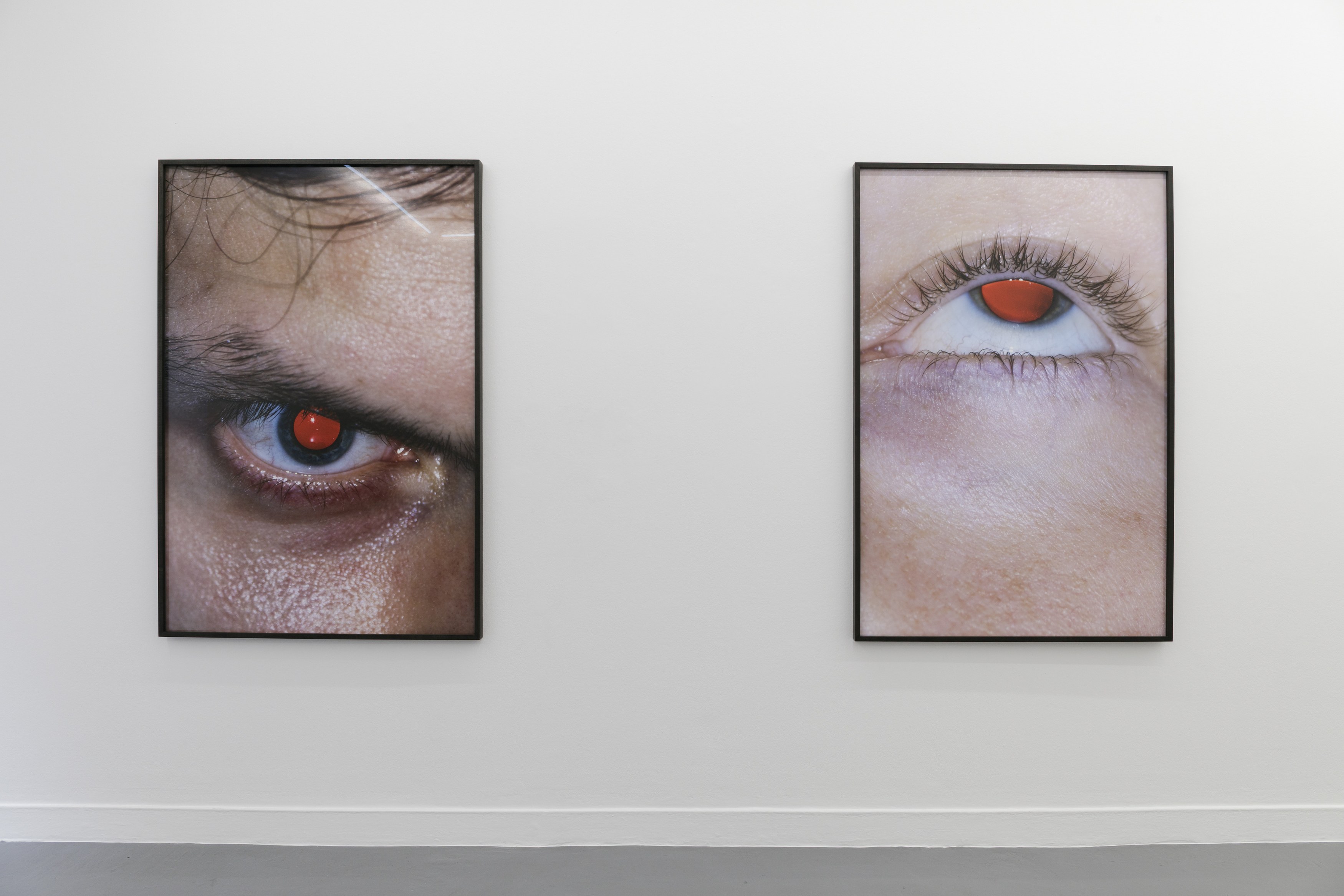
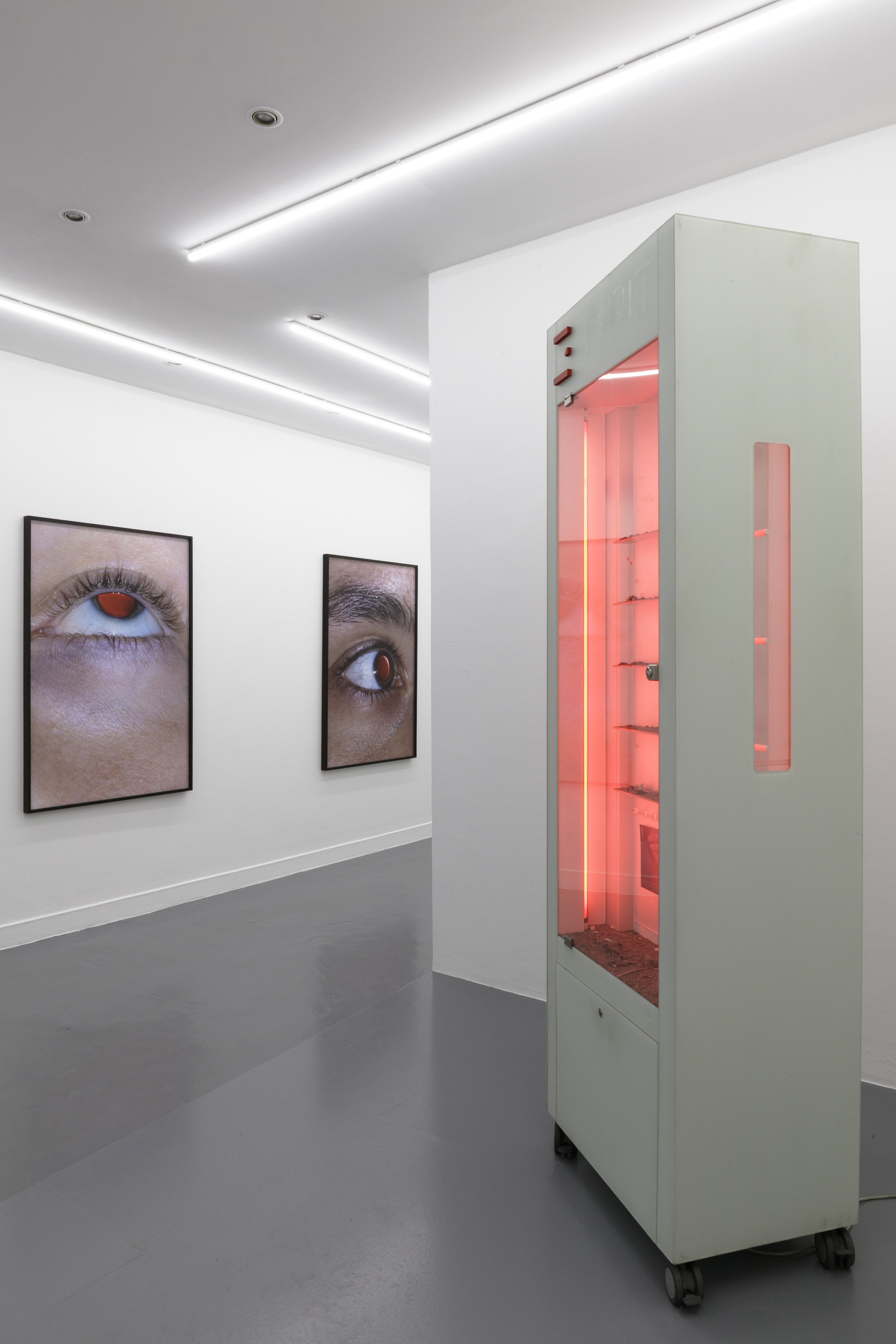
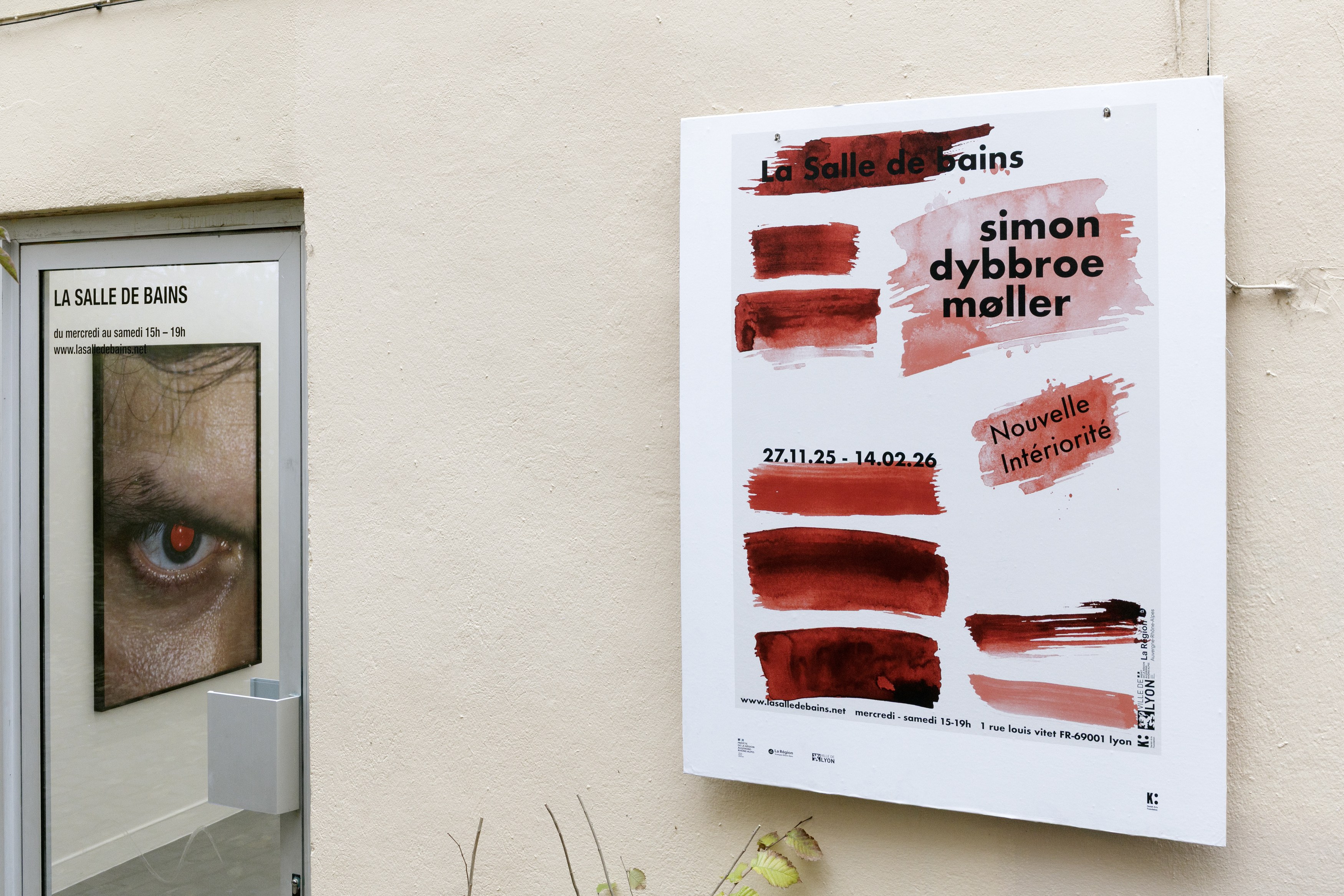
Retinal Rift seems to attempt to capture the soul or psyche of its models through flash photography close- ups of eyes. Ultimately, however these images reveal no more and no less than the fine mesh of blood vessels that run across the retina. Whereas photography actually manages to penetrate the subject here, the image it produces is a strange co-formation of body and machine. These threatening, ecstatic, and anxious eyes could be said to be altogether manifestations of the anatomical eye and the eye of the camera lens, or, taken to an extreme, the eye of omnipotent power and techno- fascist surveillance. In the mirrored wall of la Salle de bains, they duplicate themselves.
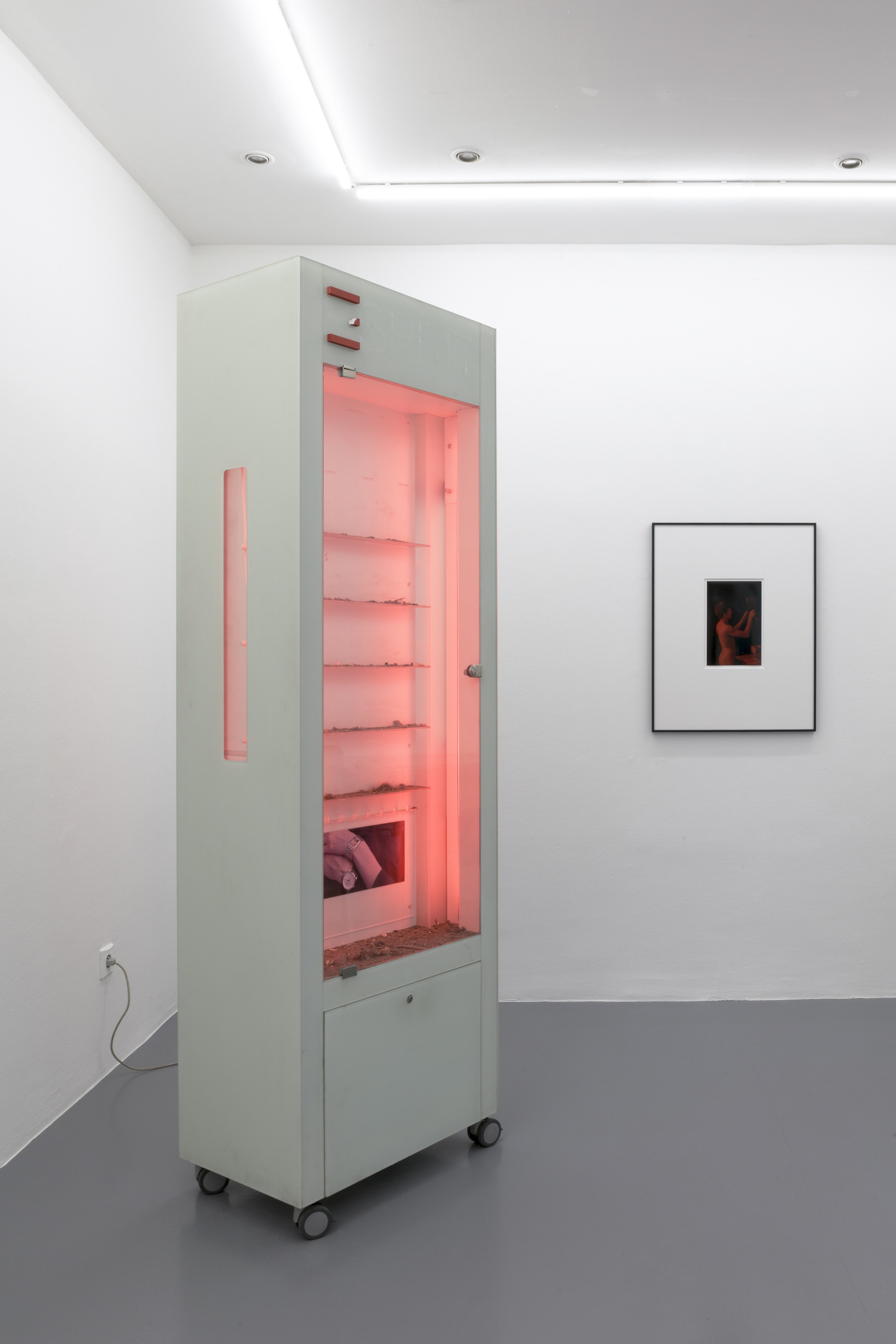
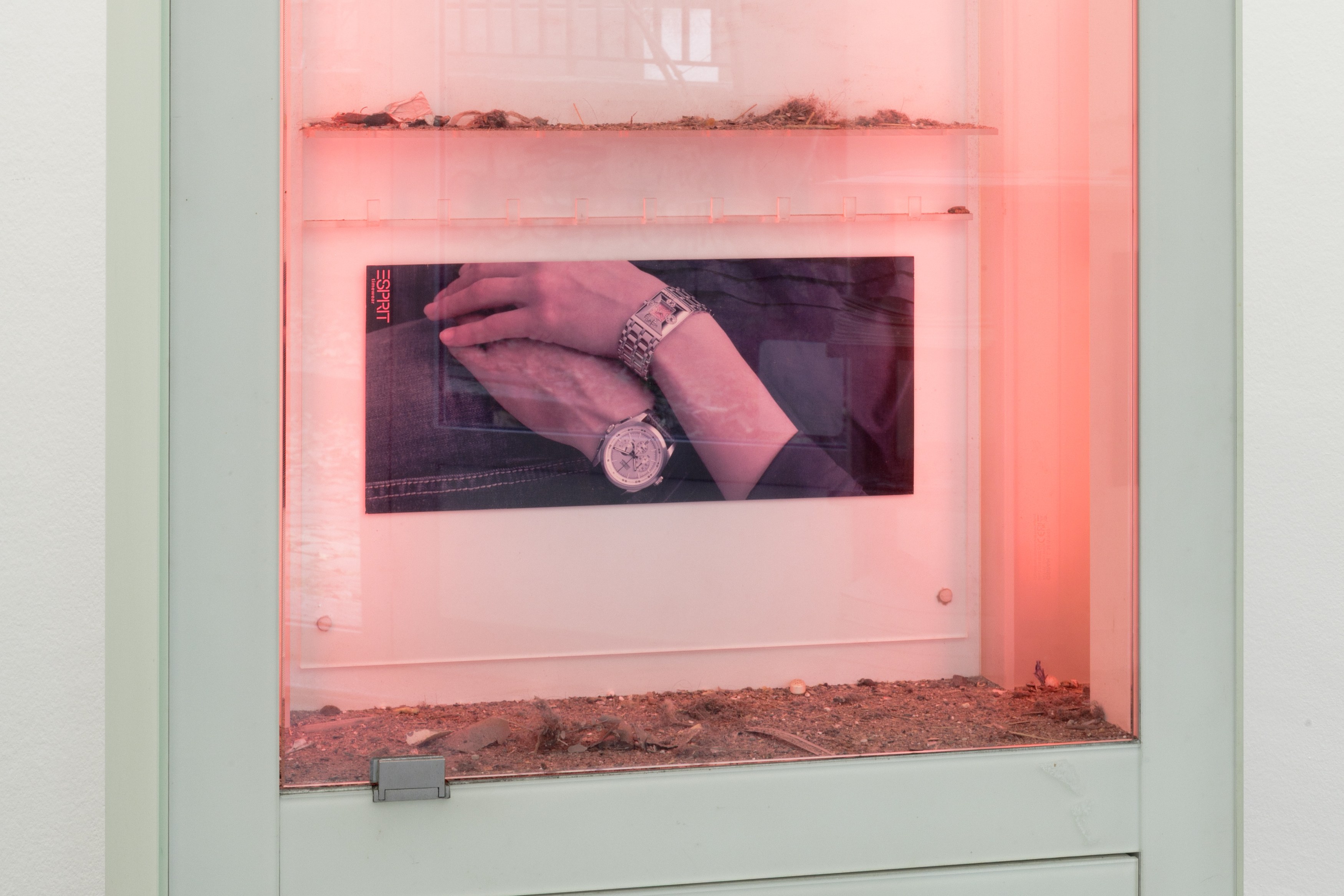
Similarly, the transparency of the totem window Timepiece #9 radiates with a mysterious reddish glow. It seems to have been empty for a long time. Dust has replaced the wrist watches it was designed to display. Its ghostly presence exudes an unsettling atmosphere of ruin, graveyards and funeral urns.
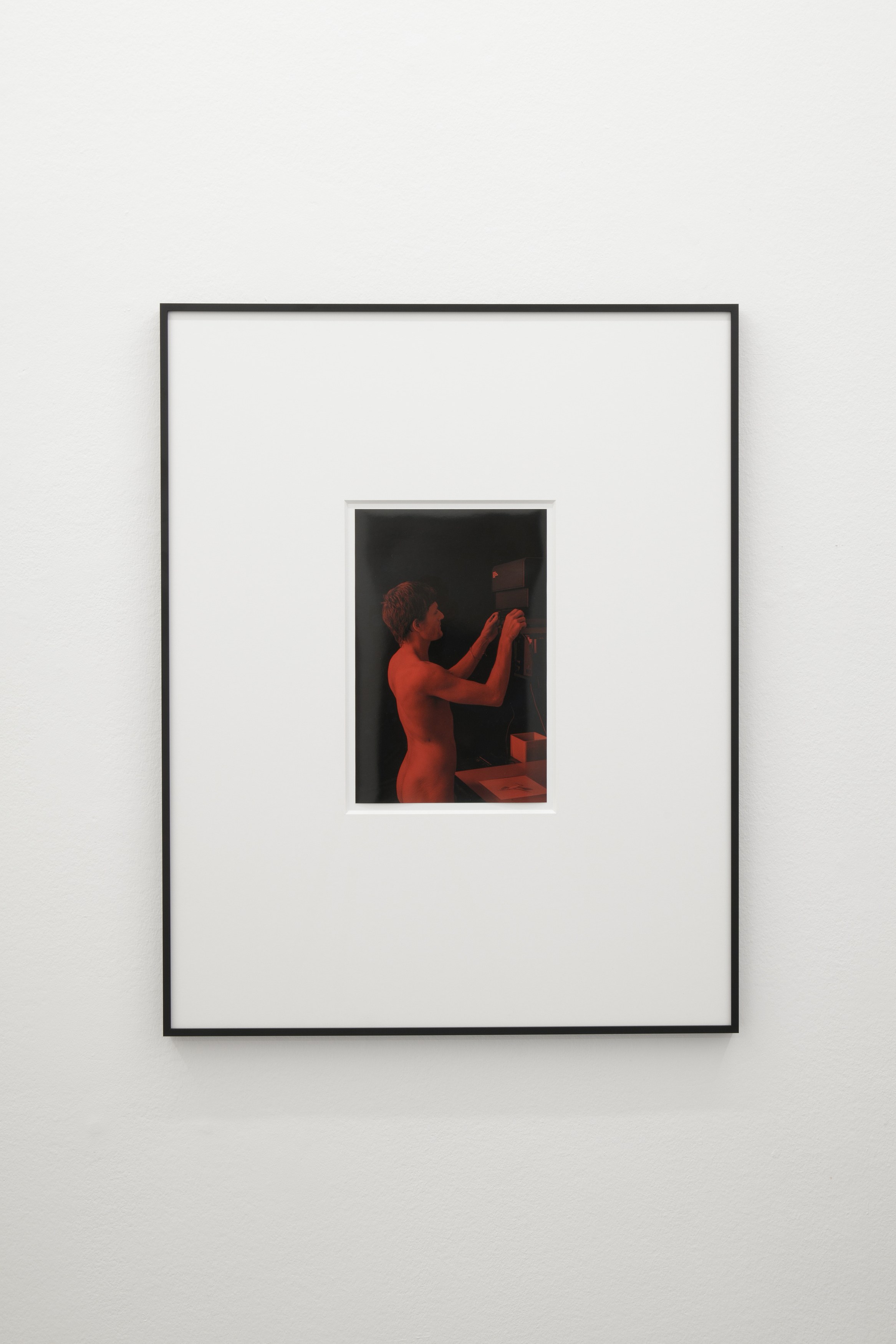
Behind it, a discreet photograph, Nude III, depicts a naked figure bathed in the red of darkroom safelights while making a print from a negative. This body is not posing but working, it is not an image – it is the making of an image.
This series shows bodies not entirely undressed, but wearing the uniform of the nudist: jewellery, socks, shoes. If the nude belongs to art, nudism is a lifestyle ; not a depiction but a practice.
Being naked is a physical experience that varies depending on the weather, the landscape and temperature; it is fundamentally un-photographic. The skin in this photo is not a surface, rather it is a porous membrane, interface, projection screen.
Nouvelle Intériorité is not confined to the space of la Salle de bains. Its red glow spreads to Le Chavanne, a bar only a few dozen meters away. There you can drink a glass of red wine next to another work from Dybbroe Møller’s Nude series and give in to the pathos of his sound piece Bounce.
Welcome to Nouvelle Intériorité.
Benoît Lamy de La Chapelle
––
Simon Dybbroe Møller (*1976, Aarhus) lives and works in Copenhagen. He studied at the Kunstakademie in Düs- seldorf and the Städelschule in Frankfurt. He has been a professor at the School of Sculpture at the Royal Danish Academy of Fine Arts in Copenhagen since 2019. His work has recently been shown at the 14th Taipei Biennial (2025), the first Klaipėda Biennial (2025), CAN in Vienna (2024), Kunsthal Charlottenborg in Copenhagen (2024), MAST in Bologna (2024) and CAPC in Bordeaux (2024). He co-directs the AYE-AYE exhibition space and curates the performance series Why Words Now.