Material Shifts at Astrup Fearnley Museet

Traditionally, the notion of sculpture recalls a stable object rendered in a robust material: something frozen in time and space. Still, sculptural practices have always also retained a notion of “material shifts”: from mold to cast, from sketch to three-dimensional form, or from idea to physical realization.
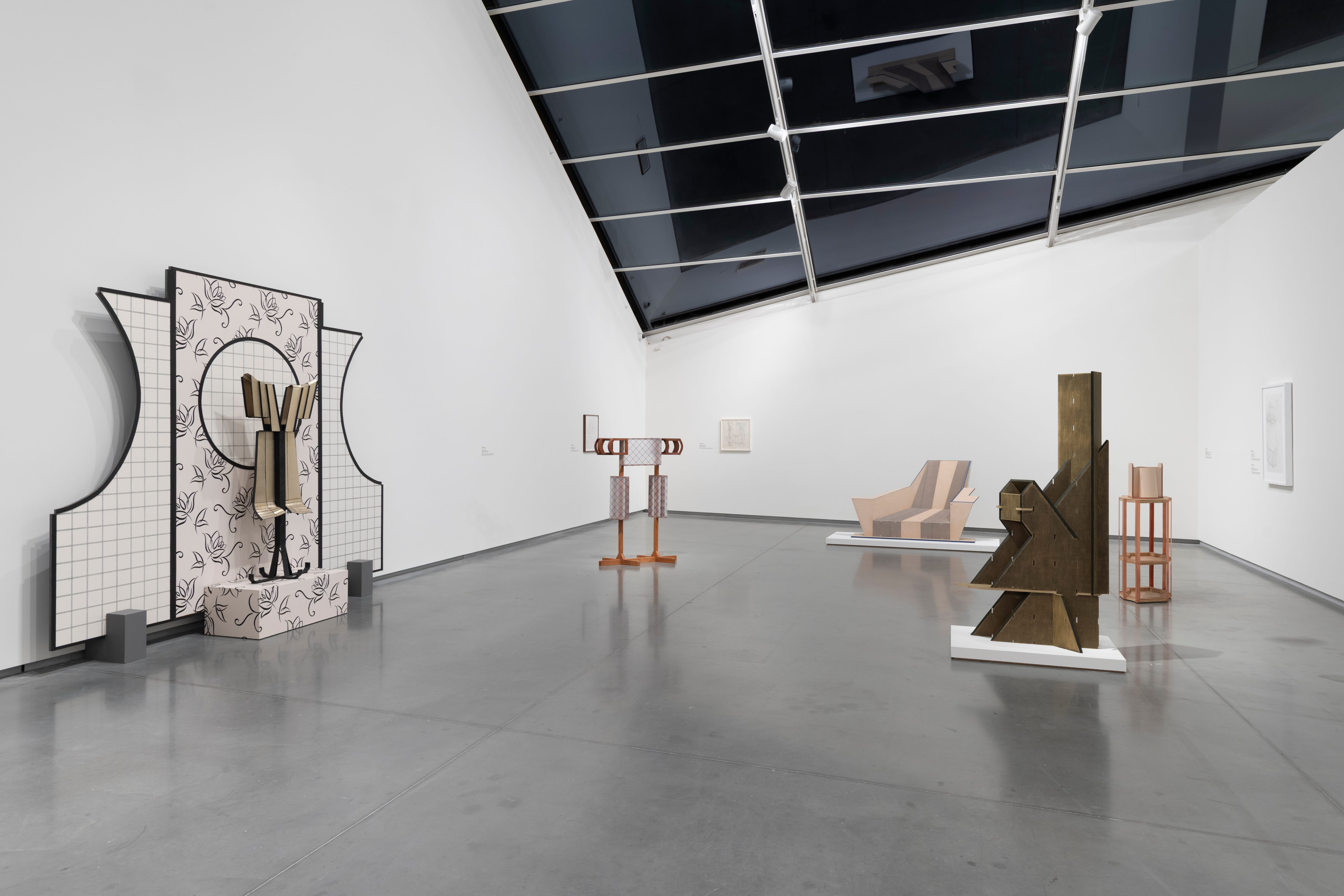
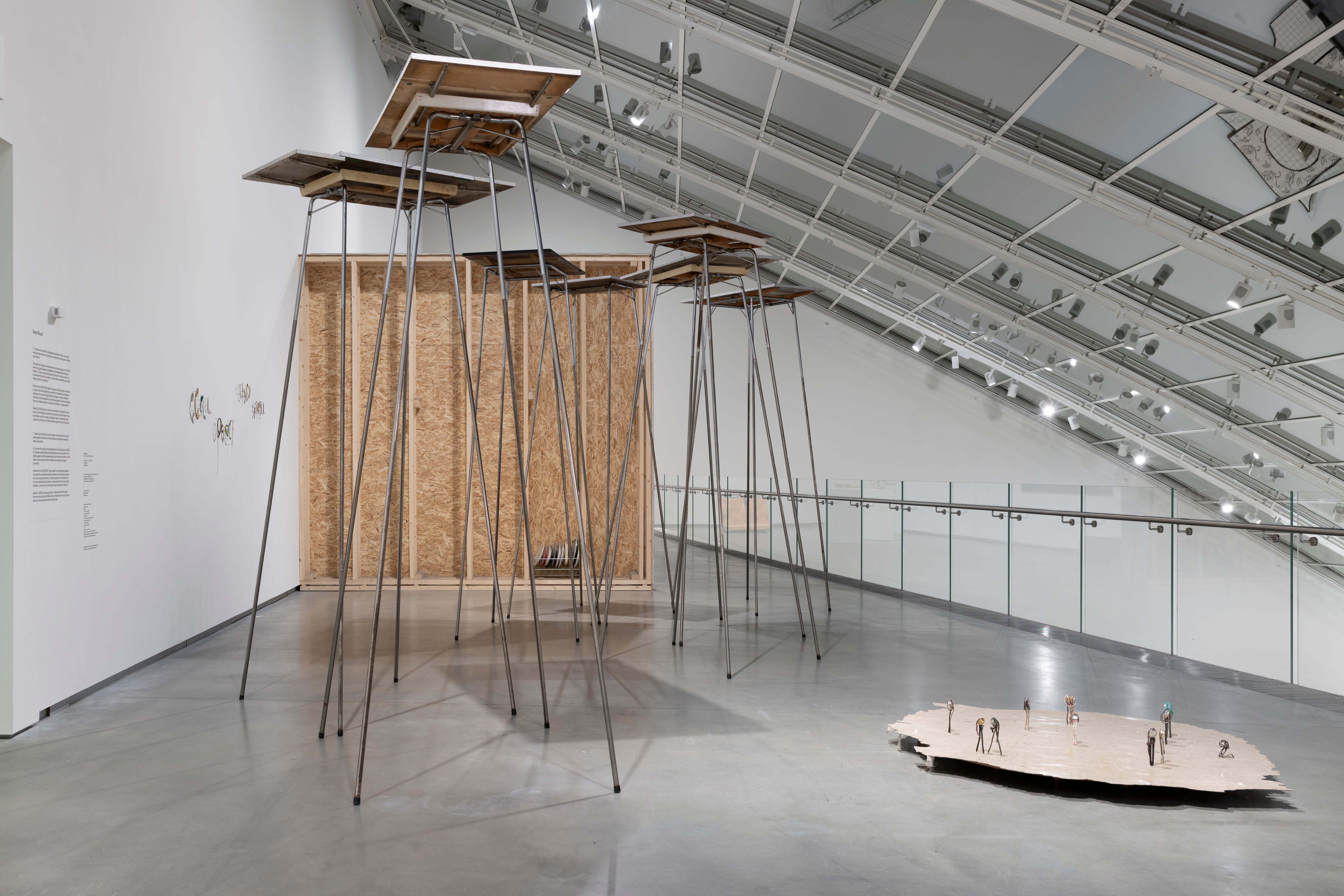
The works on view span conceptually driven pieces, material explorations, space-activating installations, and repurposed objects, mapping a field made vital through translation.
Translation is about differentness. A way of coping with, and ameliorating, and yes, denying difference. — Susan Sontag, “On Being Translated” (1995)
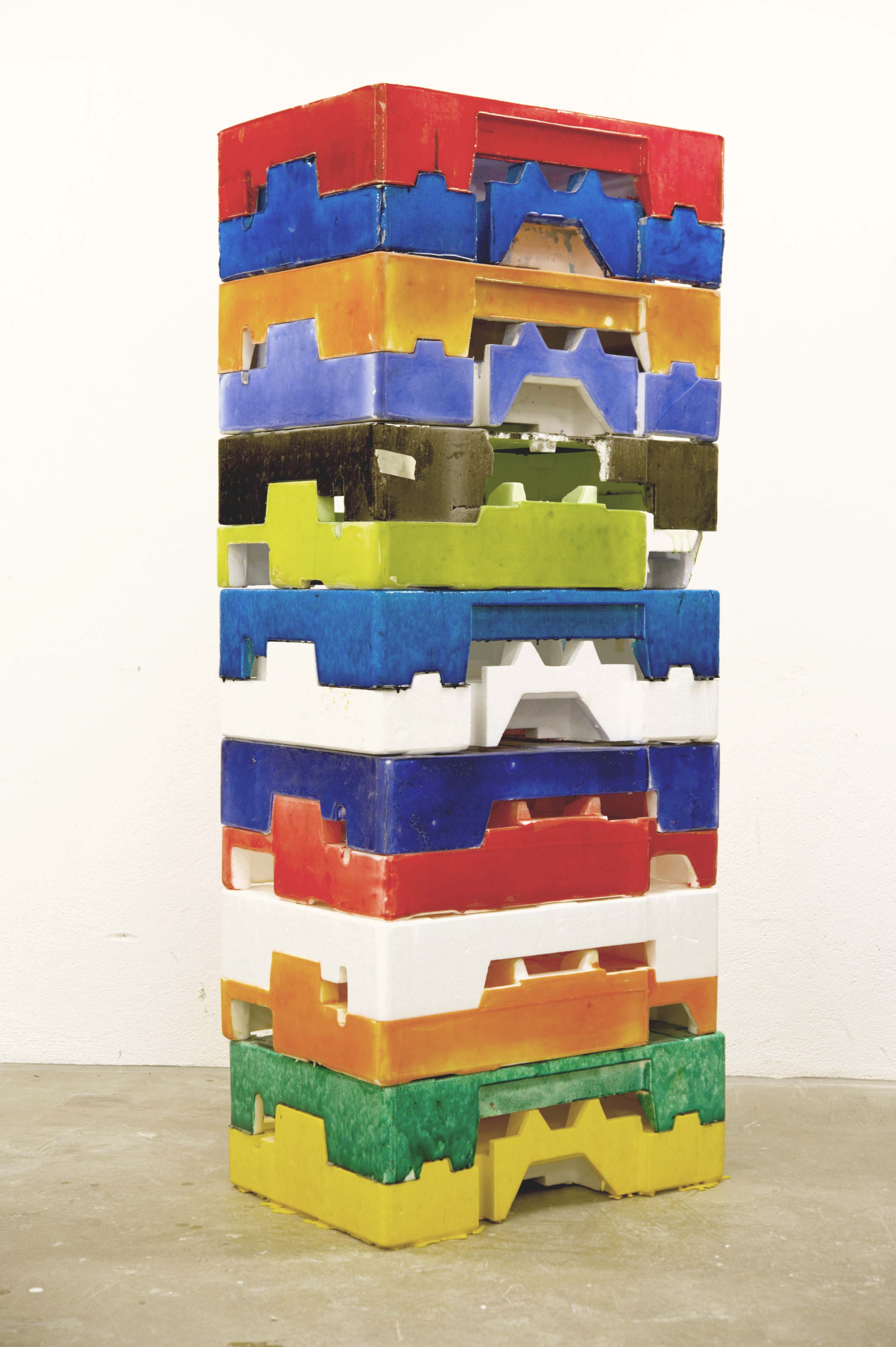
The idea of “translation” connects otherwise distinct, singular practices moving between media, materials, languages and ideas: for some, translation becomes an act of transformation—a remaking of one thing into something materially or conceptually different. For others, it is a matter of transition, a more gradual shift from one form or thought into another—an alteration.
While the word translation is generally understood to be concerned with language, an additional meaning is the rendering of a thing in another medium or form, or adapting it to another system, context, or use. This action—of lifting something from its source and reshaping it—is foundational to sculpture itself; from Greek sculptors carving the likeness of soft skin from hard stone to the readymade recontextualizing everyday objects as art.
The artists in Material Shifts undertake numerous such translations, often through precise and imaginative exchanges between categories—such as moving from two-dimensional to three-dimensional forms, from the fleeting to the permanent, or by giving physical presence to ideas not previously existing in any shape or form.
In this way, the works demonstrate how sculpture, and the sculptural, remain relevant as artistic forms. Without returning to a modernist notion of “pure” medium specificity, the works nevertheless engage with an understanding of sculpture that differs from both installation art and the object—two terms more commonly used in contemporary art.
While the introduction of found objects into the realm of art has opened up a complex study of ordinary objects and things through an artistic lens, the works in this exhibition seem to define themselves by being different from, or somehow other than, everyday objects. However closely they may resemble or refer to things from daily life, they appear as translated: held at a distance from their source material.
Curated by Owen Martin and Steinar Sekkingstad