Gili Tal at Kunsthalle Basel

Gili Tal’s (b. 1983) most comprehensive presentation to date brings together two new bodies of work. Between them, the works examine ideas surrounding commodity fetishism, commercial display, and projection. Entrenched in the visual language and materials of the commercial world, they ask how such affects collude to produce it, and where supposed limits may lie, if any, in masking the apparatus that sustains it.
Positioned between object and image, the first series is large-scale and utilizes product shots of commercial display refrigerators. It is a motif that forms the exhibition’s central point of departure and one that has accompanied Tal’s practice for several years. Earlier works, playing with levels of sparsity and how this interacts with the given potency of “display” as a signifier, presented functioning readymade appliances partially stocked with various drinks. While composing these interiors, the artist documented them photographically to analyze whether the compositions worked or not. The fact that these photographs eventually became artworks themselves prepared the way for the refrigerator to shift from being a three-dimensional physical object to a two-dimensional representation, loosening the illusion of “real life” both in terms of scale and content as it did so.
The exhibition title, Light and Airy, borrows from the language of contemporary marketing, adopting its vocabulary of ease and weightlessness while exposing what it leaves unsaid. Beneath its promise of effortless comfort and instant access still lies an industrial heft that commercial imagery consistently works to displace.
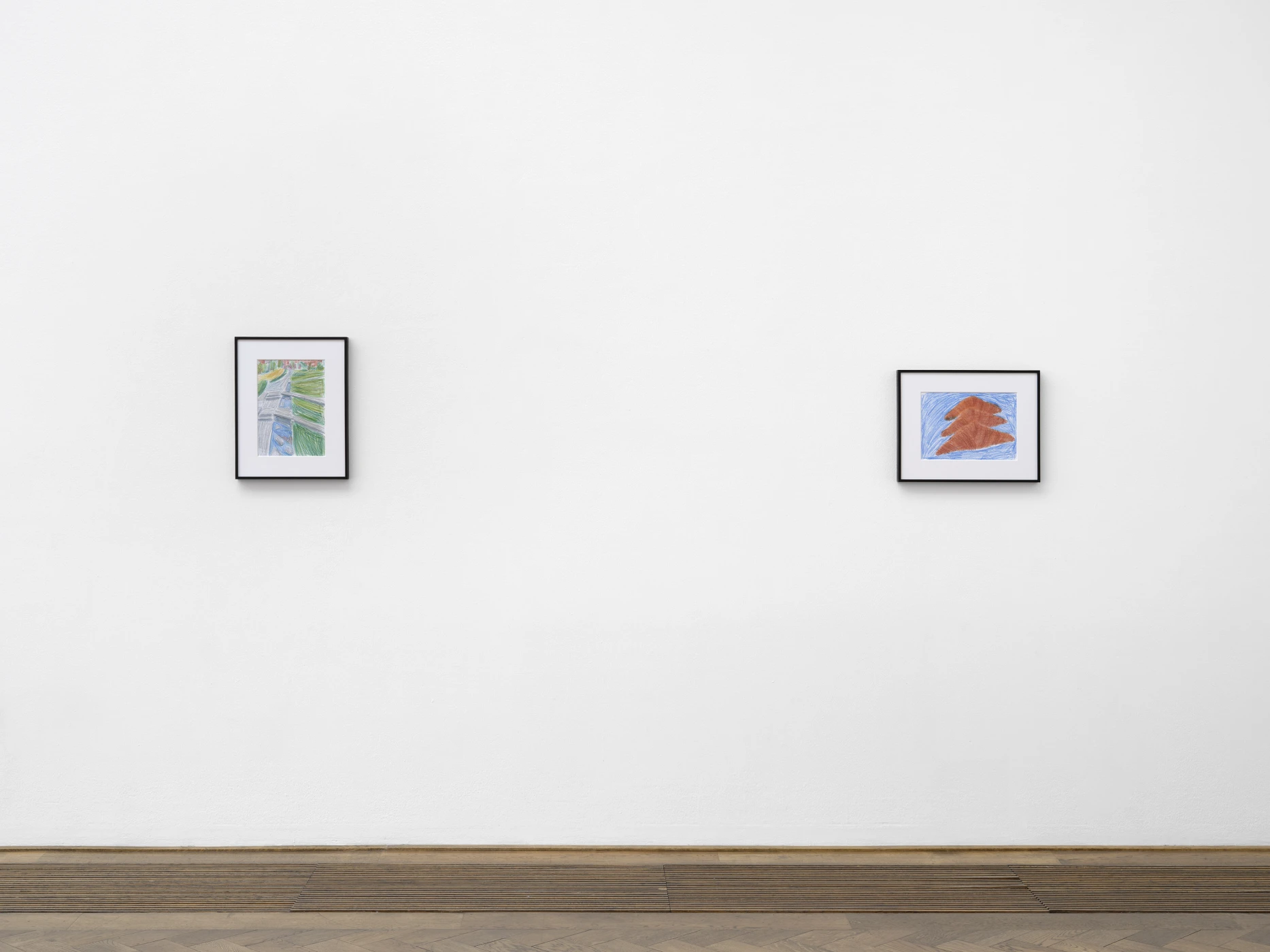
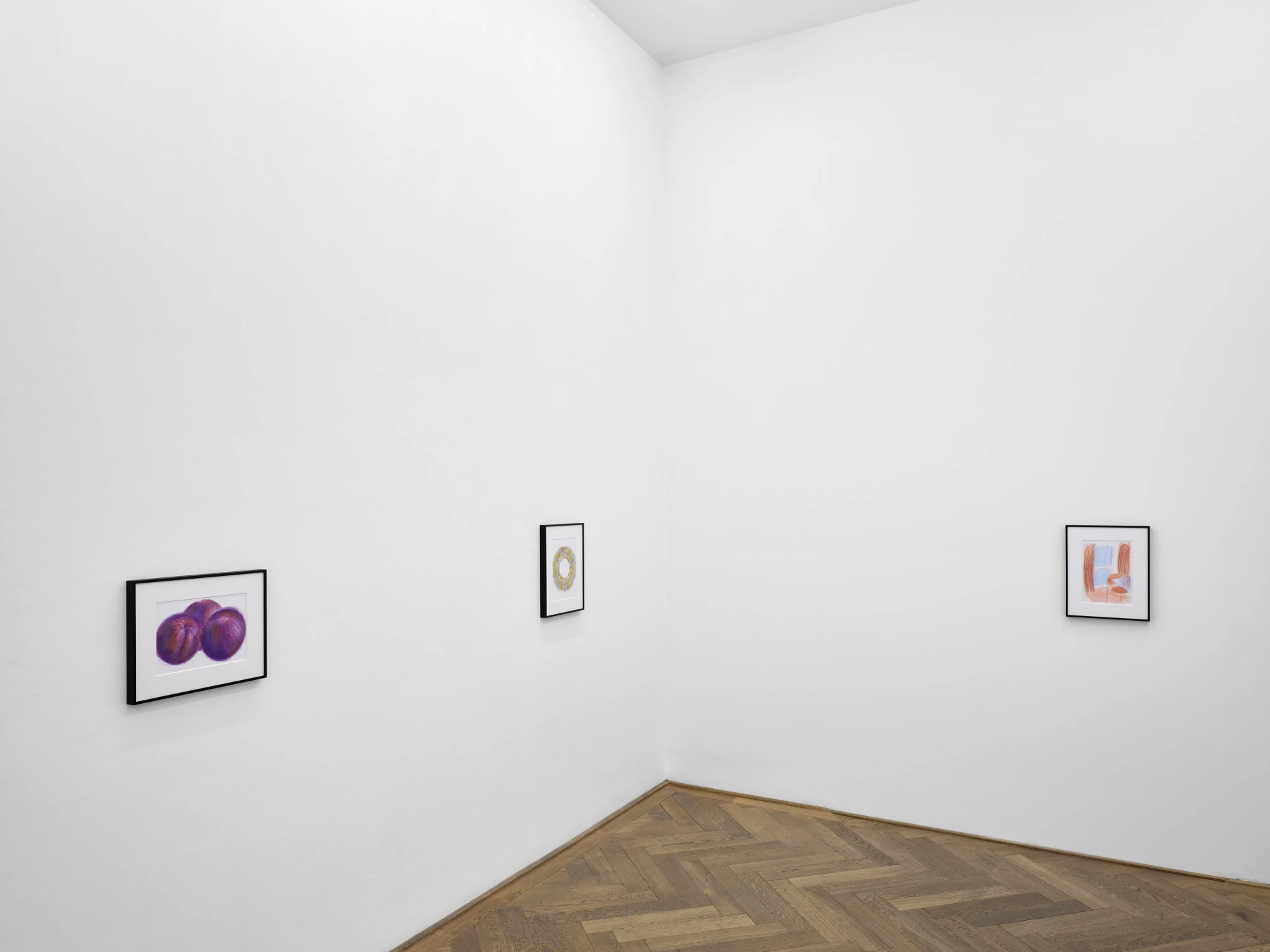
Color pencil drawings are installed between the refrigerators, expanding this inquiry into the circulation of familiar everyday commercial imagery. Their motifs derive from supermarket brochures and promotional renderings of new housing developments, as well as the artist’s own photographs. Tal’s approach to these images is from a position that combines subjectivity with critique. She allows herself to be drawn into their promise, treating their persuasive logic as the very condition from which the drawings emerge.
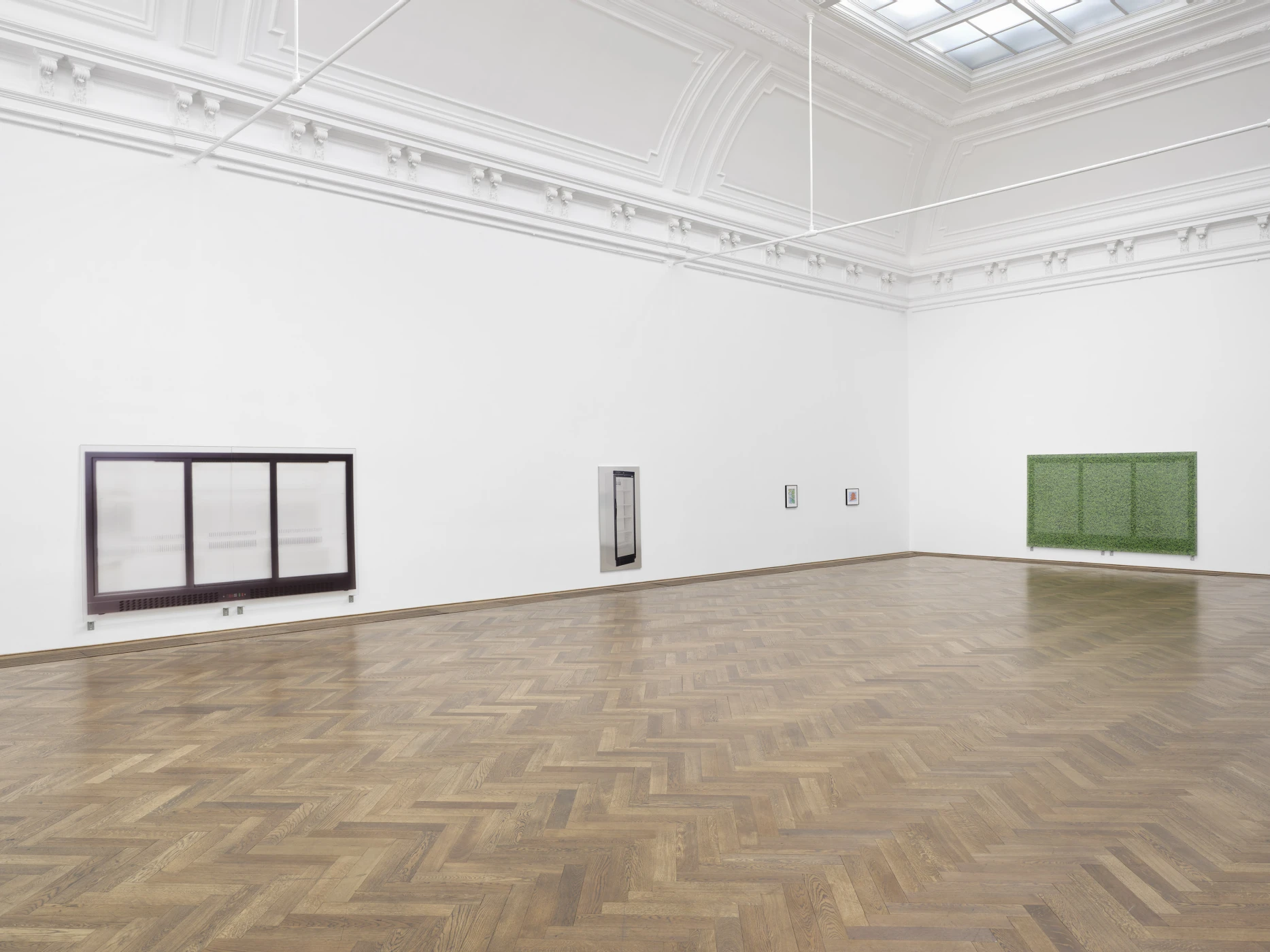
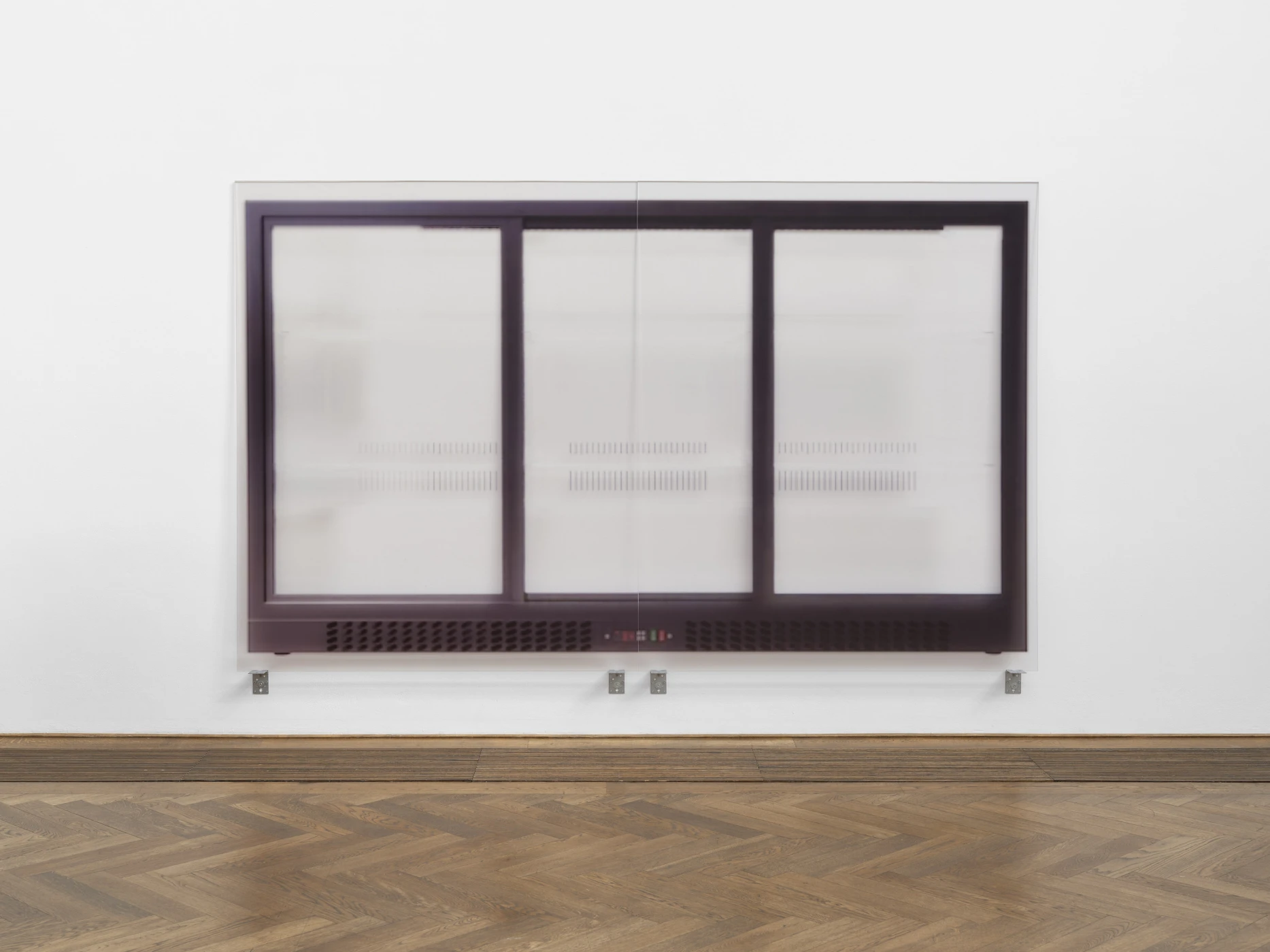
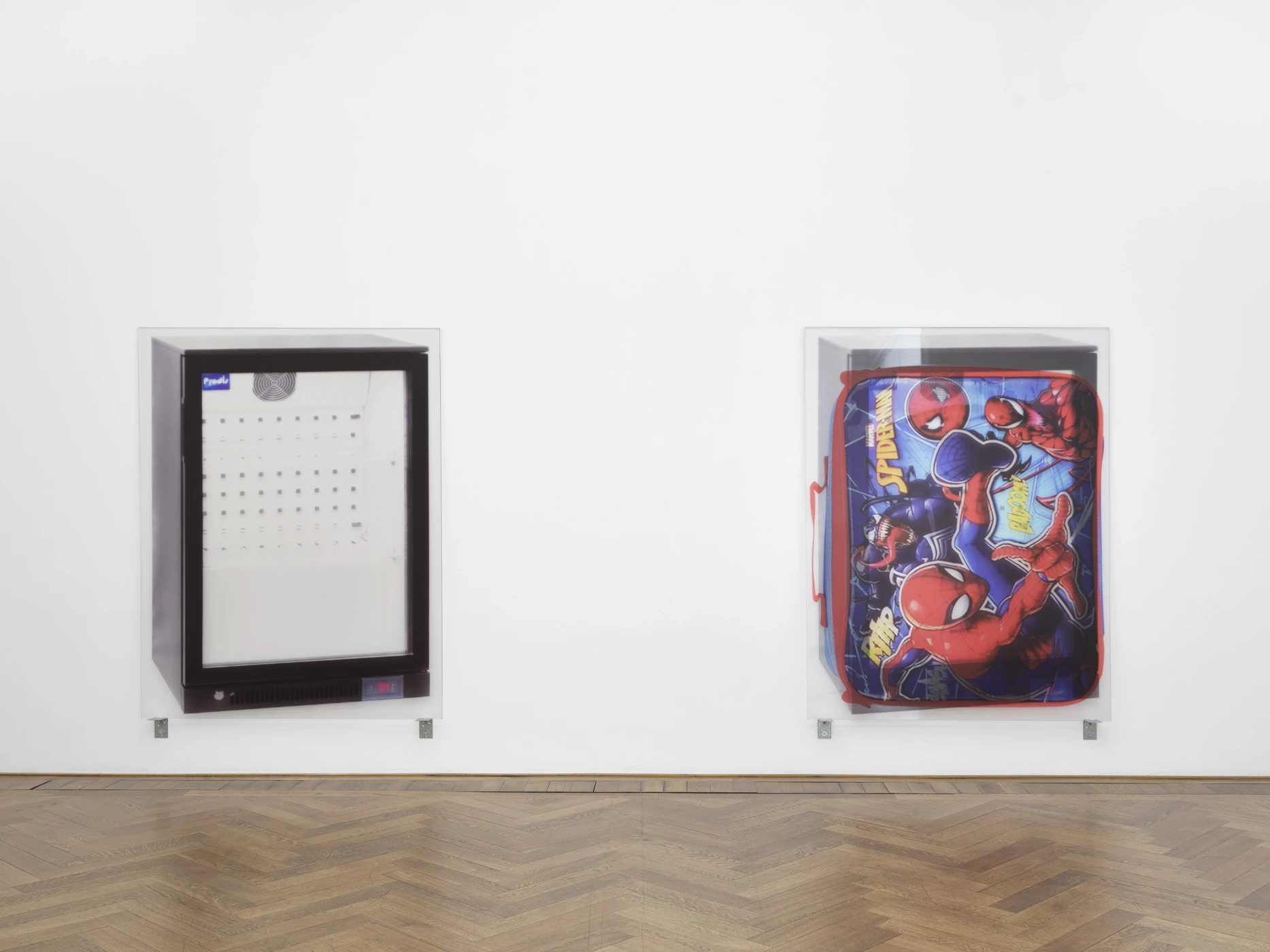
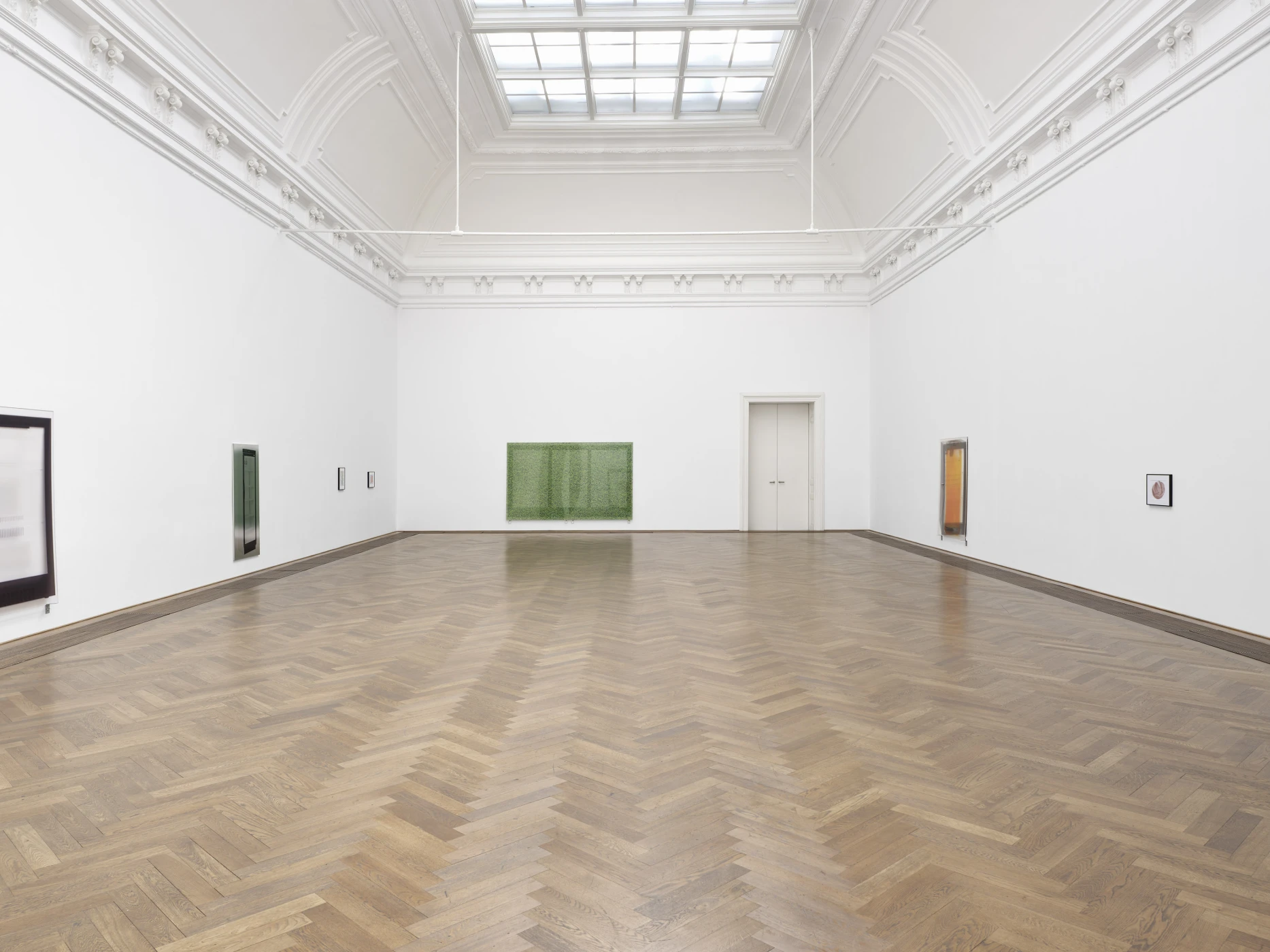
Installed as a surround throughout Kunsthalle Basel’s skylit galleries, large-scale glass-door commercial fridges, or rather, transparent pictures of them, line the walls. Perched atop industrial metal brackets, the fridges are displayed like retail items themselves instead of mere receptacles.
Gili Tal’s exhibition Light and Airy progresses as an environment through which to consider the language of commodities. Deploying the materials of the com- mercial world in her large-scale works and responding directly to its visual messaging in her drawings, the artist considers how languages of display, reproduction, clarity, and projection collude.
Playing with degrees of emptiness by moving beverages around among illuminated shelves, she previously tested how far the sparsest contents could be mobilized to still convey a sense of abundance. Radically reduced in their new status as glossy emblems yet blown up in scale, she now uses the fridges’ diminishing materiality itself to similar ends.
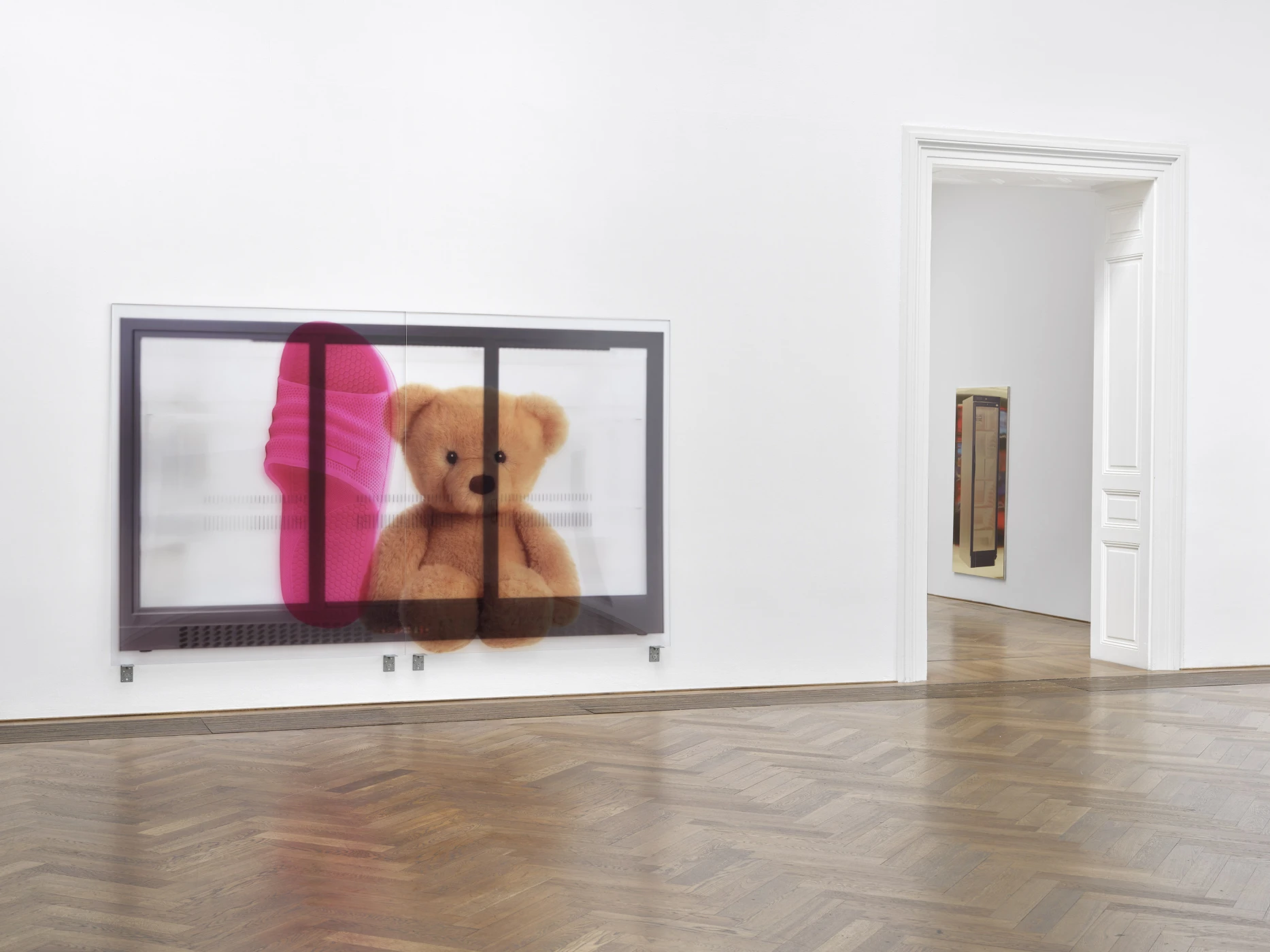
The “fridge” here comprises screen-grabbed product shots on clear commercial window stickers affixed to sheets of transparent Perspex or mirrored Dibond. It is rendered almost as a pure image, becoming a trace, a ghost, a series of outlines leading the eye straight through it to the gallery walls. However, it is through this reduction that the object starts to transcend its original form. It becomes a framework, an apparatus, a (cold) gaze, through which to consider the built environment, promotional image production, and the various aspirations and feelings that come with living in the commercial world.
Akin to a kind of afterlife, decoupled, the fridges’ attempted consignment to the realm of pictures aids their unshackling from prior responsibilities to scale. Consequently, their ties to such tawdry roles as displaying drinks are also shorn. If it weren’t for the constraints of capitalism’s imaginary, their content could now, in theory, be anything. Recalling Marx’s maxim that capitalism disguises relations between people as relations between things, a kids’ Spiderman lunchbox is suspended in front of the face of one single-door appliance. Elsewhere a teddy bear, a pink flip-flop, and a glass of ice-cold orange soda float in to fill the void. These constellations seem to assert their actuality all the more for their material thinness. And as realities, they are no less tangibles than the apparatuses, or rather the ideological constructs sustaining them, which supposedly we are now clearly seeing through to the present.
Spaces for Everyone (Grass) (2026) presents a fridge cloaked in lush green grass. The fridge becomes environment. Rendered in perforated one-way window film familiar from outdoor advertising, the piece broadens the exhibition’s focus from commercial goods to the commodification of space. Ephemeral drawings of a certain type of bucolic “new space” accompany it. Gleaned from architects’ digital renderings the world over, green glades shimmer against the glistening surfaces of new builds, and blue reflecting pools abound. If this is that elusive forever realm supposedly haunting the real, it is one whose condition as currency recalls that of endlessly circulating digital images. Eternity quickly resolves itself as half-life.
In hyperreal colors that verge on gaudy, drawings of other commodified things intersperse the fridge- image-objects. Taken from supermarket brochures, they are rendered with an eye to the tropes beholding them. A “selection” of croissants floats in an expanse of blue. Whether it is that of a sky or another pool doesn’t seem to matter. Detached from gravity and context alike, foam footballs and plums hover against empty backgrounds. Their apparent lightness seems to speak from a place inside the frictionless realm of commercial imagery, where objects exist outside of time, labor, and material resistance. In Limpid Contemplation (2026), this movement reaches an especially reduced form. The title belongs to both an empty transparent refrigerator and to the only line drawing in the show of sliced bread: one approaches transparency through absence, the other through reduction. Skeletal and apparition-like, both consider how transparency and clarity overlap against a generalized backdrop of dematerialization.
Tal’s drawings extend the decoupled logic of the fridge works while introducing another register. Their suspended forms seem almost celestial. It is as if she has taken the mysterious promise of the commodity form at its word. Although her work follows the mechanisms of contemporary consumer culture, it does so without adopting the distance of critique alone. Not only is humor obviously deployed via shifts of scale and improbable juxtapositions to supposedly disrupt the “moral order,” but her drawings work out of a position of embeddedness in her conditions. Oscillating between alienation and familiarity, she responds on a level she yet perceives the language of advertising wants her to; she responds in kind.