Frogs at Bortolami

Brekekekex co-ax.
Co-ax, co-ax, co-ax,
Brekekekex co-ax !
Our song we can double
Without the least trouble:
Brekekekex co-ax.
Sing we now, if ever hopping
Through the sedge and flowering rushes;
In and out the sunshine flopping.
We have sported, rising, dropping.
With our song that nothing hushes.
Sing, if e’er in days of storm
Safe our native oozes bore us,
Staved the rain off, kept us warm,
Till we set our dance in form,
Raised our hubble-bubbling chorus:
Brekekekex co-ax, co-ax !
Excerpt from Frogs by Aristophanes, 405 B.C.
–
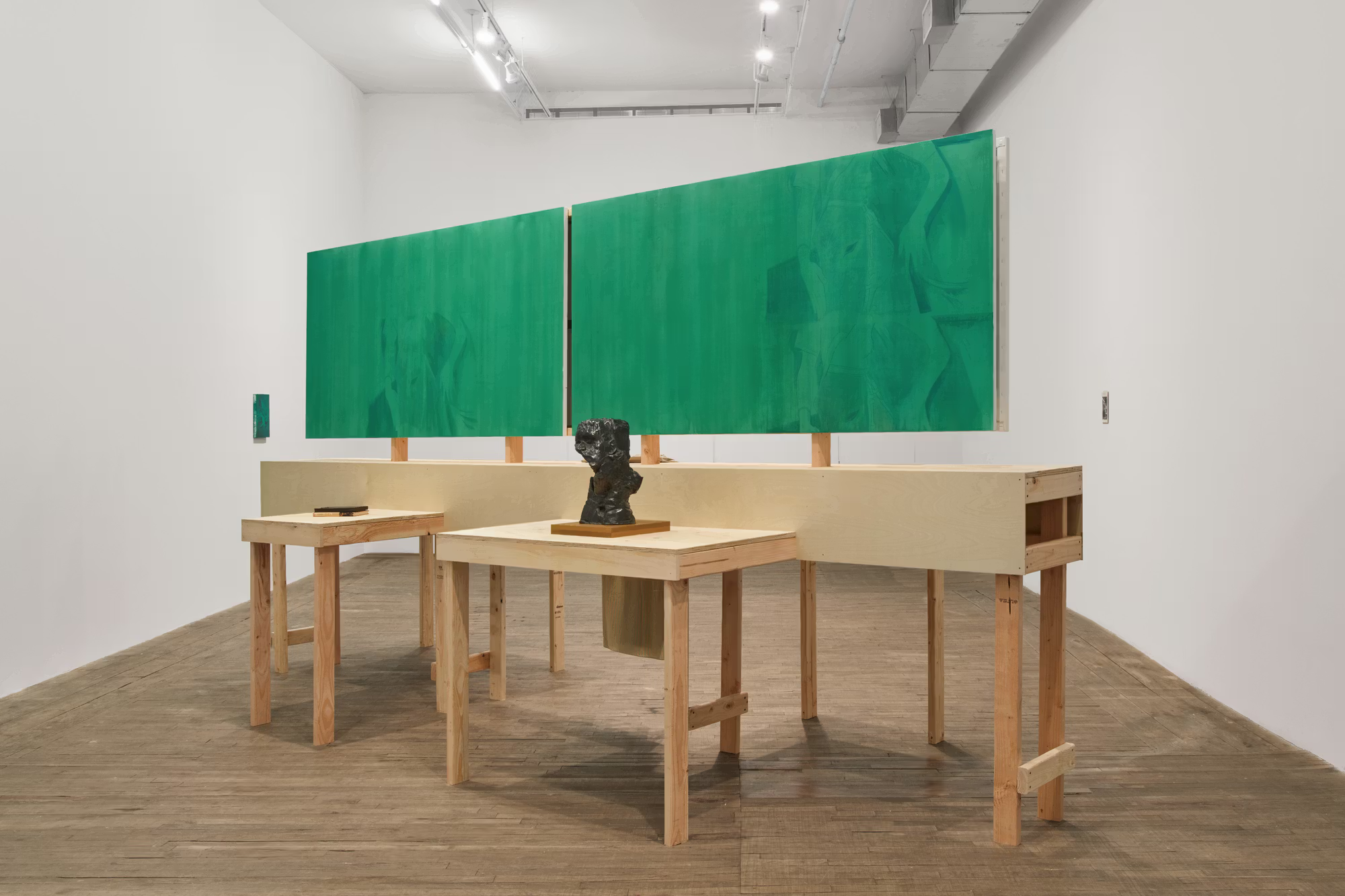
Bortolami is pleased to present Frogs, an exhibition of new work by Brook Hsu and Louis Eisner at 55 Walker. The exhibition is adapted from its original presentation in Wyoming at the Laundromat & Car Wash in Dubois, part of Bortolami’s tenth Artist / City iteration. This version of Frogs, reconfigured specifically for 55 Walker, preserves the idiosyncrasies of its initial setting. Four large paintings—two by each artist—are mounted on a simple wooden structure built to mirror the size and shape of the washing-machine and folding table framework from the original laundromat.
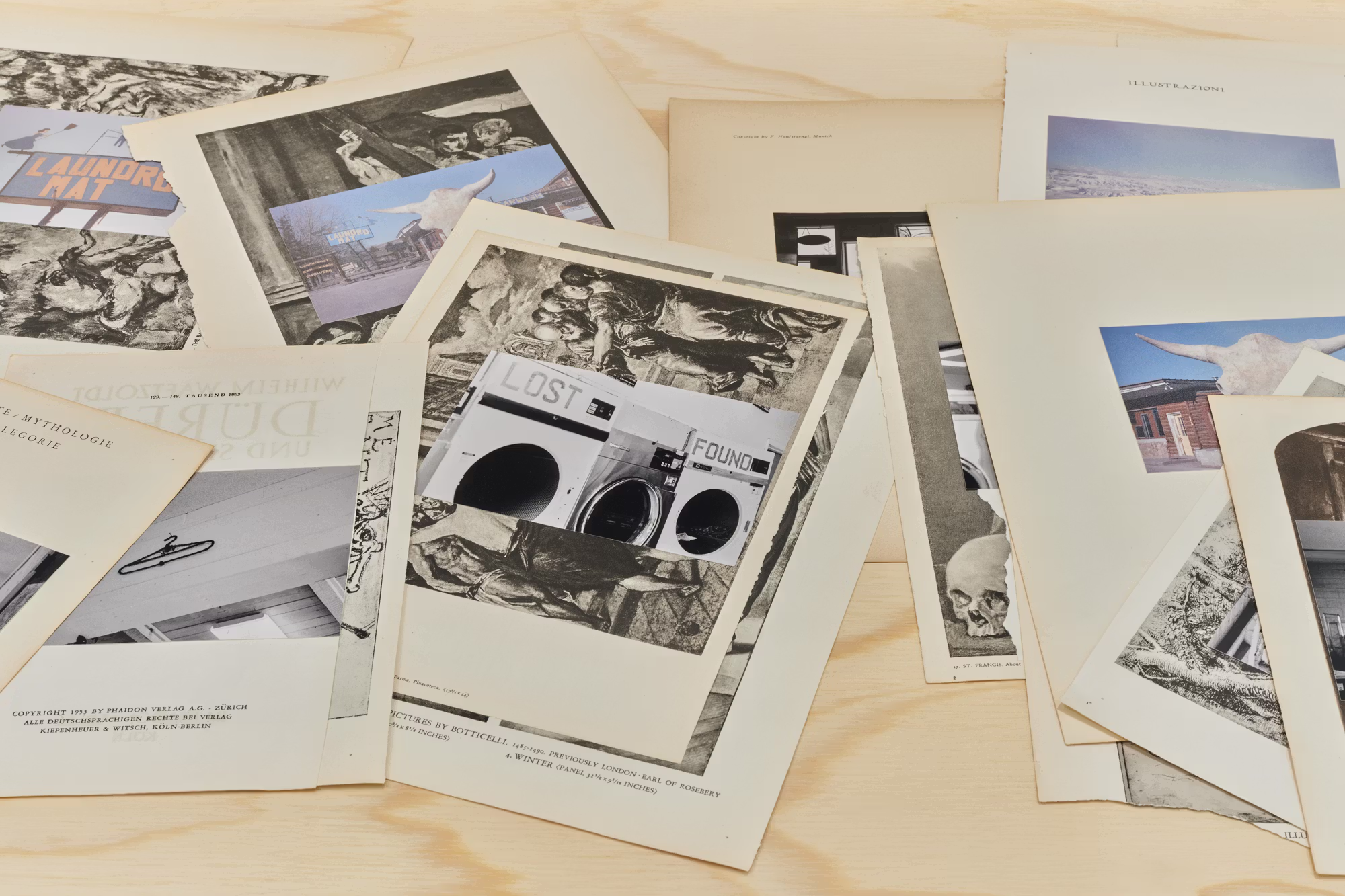
Frogs is a retelling of the ancient Greek comedy by Aristophanes of the same name. Frogs, the play, tells the story of a katabasis – a descent to the mythological underworld – undertaken by Dionysus, the God of theater, to revive the late tragic playwright Euripides. Within the context of the original Wyoming exhibition, Hsu and Eisner view the cow skull, a permanent fixture of the entryway to the laundromat created by the artist Vic Lemmon, the establishment’s previous owner, as a metaphorical portal to the stage on which the fable comes to life. Rich with references to the history of art, both modern and classical, as well as nineteenth century American westward expansionism, the artworks in the exhibition serve as the artists’ own katabases, conduits in search of a greater understanding of our time.
Titled after both the exhibition and the play, Hsu’s paintings Frogs reinterpret a poster for Buffalo Bill’s Congress of Rough Riders of the World, a traveling entertainment spectacle which introduced prototypical horsemen: the American cowboy, American Indian, Cossack, Mexican Vaquero, Riffian Arab, and South American Gaucho. Inspired by an advertisement depicting this international band of machos in their traditional headwear – and Buffalo Bill riding a bucking bullfrog – Hsu renders the scene anew with the riders themselves as frogs, simultaneously referencing another 19th century work: Japanese artist Kawanabe Kyosai’s satirical print Fashionable Battle of Frogs (1864). Rather than critique earlier representations of cultural difference and their inherent inequalities, Hsu uses them instead to reflect on the past, expressing painting’s ability to stir and maintain conflicting interpretations, memories, and emotions.
Hsu’s paintings entitled Carry the Donkey are an homage to Robert Bresson’s film Au Hasard Balthazar (1966), depicting the film’s two protagonists: Marie, a young farm girl, and her beloved donkey, Balthazar. Drawing on Andy Warhol’s silk-screened repetitions over fields of solid color, Hsu painstakingly renders the repeated images over a vibrant green, foregoing the aid of a replicable printing process. Carry the Donkey once again nods to Aristophanes’ play, and in particular to a scene in which Dionysus walks alongside his slave, Xanthias, who rides a donkey and toys with the semantics of the word “baggage”.
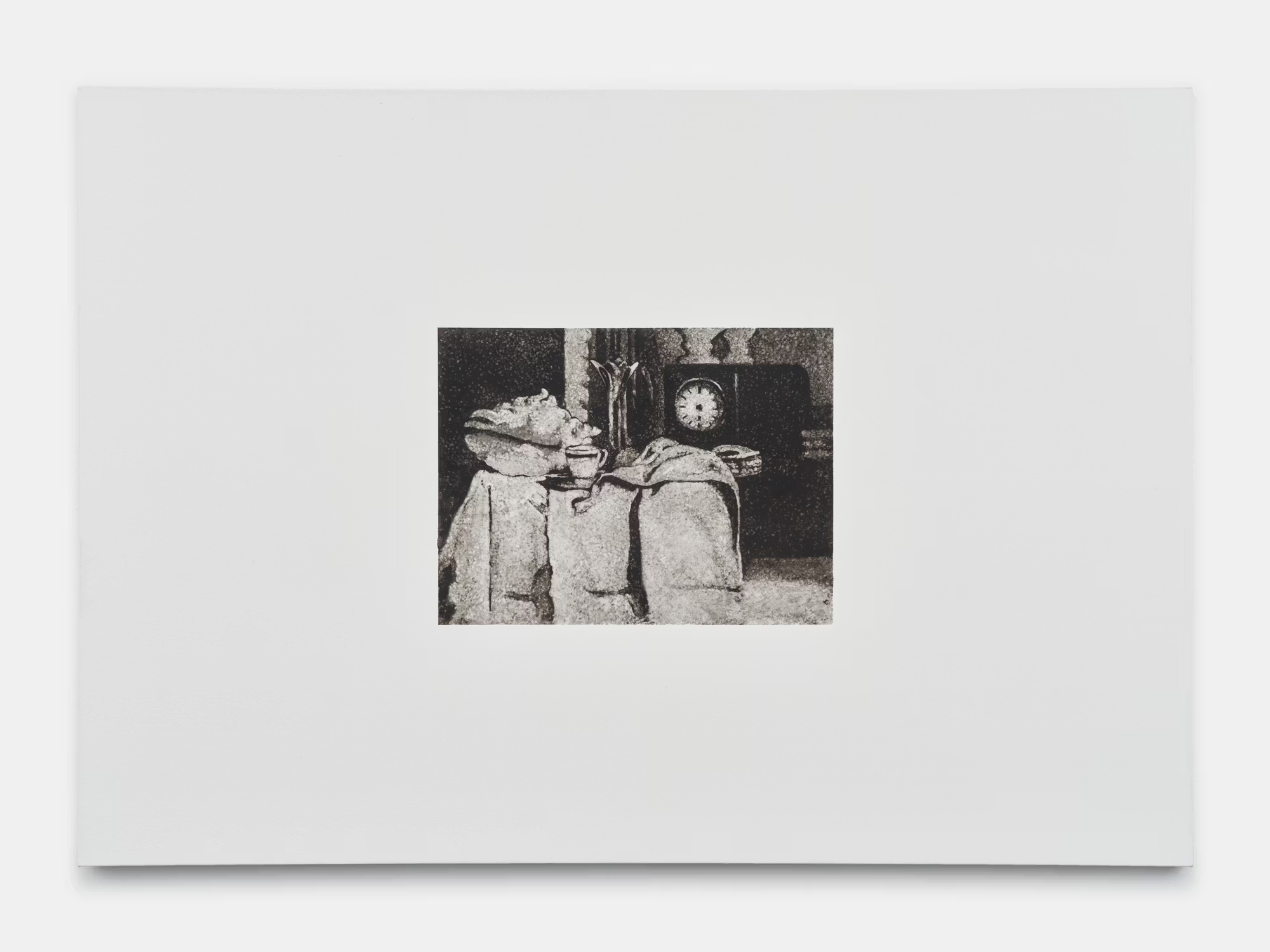
Eisner’s paintings combine his personal artistic history with the larger canon of art history as seen through the lens of a xerox machine. The composition of Paul Cézanne’s painting The Black Marble Clock (1869) is rendered in monochromatic pointillism with a bold white border, evoking the graininess and margins of images photocopied onto paper one too many times, broken down into something both familiar and new. Eisner at times reproduces compositions from his earlier paintings, a katabasis of its own, with the intent of re-contextualizing one’s own art to better understand its evolution.
Hsu’s paintings entitled Carry the Donkey are an homage to Robert Bresson’s film Au Hasard Balthazar (1966), depicting the film’s two protagonists: Marie, a young farm girl, and her beloved donkey, Balthazar. Drawing on Andy Warhol’s silk-screened repetitions over fields of solid color, Hsu painstakingly renders the repeated images over a vibrant green, foregoing the aid of a replicable printing process. Carry the Donkey once again nods to Aristophanes’ play, and in particular to a scene in which Dionysus walks alongside his slave, Xanthias, who rides a donkey and toys with the semantics of the word “baggage”.
Eisner’s paintings combine his personal artistic history with the larger canon of art history as seen through the lens of a xerox machine. The composition of Paul Cézanne’s painting The Black Marble Clock (1869) is rendered in monochromatic pointillism with a bold white border, evoking the graininess and margins of images photocopied onto paper one too many times, broken down into something both familiar and new. Eisner at times reproduces compositions from his earlier paintings, a katabasis of its own, with the intent of re-contextualizing one’s own art to better understand its evolution.
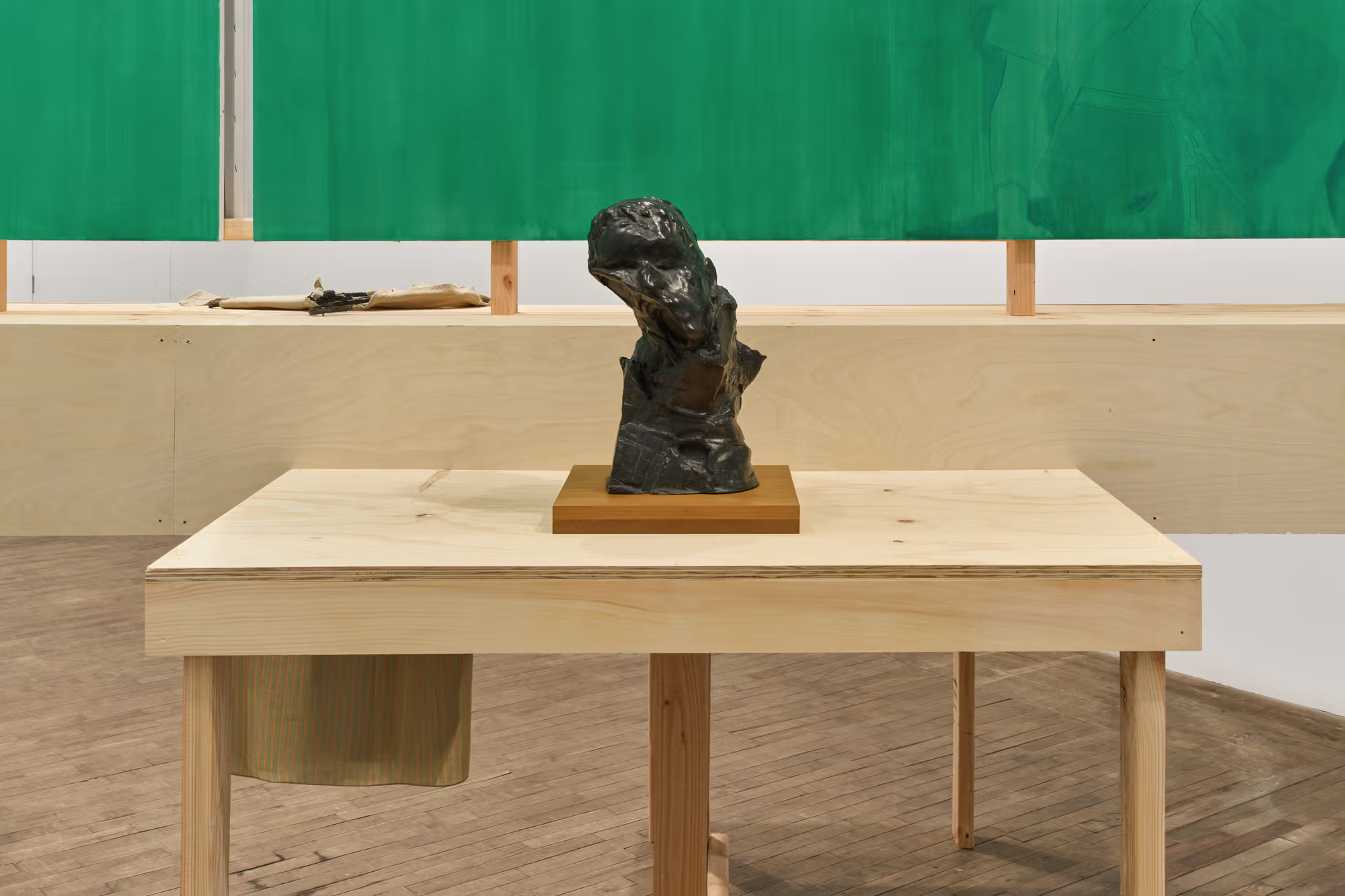
Meanwhile, his cast bronze sculptures pay further tribute to the exhibition’s title and venue with a frog one almost expects to hop (buck?) off its clothing hanger, and a lizard that could at any moment scurry across the book upon which it rests – itself a cast made from a copy of Aristophanes’ Frogs. In another, part of a man’s head emerging from a primordial substrate is presented as a bust on a pedestal designed by the artist in homage to Medardo Rosso’s emphasis on the vagaries of visual perception – particularly of those around us.
––
Brook Hsu (b.1987) lives and works in New York and Wyoming. She received her BFAfrom the Kansas City Art Institute in 2010 and her MFA from Yale University in 2016. Recent solo exhibitions include Gladstone Gallery, New York (2024); Sant’Andrea de Scaphis, Rome (2022); Kiang Malingue, Hong Kong (2022); Kraupa-Tuskany Zeidler, Berlin (2021); Manual Arts, Los Angeles (2021); and Bortolami, New York (2019). Group exhibitions include David Zwirner, New York; Heidi Gallery, Berlin; Contemporary Fine Arts, Basel; Oriole, Hamburg; Et al. Gallery, San Francisco (all 2024); 14th Shanghai Biennale; K11 Shanghai; Kunsthalle Zürich; Paul Soto, Los Angeles (all 2023); Adler Beatty, New York; Derosia Gallery, New York ; Hannah Hoffman, Los Angeles (all 2022); kaufmann repetto, New York and Milan (2021); TANK, Shanghai; CLEARING, New York; Jan Kaps, Cologne (all 2020); Insect Gallery, Los Angeles (2019-2020); Château Shatto, Los Angeles (2019); in lieu, Los Angeles (2019); and The Renaissance Society, Chicago (2018-2019). Hsu’s work is part of the collections of X Museum, Beijing; the Long Museum, Shanghai; and Musée d’Art Moderne de Paris.
Louis Eisner (b. 1988) lives and works in New York. Recent solo shows include Galerie Pepe, Mexico City; Winter Street Gallery, Martha’s Vineyard (both 2024); and Fitzpatrick Gallery, Paris (2022). Selected group exhibitions include Kraupa-Tuskany Zeidler, Berlin; Nahmad Contemporary, New York; David Lewis Gallery, New York; Sebastian Gladstone, Los Angeles; and James Cohan, New York (all 2024); Amanita, New York (2023); CLEARING, New York (2022); Fitzpatrick Gallery, Paris (2021); Blum & Poe, Los Angeles (2020); and Almine Rech, New York (2019). Eisner was a member of the artist-run organization Still House Group from 2007 to 2016.