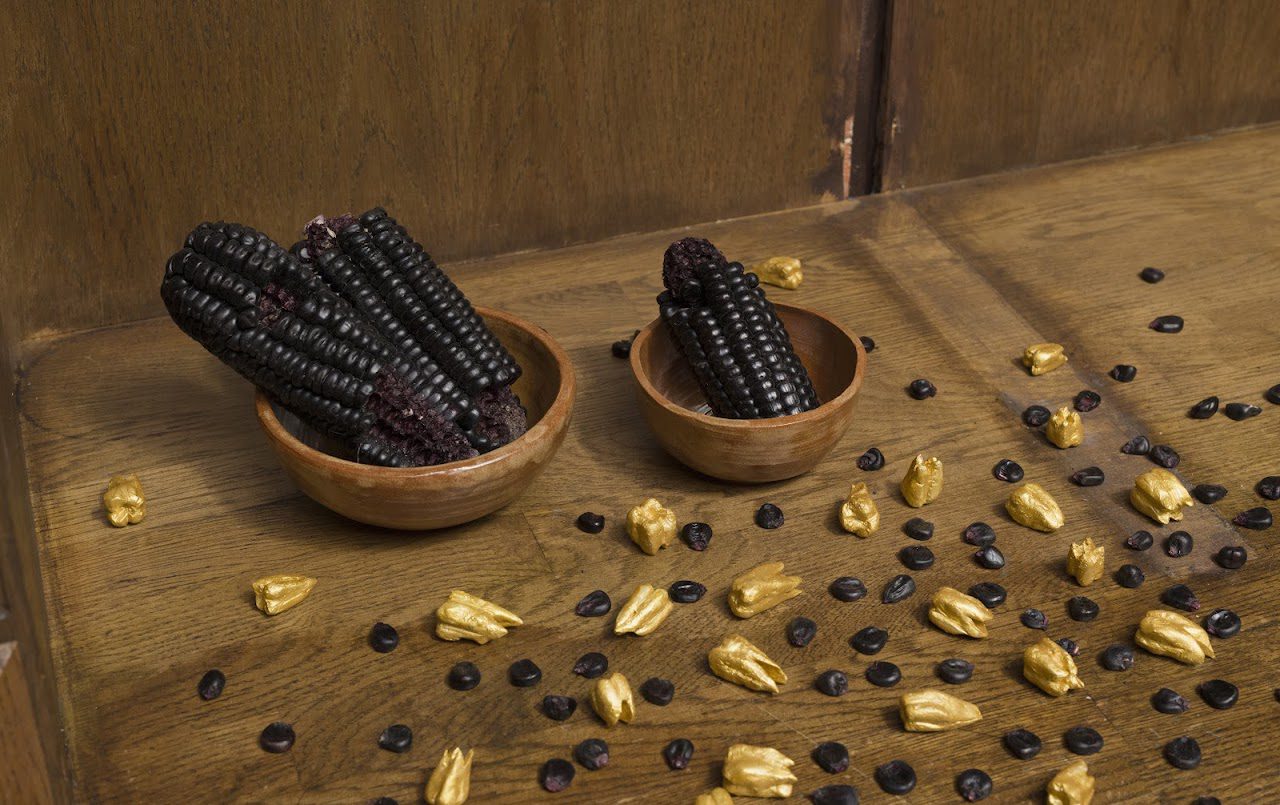
Bitter Spring at Mara Projects

Spring is the season we load with the most expectation. It is also the season that keeps withdrawing, arriving late, or cold, or briefly, or not quite as imagined.
When Plato used the word pharmakon in the Phaedrus, he meant poison. His translators wrote remedy. Both are correct: the ancient Greek word names an inherently ambiguous agent that can both heal and harm, with its power lying in its paradoxical nature. Jacques Derrida writes forty pages to show what happened when translators chose between the two words. In choosing, they miss the point; some things have to be left untranslatable to not become something else entirely.
The apothecary used to work in that indeterminate space between knowledge and superstition, science and folklore, cure and harm. To seek out that kind of help was already an act of trust in the person administering it, in the knowledge they'd inherited, in your own body's capacity to do something with what it was given. And transformation, when it came, arrived through that vulnerability. You could not have one without the other two, and risk was the very passage through which change became possible.
Today we dont have the stomach for this. We live inside landscapes and systems designed to eliminate the variable: to know what you want before you do, to deliver it frictionlessly, and to ensure the outcome matches the expectation. The past decades have been spent moving toward precision: the promise that the right intervention, correctly personalised and engineered, will produce the right result you are looking for. We have become very bad at accepting to not know what something will do to us before it does it.
Bitter Spring is held in a former whisky shop, a space built to offer a substance that has always been both remedy and ruin to the people who sought it out. Like everything stored in anticipation, what is delivered is never quite what was promised.