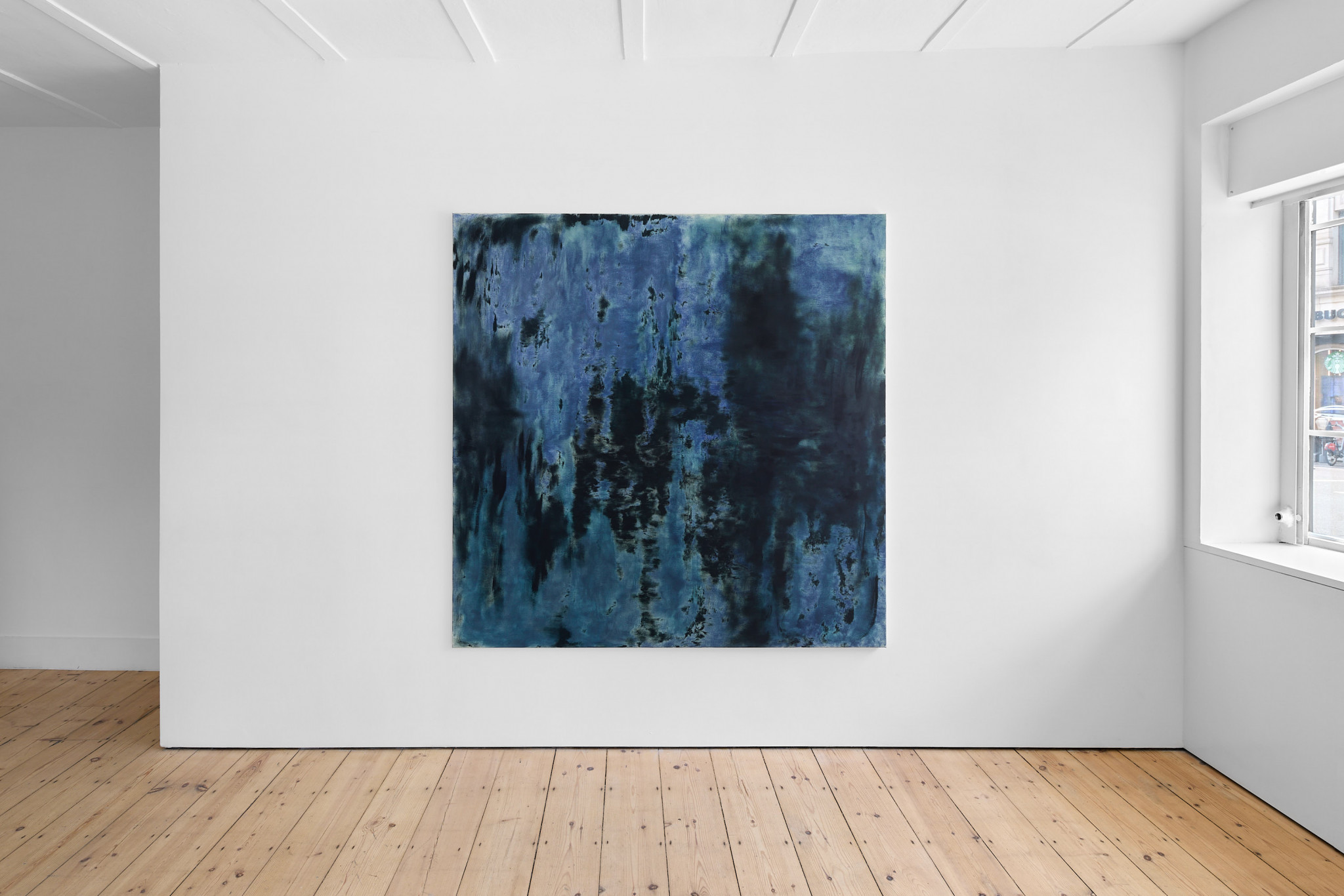
For its third edition, Parloir is taking over a post-war office building in Brussels’ European quarter. Eleven galleries present a selection of artists from their programmes. While earlier editions in Tournai and Milan could still be considered a salon or loosely structured exhibition, this time Parloir is positioning itself far more explicitly as an art fair, not least because it now coincides with the week of Art Brussels.
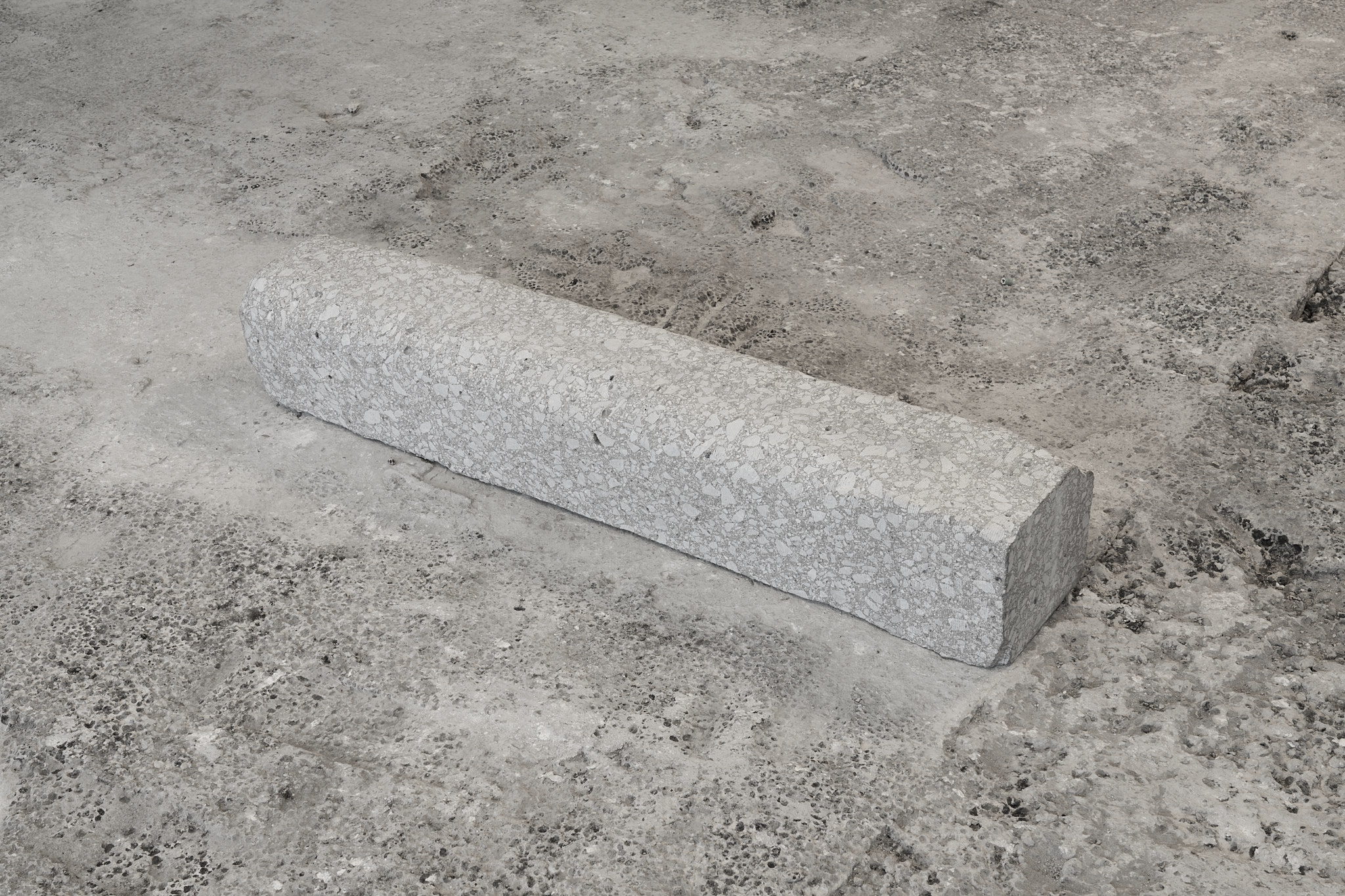
The fair unfolds in a vacant structure currently under renovation. Stripped of its interior elements, the space lies bare and cleared out, reduced to its concrete skeleton. The visit leaves its physical traces: shoes gather dust from the unfinished floors, while the exposed architecture makes the building feel noticeably cold. This raw, industrial setting creates an exhibition space that challenges whether the artworks can function autonomously, outside the neutralising context of the classic white cube. One of the works that most directly puts this to the test is Untitled (2026) by Magdalena Frauenberg. The milled concrete floor sculptures, showcased by Galerie Conradi, initially seem almost indistinguishable from the space itself, like remnants of the abandoned construction site, becoming visible only to the attentive visitor.
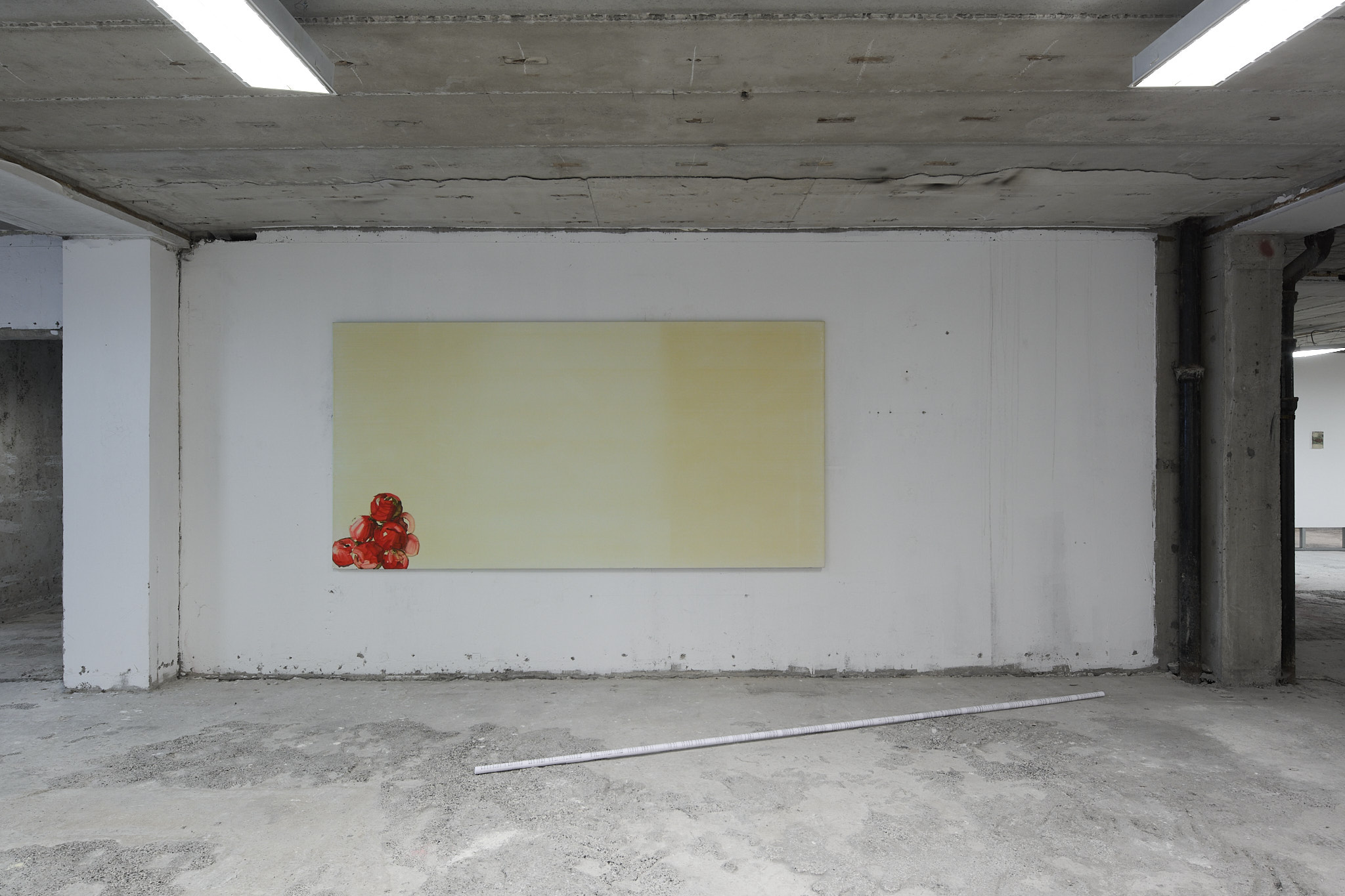
Another ‘hidden’ work is Rechonski’s Untitled (Nachdruck) (2026): a small dry-transfer decal in the form of an angel, affixed to a retaining wall and reproduced from an ornamental fleuron in Johann Thomas Trattner’s Abdruck von denjenigen Röslein (1760). Presented by Final Hot Desert, the title refers to Nachdruck, a term for the unauthorised reprinting or copying of books. This was a practice that was legally ambiguous within the world of 18th century publishing. Rechonski’s work thus encapsulates the history of reproduction and copyright. This creates a subtle connection with Rik Moens’ Label Painting series, in which he repaints the apples printed on the packaging labels of shop-bought art canvases, enlarging them onto the canvases themselves, as if the surface were beginning to reproduce its own commercial wrapping. Both works start from a copy, but do so with a keen awareness of the history of what is being reproduced.
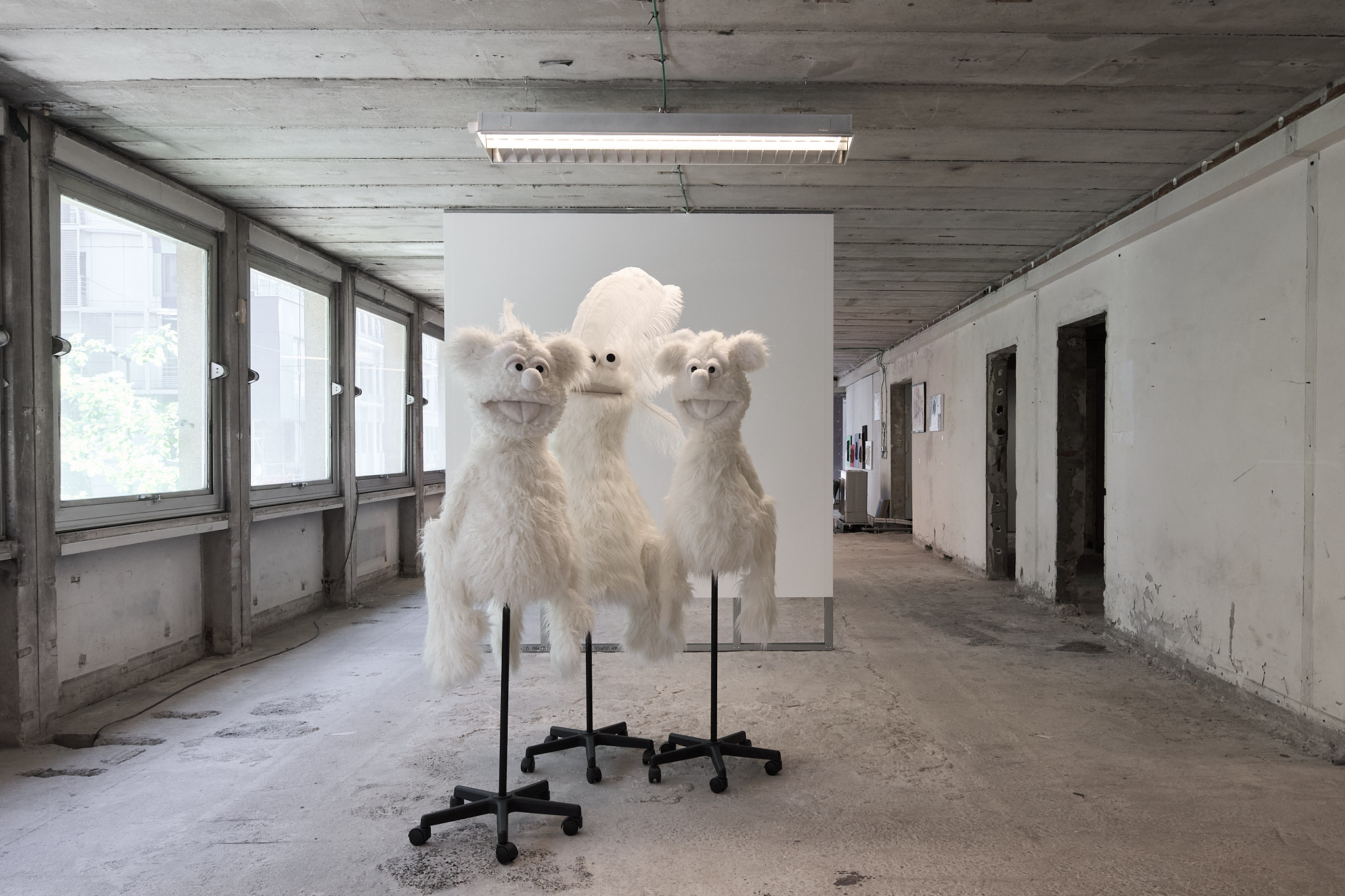
The idea of reproduction also returns in the booths of Édouard Montassut, with Tonio Kröner’s handmade puppets, and Gauli Zitter, which, as host, presents among other works Judith Kakon’s Iris series. Kröner’s puppets are shown together as two Fuzzie Bears with a feathered Cookie Monster placed between them. Stripped of colour and recognisable attributes, the figures acquire both the openness of an archetype and a rather soulless appearance. They appear to await the viewer’s projection or interpretation, while their empty, straight-ahead gaze is directed toward Hélène Fauquet’s assemblage work. Kakon’s ceramic sculptures are arranged on two platforms which provide a neutral ground against the rough floor. At first glance, they resemble the standardised plastic containers used worldwide for transporting flowers, though closer viewing reveals them as hand-glazed 3D prints. The fact that some of the containers contain actual flowers creates an interesting tension around the objects' pragmatic character.
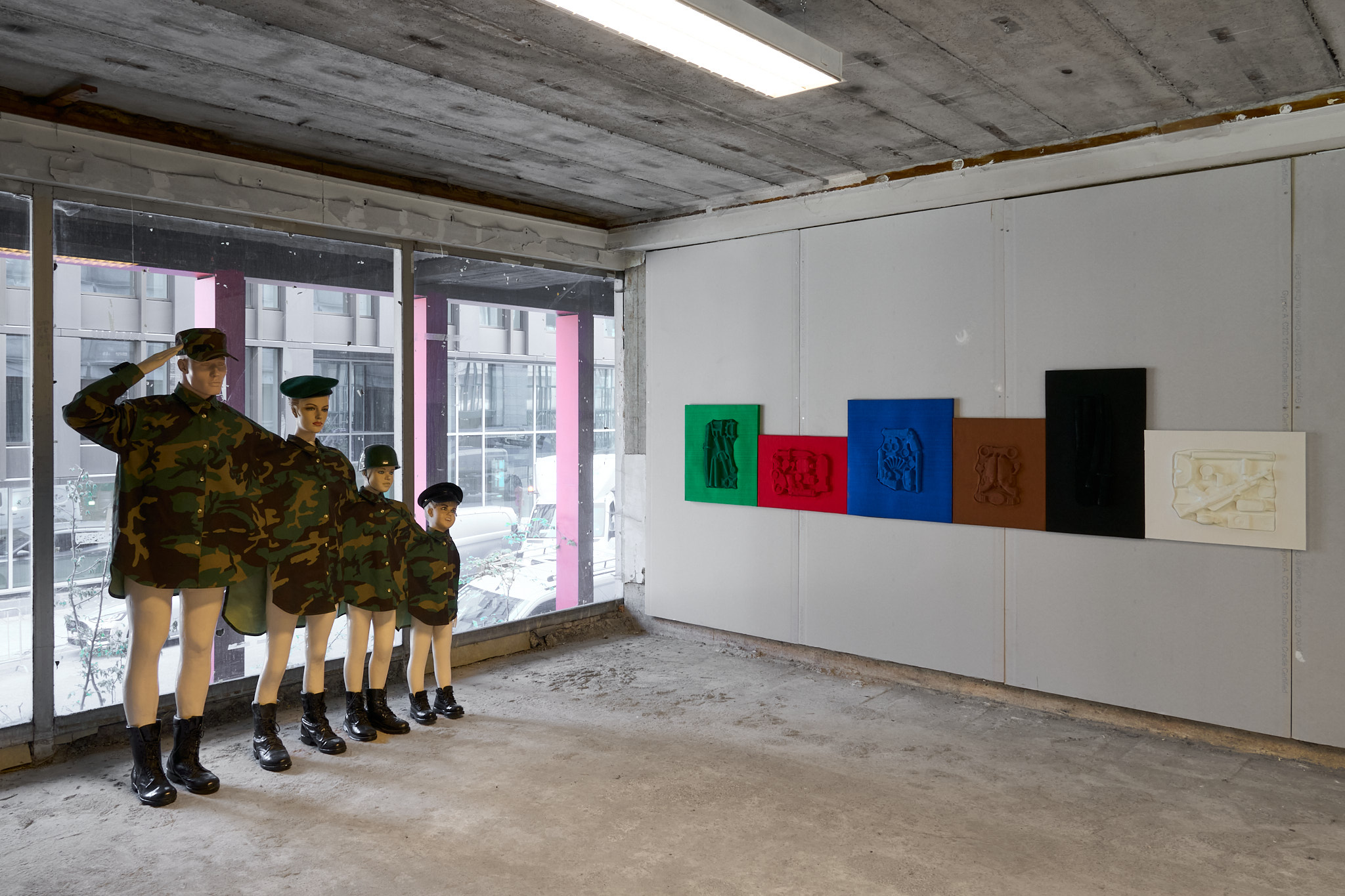
While some galleries opt for a more traditional presentation of paintings on the wall, such as Paul Czerlitzki’s process-oriented RELAY series at Beige and Yusuke Abe’s painted constructions at 4649, KIN instead presents a densely hung booth reflecting the breadth of its programme. This includes works by Jos de Gruyter & Harald Thys, as well as paintings by Dorota Jurczak and Ryan Cullen. However, it is Dan Vogt’s work that most insistently claims attention. Positioned prominently in front of the window, Fatigue (2025) is a sculptural constellation of mannequins that assembles a stitched-together family of soldiers. By placing the soldier, a familiar symbol of state power, within the nuclear family as an equally conventional ideal, the work reveals how military discipline and domestic order mirror one another, turning both the army and the family into systems of uniformity.
Within the fair, several photographic practices appear bound by a shared sense of self-referentiality. Fatine-Violette Sabiri, presented by Eli Kerr, turns to her own circle of artist friends and immediate surroundings, while Juliana Halpert locates this reflexivity in her portraits of her gallerists at Ehrlich Steinberg. Her images depict individuals while also reflecting on the institutional context in which they are produced and circulated. With Sophie Thun, included in Sophie Tappeiner’s presentation, this self-reflexivity becomes even more pronounced. Her work not only presents the final image, but also makes the photographic process visible. By photographing herself in front of a museum window, printing the image, returning to the same location and photographing the print again within its original context, Thun creates an analogue collage in which layers of time, scale and registration slide across one another.

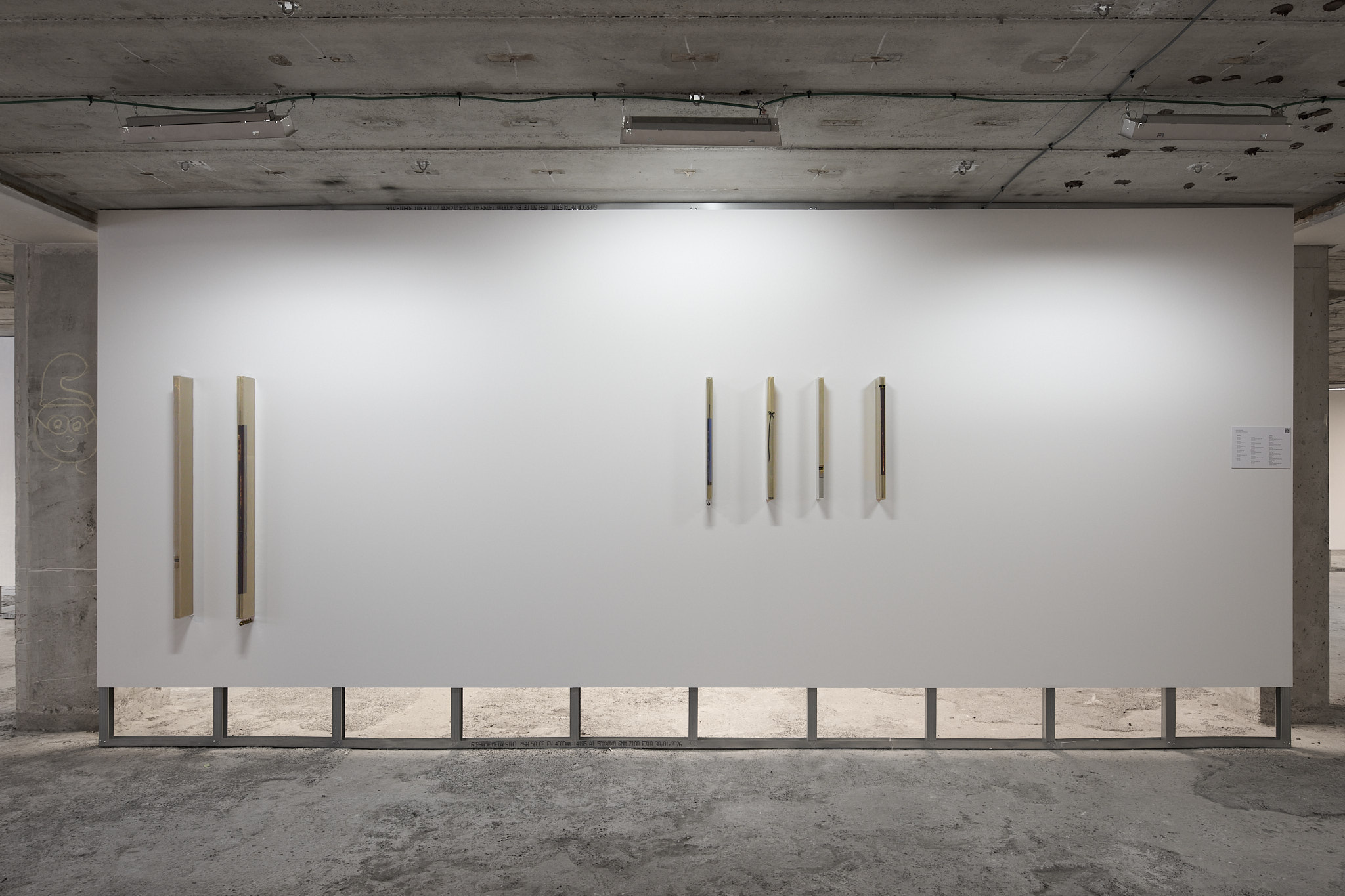
This interplay with time also surfaces in Jihye Rhii’s work at Galerie Khoshbakht. Her 'film sculptures' start with a film directed by the artist, which is then transformed into folded, condensed matter and placed inside narrow, translucent display cases. Some of these pieces are loosely tied together with string and contain small bells beneath or between the folded film. In this way, the moving image is withdrawn from its temporal progression and transformed into an autonomous object. While the film loses its legibility as a linear sequence, it remains present as a material trace, enabling the work to challenge the linearity of time and the conditions of visual accessibility.
It is noteworthy that the Brussels galleries Gauli Zitter, KIN and Beige were still participating in Art Brussels last year. Therefore, the fact that Parloir is now running concurrently with that fair is not insignificant. Brussels has a history of smaller satellite fairs and alternative formats — Independent and Poppositions came among them — though this seems less like a supplementary programme and more like an indication of a broader shift within the Brussels gallery landscape.
This shift is linked to the position of Art Brussels itself. For years, the fair has been regarded with a degree of scepticism. The high booth prices for a relatively regional fair, combined with a contracting market and rising operational costs, make it increasingly difficult to attract the galleries and programmes that could keep it relevant and distinctive — despite Belgium still having one of the highest numbers of collectors per capita in the world. At the same time, younger galleries often see the gap between the Discovery and Prime sections as too substantial, both financially and structurally, leaving them with few possibilities to grow within the fair rather than simply pass through it.
Several leading galleries from the Belgian capital have been staying away from the fair for some time now, such as Jan Mot, dépendance, and Gladstone; with Lodovico Corsini following suit this year, alongside Harlan Levey Projects, which is absent after twelve years of participation. Other younger programmes, such as Damien & The Love Guru and Super Dakota, also seem to have lost their way there. When a fair in its own city is no longer a given for its most notable galleries, the question inevitably arises as to what exactly it still represents.
Against this backdrop, Parloir emerges as a more compact and vibrant alternative, showcasing a diverse selection of driven galleries from various continents. While the younger sections of Art Brussels have often seemed weak or inconsistent in recent years — despite strong past participations by galleries such as Hot Wheels, piktogram, Triangolo and Bukia Vakhania (formerly Gallery Artbeat) — Parloir has assembled a genuinely convincing ecology of emerging galleries. What is on display here is precisely what should be expected from a fair that touts its so-called “commitment to prioritising quality over quantity.”
__
Parloir, now in its third edition, is organised by the gallery Gauli Zitter.
Pieter-Jan De Paepe is a curator and art historian based between Ghent and Copenhagen.