In Conversation with Tom Burr
Words by
Charlie Mills

I almost always incorporate some degree of the location of an exhibition into my work itself. It’s a site responsive method I consciously use, but also a mental reflex where ideas and possibilities come to me from the site or situation. I need a context to respond or reply to. When I was thinking about going to São Paulo I began thinking about Hélio Oiticica. His work has been important to me for a long time. I discovered it when I was first in New York, in school, just after he had died, and it was the queer aspects of the work as well as his life itself that had drawn me to it initially, I think. It was later that I became more aware of The Neo-Concrete Movement (1959-61) that he had been a part of and the larger Brazilian art context. So, Hélio seemed like a vehicle for me. He lived in New York as well, and the back and forth dynamic of his life and work — between Brazil and New York — connected the two distinct locations, creating a road map that I thought could be the backbone of my project at auroras. I began to think about mimicking Oiticica in some way, shadowing him.
I was living in the house while in São Paulo, in a bedroom on the second floor above the exhibition spaces and looking out on the back garden. Everything was right there in the same building. This highlighted the fragile division between my personal and professional realms and laid it out in architectural terms. I began to think about exposure. About being seen, and exposing myself to a public. The house is in a modernist style and was designed to be highly protectionist to the public street side, with multiple walls and gates and fewer windows, and very open to the back private garden. It’s a fairly anxious piece of architecture, heavily guarded, which was motivating for me and in sync with my thoughts.
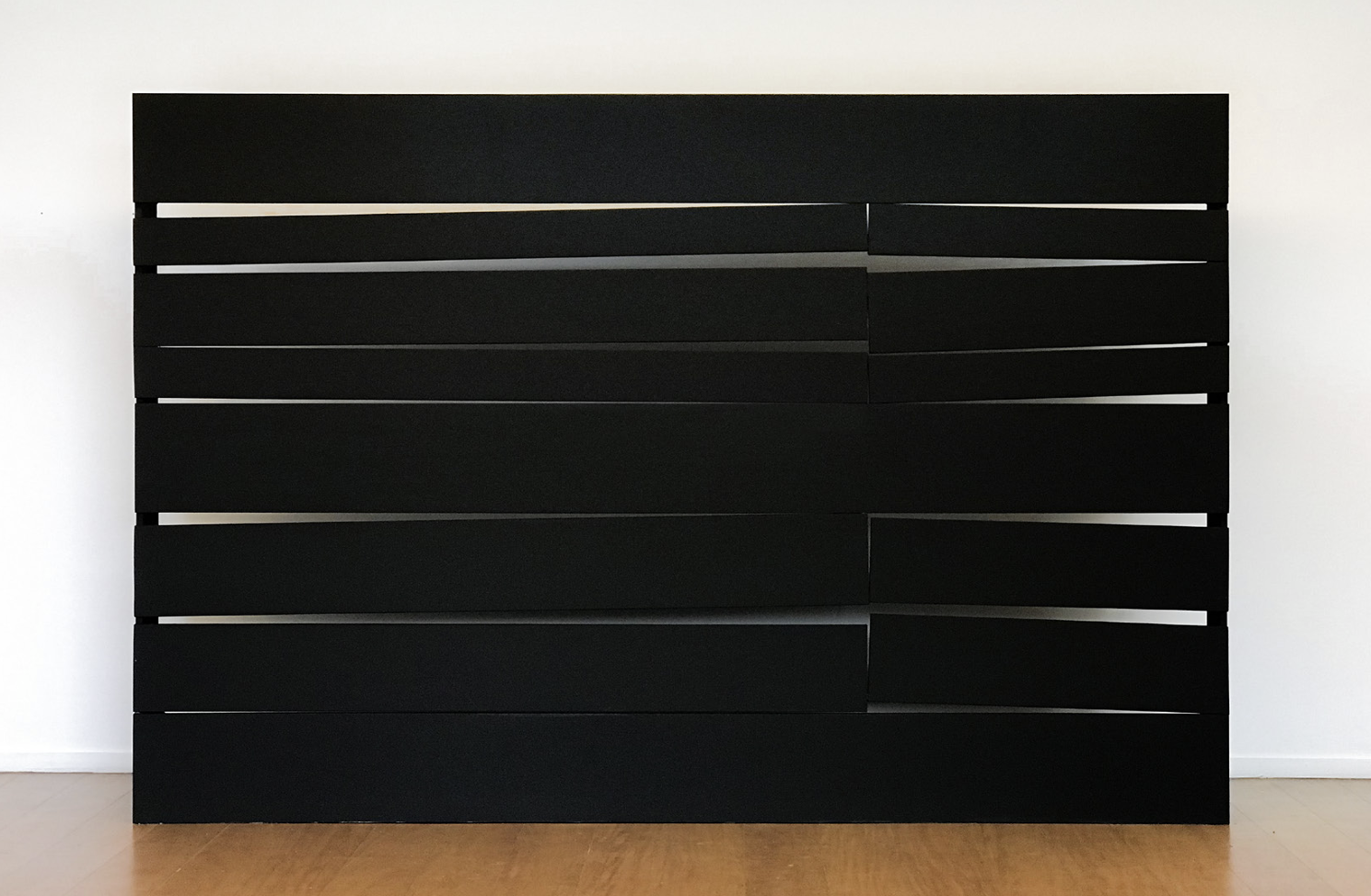
I think that this is the result of being more focused on making exhibitions, more than I am in creating any discrete or isolated object. I’m concerned with the whole field, in a sense. I think about what is seen and what isn’t, who is seen and who isn’t. And what exposure means both for the viewer and the viewed. It also stems from considering how subjectivities are concealed or revealed and made to perform or to remain withdrawn, and that there is no intrinsically private realm that isn’t linked to a public one.
With these works I was really trying to convey a kind of fragmentation of subjectivities; the idea that many layers, many factors, many determinations are embedded in a body. And likewise with the social body, this is best described as being in a state of flux and plurality, as you say. With these works specifically, I was thinking about how the concept of a “general public” negates or disappears the existence and experience of queer bodies, or more specifically, gay male bodies who have used parks, movie theaters and other spaces as both refuge and a site of pleasure and connection. With An American Garden, as one example, I wanted to present the layers of publics in one specific physical space, the Ramble in Central Park, with different interests and stakes in that same plot of land, and how these different stakes are deeply intertwined with one another and produce a complex political and spatial landscape. This work came out of Robert Smithson’s writing as well, in particular his last essay, Frederick Law Olmsted and the Dialectical Landscape (1973), which was about the Ramble, and that link made me think about social space and physical landscapes as texts, with multiple readings, subtexts, footnotes, etc.
With Circa ’77 I also thought about physical sculpture as a sort of text, with multiple voices embedded in the same site. Power dynamics at work. I like this as a model. We look at artworks, we take them in, and we also read them. I was also exploring concepts of displacement, and of an external site’s relationship to the exhibition site of a gallery or museum and how to inscribe this shift of place into the work. All of the works you mentioned were pointing to specific locations external to the spaces that the works were shown in. I wanted to create parallels between that external site — Times Square for instance, with 42nd Street Structures — and the gallery where the work was exhibited, to collapse those different publics or audiences onto each other so that the dynamics I was pointing to would resonate as present and “here” — not simply “out there.”
I’m still navigating all of this with my work. Contemporary culture continues to change of course, now isn’t the same as then. But the idea of fragmentation in relation to my own subjectivity and to others feels politically important as an armature for thinking, as a way of pushing back in some sense against normalising forces which aim to control bodies and thought. It also can bring extreme pleasure, it seems to me. And different forms of pleasure are always at risk of being shut down.
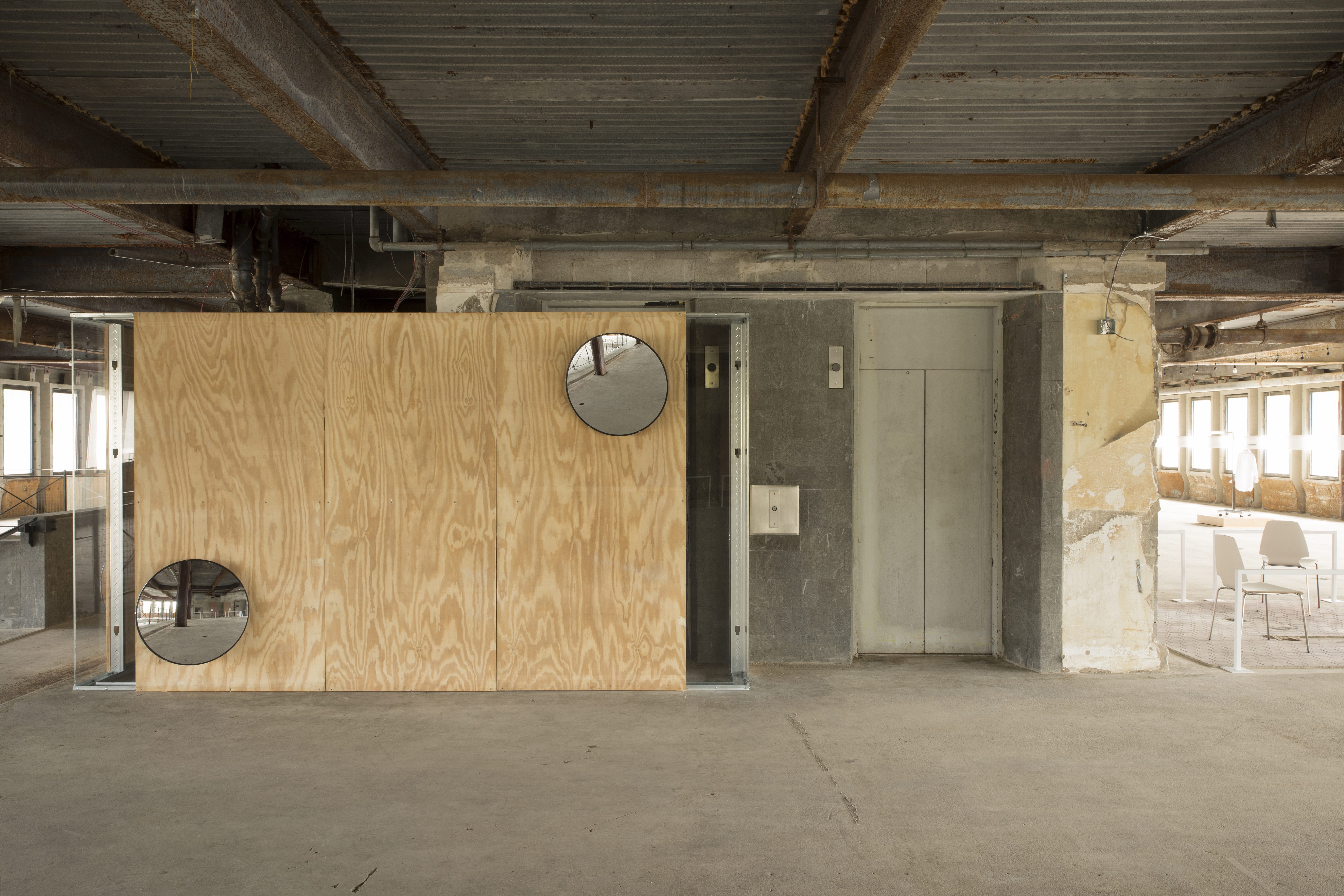
New Haven is where I was born and grew up, if that means anything in relation to your question about uprootedness and displacement. With Body/Building I was digging autobiographically, self-consciously so, thinking about my experience there. More interestingly, I was fleshing out a simultaneity of experience hovering around the geographic area and the year 1970, when the Marcel Breuer building, where the project took place, was first built. So much happened there at the time that remains embedded in the place and part of its structure: design history, urban developments, political events — including the Black Panther trials and the public protests that surrounded them. The French novelist and poet, Jean Genet was there and a part of it as well, writing his eloquent speech in support of the Black Panther Party; the FBI was tracking Genet’s every move, as part of their surveillance of the Panthers. The building was a witness to all of that, as well as one of the actors. Body/Building existed for one year in this abandoned Breuer building, which was then owned by Ikea. They didn’t know what to do with it so they let us in, allowed us to squat there and create this durational thing. The structure became a stage were several characters converged in a constellation across the space: Jim Morrison, Anni Albers, Jean Genet, J. Edgar Hoover, Breuer, Brutalism, etc.
The minimalists were material for me, a place to start and to react to. Both formally and also as a social group, a social force. I was less interested in the aesthetics and more in the politics and implications of reduction, as well as the close associations with architecture and emblems and motifs of containment. The other artists you name represent a wide swath of history. Eva Hesse was probably my strongest high-school art crush and fueled a lot of my thinking at the time, spatially, and materially. Also a Capricorn. Bruce Nauman is a curious figure whose work has always drawn me, it's often stranger than you first think. His corridors and his contrapposto studies are excellent, deceptively simple works that demonstrate power in its latent forms, and I relate to that thinking. You’re the first person to make that connection. And now I will go look up the Henry Moore piece you mention. But with Félix it's different. He was six years older than me but we were friends and peers in the late 1980s in New York and some of the conversations we had at that time helped me begin to navigate the then burgeoning interconnection between art making and the market which felt so overwhelming at the time. Of course it's only increased since then.
We also shared a commitment to working with the entanglement of form and power, and to consider form in its ideological dimensions. We were both young queer artists — gay men — living through the battleground of the AIDS crisis, which ultimately had a profound effect on both of our work, and which, of course, took Félix’s life. Félix and I exhibited together again recently, each with a large scale work — his Untitled (Water) and my Deep Purple — as part of Jared Ledesma’s Queer Abstraction exhibition at Des Moines Art Center in 2019. The spatial play of the two works together, each with their own intrinsic meanings and histories, along with their shared turning and twisting of monochromatic painting, was gratifying for me to experience on a number of levels; like a dialogue that has continued over time, a form of resilience.
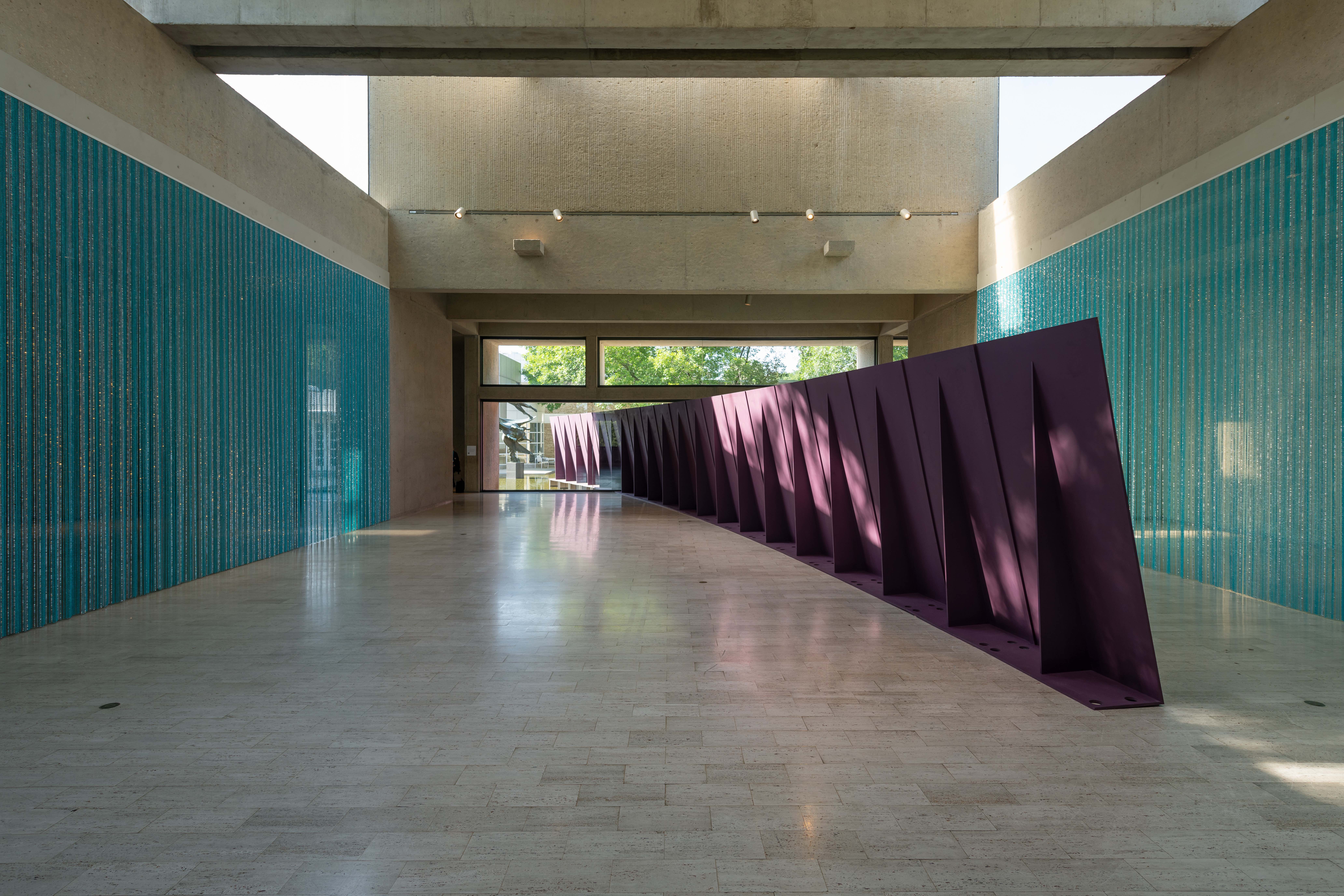
I read an Agnes Martin quote about her early relationship with Ellsworth Kelly, when they were both in New York, the early years. She spoke of their shared interest in not being present in their work as figures or authors, not being seen, and that the work should stand outside of themselves and be something apart. I think this is interesting for two mid-century queer artists! I think of these works in this light, of negotiating the desire to be anonymous with the necessity — and want — of being seen. And of self-consciously coming after artists like Martin and Kelly.
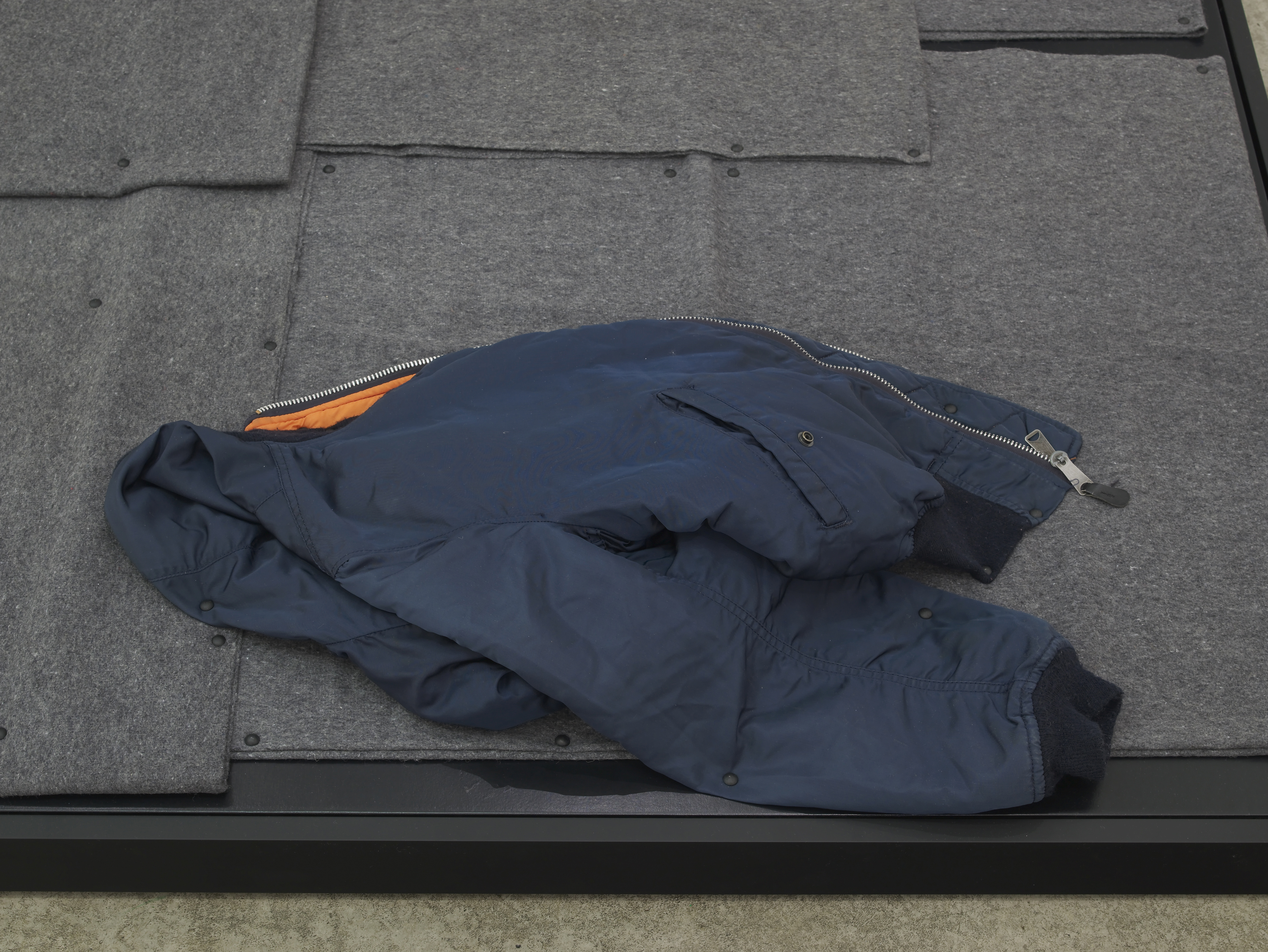
These associations are valid, and yes I’ve consciously used the materials this way, that they might read one way but you’re not completely sure either. I’m not interested in ambiguity for its own sake and I usually find that approach sort of lame, but I do connect with things that look simple but are not, and I like things that release over time, and, also, I like contradictory impulses, of getting at something through its opposite. Finding vulnerability, to use your word, through the somewhat aggressive act of hammering nails into clothing and fabric.
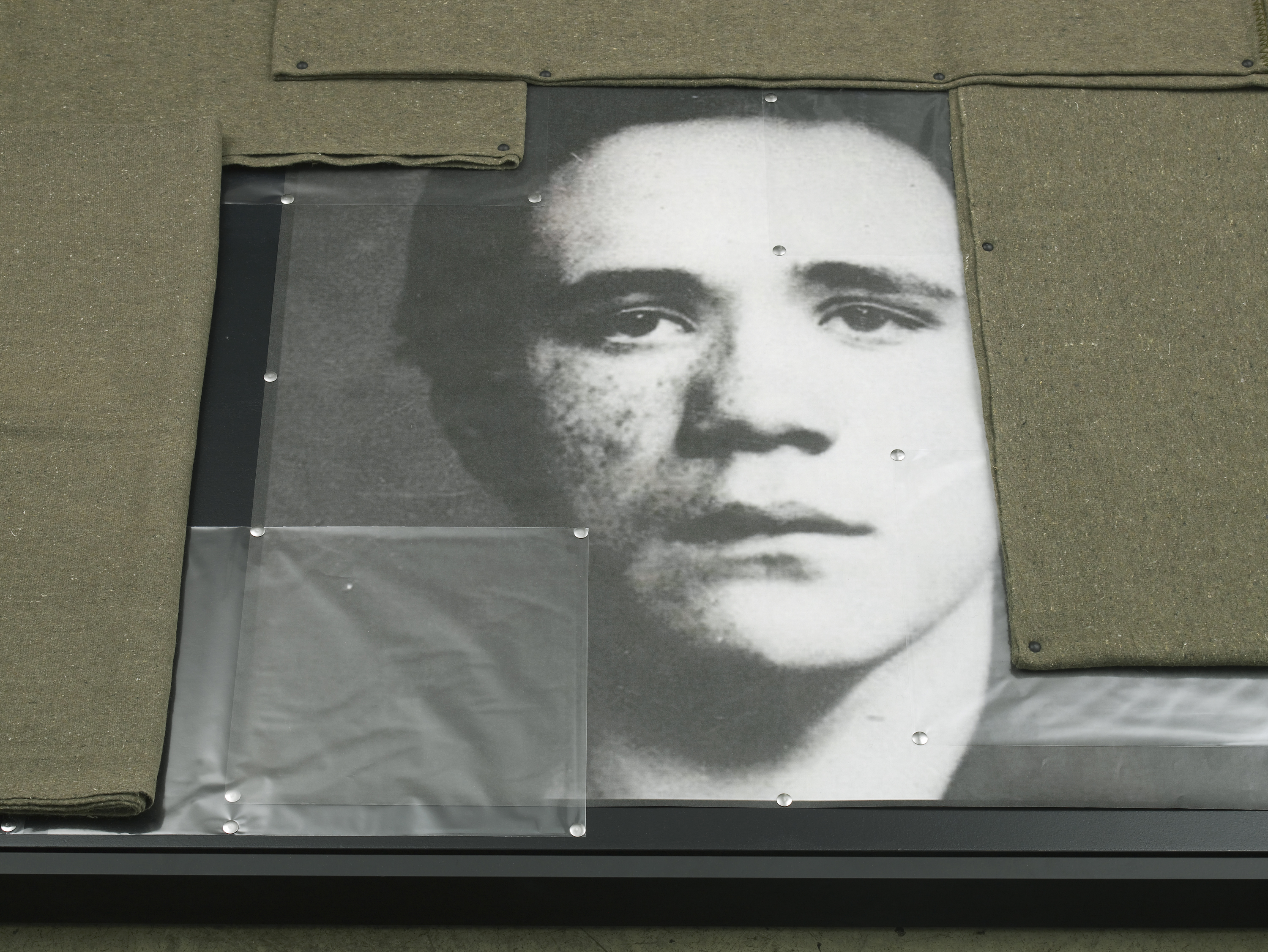
I think of collage as more of a method or a lens than a motif, more of a way of processing and presenting. It goes back to the discussion about fragmentation and that any depiction or reflection of an idea seems most satisfying to me when it's in parts and pieces. The works from Hélio-centricities are on wood panels, as are all the clothing and collage works I’ve done. I like the toughness of this substrate, the edges, the nails, the heaviness, the affinity to a wall or floor or crate. But they do pass as paintings in a sense which is why it's sometimes assumed that canvas is present. I used my own t-shirts for the series of smaller works, together with pages taken from books I found in Brazil from the 1970s that deal with sexuality as a pop phenomenon; liberation tangled up with titillation and a slew of deviations chronicled in chapters. “The Joy of Sex” genre of literature. The pages also had good Oiticica-suggestive colors and forms and strong graphic layout.
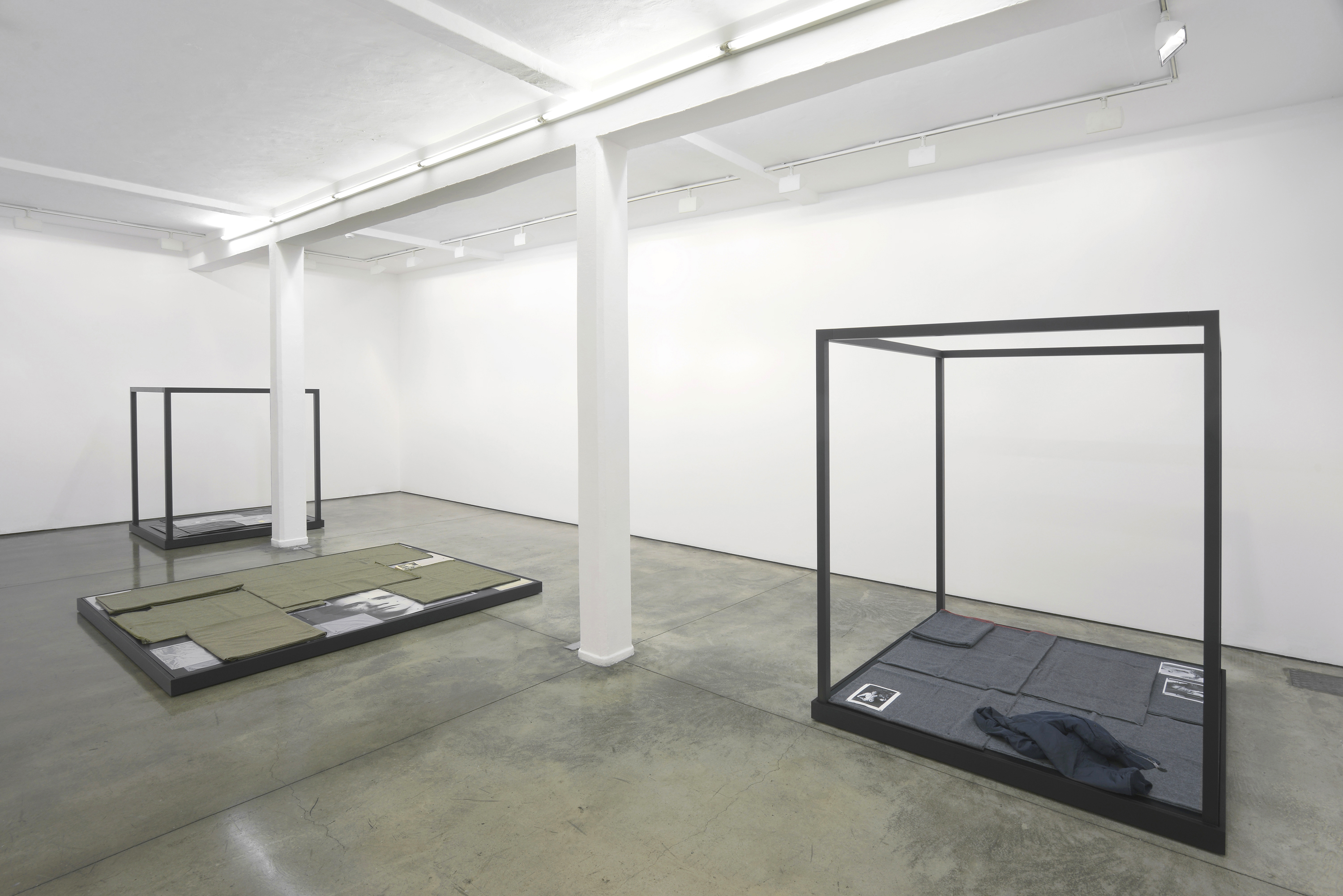
As soon as this question is posed, I find myself wanting to fall in step with Agnes and Ellsworth and skirt the issue of any suggestion of my biographical coordinates or subjectivity within my work. I want to perform the fallacy of anonymity as well. It’s nonsense, but I want it both ways; I want to be there and I don’t. I think that’s a queer dimension and a queer dilemma, and one that I have lodged at the core of what I do. I’ve used this dynamic I think, this sort of defensiveness or guardedness in response to a suggestion of openness, or moment of exposure, even one I have created. That said, my work has always been my way of negotiating the world and of my relationship to shifting circumstances, and that includes how one is living, how one is aging, and how one is accumulating — and shedding — layers along the way.
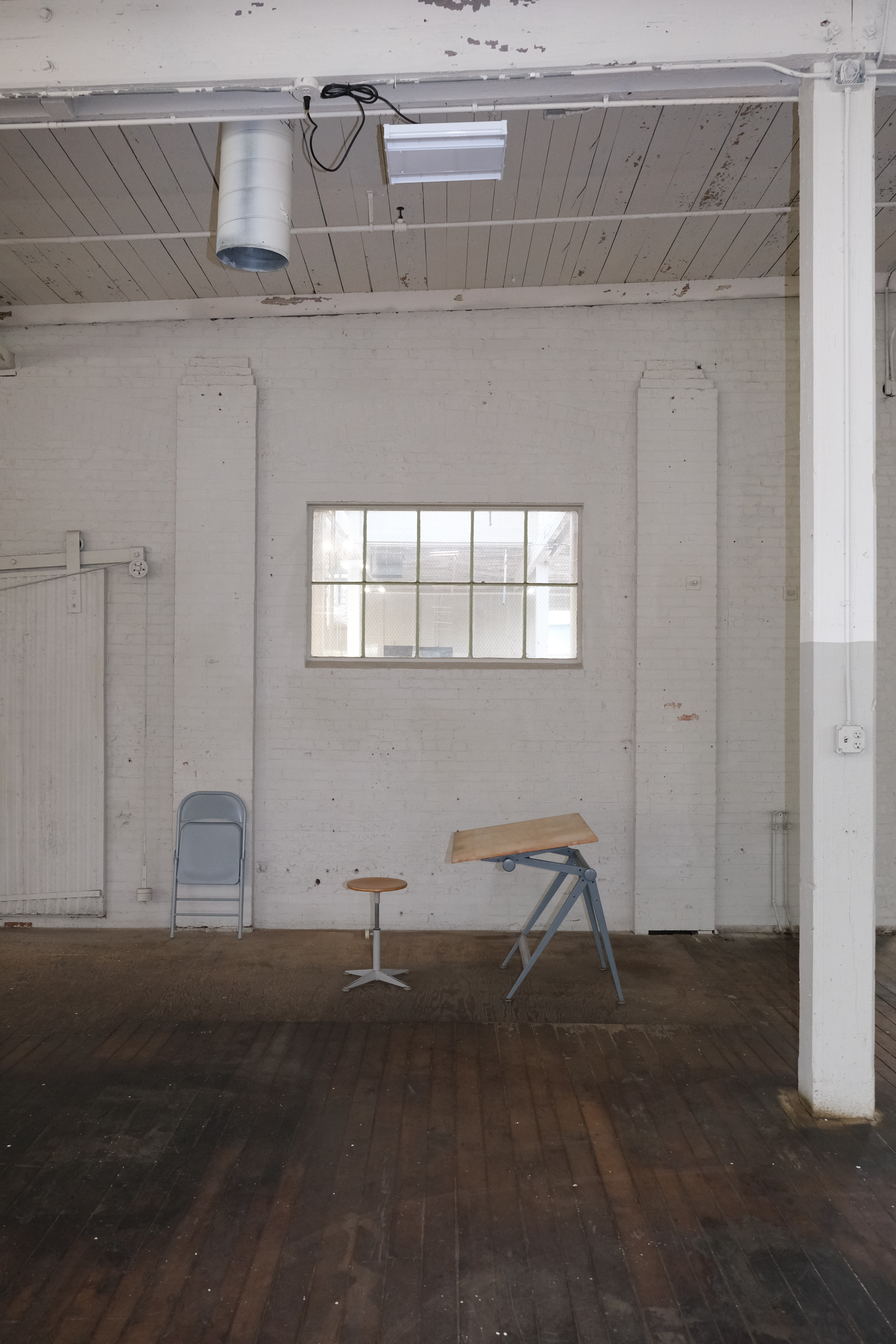
Recently I’ve taken a large space for my work. I call it Torrington Project and it’s a place to create new projects and at the same time install older works, an array of things from the late 1980s to the present. I can play with the spatial aspects of what I do and what I’ve done, and do so without some of the requirements, restrictions and expectations that accompany exhibitions and certain art-world deadlines. It's a place to breathe and reassess.
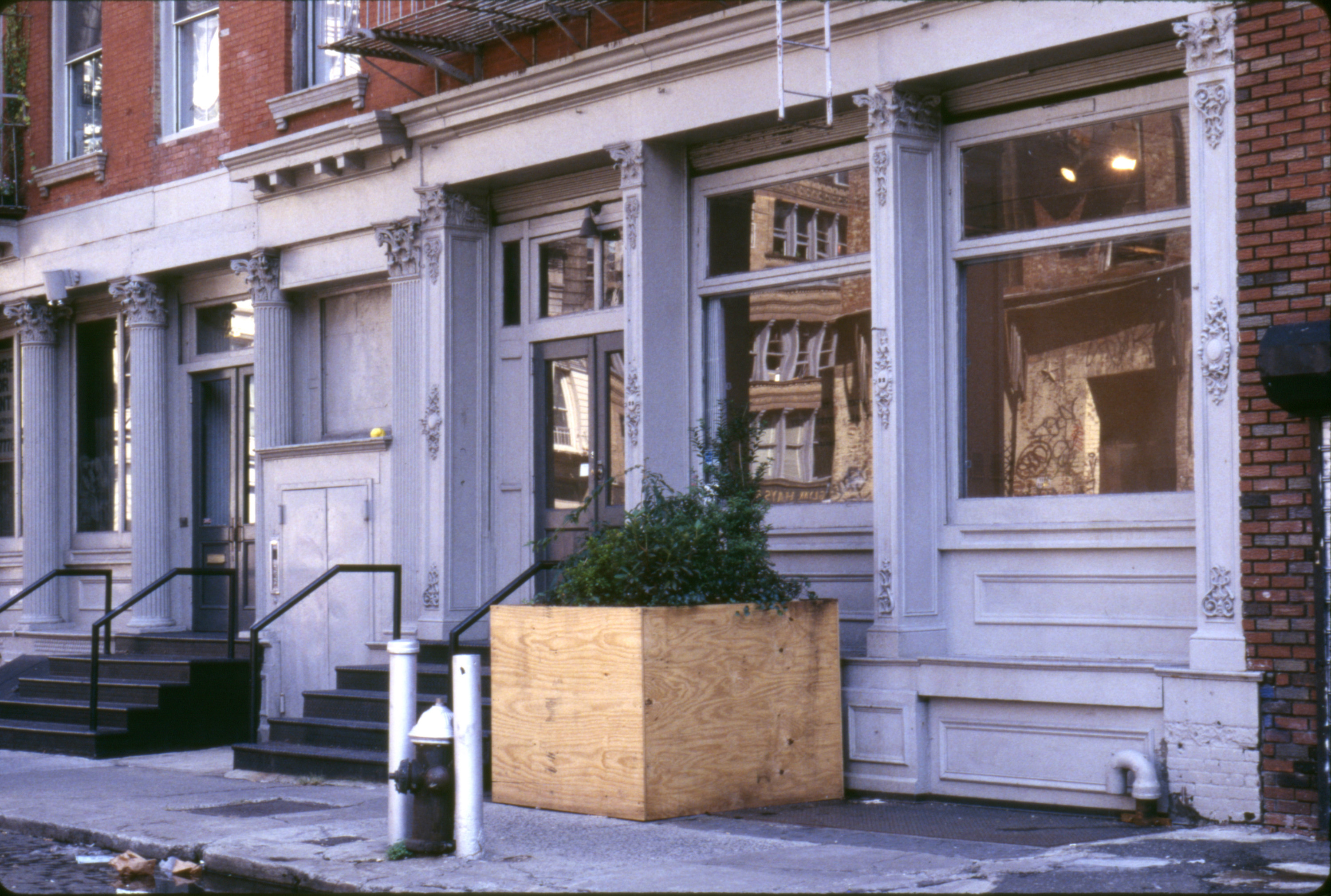
Some earlier works that have been lost or destroyed for various reasons will get remade and installed here, such as the large-scale Judd-responsive cubes I made in 2001 called Container 1, 2, 3, which was made for a significant exhibition at the time and which crystalized some of my thinking, but was later dismantled due to storage issues. Or The Making of An American Garden, the planter piece that was installed on the facade of American Fine Arts, Co in 1993 for the group show What Happened to the Institutional Critique. This was also dismantled and never shown again. These are pivotal works that I want to be seen again, they are critical links and without them certain gaps exist.
I’d like to have these projects experienced alongside new works I’m developing, in the same space, sharing the same air. During 2020, for instance, I photographically recorded my daily showering routine, my wet footprints on a gray bath mat, day after day, then decided to wrangle it into something more enduring, and edited it down to become a grid — Twelve Grays — which will hang in the space as well. The place is an opportunity for me to think and work differently than I have been, to take time, and to have a different sort of control over the daily context of my work, spatially considering new ideas in relation to the arc of the last 30 years.