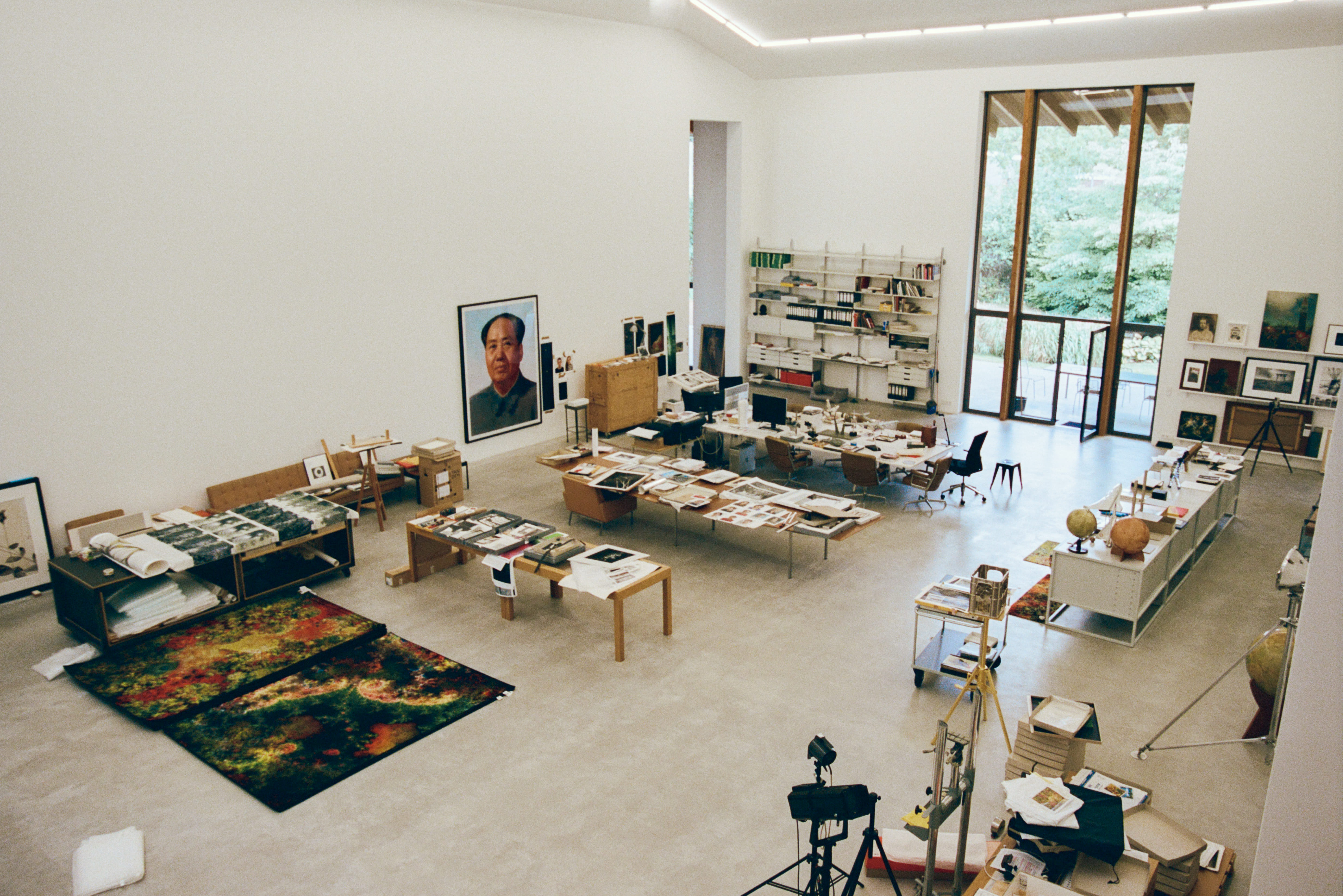
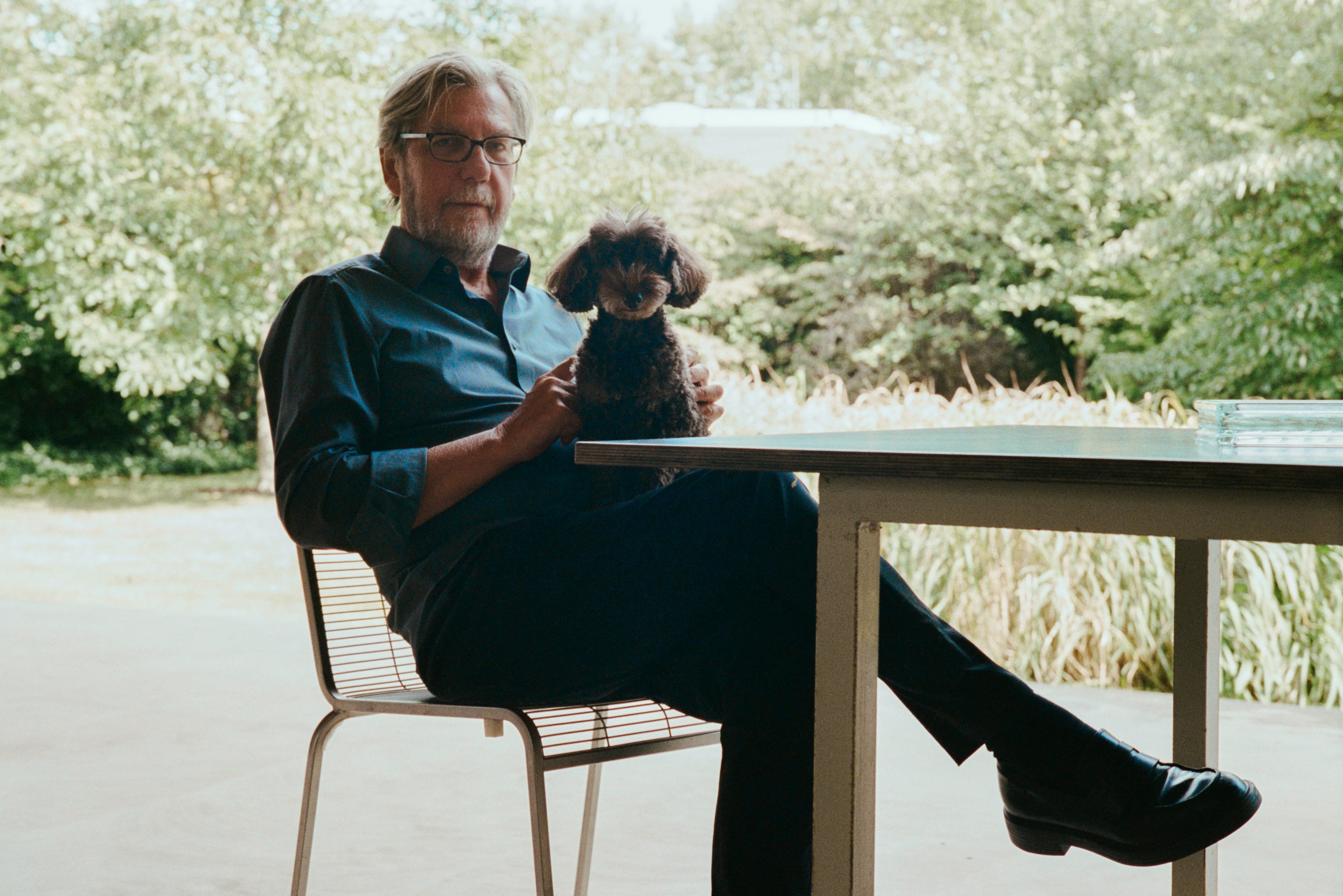
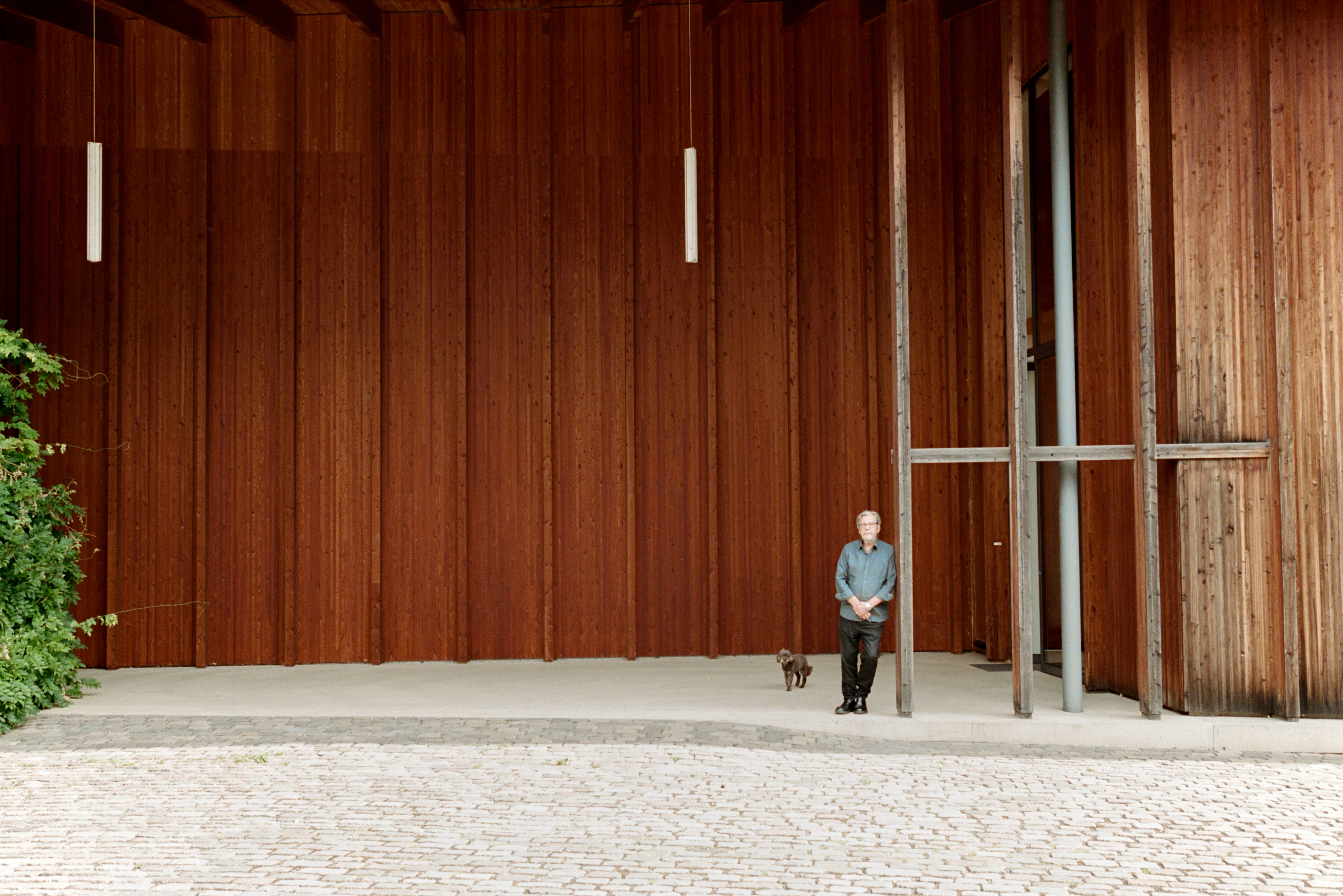
In Conversation with Thomas Ruff
Words by
Reuben Beren James

Yes, exactly. I shot analog for twenty, twenty-five years. Then photography became digitised, and I said, okay, this is a new tool, like a new lens: I have no preoccupation, so if I need it, I'll use it. In 1996 I got my first email address, and at that time you still went onto the internet via modem, over the telephone line, so it took time to connect, there weren't many pages yet, and it was very slow. I realised I was seeing a new structure in the image, something I hadn't seen before. In the analog world, the smallest part of the image was the grain of the film; then it changed to digital, and the smallest part became the pixel. And then, for the first time, I saw these jpeg artefacts. Because the internet was so slow, images had to be very small; you know the acronym JPEG, Joint Photographic Experts Group, that was a jury that defined the compression rates. So even though the images were small, say 2 megabytes, they were compressed down to 300 kilobytes to travel faster. But that compression rate had consequences for the structure of the image, and I found that interesting: not just the move from film grain to pixel, but continuing that journey to the jpeg artefact.
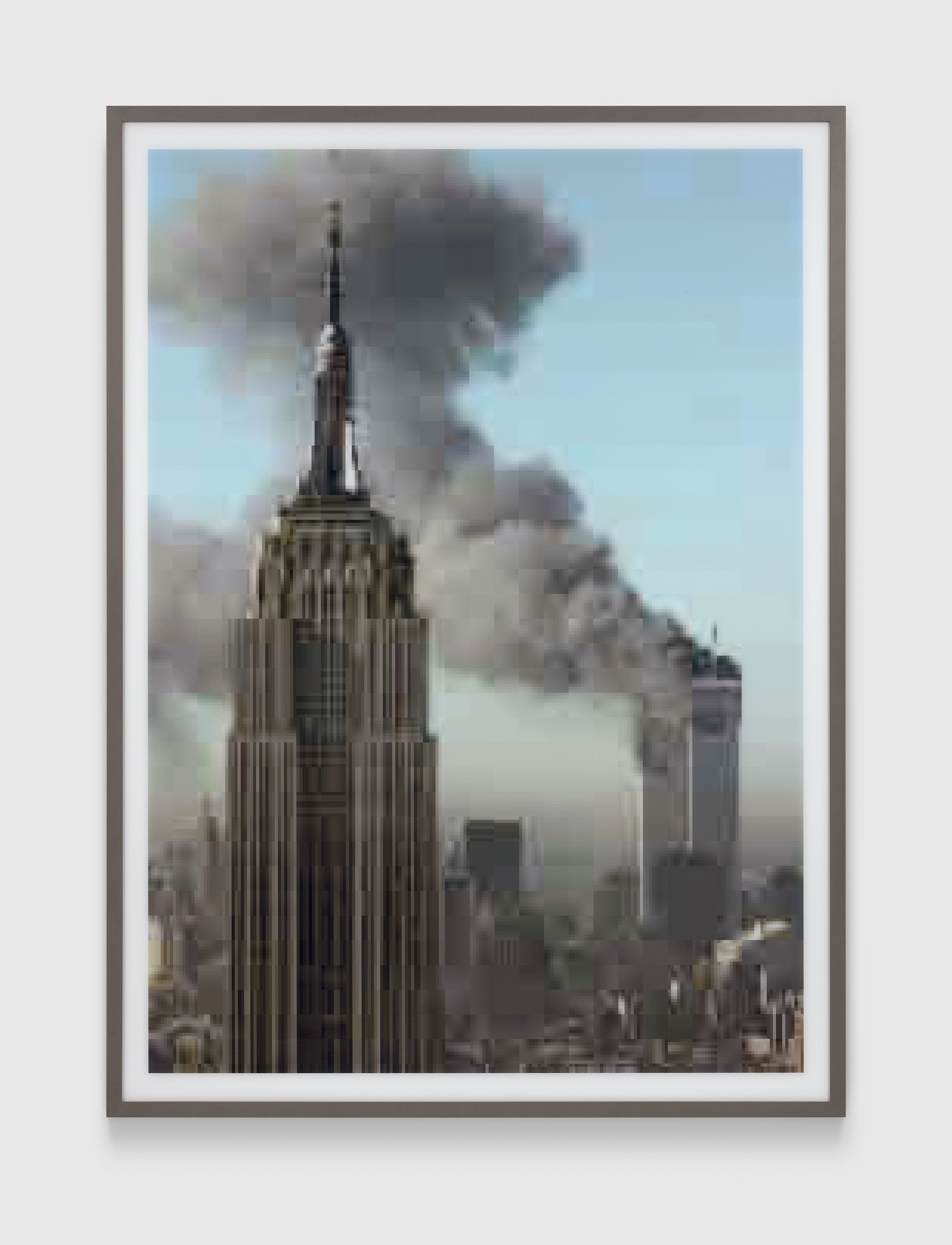
Yes, that's right. We had planned the opening of Ludwig Mies van der Rohe photographs [l.m.v.d.r., 1999–2001] in New York at David Zwirner, which was in Soho at that time. I was in a hotel on Mercer Street, close to Canal Street. I was in my hotel room when the first plane crashed into the first tower. I went down to the street, and then the second plane crashed into the second tower. It was an awful, dramatic situation. I had a small camera, a Minox, and, like a stupid tourist, you shoot either beautiful things or catastrophes. The streets were crowded, everyone was shouting, everyone was looking downtown towards the Twin Towers, many were crying. I photographed the burning towers. When I got back to Germany and developed the film, there was nothing on it; you could barely recognise anything on the images. But because it was such a dramatic event, I started searching on the internet for images. I found these really small files — the internet's speed hadn't increased much yet in 2001 — and ended up with a huge collection of 9/11 photographs, some of them just screenshots from TV footage. I downloaded all of it, and because I was already working with the artefacts and compression rates, when I took one of the 9/11 jpegs I'd downloaded and scaled it down further, to 100 kilobytes, compressed at the worst rate, a rate of 12 — the jpeg structure really showed up.
At that time, I really thought of these as artificial images. Most of those compressed jpegs on a computer are only, say, four by five centimetres, and the resolution of your screen overlays the bad structure, so you don't actually notice the structure of the image, you think you're looking at a photograph. But it's not a photograph: it's an artificial construct of a photograph. At the time I thought, this is really artificial; it wasn't artificial intelligence yet, but it was a brand new situation.
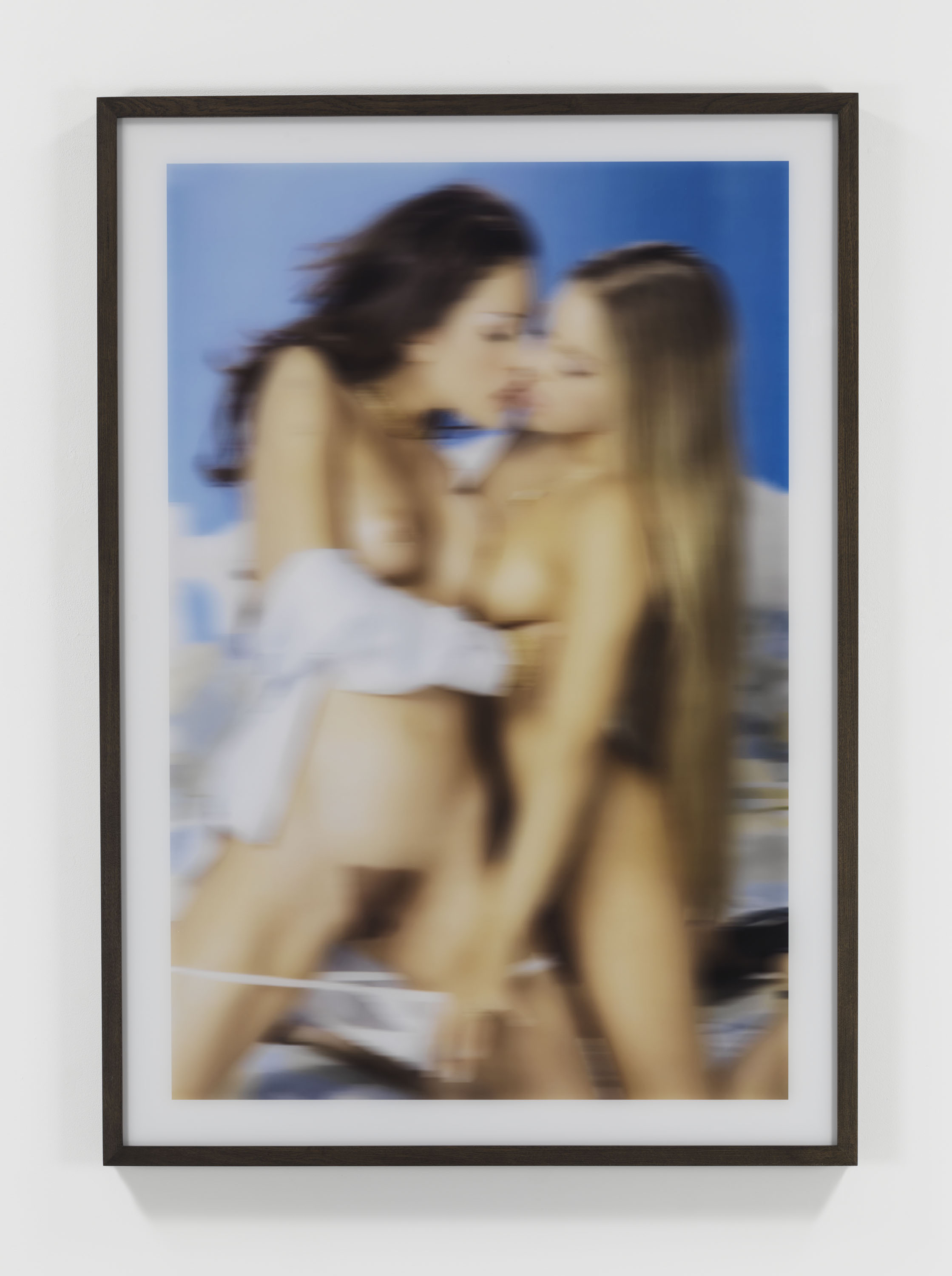
The nudes are blurred because the files I could download were only 300, 400, 500 kilobytes. If you scale those up in Photoshop, you get a pretty ugly structure, so what I did was scale them up and shift pixels at the same time to avoid this ugly, clumsy structure. That was the first reason to blur them. Of course, there's also the art-historical context of Gerhard Richter, and blur has a long history in photography generally, so it was fairly common. Normally, blurriness is just the inability to make something sharp, or if an object is moving too fast, you can't capture it properly.
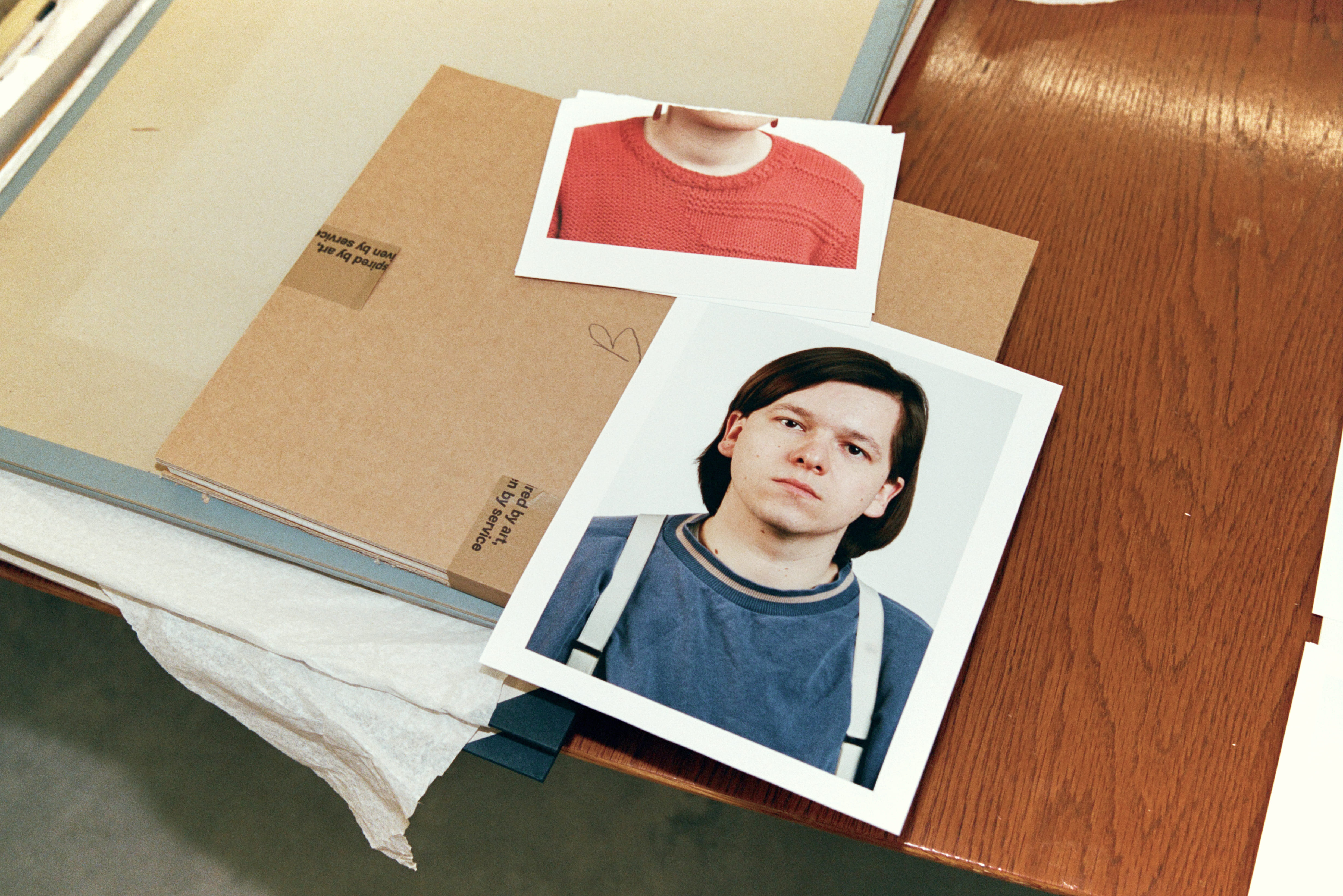
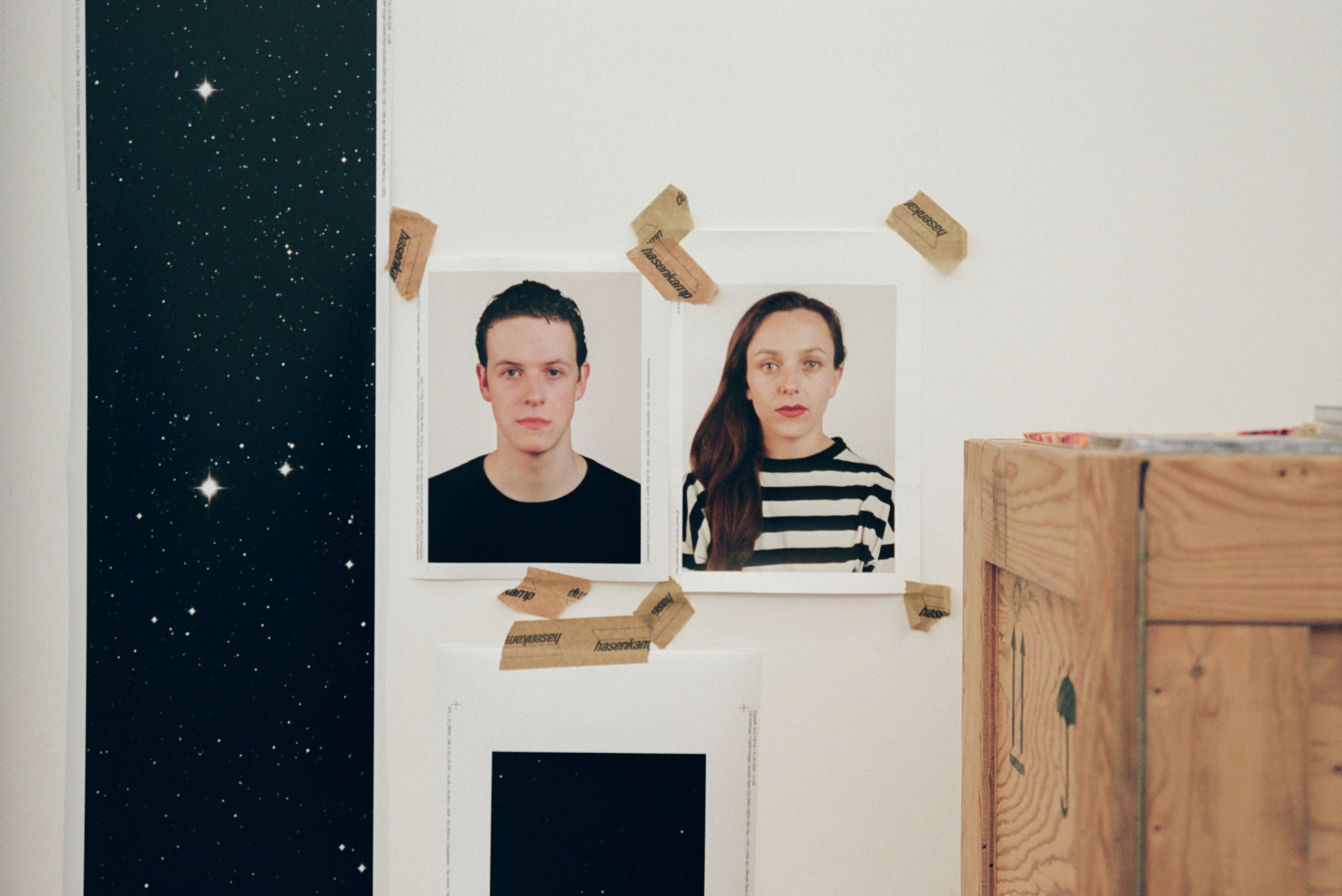
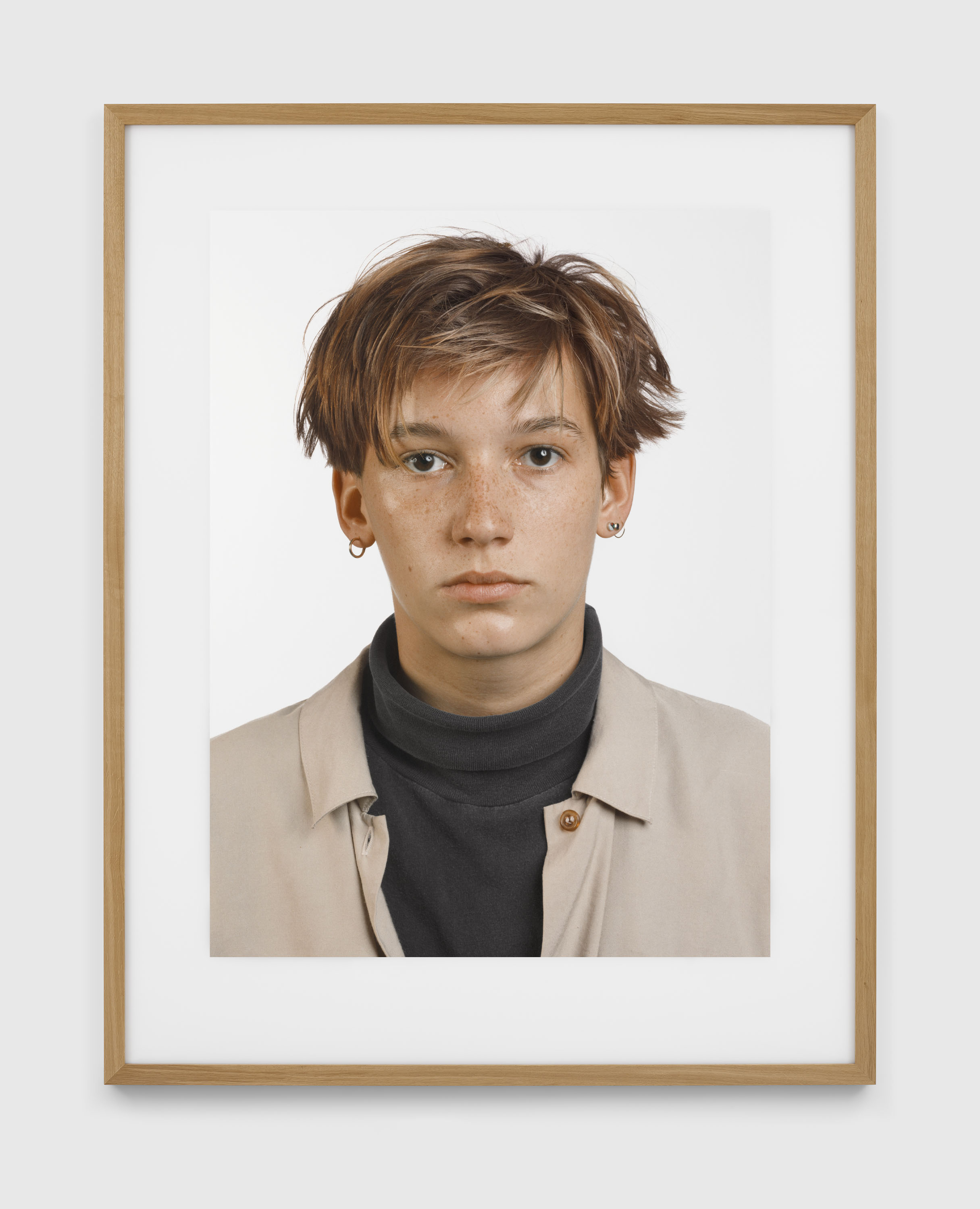
Actually, I can't really say. I think those images show up at a certain time in my life, when I'm busy with something, so I don't really look for images, the image finds me. In a way I'd call it autobiographical. I'm in New York, 9/11 happens, and I'm already working on the jpeg artefacts — and then, boom, that jpeg shows up. When I made the Porträts [1981–1991 / 1998-2001], myself and my friends at the art academy were interested in conceptual and minimalist artists, and at that time I had the feeling the portrait had disappeared from minimalist and conceptual art, so I developed the idea of making a very minimalistic portrait. The same with the Nächte [Nights, 1992–96] photographs, which I developed from watching TV during the Second Gulf War, and the green tint from the image-intensifier technology soldiers used at the time. Probably all the different series emerge from my everyday life.
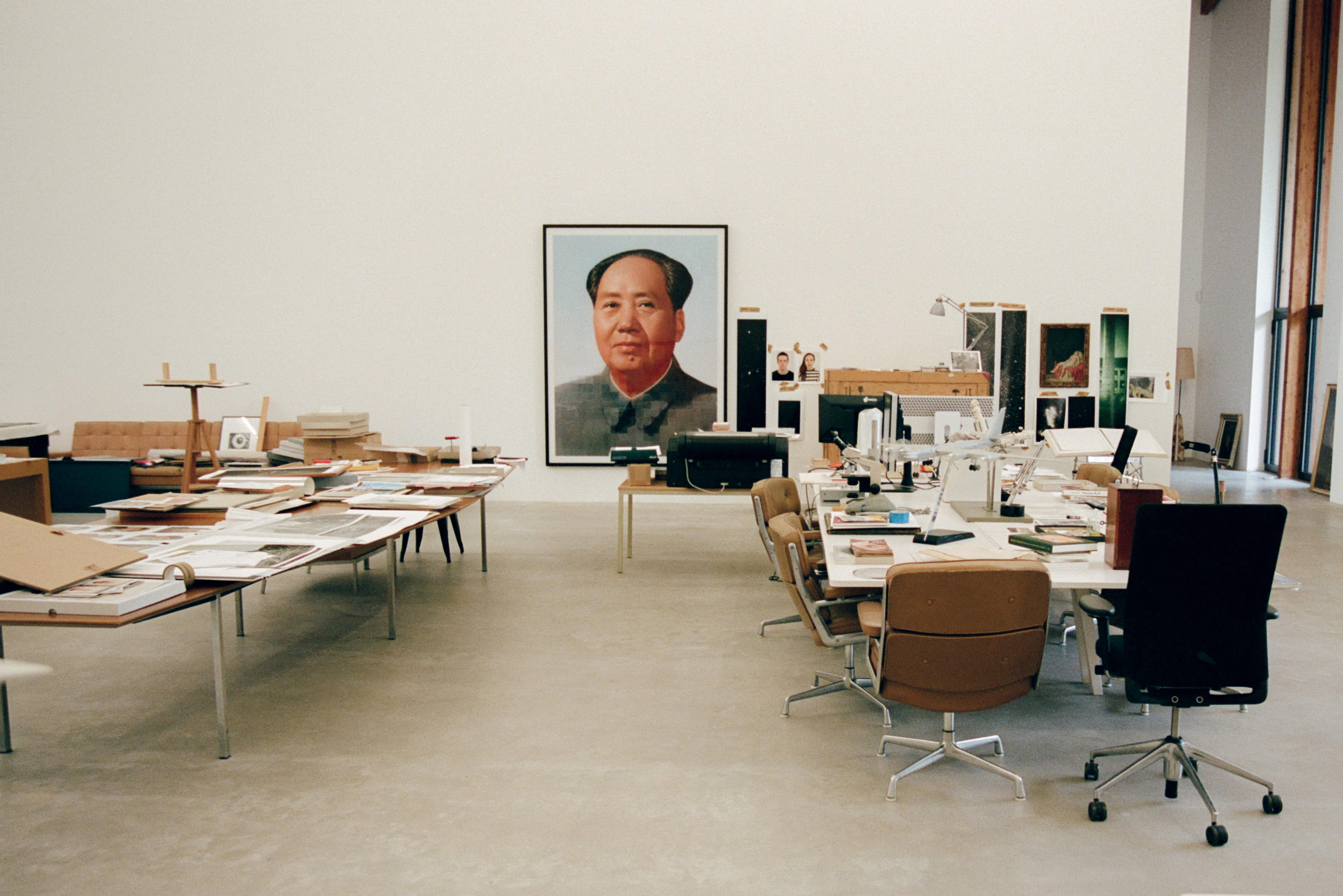
It's both. Of course the image itself is always important: what's on the image matters. But the way I treat it, the technique I use to alter it, also has to be very precise and fit exactly with what's on the image. With the tableaux chinois, I'm a big fan of propaganda photography. Chinese propaganda photography specifically is sweet, naive, completely different from Russian propaganda twenty or thirty years earlier. I love those images, and I had books and magazines from the 1950s to the '70s that I was collecting; I also loved the structure of the offset printing. At a certain point I thought, how can I bring these into a contemporary context? I thought maybe I should stage a real collision between 1960s–70s offset print and the digital age, so I added large pixels to the images. You could read it as a critique: that China, technologically, is state of the art, on the same level as American digital pop culture, but the ideology is still the same: one party, one leader who takes care of the people. So it's a real collision: what we'd call, in Germany “Auffahrunfall”.
Maybe not at the beginning. Or maybe you already have a kind of abstract image with the Sterne [Stars, 1989–1992], because it's really just a pattern of dark background and stars blinking in the foreground, and of course the framing and cropping were compositional decisions I made. But in a way, for the first twenty years, from '77 onward, I was pretty straightforward, shooting straight photography.
When I was developing the Sterne in my head, I had a real problem, because up to that point I had always been the author of the image: I was always the one who pulled the trigger. With the Sterne, it wasn't me pulling the trigger. Of course, I could have used my own small telescope and camera to shoot the sky, but that would have been amateur quality, and I wanted something high-end, state of the art; even though I was professionally equipped and educated, I wasn't able to shoot these images myself. So I had to decide: either insist on being the author and get bad quality, or give up authorship and make something that was, at the time, genuinely astonishing. So I gave up authorship. It's the same with the newspaper photographs: I think this is something every artist does, collecting images, pinning them to the wall. So there I was still the author, but using found footage. Then, after the Nächte, which I shot again myself, at night in Düsseldorf, I worked on Andere Porträts [Other Portraits, 1994–95], which was a kind of double exposure, made with one shot, using a machine that lets you morph parts of different faces together, so that was already a kind of montage. Then I continued with the Plakate [Posters, 1996–99] works, where I also used found images and montaged them together. After that I moved to the l.m.v.d.r. series, which mixed straight photography with found and archival photography: I asked MoMA if they could supply images of houses I couldn't shoot myself. So it became a mix of shooting, finding images, and altering images.
My first Porträt is from 1981, and I shot portraits at 24 by 18 centimetres for five years; that was totally fine for me. But I remember one exhibition here in Düsseldorf, where all the walls were covered with my portraits, and a friend came up to me and said, "oh, over there, that's Heinz," or "that's Marcus," pointing at the photographs. And I thought, no, that's not Marcus; Marcus is over there, talking to Heinz. You're looking at a photograph of Marcus. People kept mixing up reality with the photograph. I thought, I have to work on this: on creating a very clear distinction between reality and the photographic image. During that period I was always dreaming of a big photograph, but I was just a student, or had just left the academy, and didn't have the money; it was too expensive. Eventually a gallerist, Philip Nelson, invited me to show the small portraits in his gallery, and I told him I had this idea for a big print, which would cost 500 Deutschmarks, a lot of money for me at the time. He said, "Thomas, here's 500 Deutschmarks — we'll do the exhibition with the small portraits, and if the big one works, the show is even better; if it doesn't, we've just wasted some money." So I made the first large-scale print, and I was genuinely shocked, overwhelmed, because the physical presence wasn't just an enlargement of a small photograph, it was a completely new image. And the other thing, at that time, the big photograph was already in the air. Jeff Wall and the Canadian photographers were already working large scale, and in Germany you had Katharina Sieverding, Günther Förg. It was in the air, in the mid-1980s, and I joined them.
I don't think I find new things in them, exactly, but if you combine different bodies of work, say, two or three large Sterne with a row of ten small Porträts hung next to them, or in the same room, something happens. That can be a decision for one exhibition; the next show might combine things differently. But the works have always had a fairly natural relationship to each other: they're all familiar with each other, they are a big family.
–