In Conversation with Sophie Giraux
Words by
Anya Harrison

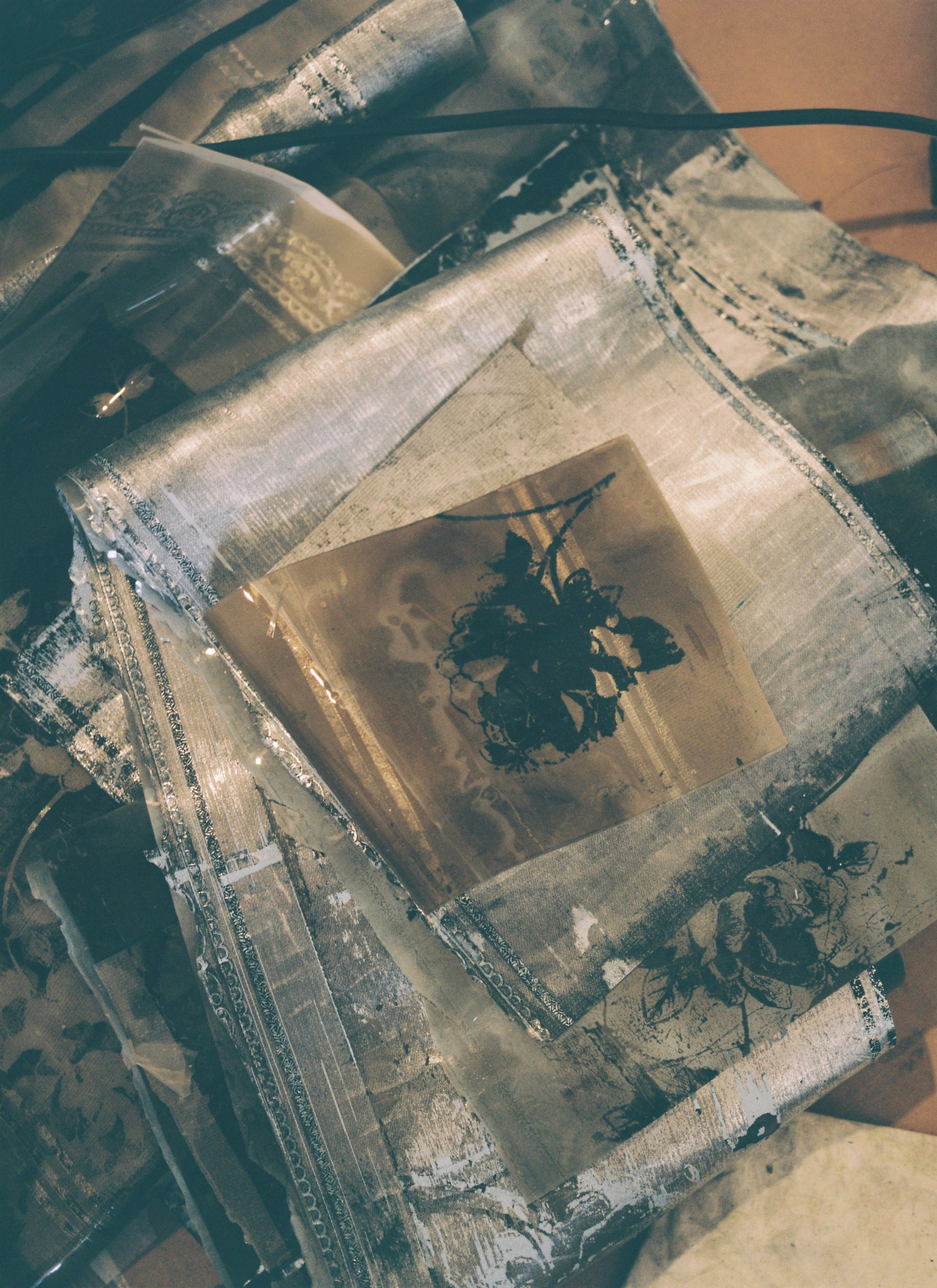
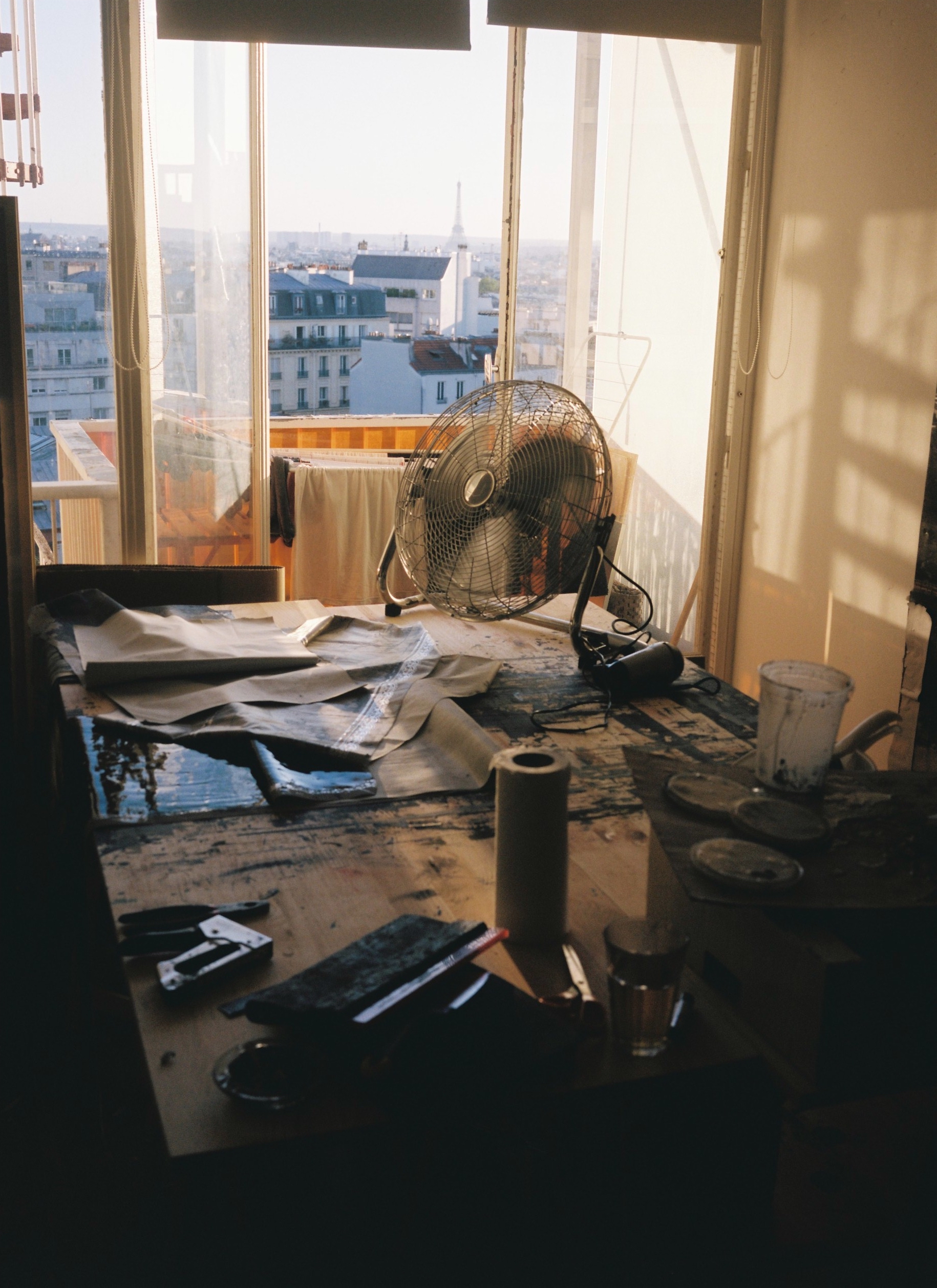
I started this body of work five or six years ago. At first, I was simply collecting tablecloths I bought in dollar stores and used them to cover my worktables. At the time, I was working on another series using the same rubber these works are made from.
By accident in the studio, I started to see the potential in printing both the embossing and the colour of these tablecloths. I’m drawn to finding materials associated with low or pop culture: something cheap, mass-produced or domestic that would be a kind of synthetic, simulated version of the so-called “real thing.”
I’ve now worked with two different patterns—one for the Dolly series and one for the All for You series.
For Basel, I’ve decided to develop the process further and keep the work moving by adding a screenprinted layer, which consists of a reproduction of the image printed directly into the tablecloth before casting it. It becomes a copy of a copy, testing the limits of repetition and how far that transformation can be pushed. I was also interested in introducing another medium into the process to see where it would lead me. What is emerging now feels like a memory of the image—something that is fading, almost ghostly.
Until now all the colours came directly from the tablecloths themselves. I didn’t add anything else. It was a direct transfer until I exhausted the tablecloth. The mould was then cut, reassembled, and became a collage in a circle of creation and destruction.
The multiple copies of the original lead to a gradual loss and fading of the source image that ultimately becomes inaccessible.
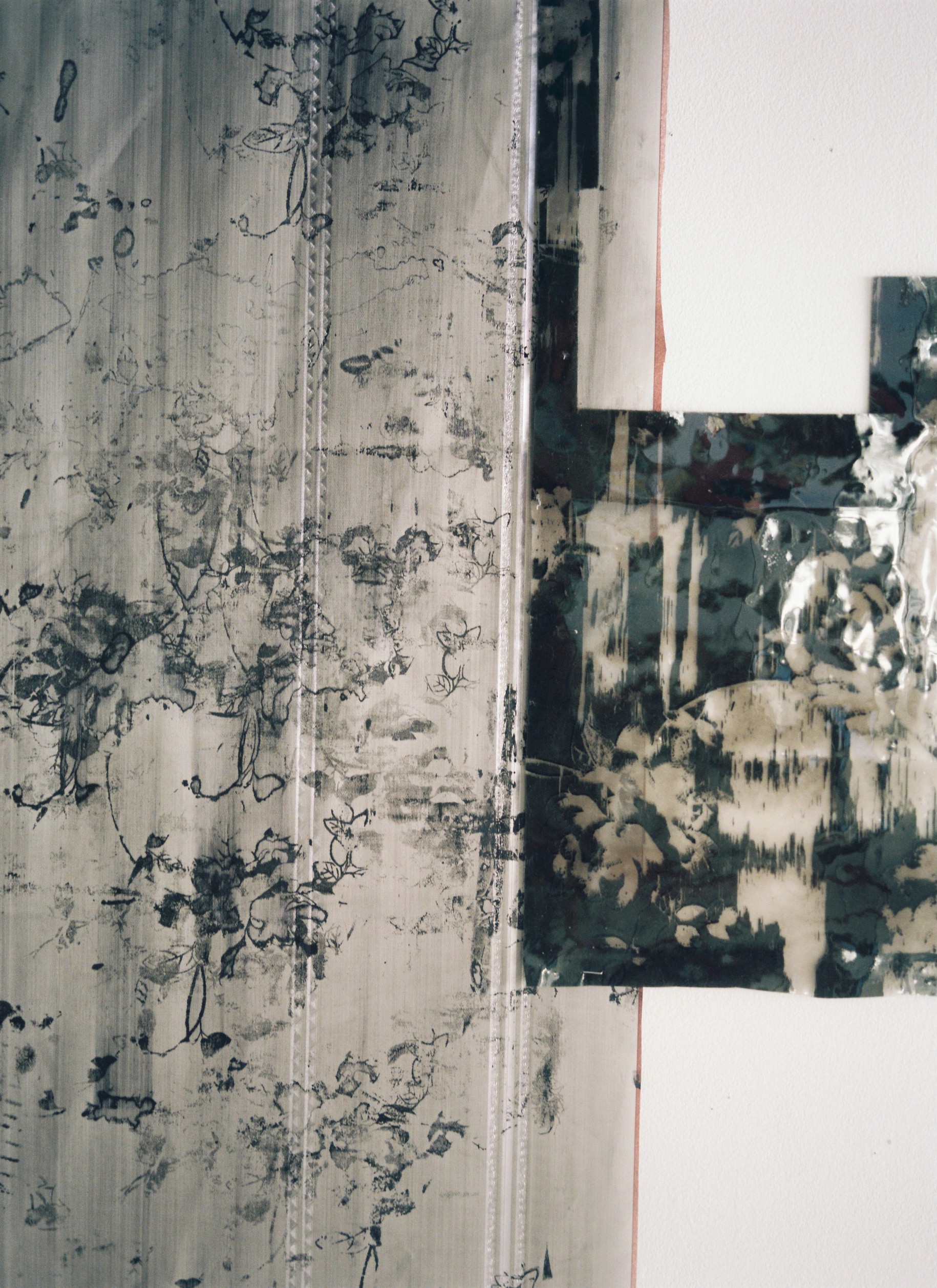
For the new ones I am making now, I am screenprinting into the tablecloth. So, again, the image is a copy of copy and seems to become a looser, fading memory of it. Bringing casting and screenprinting together becomes, of course, very tautological, but it allows me to distort and play with the resolution of the image even further.
You are facing a two-dimensional work that comes from a sculptural process. Up close you can see the folds and materiality, which confuses what it actually is: an image, a print, a painting, or something altogether different.
Chance is also an important factor in the process, in how I can bring all these events together.
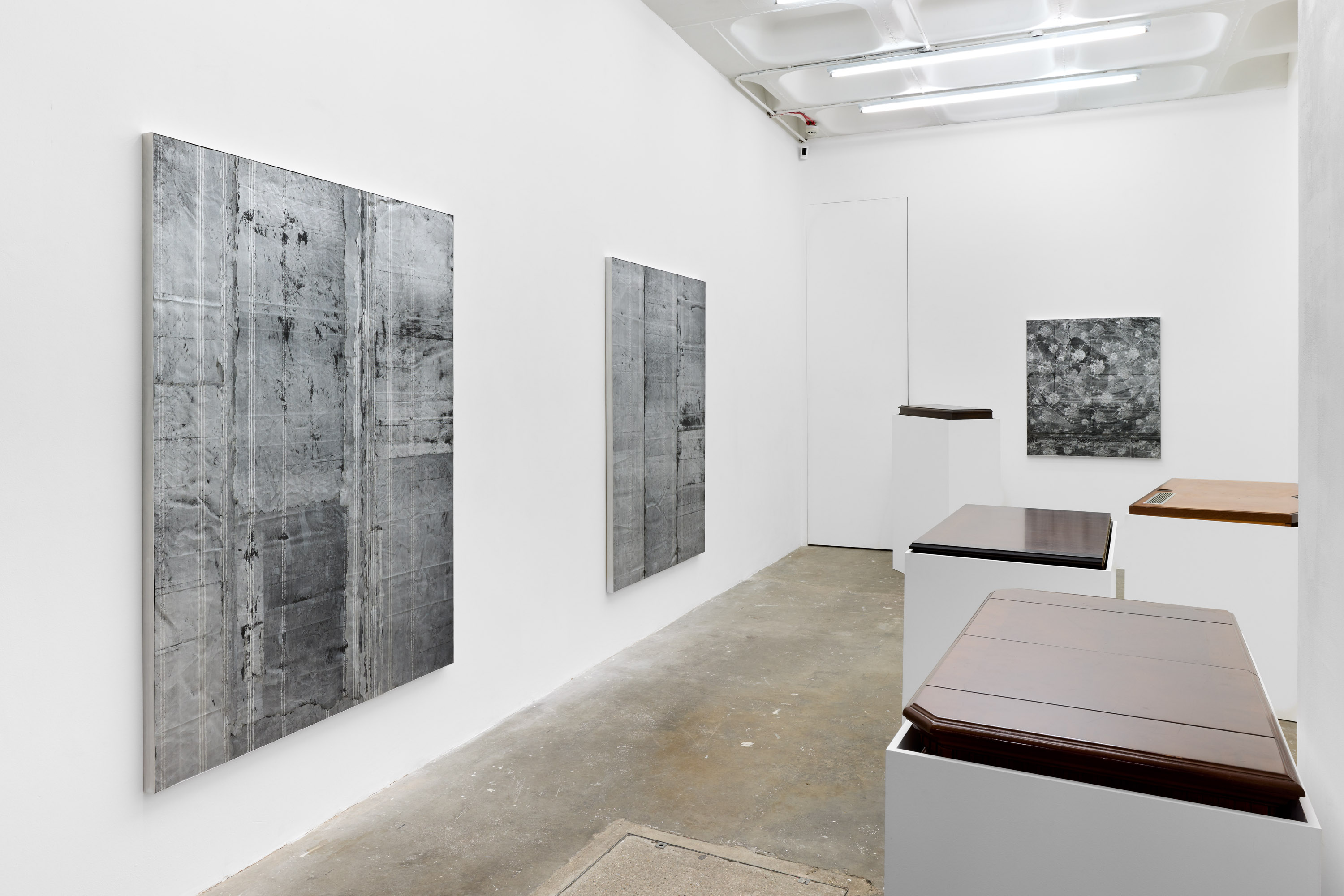
Because they seem to be so many different things at once, I simply call them "works." People tend to refer to them as paintings, mainly because they hang on a wall and present an image, but I'm interested in resisting fixed definitions and escaping clear categorisations. I tend to view them as screens, in the same way that we now view the world—and the world of images—through the small screens of our phones.
When I made this exhibition, I wanted to find an idea or something that could bring together opposites and I was looking for an unifying figure, someone who can bring people together, at least for a moment, and that’s how Dolly Parton came up. Everyone loves Dolly! I was interested in the idea of an uber kitsch, over-the-top persona. She’s contemporary while also representing something very nostalgic.
One morning, on my way to the studio, I found a small paper clip from a newspaper of Dolly Parton (or at least someone who looks like her). For the show I wheatpasted 25 images directly on the wall, like a film still. I also used sodium lights, which cast an intense yellow glow throughout the entire space, but more importantly, they flatten the colour of everything and become kind of grey.
Whereas Muybridge depicts the development of a movement, here it’s a still image that is endlessly repeated—a movement that stands still, in a way, something like a glitch. I’m interested in how an image becomes detached from its original context: a process akin to a meme, something that mutates through repetition, but at the same time flattens meaning. Dolly is about reproduction. The first cloned sheep was named after Dolly. All the works in the show were named Dolly.
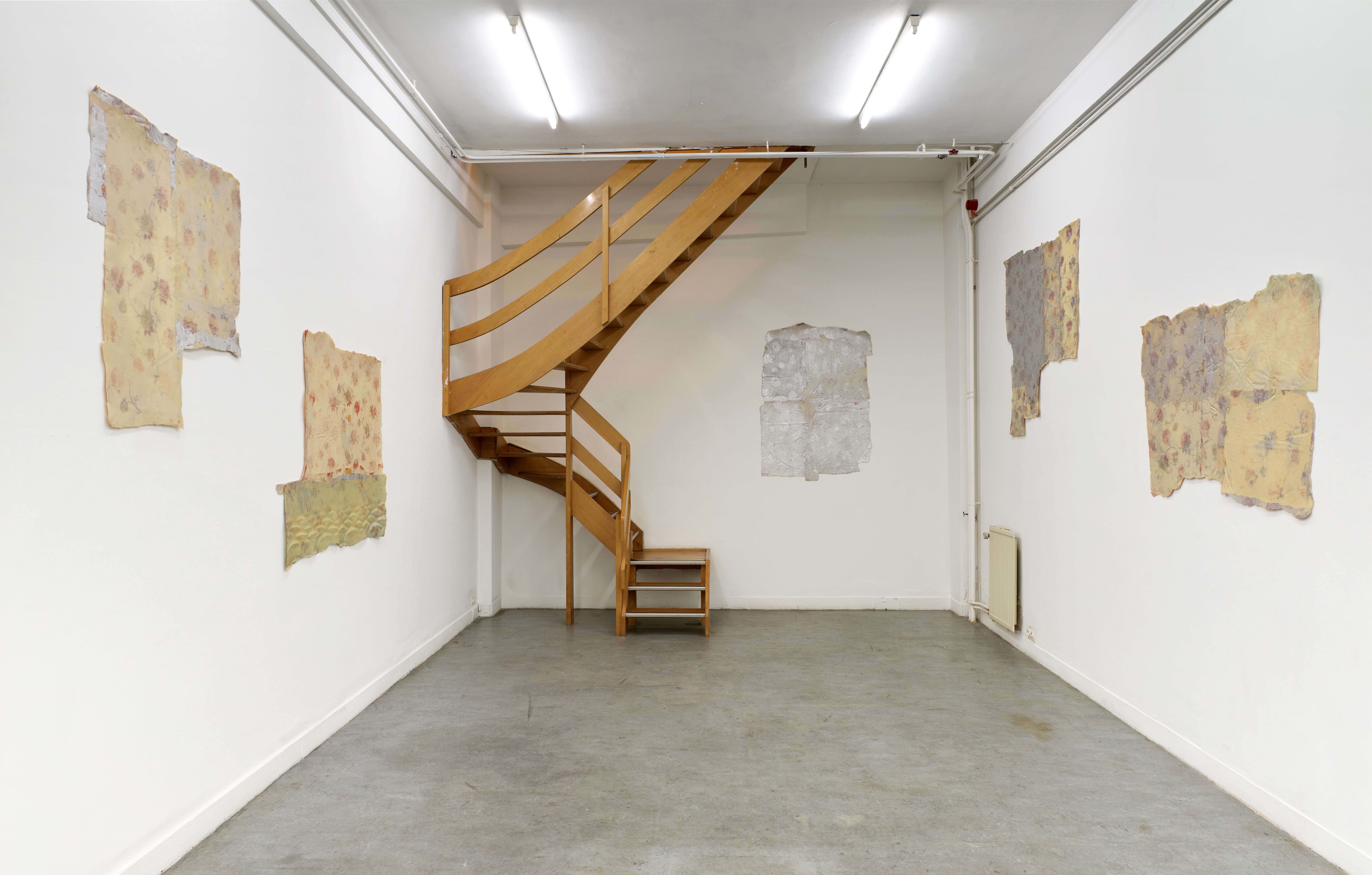
It’s funny because they’re almost over-the-top, to the point of ugliness, and then they shift into something cold and strangely beautiful. It can swing or go wrong very quickly. I wanted to use the flower motif to confuse and unsettle that femininity, even the sentimentali to ty that comes with it. I think the distance and coldness I’m interested in also comes from an early attraction to Minimal and Conceptual art. That’s where a lot of my thinking around restraint and form started.
Yes, I am interested in how to bring contradictions together, the friction between the two.
The formal reduction versus a more affective or decorative language. I think the work moves back and forth, or holds them together.
The image from the tablecloth is a reproduction of a flower, not the real thing, but a copy. I am trying to find motifs (here, flowers or cats) that are easily recognisable and can trigger a multitude of associations, imageries, symbols or even clichés, without necessarily having one clear intent or definition.
The seriality of the images is also closely tied to casting as it contains a logic of repetition. I’m interested in that in-between space where seriality is never fully neutral or mechanical.
%20copy.jpeg)
I’m not sure what the image becomes through repetition, but I think it starts to mimic the act of scrolling where we no longer really see what is right in front of us. We forget how to look. There’s a kind of loss there. When you encounter my works in person, they don’t look anything like they do as flat images. They have texture, depth, and a physical presence.
I’m interested in understanding the capacity of a medium and how far I can push its limits. An early work, Seventy Seven Seconds (2012), explores a similar idea using two slide projectors placed next to each other. They continuously search for their focal point, only momentarily aligning every 77 seconds. For a brief instant, they achieve the same size and produce a pure rectangle of white light.
I’m a very obsessive person! But only because I keep finding new layers to zoom in, stretch, and explore. In that sense, I could say that my practice is quite fetishistic. The flower motif gets reduced, displaced, abstracted, ghosted, or erased. The works stutter, they repeat, but they’re never exactly the same. For me, sculpture is often a dead process: you make a mould and then a cast, which becomes its exact replica. I wanted to find a way to bring sculpture and cast-making back to life, with higher chances of accidents.
Maybe I am trying to slow down time, or at least create a counterbalance to the speed at which we consume images and live life. In an early video work, L’espace d’une année en une minute (2010), I filmed the pages of a calendar flipping by, compressing an entire year into a single minute. The older you get, the faster time goes by. I guess my practice has gradually become a way of resisting that acceleration.