In Conversation with Rebecca Ackroyd
Words by
Susanna van Roessel

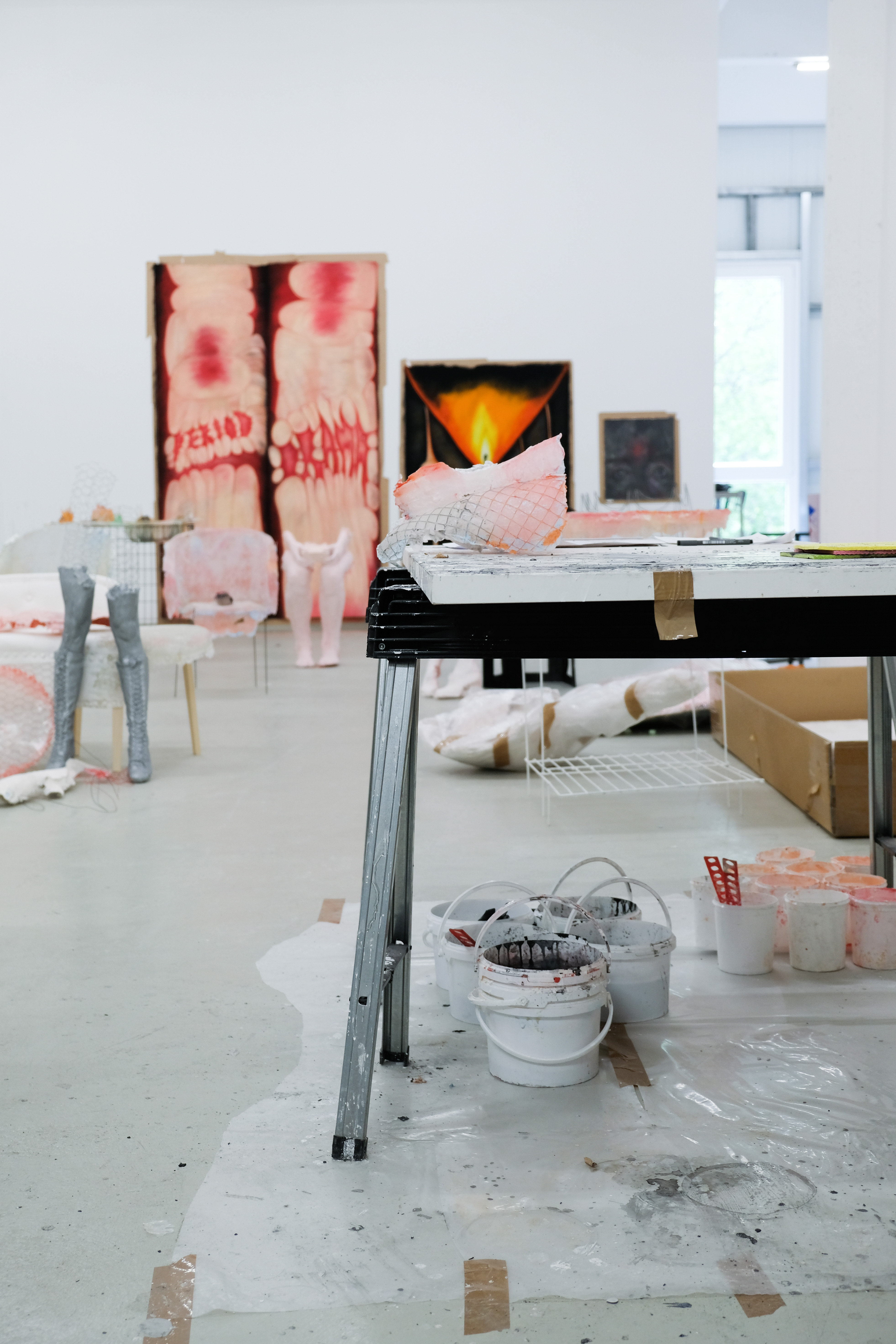
I work on multiple works consecutively, so I wouldn’t say that there is one particular ‘impulse’. It’s more that I don’t want to limit the way I work to one specific idea. It’s important that there is a freedom in the direction the works take as I develop them, as often there are surprises or mistakes that happen in the making, and sometimes these lead to unexpected breakthroughs.
In some instances, I consider how they might work in the room together, but on the whole, the installation is where the relationships between the works is developed. I don’t always want cohesion; it’s important that there are jarring moments.

When I have a show somewhere, I always consider how the exhibition will be entered and what a first impression of the work. It’s interesting to think of an exhibition space as neutral because perhaps it’s that supposed ‘neutrality’ I want to react against. I always try and find a way of making that space mine, whether that’s through the install or altering the architecture in some way.
I don’t really approach making work in the sense that there is one idea; rather, there are many, and they inform the making process and continue to develop after a show is completed. I see making work as an ever-expanding conversation that gets added to; there are no full stops.
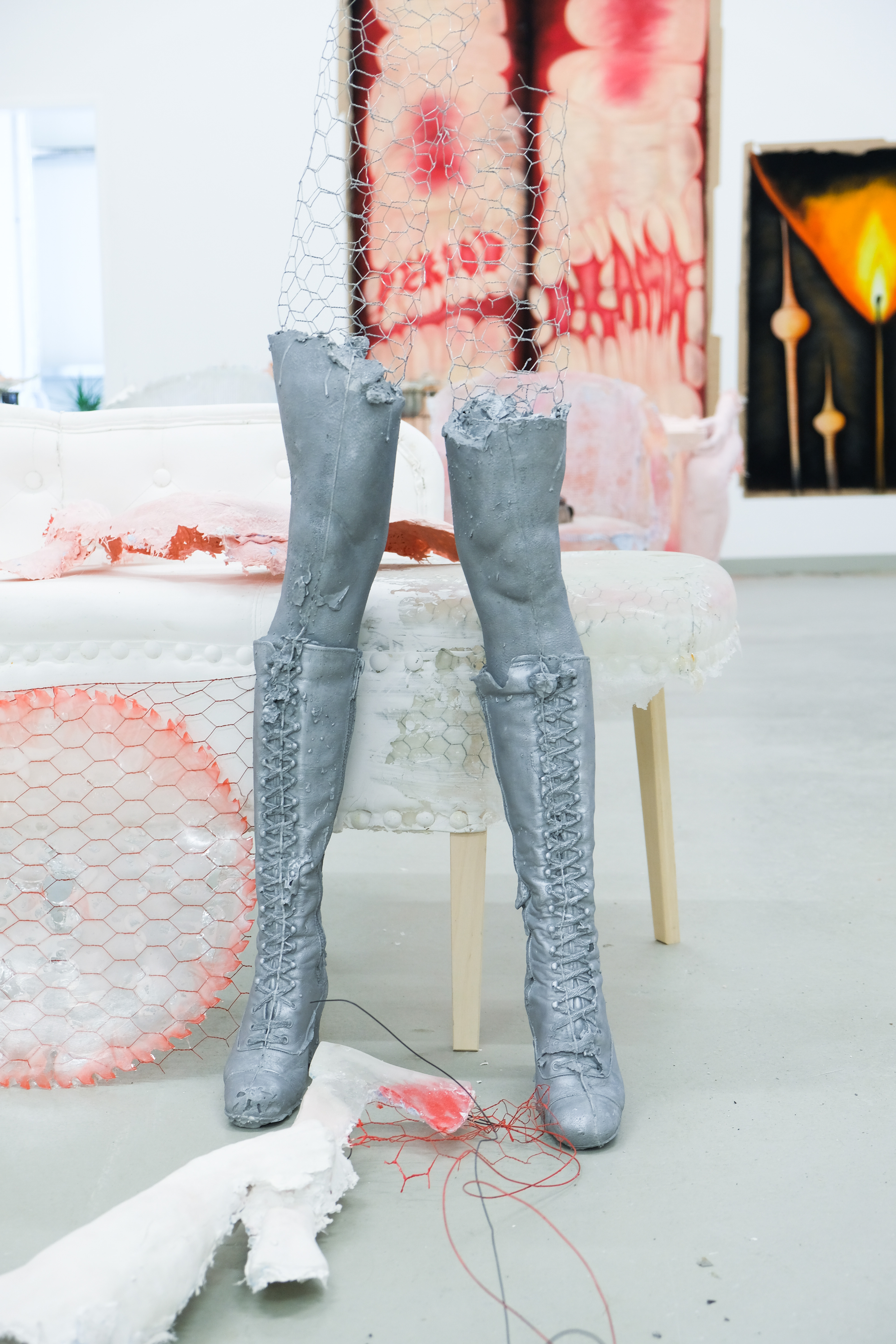
There are certainly moments when I choose to be more direct in the work; the casts are lifting directly from reality. The cast chaise lounges were a literal reference to the therapy couch as a site of remembering and the piecing together of a life. I see making work in parallel to life in many ways - in that it becomes a time line of objects the marks the life of the maker. There’s a sense of piecing something together and not quite being able to get your bearings, like in a dream where everything is familiar and alien at once. I have memories of being a child and seeing the head of a big rabbit costume in one corner of the ceiling and a clown head in the other corner outside the bathroom. I was talking to them, and I was so sure it had happened and the memory is one of the most vivid I have from that age.

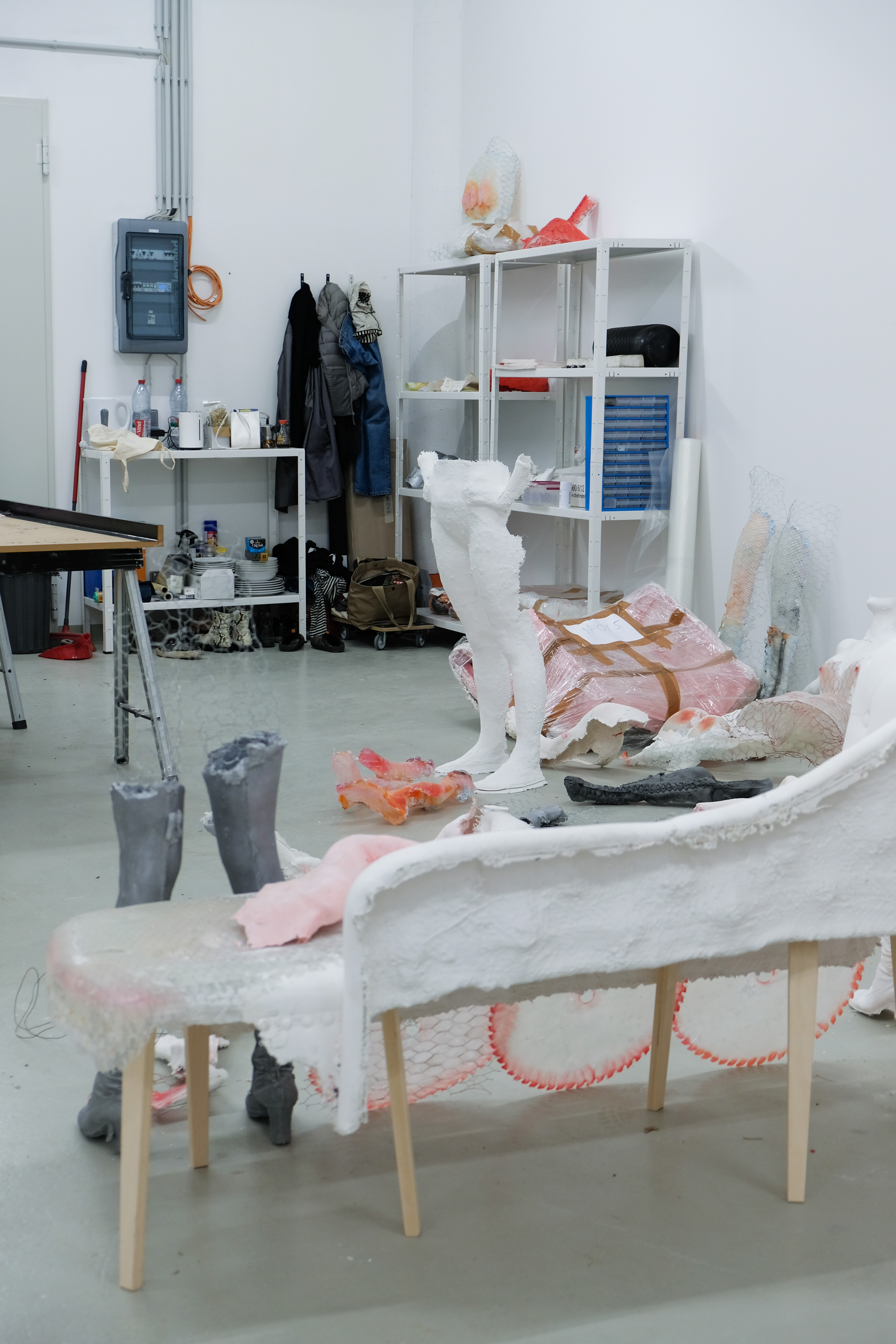
The notion of hiding is interesting, the studio can become a hiding place. I sometimes think of it like my teenage bedroom - where I would go to escape and draw - somewhere you wouldn’t let most people in, it is an intensely private space. That’s where I make from, I have to feel like no one is looking.
I always want the work rooted in the present, the helmets and sunglasses you refer to were specifically used on works to shield their gaze or mask them, like a barrier or protection from something unseen. Often with casting it’s very much about capturing a particular moment that reflects the present.
I would say it’s very important, both in terms of the ideas surrounding domesticity as well as in a more psychological notion of ‘home’. The house where I grew up is always a particularly generative place for me to draw ideas or work from. Houses hold so many memories - they’re full of the lives of current inhabitants as well as the stories of those who lived there before. I once had a shaman do a spiritual reading of a space I was exhibiting in, and she told me a Victorian man and woman were standing on either side of me. There’s something fascinating about the idea that the world is full of ghosts - layers of spirits that we just can’t see all the time. I don’t necessarily believe it, but the experience with the shaman momentarily rocked my perception of reality.

Not really. For me, the fragmentation refers to an interruption in thought or the physical remnant of a memory. I use casting as a way of making a physical snapshot, I very much see them as photographs that occur only once in that particular time. I like the idea that as the bodies I cast change - grow older, bigger or die - that these fragments will remain like a physical record - bones. I’m very much inspired by the ghosts of the past, both in terms of my family and in more of a general way. I often use pieces of clothing from my mum’s wardrobe - a recurring pair of boots of hers from the 70s are recast in different works - the clothes are of their time. There’s an idea of wistfulness for a simpler time that I’m interested in, how we romanticise the past. I try and bring elements of that into the work through the way I fragment things - a boot from the 60s next to a laptop from today. It all informs each other in the cross-pollination of time and stories creating a layering of content and imagery that references my personal history and a wider idea of visual culture through objects/fashion.
The way I approach colour in many of the works is similar in approach to making a painting in terms of process. It’s intuitive. In the piece’ singed lids’ that I showed for the Lyon Biennale, I wanted the resin to be an intense lava orange to give the impression of a scorched after-image you get from looking at a bright light. I use colour and materials depending on the content of the piece and how I want it to feel.