In Conversation with Mark Manders
Words by
Daniel Breuer

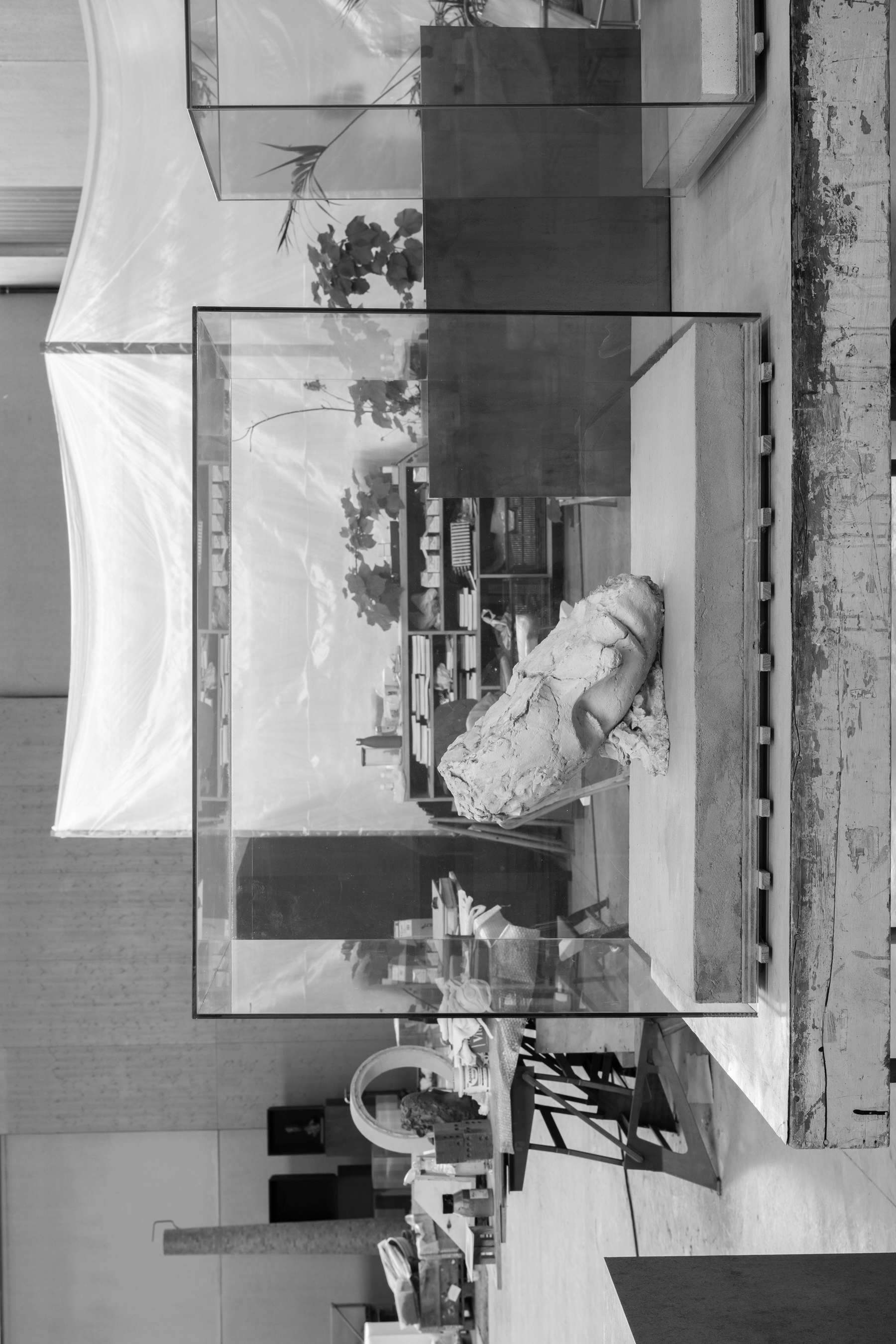
This work, Tilted Head, appears as if it’s made from clay. When I started working on it, I asked the question: what is the most fundamental material a human can work with to make an image of another human or to make an image of an animal? I felt that this is the most primitive display. If I make a figure, I cannot simply choose colour because it has to be like the real material. Of course, the work is painted, but it looks like clay. For me, that’s really important, because clay is the most primitive material you can work with.
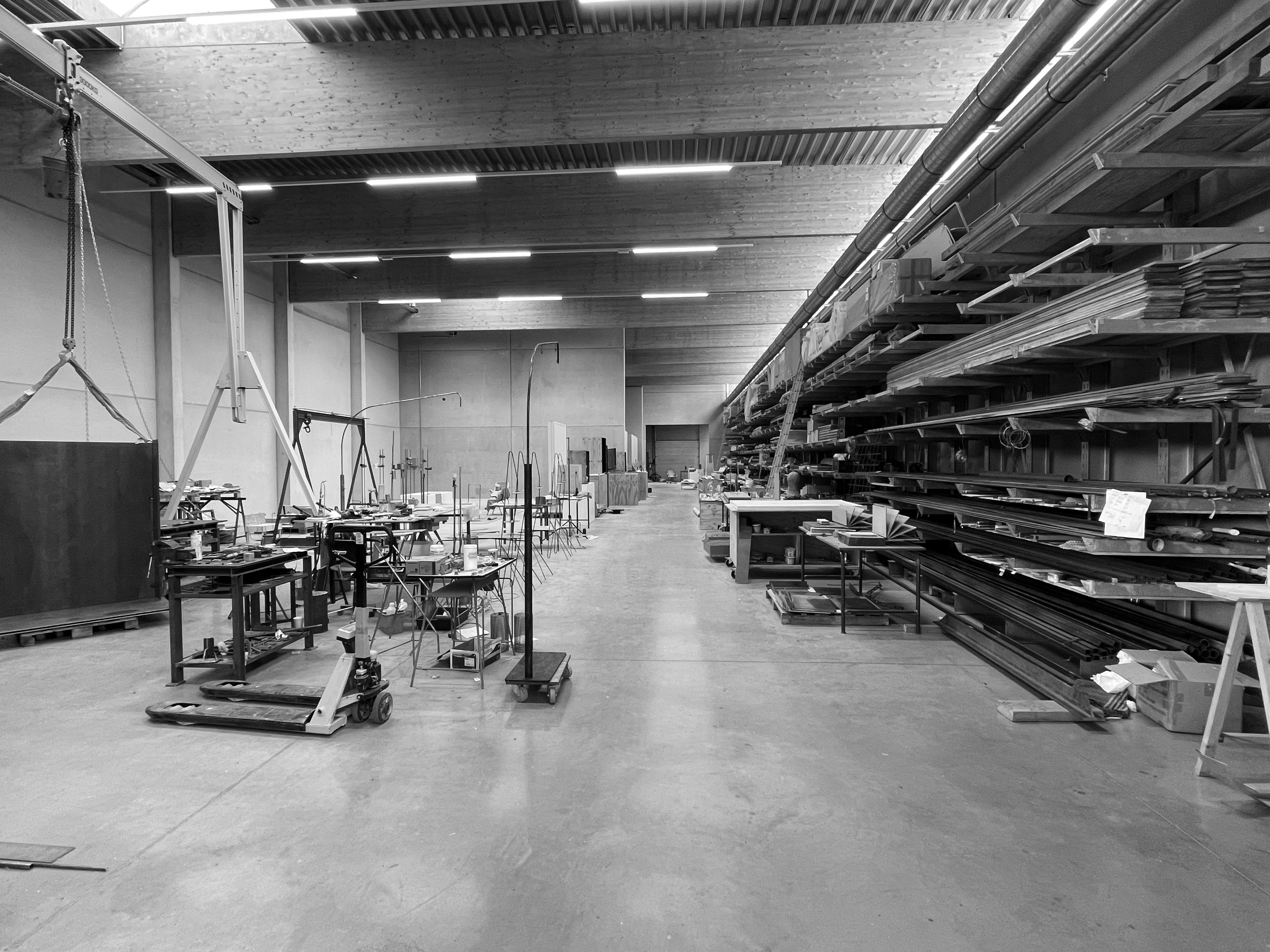
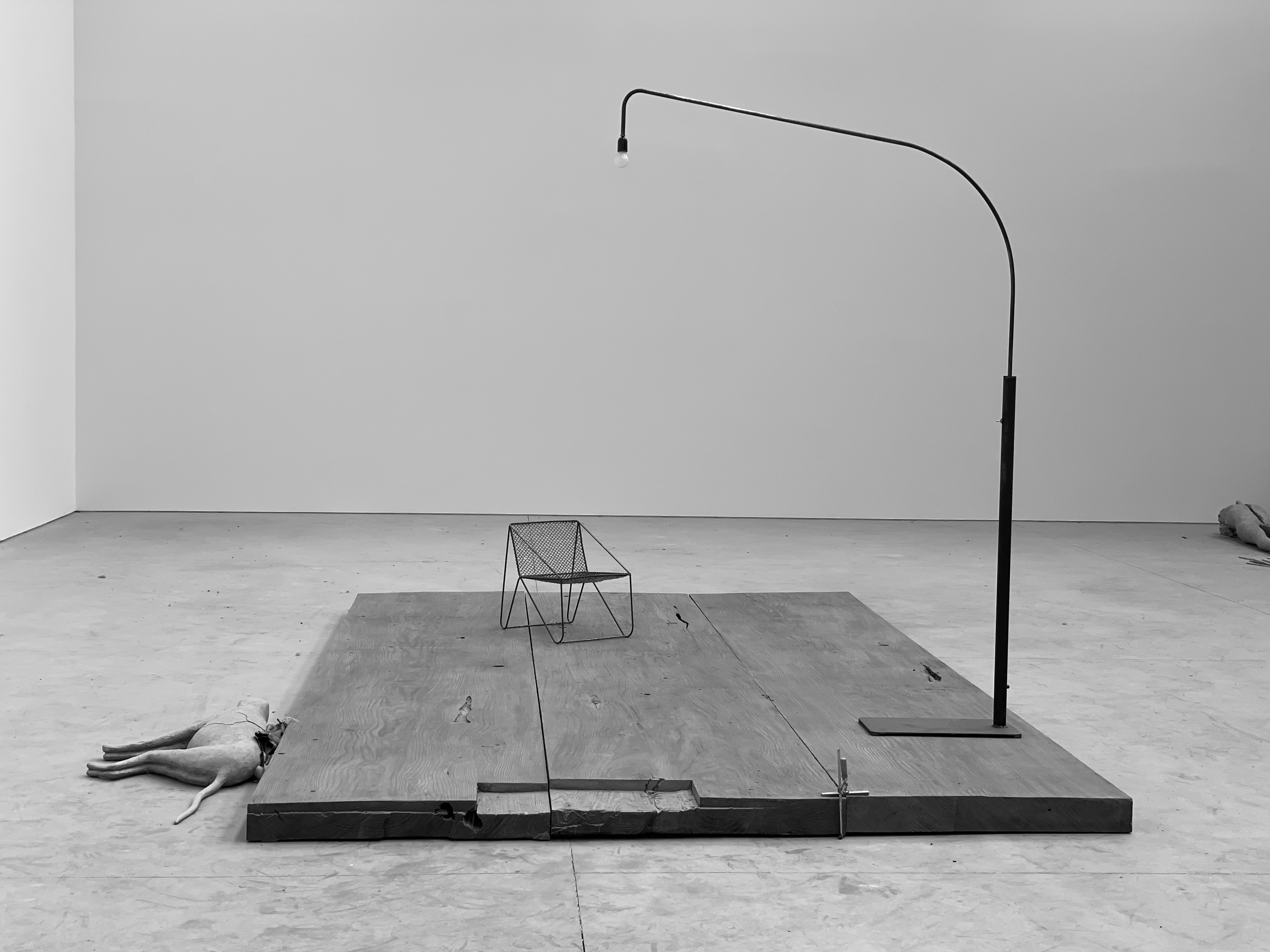
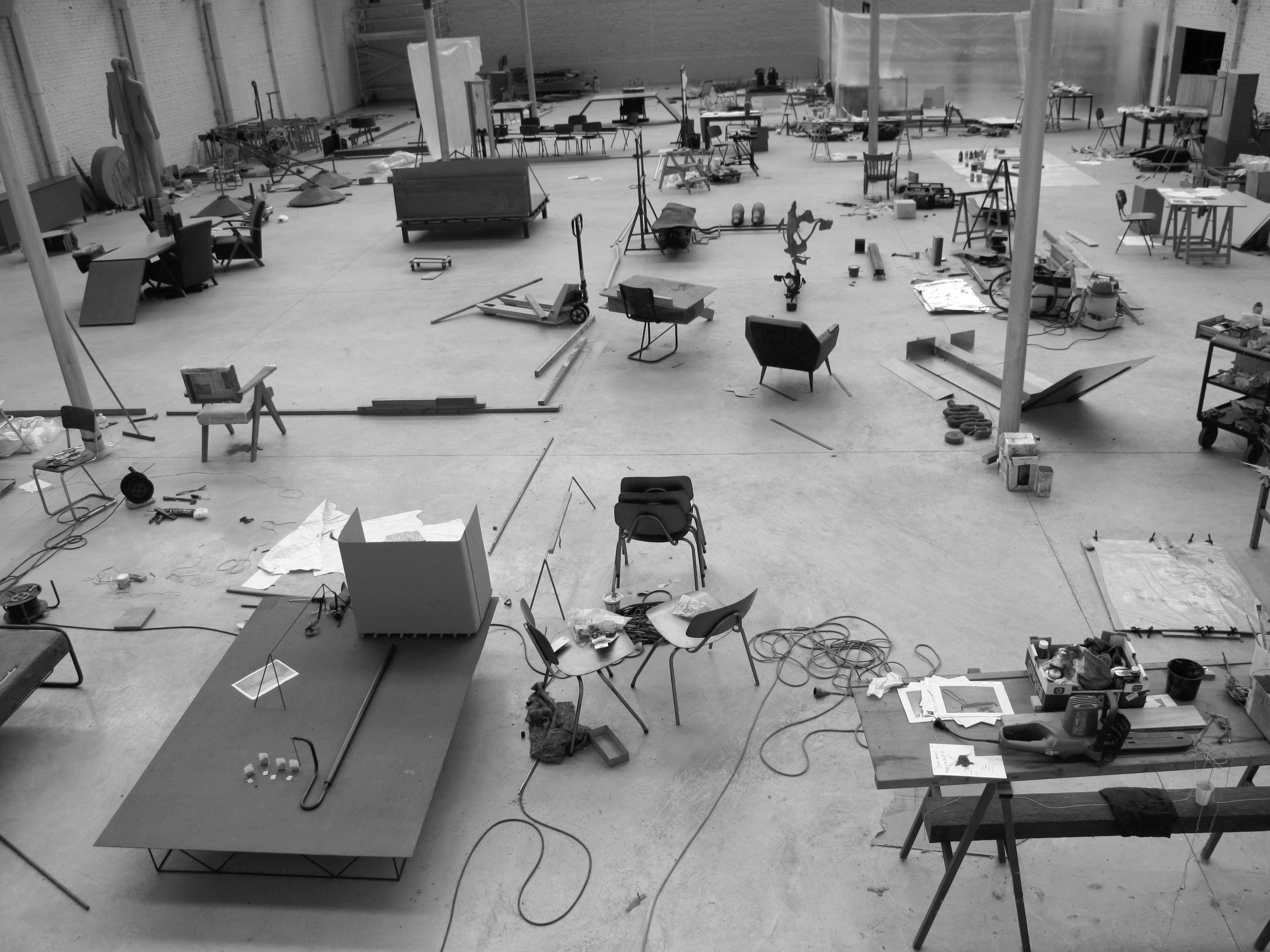
Yes, but to me, there is also something else. I make it in a material that seems as if somebody has just made it. It appears here like somebody didn’t finish and just left.
Absolutely, yes, I'm very happy in my studio. I’m very optimistic. I work on many works at once, and I have the feeling that they will all be good, although they always kind of fail. But one day they will be good. It is something so beautiful that it’s still possible after all these years of evolution. We still have this possibility of making an object that can speak for a few seconds and stay with you forever.
Yes, absolutely. And he also had so much fun. It’s so much fun to be an artist, it is the best job possible. Although I don’t cure people and I cannot do operations, I hope if people see the joy and find joy in my work then it can be some kind of positive. I really believe in art.
The Broken show at Palazzo Stozzi is so rich and layered. It is very interesting how the idea of fragmentation relates to violence and time, to natural accidents or consent. My work is fragmented because I decided to leave in mid-process.
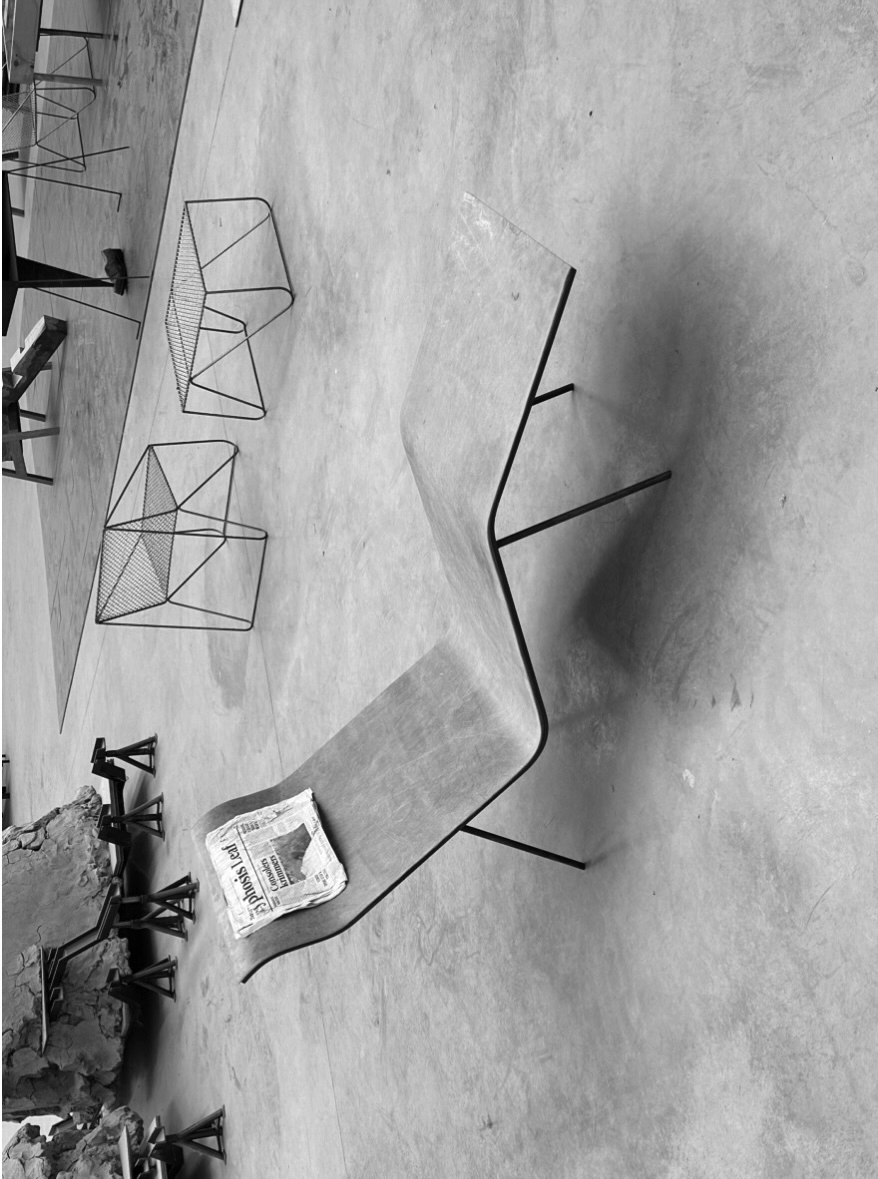
The reason that I started making these newspapers is because I was not allowed to use real newspapers in my work. Some years ago, I needed some pieces of a newspaper for a work with papier-mache but I got stuck. I couldn’t use a normal newspaper because my work is frozen in time. It is frozen in one big now, so for me, it is not possible to use a daily newspaper that is linked to a certain date and place.
I had to make a newspaper that is timeless, and one of the solutions was to create this newspaper with all existing words. Every word is used just once, all in a random order. I started my work as a poet, and step by step I started to write with objects. Now I do not write “chair”; I make a chair and use the real thing.
At the age of eighteen, when I was considering becoming an artist, writer, or psychiatrist, I was really fascinated by books written in the first person. It is unbelievably interesting how a first-person narrator can pull you into an inner world, allowing you to think and feel alongside someone who does not really exist, but who has been constructed in such a way that they touch vital aspects of our own lives.
It was then that I decided to write with objects instead of words. Over the course of our evolution, a deep and special relationship has slowly emerged between things, objects and architecture and how they relate to how we think and feel. My plan was to spend my life working on a book, not a written book or novel, but a vast, static yet ever-expanding three-dimensional stage one could literally walk through. A building that seems abandoned, in which the actions and thoughts of the narrator have crystallised into a cohesive whole. Just like in a novel.
When I began, I was, and still am, deeply grateful to be alive, to be able to live for a short while. It strikes me how I, and the people around me, handle life itself and relate to the realisation of how ephemeral life is. I’m also interested in the strength and vulnerability of human thought. In how we, as thinking individuals, remain susceptible to logical fallacies and neuroses, and open to hope as well. It is from a sense of gratitude that I try to capture, or to freeze, as many thoughts as possible in my life. Not because I consider myself so remarkable. But because I think it’s remarkable that I exist. It is quite amazing that, as an artist, you can make something a viewer needs to see for only a few seconds in order to carry it in their mind, even for decades. A static image can have tremendous power and can therefore be a connecting factor. Even stronger is when multiple static images can be arranged in dialogue, like words in a sentence.
—