In Conversation with John Bock
Words by
Reuben Beren James

The term “world theatre” is too big a term for my plays. It is a small play of the dark psyche. The black monochrome covers the psyche of the quasi-ego. I sit in my psycho-chamber and let the different quasi-egos act and muddle around. The quasi-egos suffer intrinsically in a normalized structure. They offend and warp themselves. They desire without reason but with a creative substitute notion. The quasi-egos fight with mutated ideas and concepts against the fixed norms of the environment. The will slips into courage and ends with the body visage in the mud. The conceptual mind is clicked out and the ex- ego sits dark-dark.
I do not process his ideas of the absurd. That is precisely the crux of the matter. The absurd is undefined. It is a soup variable. Feed your EGG-EGO with vagueness and you approximate the absurd soup. Puking is allowed, eating is not. Artaud is an an- ti-God who slipped through the black monochrome and landed wetly confused in the isolation society. His WIRR-WARR-glam ideas splashed against the withered isolation society block. Punishment by deprivation of life followed, but Artaud gave birth to himself in the glitter intoxication even more undefined than in the BEFORE time of his existence. Now Artaud has mutated to a dark absurd idea in the now-time.
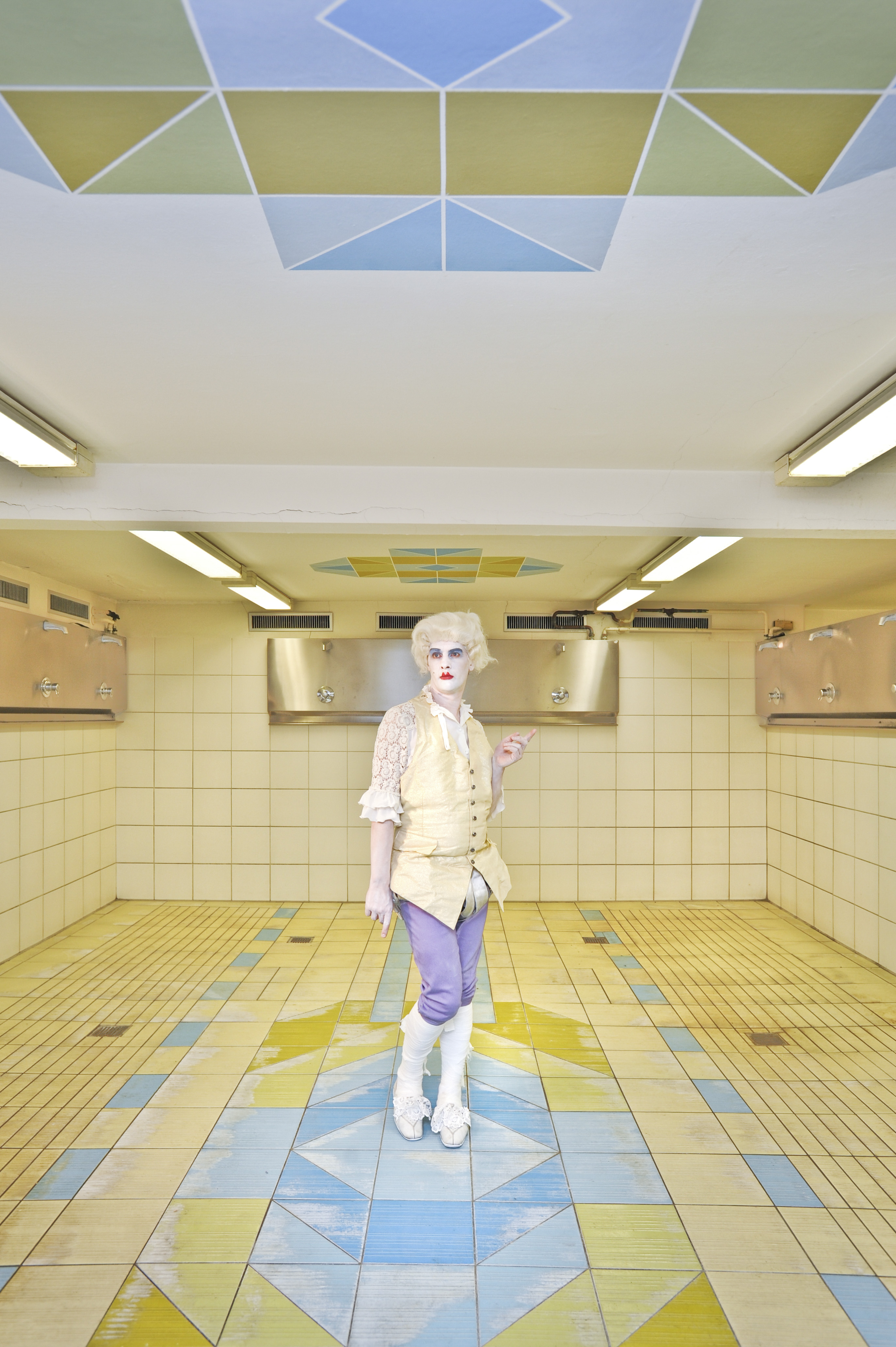
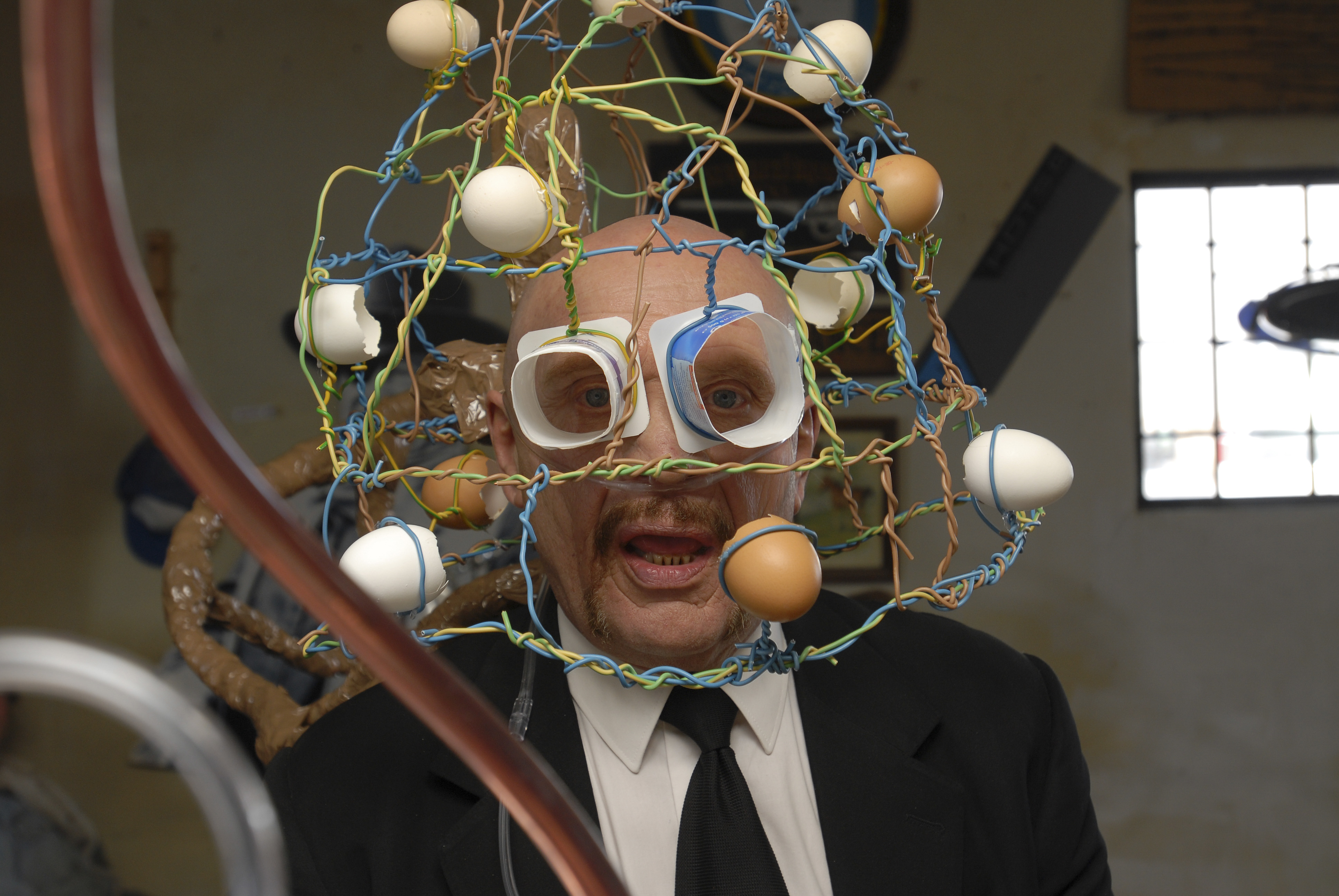
My artistic deed-urge-drama consists in sum mutation. In art school, the sixty-year-old Conceptual Minimal artists sat on my drooping shoulders - Lawrence Weiner, Robert Barry, Douglas Huebler, Stanley Brouwn, Donald Judd, Carl André. They whispered concepts like essence-presence, elasticity, fluids, undefinition, nothingness, disappearance-into my right ear, but the wrong ear listened in and wiped up the ideas and stored them in a preserving jar. I wrapped my idea jar around my head (KOP-OP-Koppel) with gaffa tape. When I stand head the idea sauce slides onto the inside of the preserving jar. The theory KOP-OP-Koppel exists in the Whey-ME- Mind.
I dislike the term performance. My deed-urge-drama mouths in the term of the lecture.
At the beginning I wanted to make art disappear with the help of the before mentioned figures by giving analytical lectures on the basis of mathematical-economic lectures. So a very dry dust cloud floated in the room. Then I built tool and diagram for better understanding - but crooked and leaking. Next step: determine space, through emptiness versus fullness. The space installations emerged, in which I acted as a quasi-me, following a deed-urge- drama. My Inside-EGG-EGO grew into the blurry, immeasurable and then I reached for the video camera and photographed myself flickering. In the pointing mode show the ideal recipient experiences my sum mutation of the facts “lecture, installation and film”. The sum mutation is a Ringel-Ran-gel-Rosen game of the facts.
Challenging and dissolving boundaries are two good subgoals. You can only challenge if you really want to make contact with pairs of eyes that stare at you shaking their heads. But they stare and so I slide over their eye slime into their Whey-ME- Minds, on into the main-drain-brain and sow unreason with will and desire while Plato shovels in cognition mush with a wooden spoon. I lean my head down against the sharp pillow corner and disappear. So not only dissolve boundaries, but dissolve yourself. I’m thinking of Stanley Brouwn right now as my main-drain brain is draining.
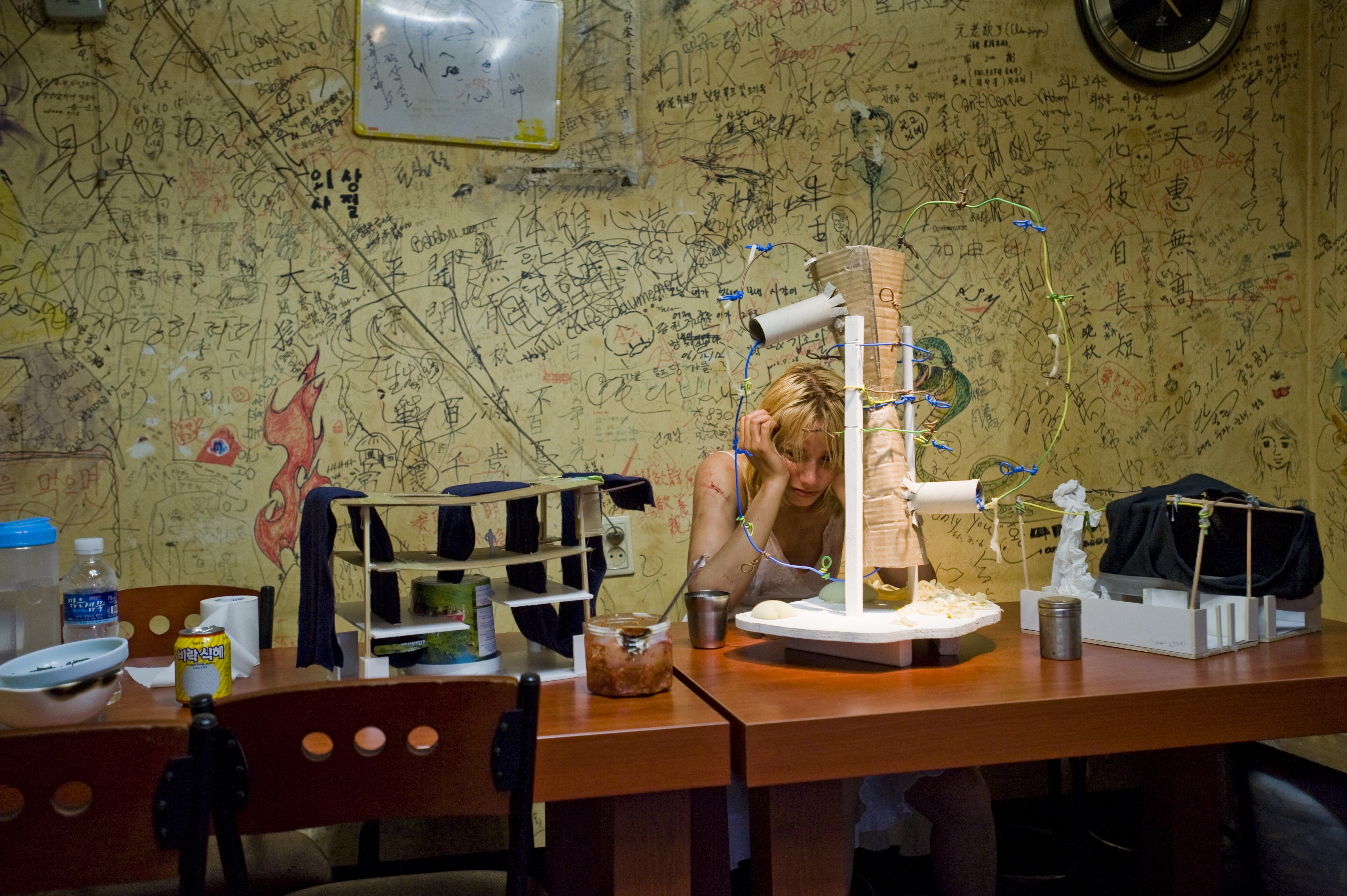
I am a tiny part of the mass power and draw my Krickel-Krackel circles in the Tin-gel-Tangel game with order. I am not wearing an anarchist chaos t-shirt. I buckle in my HEAD (KOP-OP-Koppel) while pulling the wool thread out of my Idea recipient’s sweater. A light breeze blows around the yield mountain of world existence. The world is an unmistakable limited parlor with the x . y . z fact measures.
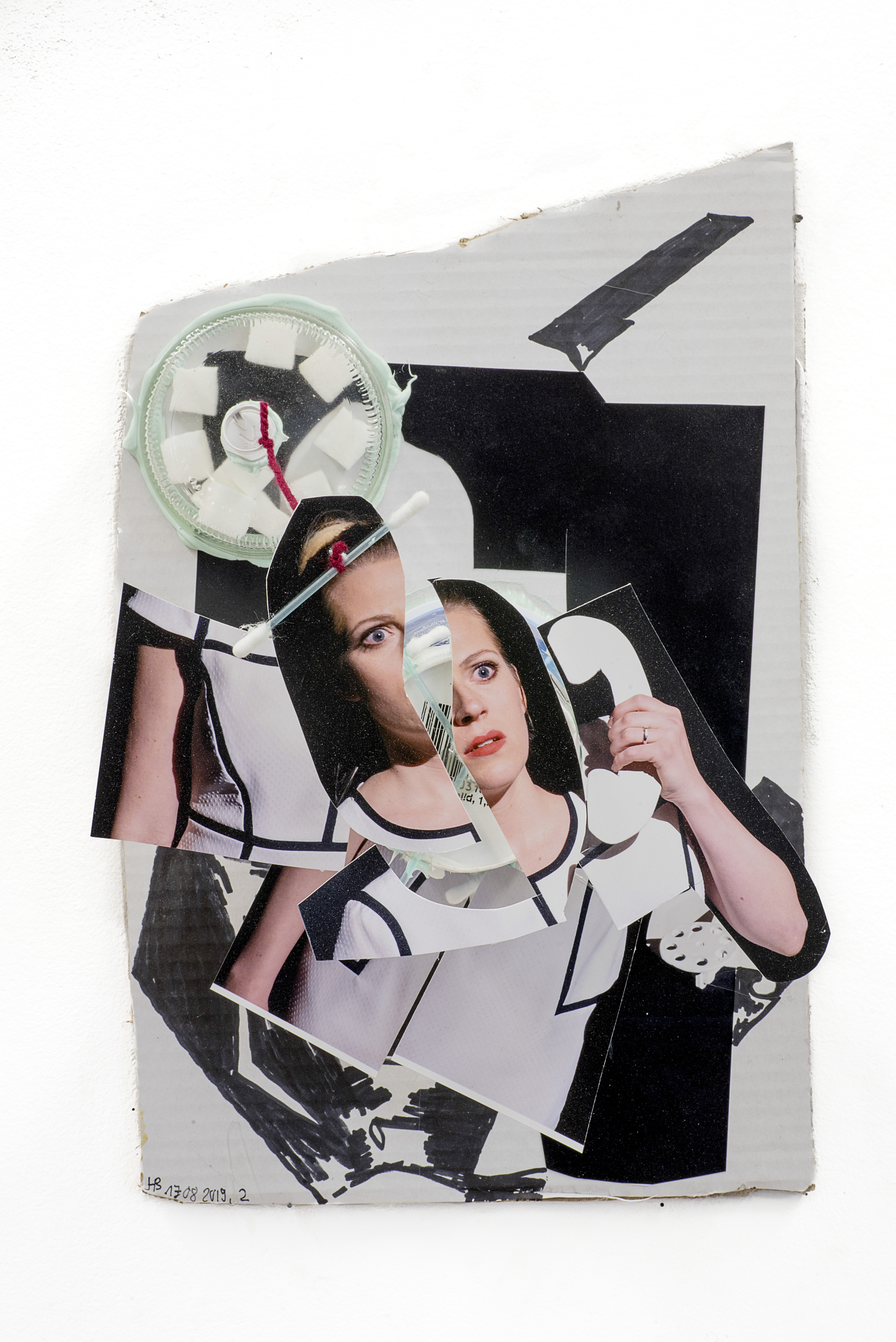
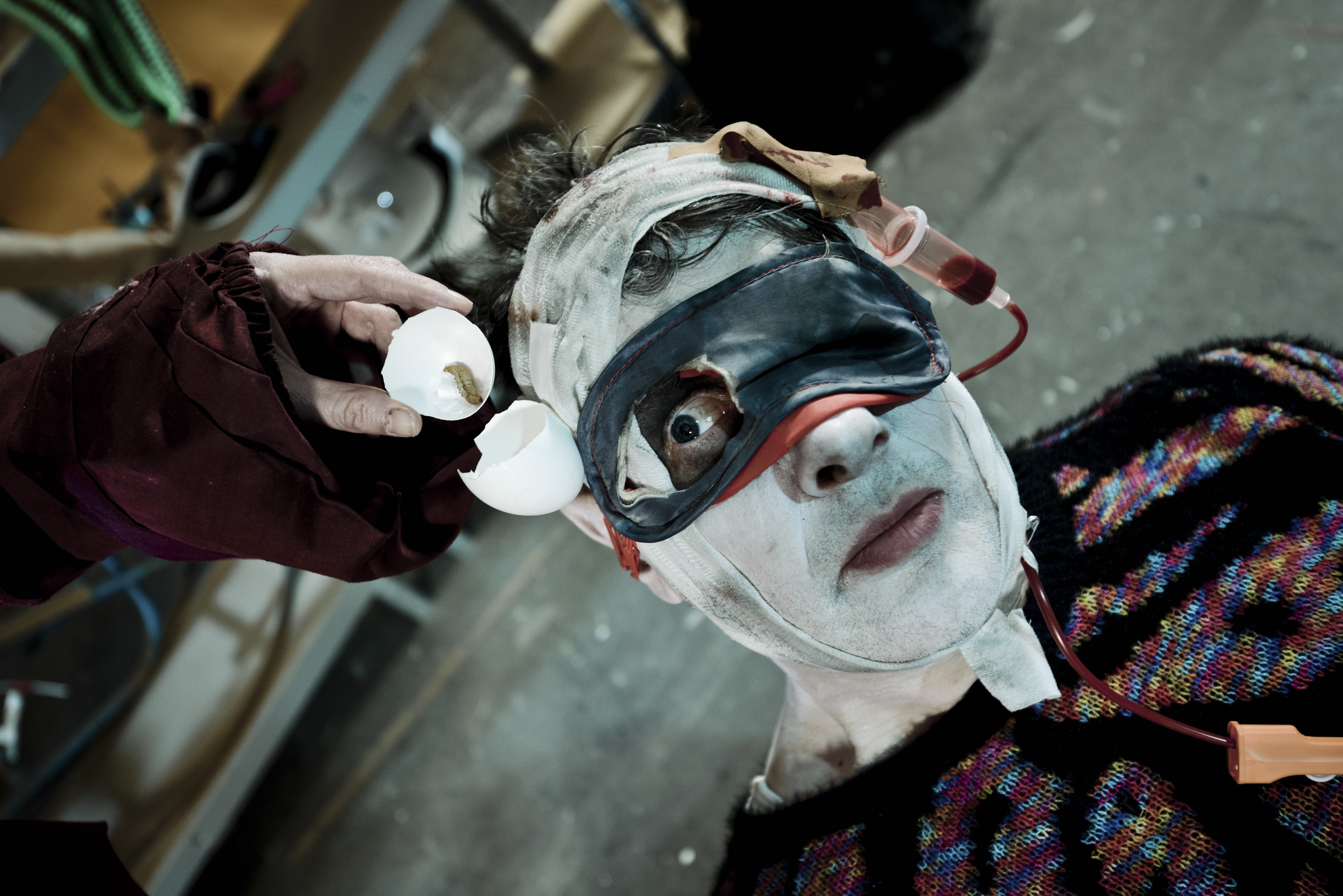
Silent chaos with explosion effect. A pin with red ball head into the already much seen eyeball with a sugar cube balancing on the tip of the tongue.
On the concept of physicality: My body is shirted and under the shirt collar the essence presence peeps out. I am naked and tautly drawn. If it goes off with me unbridled, I ask for understanding, because I am liquid without direction.
I would so much like to build a Donald Judd Cube, but I’m not allowed to. The quasi-me is already waiting and wants to be fed. The Golem-Double draws a figure on the DIN-A-4 sheet and is quite satisfied with what he has done. The EX-EGO stares at John Wick I - IV and knows no mercy with itself. The EGG-EGO strolls along the border strip. The One-My-Self-Me-Bean pushes a milk carton tab over the edge with his fingertip.
I lack the concentration and stamina to produce an art product to safely represent the self in the world and existo evidence. Approximations with violated facts as diagrams and vehicles and tools is my thing. And all in imperfect blur mode.
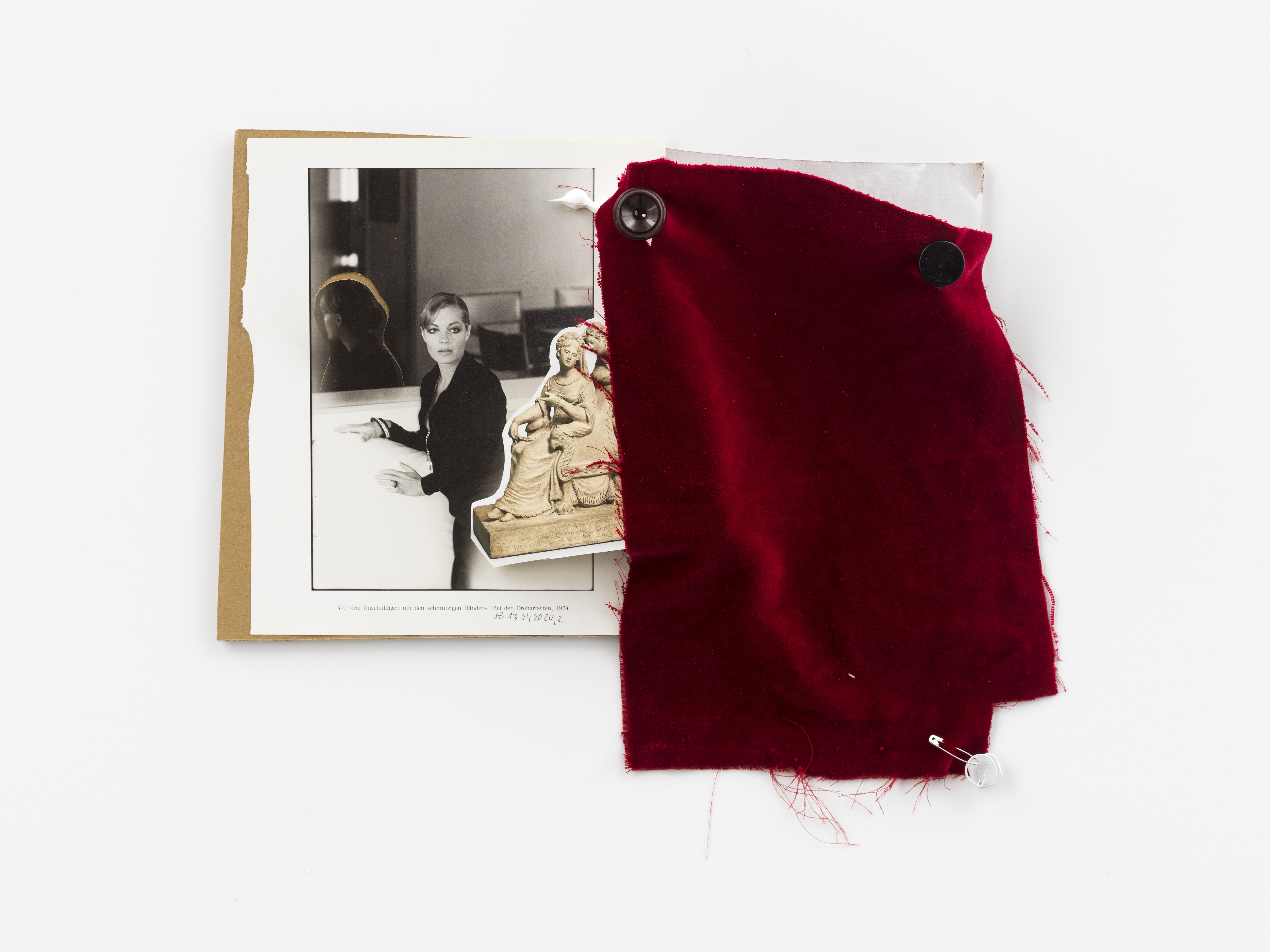
The objects and costumes (also called quasi-egos) are not supposed to become autonomous at all. They are part of the sum mutation and stand to each other in loose, foamed interdependency elasticities. A torrent of interdependency-elasticities pours over the recipients. Everything sticks together. The parts turn into sludge, in which the recipients criss-cross, breathless, immerse themselves.
The accumulation mush plays deliciously around the recipient. The NAIVO-GEN particles enter into an optional concatenation. The objects (instruments, diagrams) and costumes (quasi-egos) play an important role in the film as well as in the sum mutation. They partly determine the narrative and make the narrative of the film disappear. They also sometimes act counterproductively to the narration. The single part is nothing, the blurred modular connection of the parts is everything.
Billowing, pulsating sum parts mutate without any definition in the Whey-ME-Mind of the recipient. The actor or performer assumes the role of quasi-ego and directs or is directed by the instruments and diagrams.
You have defined the sum mutation well in its structure. But I hope that I trigger something in the recipient through the sum mutation, namely the unclear, fuzzily approximate goal of art welfare.
The art welfare. What is it? I don’t know either, but I strive towards it without any precise direction with an absurd MILK touch. The goal of the art welfare there is not to define, but to recognize it lost in thought and to disappear in it.
The sum mutation is not a technique, but a possibility. But one thing I already found out on the way to the KOP-OP-Kop-pel - it is not fixed.
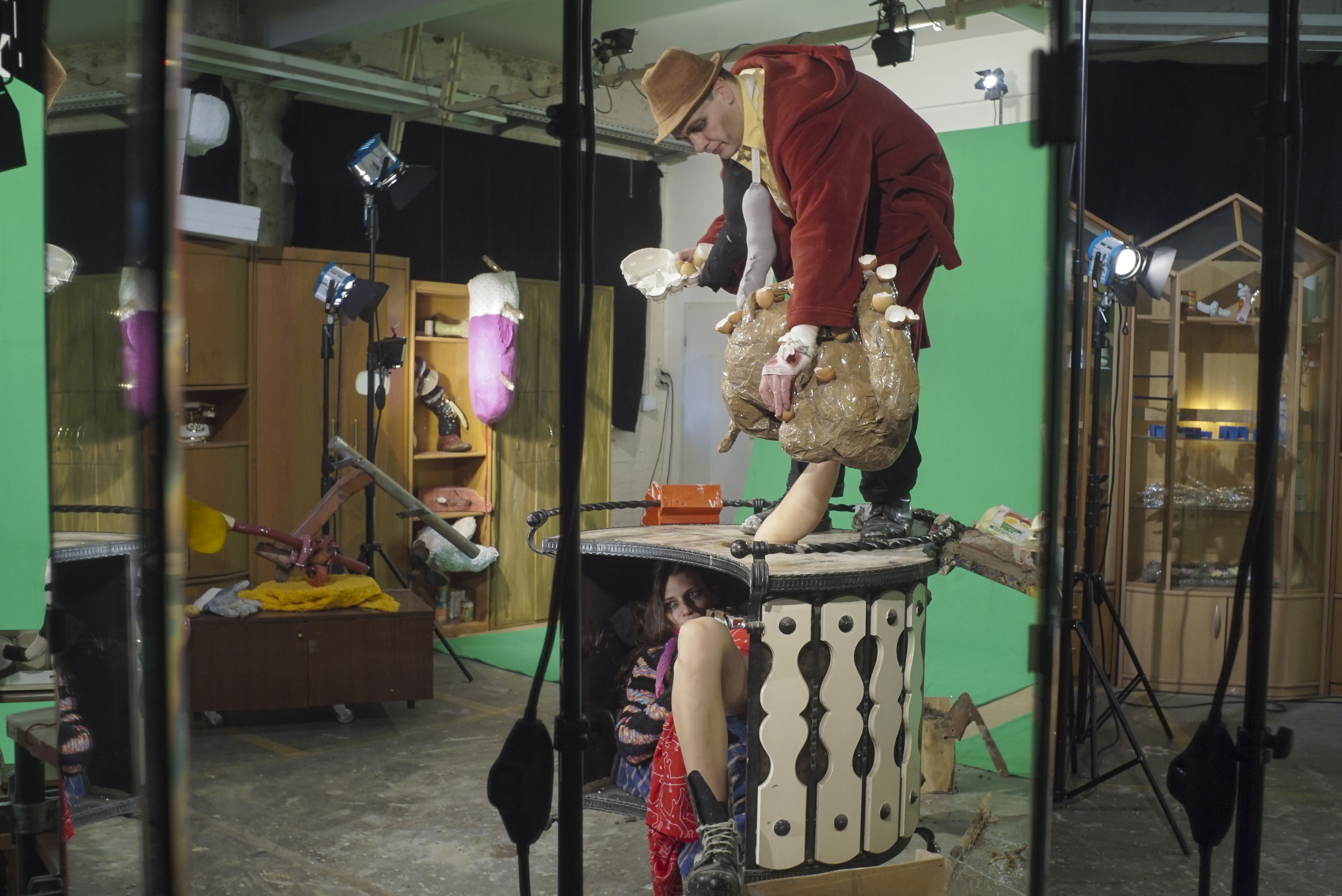
Taboo. Taboo. What a beautiful word! It invites one to scalp it. A dismembered taboo with its physical sound and its two heart-stopping “O “s. One “O” and next to it another “O”! So, who does not reach for the scalpel in sunshine!
Blitzenblank shall the deed-urge-drama creep across the stage. Oh yes - throw me the first “O” into the maw of unreason. My incisors shred the “O”. I’ll chop up the second “O” into small morsels and serve it to the mass power on rococo china. What a feast!
The black psycho-monochrome works at full speed. 1sqm, 1cl, 1ml, 1kg, 1 Existo.
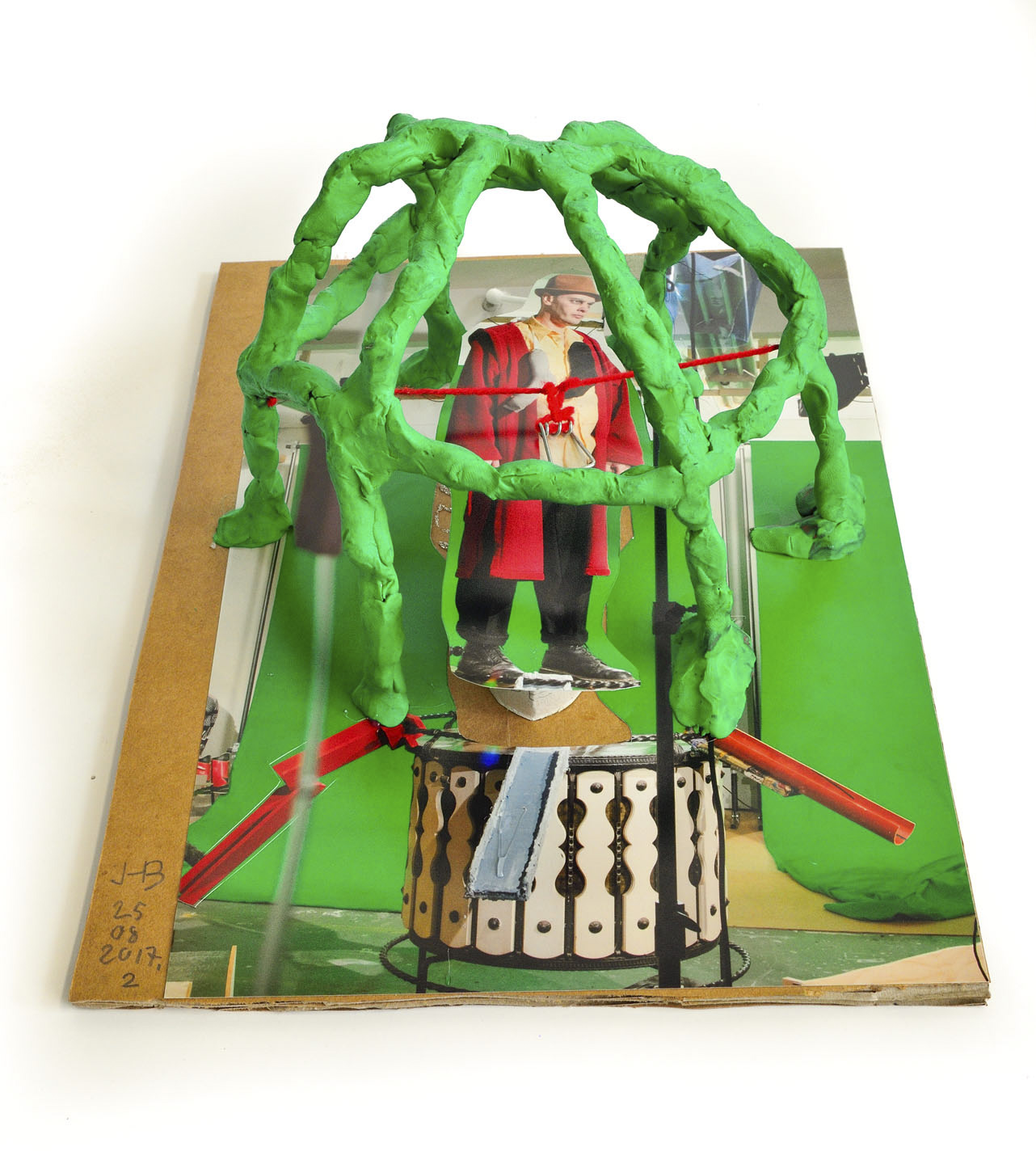
Peer Gynt is a play by Ibsen. Such a piece in person with caked-on tuddle stuff in the Main Brain Drain on it. Criss-cross he draws his story-spinning in the milking parlor on his farm. Meech elasticities flow around the big udder. Lars Eidinger as Peer Gynt sings songs by A-ha and Lullaby by The Cure. He slithers in a model circle game of an iso-schizo society in the madhouse.
Lars explains Ted Kaczynski Peerle theory by means of a curve diagram. He does it with troll women with a dash of libidinousness in threesomes.
Peerfect drifts Lars between the spinning worlds and the wretched on the farm. He chops off his finger peerfide and swallows peer-you cash flow from the financial vat.
Lars himself slips into the udder chamber that escapes the ground.
The end? No. Headfirst, he ropes out of the floating udder and disappears into a cesspool. It takes him about two hours to do it all, give or take.
Lars Eidinger plays Peer Gynt in superflex style with momentum. His acting injects the character of Peer Gynt with a dose of essence-presence-soup. He glides through the play and captivates the audience in his darkness. The audience is blown away and swallowed.