In Conversation with Anna Jermolaewa
Words by
Sabrina Roman

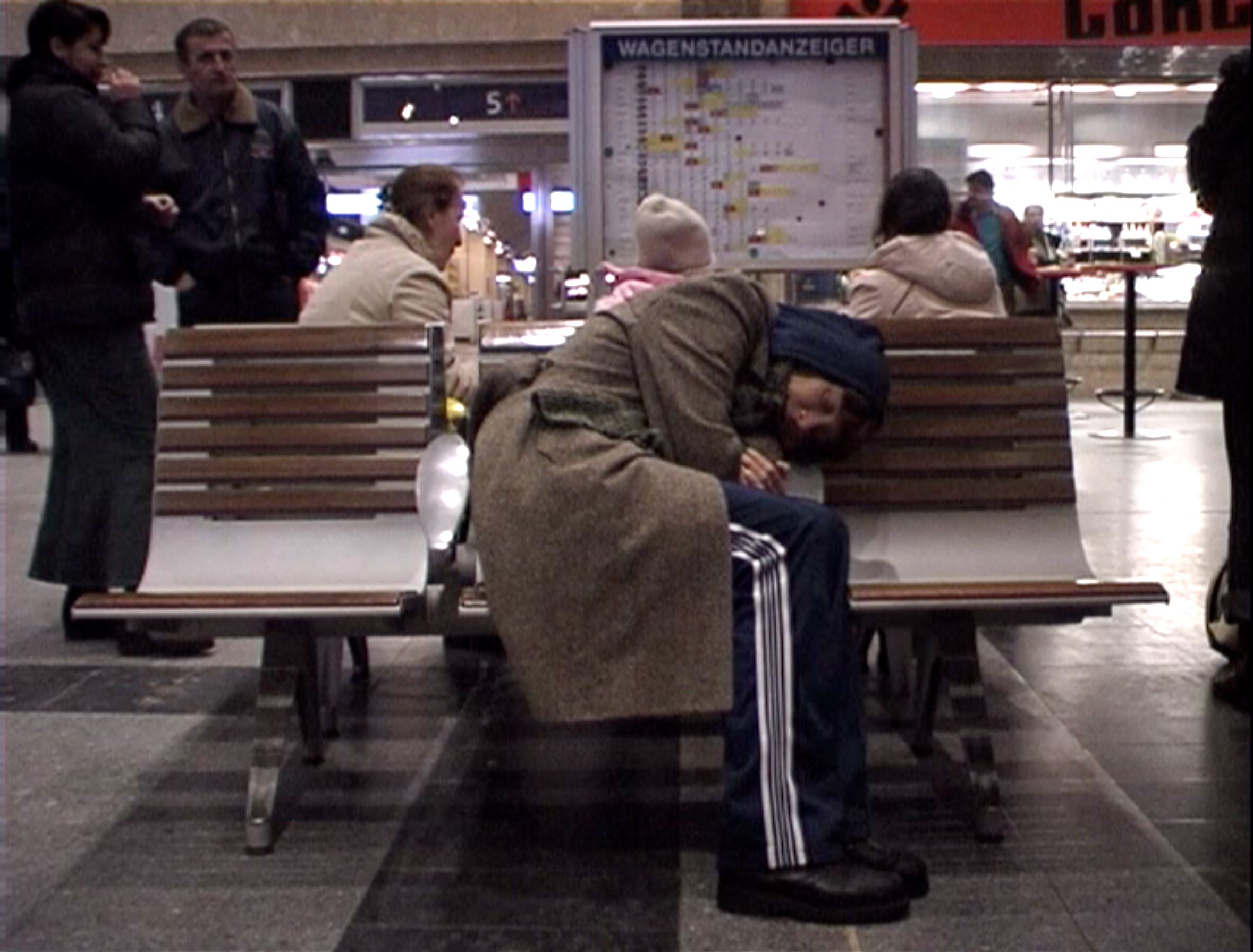
In my works that touch upon the social or political aspects of my personal experience, I try to find ways to engender a dialogue that goes beyond my experience. I try to make sense of the world, or at least what I’ve experienced in it, through concepts that hopefully can inspire someone to think about their own place in the world and how they interact with others. It’s not so much about me experiencing this as it is an examination of something I have experienced, for example, in my work Research for Sleeping Positions.
A good friend of mine described my practice once so well that it always stuck with me. She said that, simply, my work “finds the poetry in everyday life.” When applied to the world, and one’s experience, which can be both tragic and wonderful, and endlessly complex, this “poetry” can manifest itself in concepts that contain contradictions, correlations, and other aspects that ask the viewer to contemplate this complexity and maybe even inspire, such as with my works that touch on the refugee experience, a little empathy.

Many of my works have, at least I believe, a strong sense of irony. Take The Doubles for example. The impersonators of these Soviet leaders, and Putin, who are for hire for Russian oligarchs’ private parties, tv appearances, or simply wander around Red Square for tourists to take photos with, come across as benign, almost comical, performers. But the way Russian society reacts to them speaks to a troubling and terrifying re-writing of Soviet historical narratives. When I was with the Stalin impersonator in a shopping mall food court, a young man interrupted the interview to tell him that he was his “hero”! On the other side of the coin, the Gorbachev impersonator became quite unpopular (even afraid to be beaten up on the street when he was in his role) and has since retired.
In one of my early videos, Trying to Survive, I use nevalyashka (roly-poly) dolls asa metaphor for the average citizen. Against a white background, the dolls begin to wobble back and forth. Soon they find a rhythm, smacking from side to side in unison; however, as their environment grows more aggressive, they begin to spin and tumble out of control, a chaos that ends with all eventually falling out of frame and dropping to the floor with a loud “BANG!” like a gunshot.
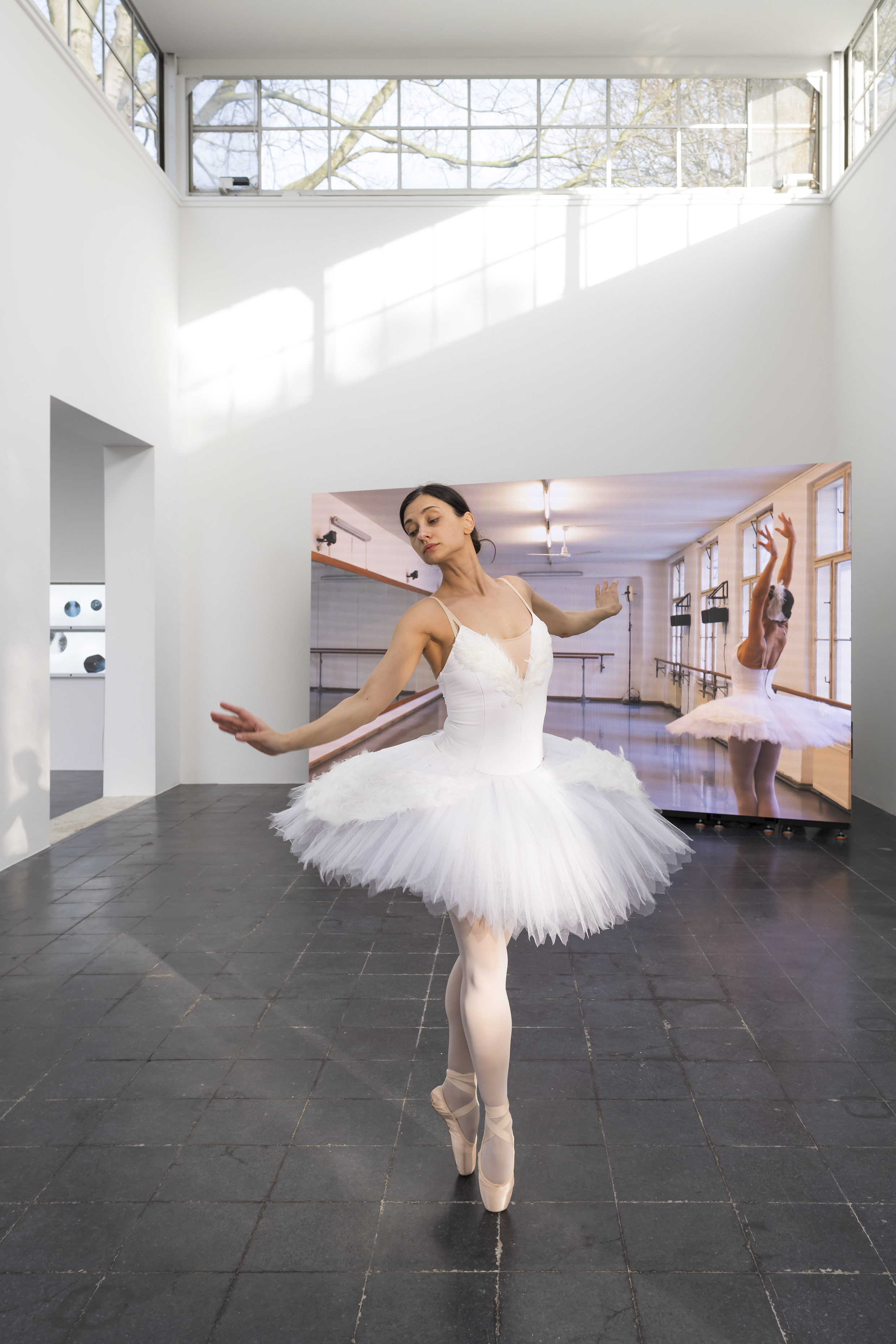
With Rehearsal for Swan Lake, I use what was once a tool of a corrupt state to distract its citizens (and avoid popular unrest/protest) as a form of protest against the current corrupt regime that succeeded it. Like most of my concepts that use irony, it involves a paradoxical element, but is in no way humorous. Irony and paradox as a form (or language) of protest or resistance can show that one can use the same tools (or codes) to break down a system that the system uses to try to maintain itself. At the very least, I hope that artworks and actions that use this approach can inspire others to find their own creative means of resistance.

I would prefer to be referred to as a conceptual artist. Many of my ideas come from my life experience, or how I see the world, and the artwork produced is my voice. Sometimes that voice is political, sometimes not. I am strongly against Putin and his regime and their murderous actions in Ukraine, both before and after the full invasion. In some of my works, I voice this opinion. This stance, combined with my history working with the political opposition party in Leningrad in the late ‘80s, probably led to the label you speak of. But I also have a lot of works that involve pigeons and no one calls me a “pigeon artist,” at least to my face.
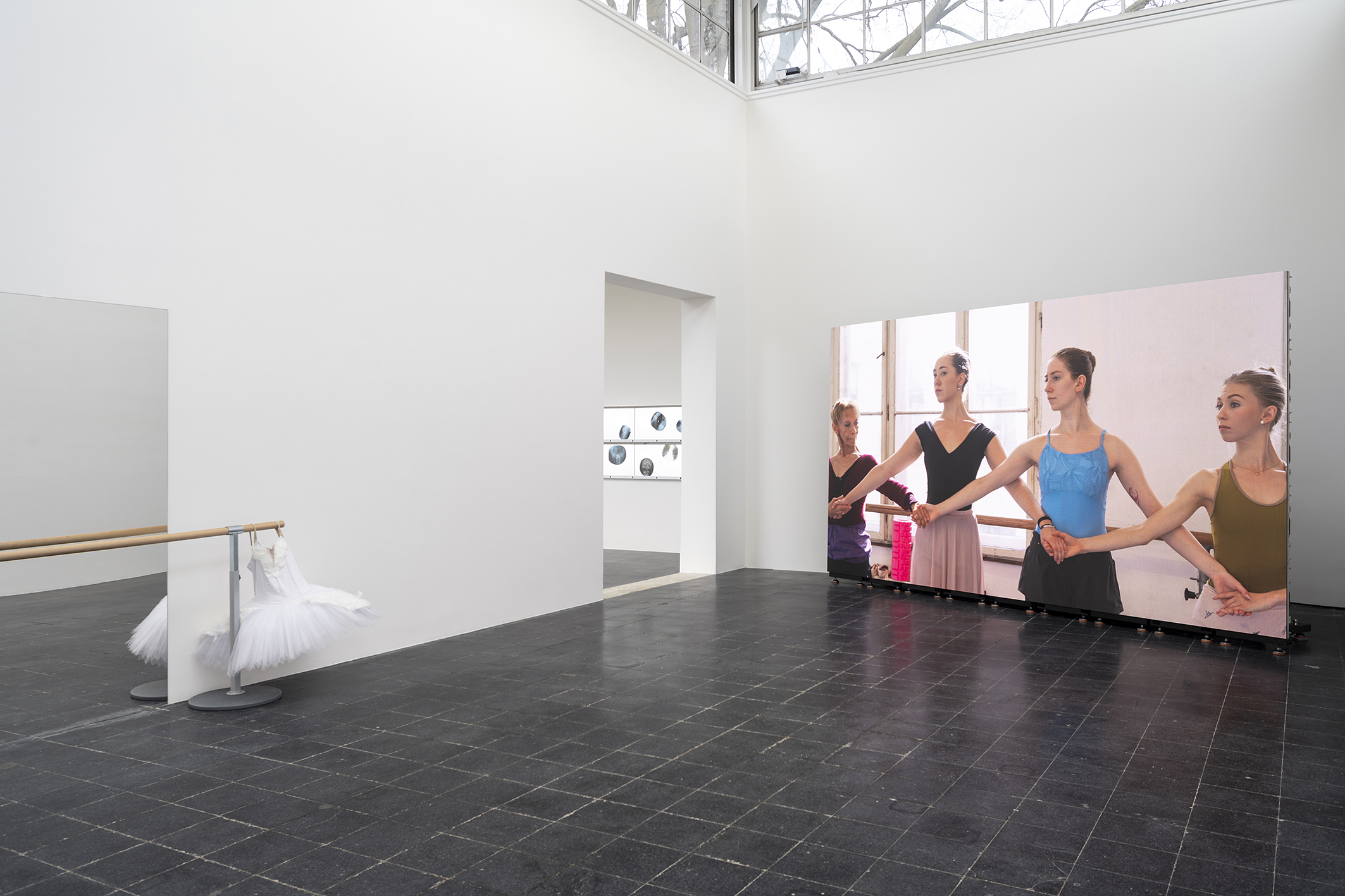
The concept for Rehearsal for Swan Lake started with my childhood memories of seeing Swan Lake broadcast in a loop on Soviet TV, as a tool of the state to distract and placate its citizens during a time of political instability or duress. Among many, it had an opposite effect: it caused an apprehensive excitement that something in the oppressive Soviet system was going to change. At the least, it signified that a powerful Soviet leader had died.
I found these aspects especially poignant in turning this tool of the state, Swan Lake, into a protest against Putin.
We began production with the idea that we would rehearse for a final performance that would be our “Swan Lake broadcast.” While filming rehearsals, and seeing the hardships Oksana and the dancers put themselves through, it became obvious that the work was in the rehearsal itself. Their struggle to achieve “Swan Lake”—not only the physical toll, but the missteps, the search for a unity of movement—emulates the hardships inherently involved in resistance against authoritarian regimes. All of the “color revolutions” I show signifiers for in The Penultimate were only made possible by incredible determination, struggle, and sacrifice.