Nat Faulkner at Camden Art Centre

Camden Art Centre is pleased to present Strong water, the first major institutional exhibition in the UK by London-based artist Nat Faulkner (b. 1995). Faulkner is the recipient of Camden Art Centre’s 2024 Emerging Artist Award at Frieze and presents an ambitious new commission across Gallery Three and the Central Space.
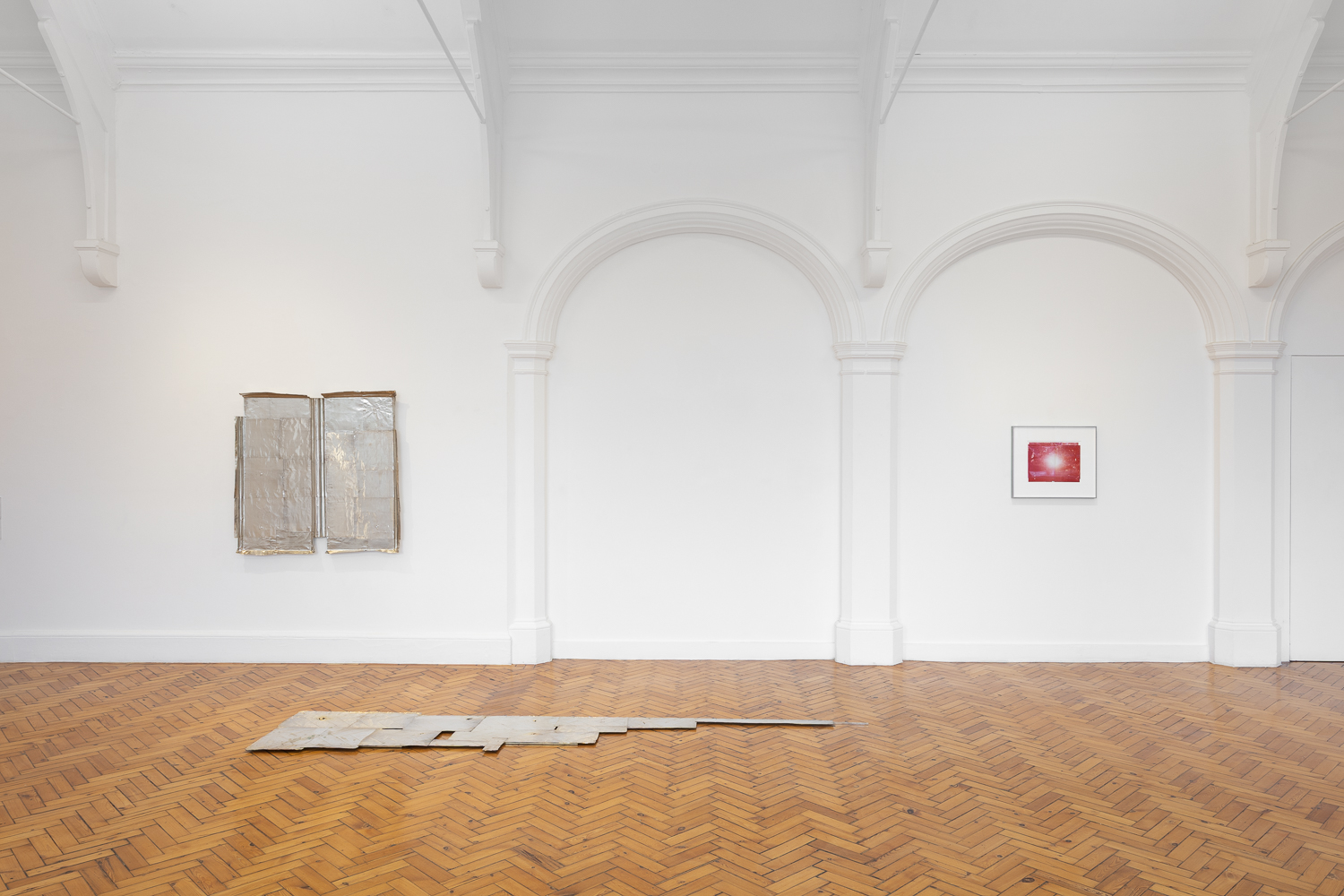
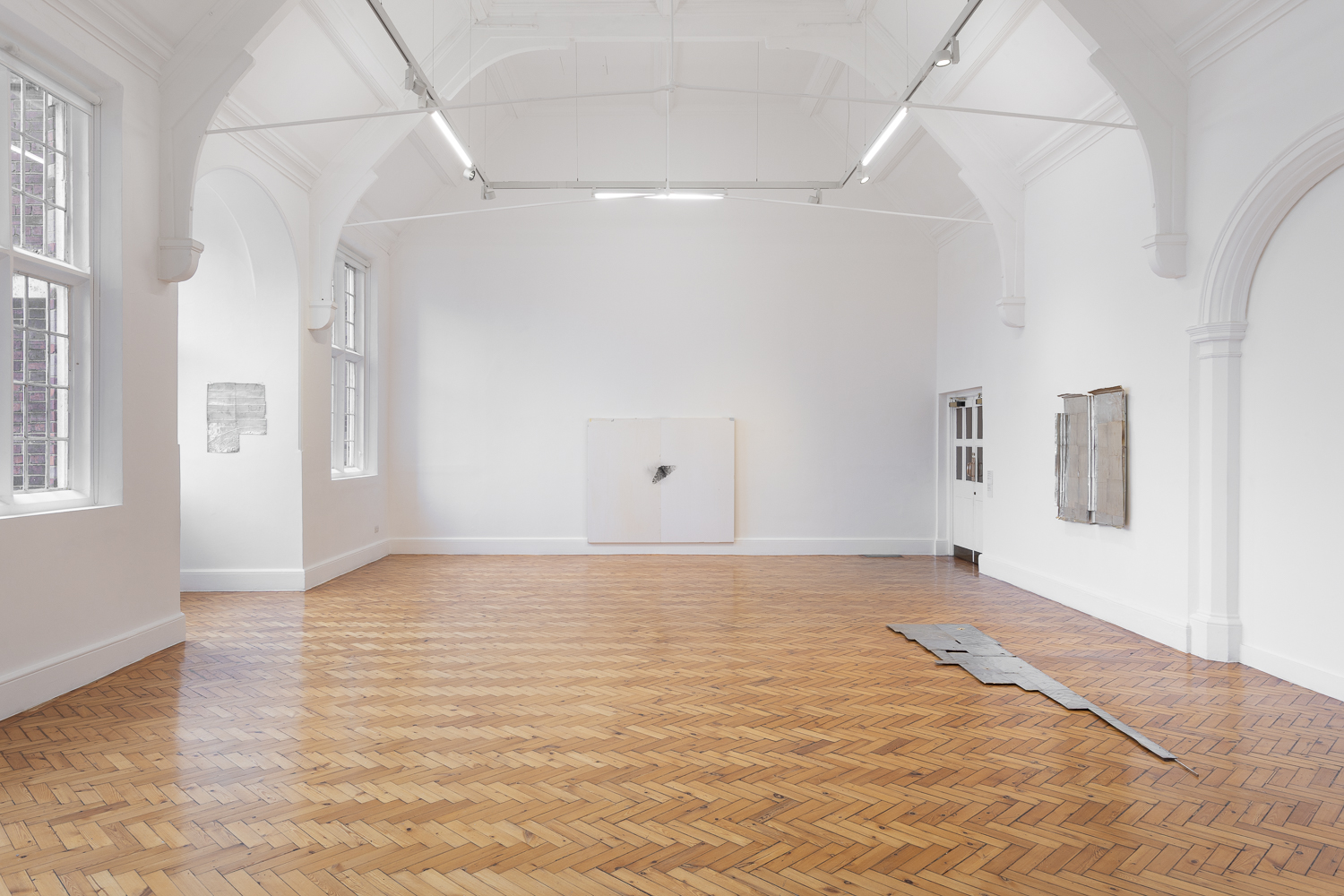
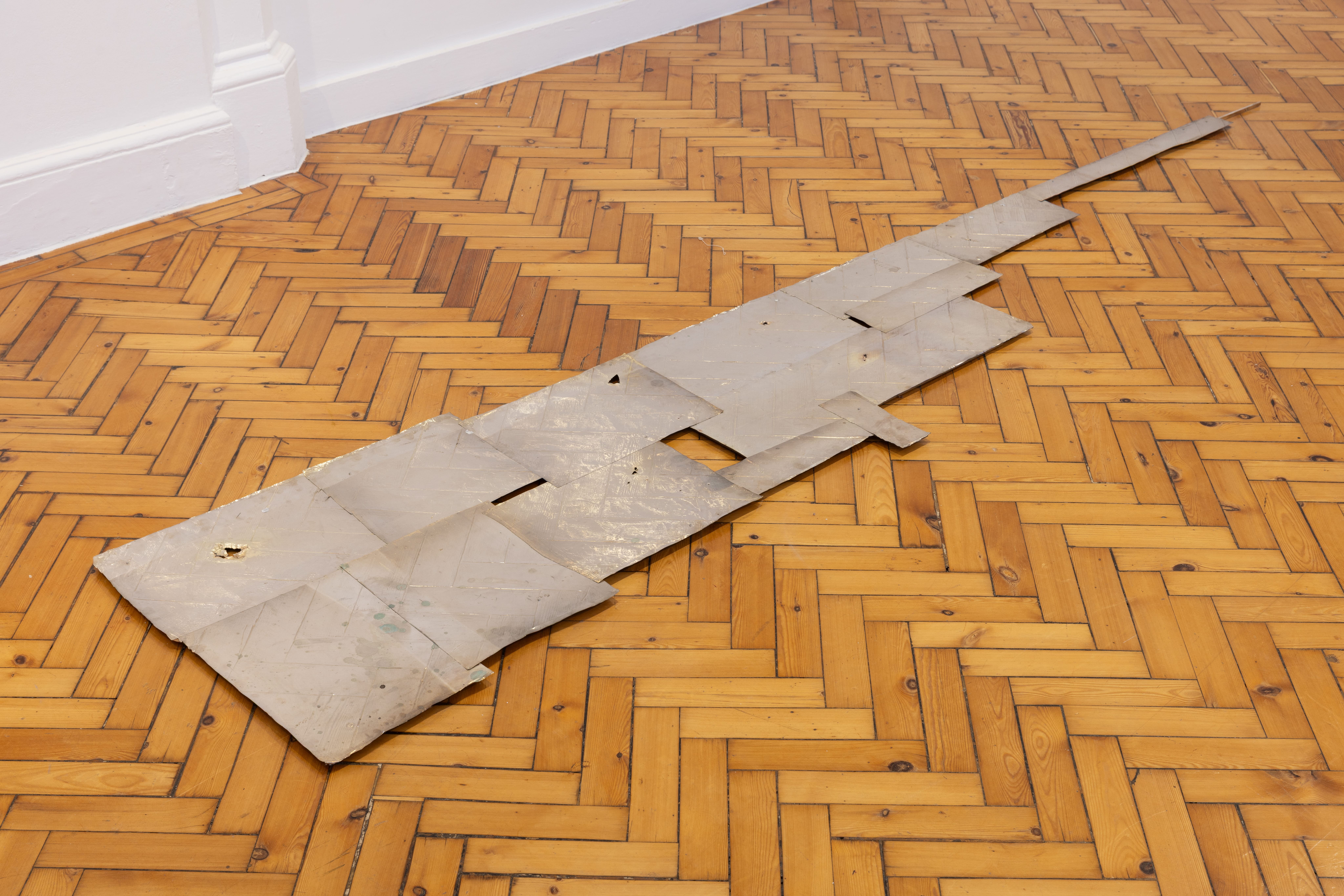

In the tradition of artists such as Bruce Nauman and Fischli & Weiss, Faulkner’s studio is a primary subject in his practice, as well as the gravitational centre of this exhibition. In a series of new copper frottage reliefs, Faulkner partially maps this site via ‘rubbings’, taken directly from the floor and walls of his studio, which are then electroplated with silver that is recycled and purified from x-ray film, sourced from NHS labs. Each ‘impression’ captures minute details of the space which, when pieced together like finds from an archeological dig, reveal a partial, uncanny, 1:1 image that haunts the gallery in situ. Over the course of the exhibition the silver will respond in subtle ways to the shifting qualities of light reflected from outside the gallery; developing and evolving as it tarnishes with breath, moisture and humidity.
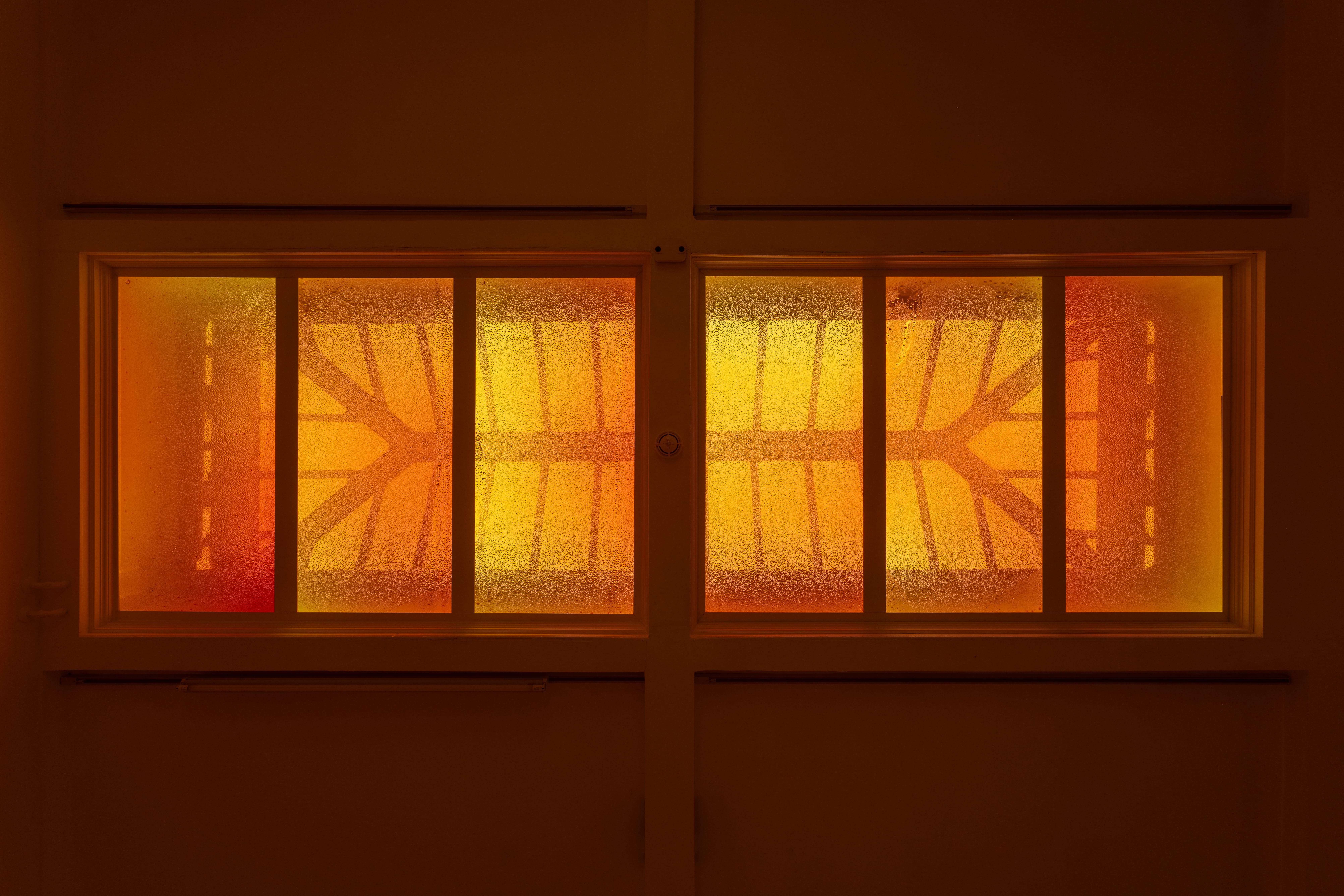
Derived from the Latin name for nitric acid, ‘aqua fortis’, the exhibition’s title, Strong water, alludes to the artist’s fascination with state changes, demonstrated in water’s mercurial ability to cycle through manifold conditions. This continuous cycle provides an analogue to the works featured in the exhibition, in which the constant vitality of metallic substances prevails across distances and state changes, from fixed quantities to new apparitions. Water, in contrast, dilutes and washes away potent chemicals, changing from a benign substance to one charged in confrontation with chemical elements, their properties and behaviours. One such element – iodine, a light-sensitive liquid –features in the exhibition: bottled in bespoke vessels, it provides a flash of colour amidst the exhibition’s mostly monochrome palette.
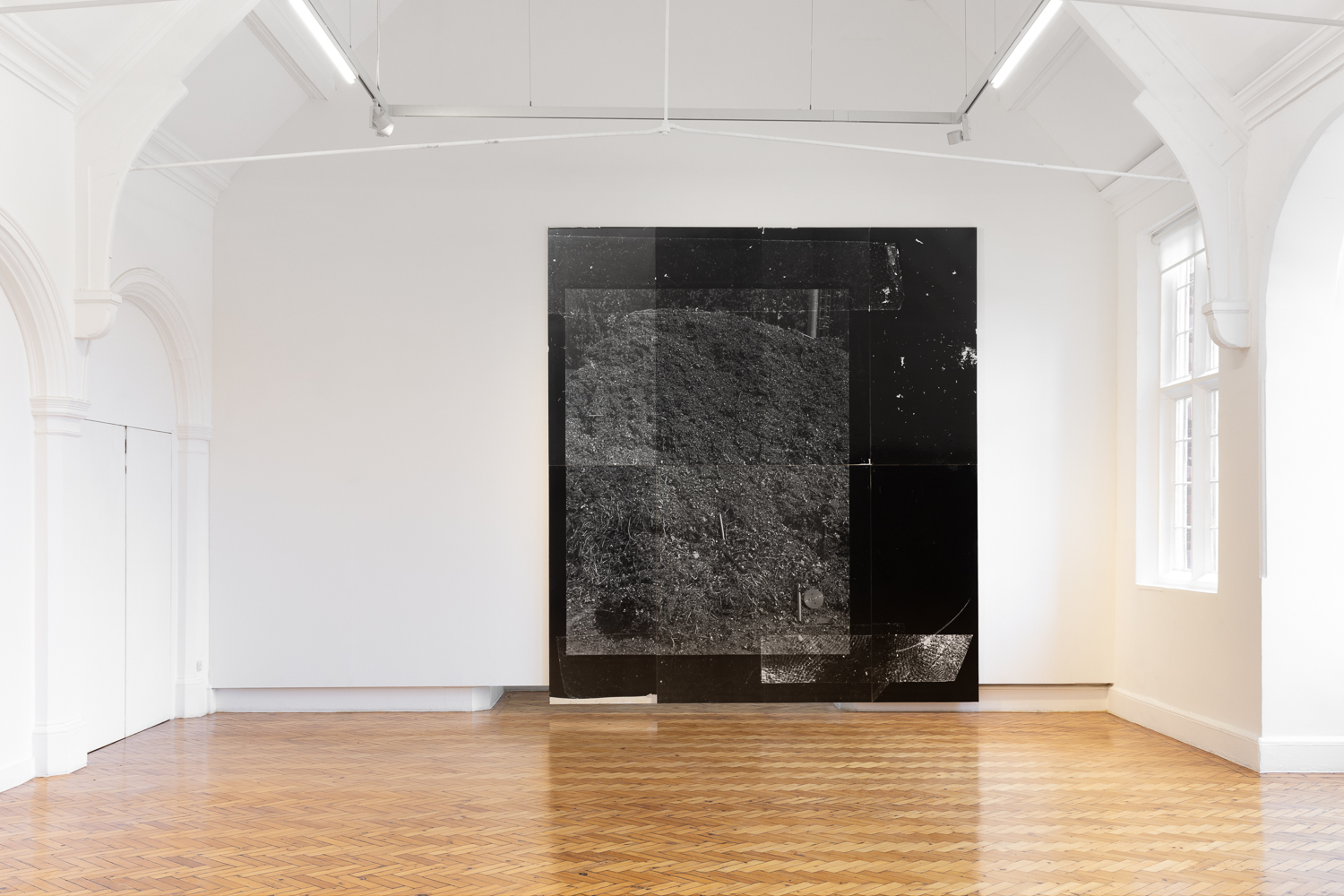
At the core of Faulkner’s work is a concern with the structures and mechanics of photography, and the artist’s studio – which operates for him as a giant dark room – is a machine whose settings and parameters are calibrated to determine the scale, tone and intensity of an image. Within the exhibition a large-scale, multi-panel photograph, taken at a waste-metal facility in Cremona, Italy, demonstrates how extended exposure times give rise to variations in image intensity (light and dark), as the development of the six prints is keyed to varying times of day and the accordant surges or lulls in the electrical grid powering the enlarger.
Faulkner welcomes chance into the developing process, as dust and other detritus, as well as traces of the physical process of fixing the negative in place (fingerprints or Sellotape) emerge in the images. Printed using an analogue silver gelatin process in which metal is both subject and medium of the work, this floor-to-ceiling photographic installation further expands Faulkner’s investment in alchemical processes of distillation, purification, and the refining of base metals. In the artist’s words: “As we jettison, organise, distil and recirculate, the metal that was once ‘old’ becomes ‘new’ again in a ritual of purification.” In a world so oversaturated by digital imagery, Faulkner’s work offers respite – an expanded, spatial practice in which the hand of the artist, a sense of presence and physical touch poetically revive the art of photography for fatigued, 21st century eyes.
The exhibition is accompanied by an artist’s book, titled 1:1, which consists of an extensive series of contact prints derived from a single large format image of a peppered moth (Biston betularia) – widely studied as an example of ‘industrial melanism’. During the Industrial Revolution, soot from factories darkened the bark of trees. By process of natural selection, the lighter form of the moth, which was once well-camouflaged against lichen-covered trees, became more visible to predators and populations diminished, while a darker (melanic) variant became more common, as it was better camouflaged against the soot-darkened trees. Alternating on recto and verso as positive and negative, the images progress from a precise depiction to a largely obscured, abstracted extrapolation, as the subsequent prints ‘degrade’ with each repeat, the information in the original becoming increasingly distorted and generalised. The publication includes contributions by Gloria Hasnay (Director of Kunstverein für die Rheinlande und Westfalen, Düsseldorf) and artist Sean Steadman, and is designed by George Haughton.
A new essay by Geoffrey Batchen is published in the latest edition of Camden Art Centre’s long-running File Note series. Produced for every exhibition, these publications enable the commissioning of a new piece of long-form writing, accompanied by a reading/listening/watching list compiled by the artist.