Jessi Reaves at American Academy of Arts and Letters

Jessi Reaves

March 14 – July 3, 2026

process invented in the mirror

American Academy of Arts and Letter

New York

Jessi Reaves (b. 1986; Portland, OR) makes sculptures that confront the assumptions and values embedded in objects of daily life. Early works incorporate severed limbs of mid-century furniture in crude constructions that humorously question the elevation of clean lines and rational forms to universal good taste. Recent sculptures have become visually dense, using handiwork and ornamentation to achieve an almost grotesque sense of accumulation.

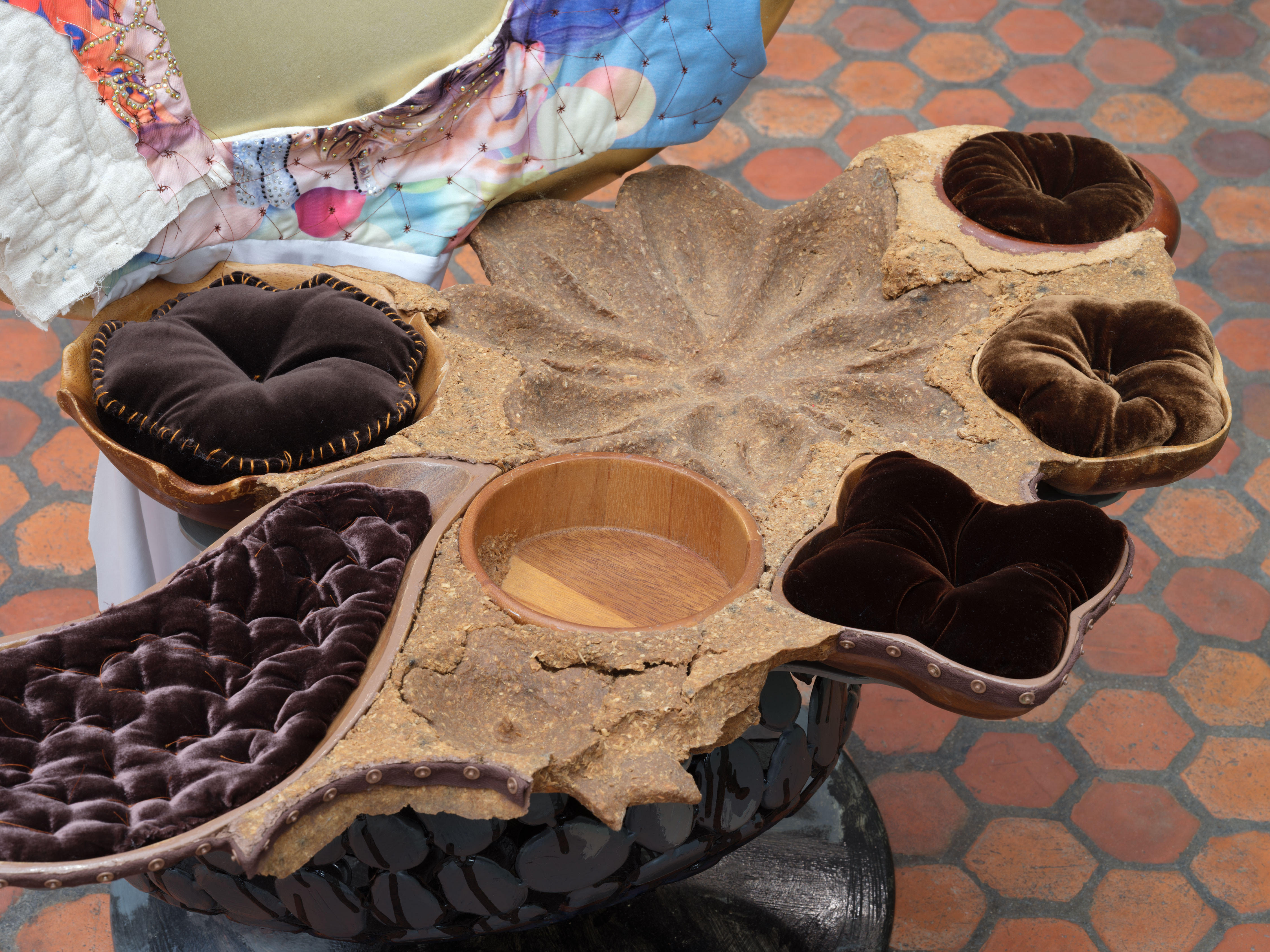
The works in process invented the mirror revolve loosely around Reaves’s interest in objects that reflect our evolving relationship to labor and the handmade. Some sculptures contain simple woodworking projects, such as carved wooden bowls with the crude marks of a hobbyist’s practice. Others incorporate objects of domestic self-sufficiency, such as rotating machines like lazy Susans or bachelor’s stools, convertible pieces of furniture designed in the eighteenth century for single men that transform with a toggle. A distorted image of a New Deal mural of men mining steel and milling lumber grounds the installation.

The exhibition began at the Walker Art Center in Minneapolis last fall. At the Walker, Reaves made over the gallery with elements of “municipal dimensionality,” including a drooping green curtain hung at the awkward yet practical height where public buildings add wainscoting or special paint to protect their walls from wear. At Arts and Letters, Reaves has altered and remixed some of these display materials to create modular sculptures that will join the other works in the show.
The sculptures of Jessi Reaves (b. 1986; Portland, OR) confront the assumptions and values embedded in objects of daily life. They combine materials that, depending on the beholder, might be regarded as junk, prized design, kitsch, or cherished heirlooms, and, through reassembly, propose less fixed and prescriptive ways of seeing. Objects in her studio include a hulking chrome bar, plastic hair claws with particular art deco–era decals, a burlwood CD caddy, hand-carved geese. Recently, Reaves has collected simple woodworking projects made by hobbyists to sharpen their skills with a tool or as effortful personal gifts. They are the sort of loaded objects that, as Mike Kelley once pointed out, contain a seeming contradiction between their high emotional value and humble material qualities. Kelley’s writing is a touchstone for Reaves, especially his insights about craft’s status in the cultural hierarchy.

Reaves grew up in 1990s suburban Oregon, where the DIY ethos of the 1970s persisted. Her mother made macramé from heavy jute and wooden beads and taught her to sew. Her experience of art, and what she thought it was at that time, were the creative wares she saw at farmers markets or at the nearest art school, Oregon College of Art and Craft, where students made jewelry by heating and bending old silverware into rings and bangles. Her family made annual visits to Timberline Lodge on Mount Hood, a structure hand-built over nine months during the Great Depression as part of the Works Progress Administration, a New Deal program that employedout-of-work artists and builders. Seeing the lodge, with its chunky wooden furniture, ironwork, and murals—all made by WPA artists on site—led Reaves to think of artmaking as a profession that had value and that she wanted to pursue.

In art school, Reaves initially studied furniture design. She spent an entire semester building a single table to learn to use hand tools—hand planer, Japanese saw, increasing grits of sandpaper. It was endless sanding. Professors in the department were either industrial designers or studio furniture craftspeople, and the courses focused on technique and mastery. The more she looked at what was being made, and how it revered craftsmanship above all, almost without question, the more her motivation waned. The outcome seemed predetermined, like a virtuosic pirouette.

What seemed less clear, and therefore more alluring, were her conversations with painters, who incorporated or shrugged off learned conventions in pursuit of something more mysterious. As Adorno once put it, they were making something that had “become more than something simply made.” Reaves switched to the painting department, and by graduation was applying acrylic to upholstery foam, trimming the edges so the works resembled fake rocks or stone tablets made strange.

She was interested in material transformation and using a surprising scale; most of what she made was either diminutive or huge. When Reaves had her first gallery exhibition in New York six years later, she showed sculptures that were, in many ways, a riposte to the aspirations of her early design education. They incorporated severed limbs of iconic mid-century modern design knockoffs, like the metal baseof a Tulip table or the wooden exoskeleton of a Wegner chair, in combinations that invited use as unconventional tables, seating, or lighting. As the practice developed, Reaves’s works became more formally complex and proposed increasingly ambiguous and absurdist functions. For example, Blue heart shelf (2019) has a high tower of chair parts and painted steel that support a single blue Perspex drawer. The body of Take it from someone who’s been there before, cabinet with heart doors (2019) has the look of a large freestanding wardrobe, yet its interior, where a person may hope to store something, is three-quarters full of furniture parts. Tempted by the semblance of function, yet thwarted when we seek it (we’ve all “been there before”), Reaves’s ad hoc compositions dare us to imagine how we would use them.

Critics note that Reaves “lays waste” or “obliterates” the line between sculpture and design, suggesting we have entered an “enlightened consensus, in which all genres and materials are treated as equal.” 3 Yet Reaves has been deliberate about exhibiting only in art contexts. As an artist, one tradition she carries forward is productive contradiction—intentionally disrupting her own premise. Her objects risk undermining their art status by offering domestic function. Then there’s how they’re constructed. To make Center console (the extent of the damage) (2025), for example, Reaves used cheap plywood flooring to replicate a rare Paul Frankl occasional table. The material breaks easily, making square corners impossible. Where Frankl edges his table with silver leaf, Reaves covers hers with mirrored venetian blind slats held down by upholstery tacks. She often employs glue and sawdust for joinery—a technique multiple commenters in an online woodworking forum call “horrible” and a YouTube influencer hack. She makes slipcovers from materials too delicate and sheer to be protective, then sews them on permanently. She builds large, complex objects with minimal storage space. To suggest how one might use an intricate, handmade cabinet, she fills it with reusable water bottles from the lost and found at her yoga studio. Her work pries at the hierarchies embedded in modern design history—with its rational forms and almost moral faith in functionality—and questions the very premise of universal good taste.

The works in this exhibition revolve loosely around objects that reflect our evolving relationship to labor and the handmade. Some sculptures contain carved wooden bowls with the crude marks of an amateur’s practice. Others incorporate furniture forms that absorb domestic labor into their mechanical function, like lazy Susans. Two works use eighteenth-century bachelor’s stools— convertible furniture for single men that toggles from ironing board to chair to stepladder. Reaves’s sculptural solution is to fix them into a single position, then render them utterly useless for that designation. A would-be ladder is filled with boxes and encased in Plexiglas; an ironing board covered with driftwood and silk.

process invented the mirror began at the Walker Art Center last fall. There, Reaves made over its austere galleries with a large mural and other elements of “municipal dimensionality.” She had in mind the New Deal murals of the 1930s and 1940s, like those at Timberline Lodge, that elevated and idealized the dignity of work. Research led her to a mural in a West Virginia post office depicting men mining steel and milling lumber.6 Reaves distorted the image and rendered it in grayscale on a series of wooden panels. Beneath it, she hung a green curtain at that awkward yet practical height where public buildings have wainscoting or two-tone paint to protect walls from daily wear.

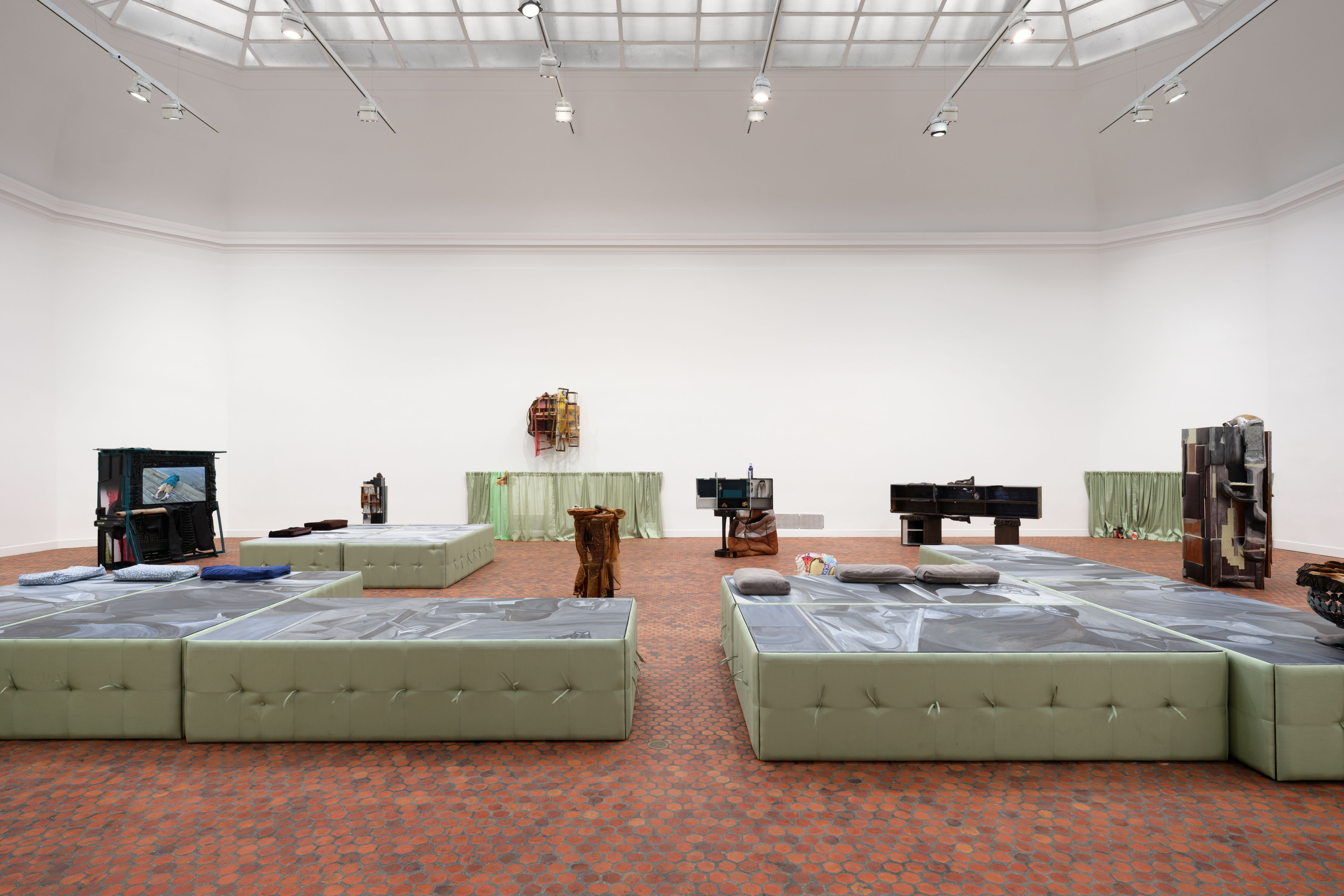
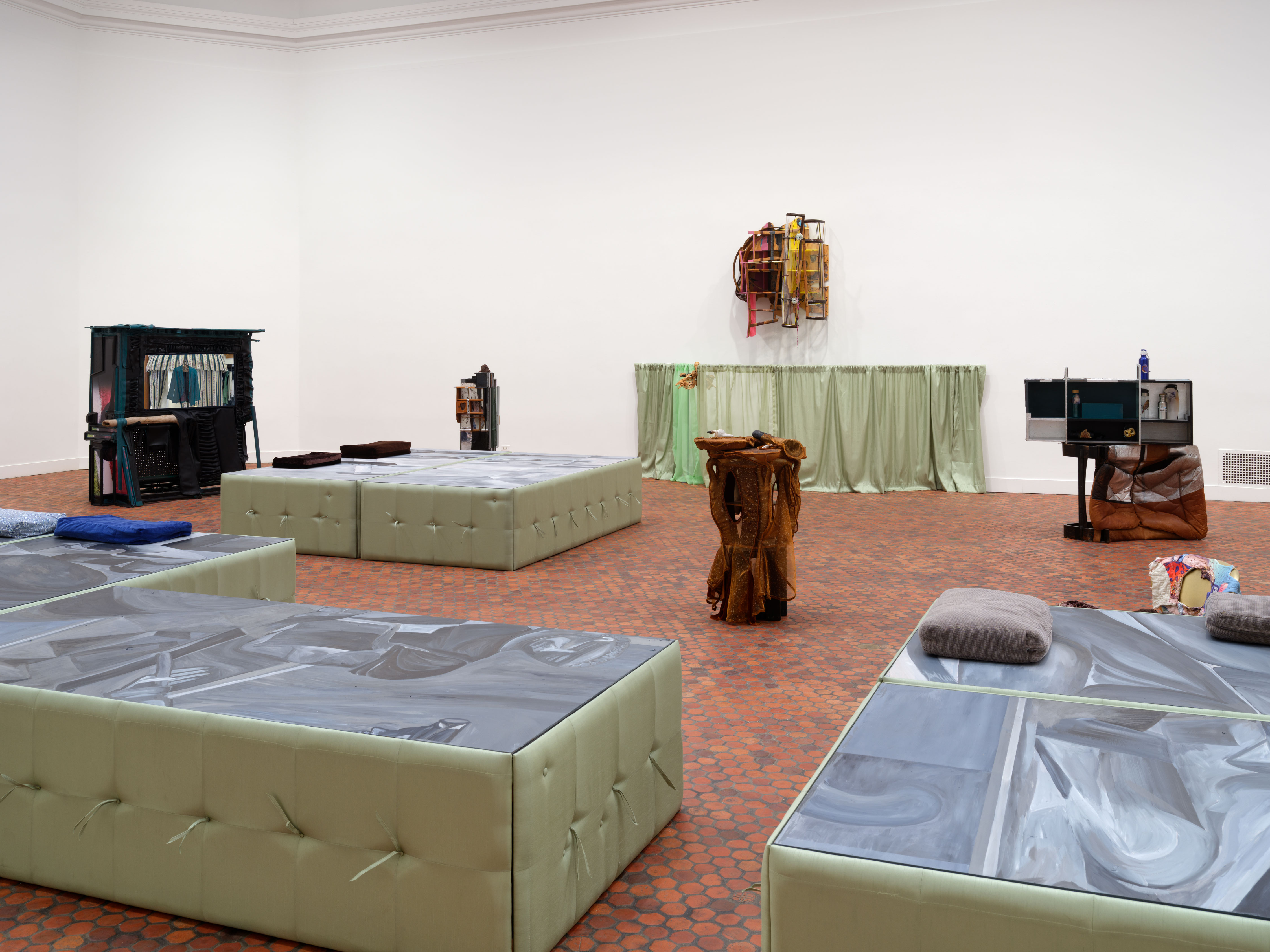
To prepare for the exhibition’s second presentation in New York, Reaves considered the ornate Beaux Arts architecture of Arts and Letters and how to alter and remix its contents in response to the changed environment. Travel triggered transfiguration: Using the exhibition’s display elements as she would objects in the studio, Reaves repurposed the murals and curtains from the Walker, shaping them into sculptures. Most of the mural panels became tops for freshly constructed pieces that function as modular seating or display platforms, their sides upholstered in salvaged fabric. A portion of the protective curtain remains, wrapping artworks as wall-mounted stanchions. In this new configuration, the idealized scene of laboring workers is broken up and reoriented from vertical display to horizontal function. The sculptures do not resolve; they wait, as all useful things must, for someone to decide what they’re for.

– Jenny Jaskey

Installation view, Jessi Reaves, process invented the mirror, American Academy of Arts and Letters, 2026. Photo: Steven Probert Studio.
Jessi Reaves, What do people do around here, 2025. Courtesy the artist and Bridget Donahue, New York; photo: GC Photography.
Jessi Reaves, We've seen the moodboard, 2025. Courtesy the artist and Bridget Donahue, New York; photo: GC Photography.
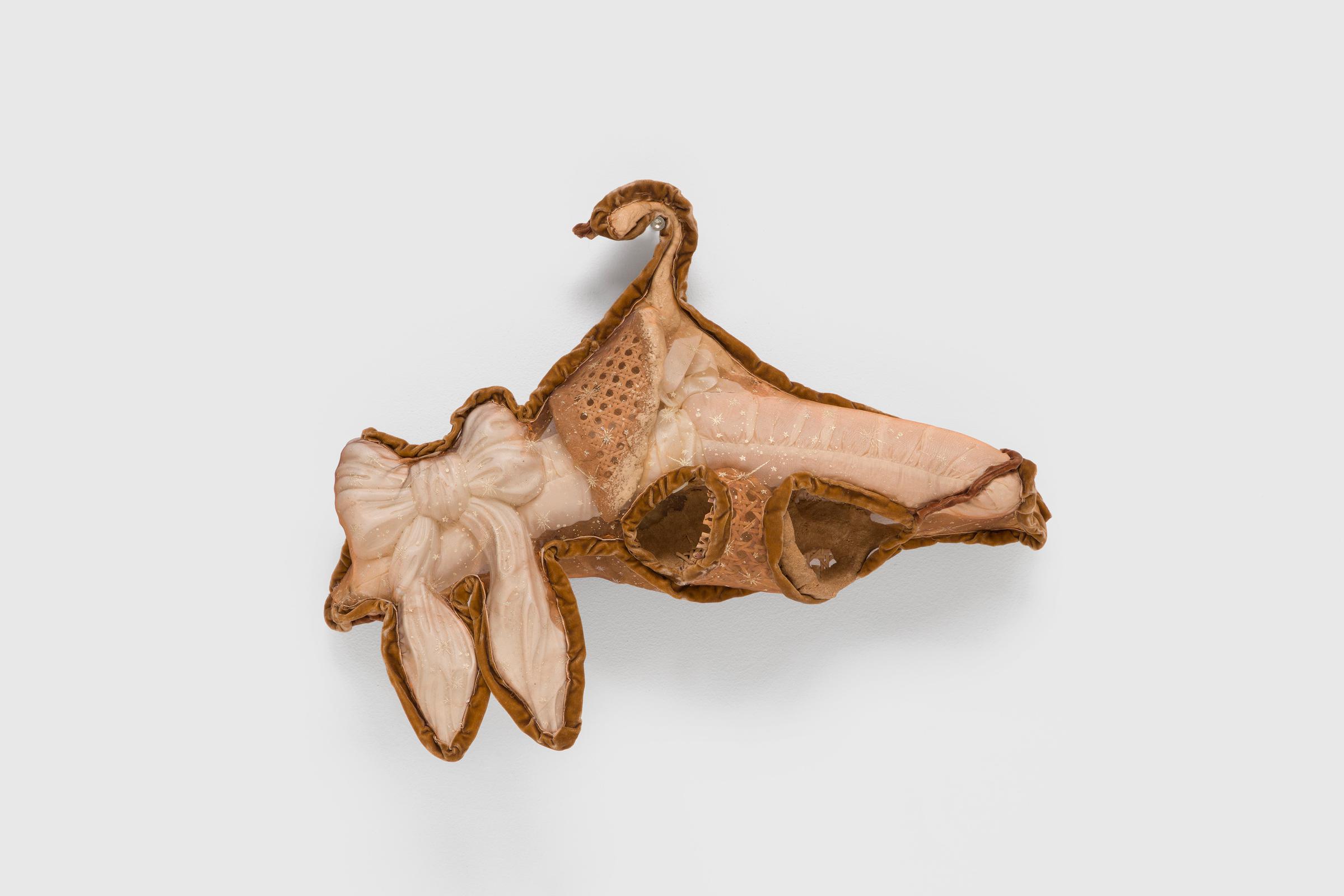
Jessi Reaves, Hanger, 2025. Courtesy the artist and Bridget Donahue, New York; photo: GC Photography.
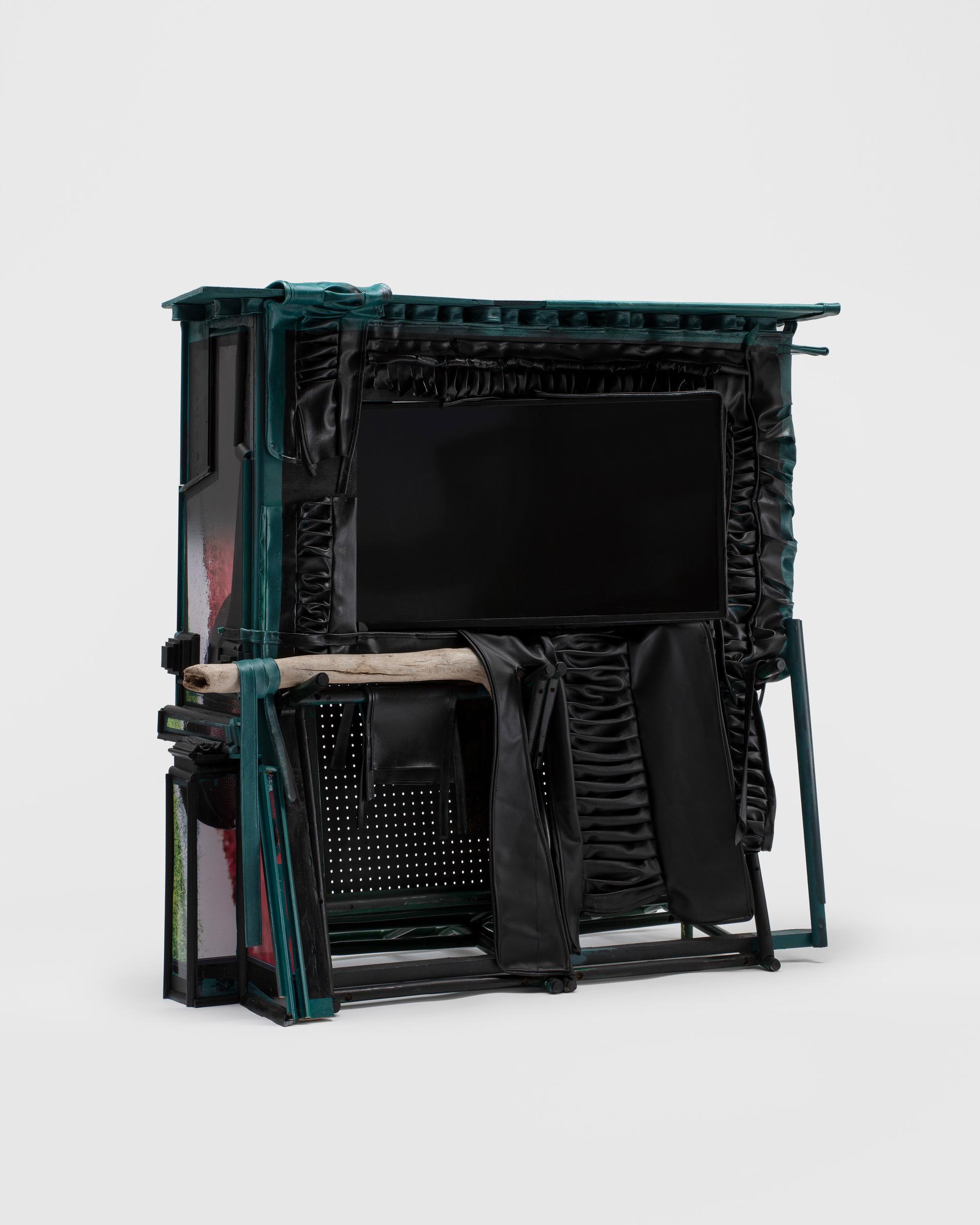
Jessi Reaves, Reflection in black plastic, 2025. Courtesy the artist and Bridget Donahue, New York; photo: GC Photography.
Installation view, Jessi Reaves, process invented the mirror, American Academy of Arts and Letters, 2026. Photo: Steven Probert Studio.