Gina Fischli at zaza'

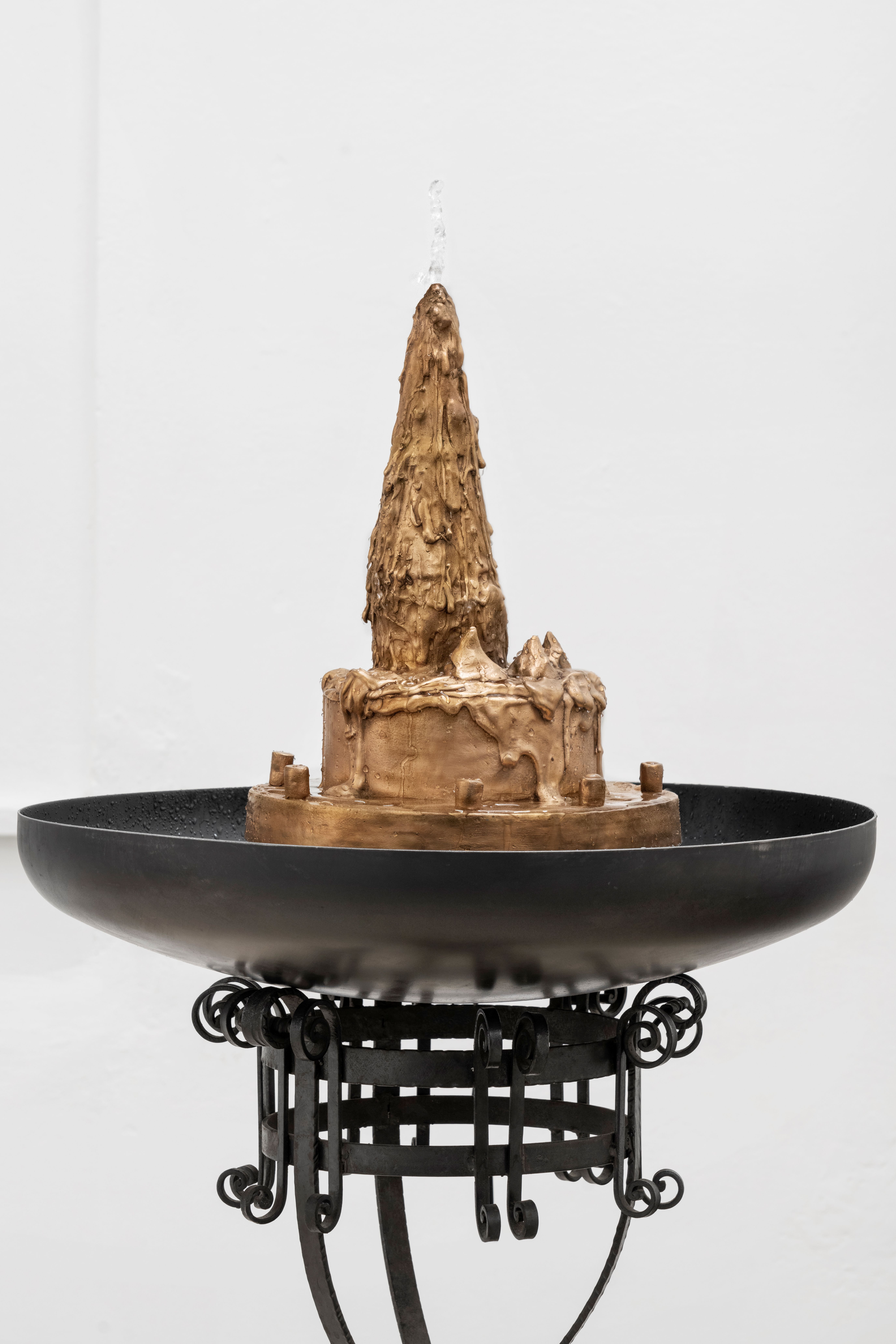
The exhibition takes its title from Carson McCullers’ novella ‘The Ballad of the Sad Café’, a narrative structured around unequal desire and unstable forms of community. In Fischli’s work, community appears as a condition shaped by access, dependency, and exposure rather than mutual belonging. The reference to McCullers frames the exhibition as an inquiry into how togetherness is organized and strained by economic and social arrangements that remain largely implicit.
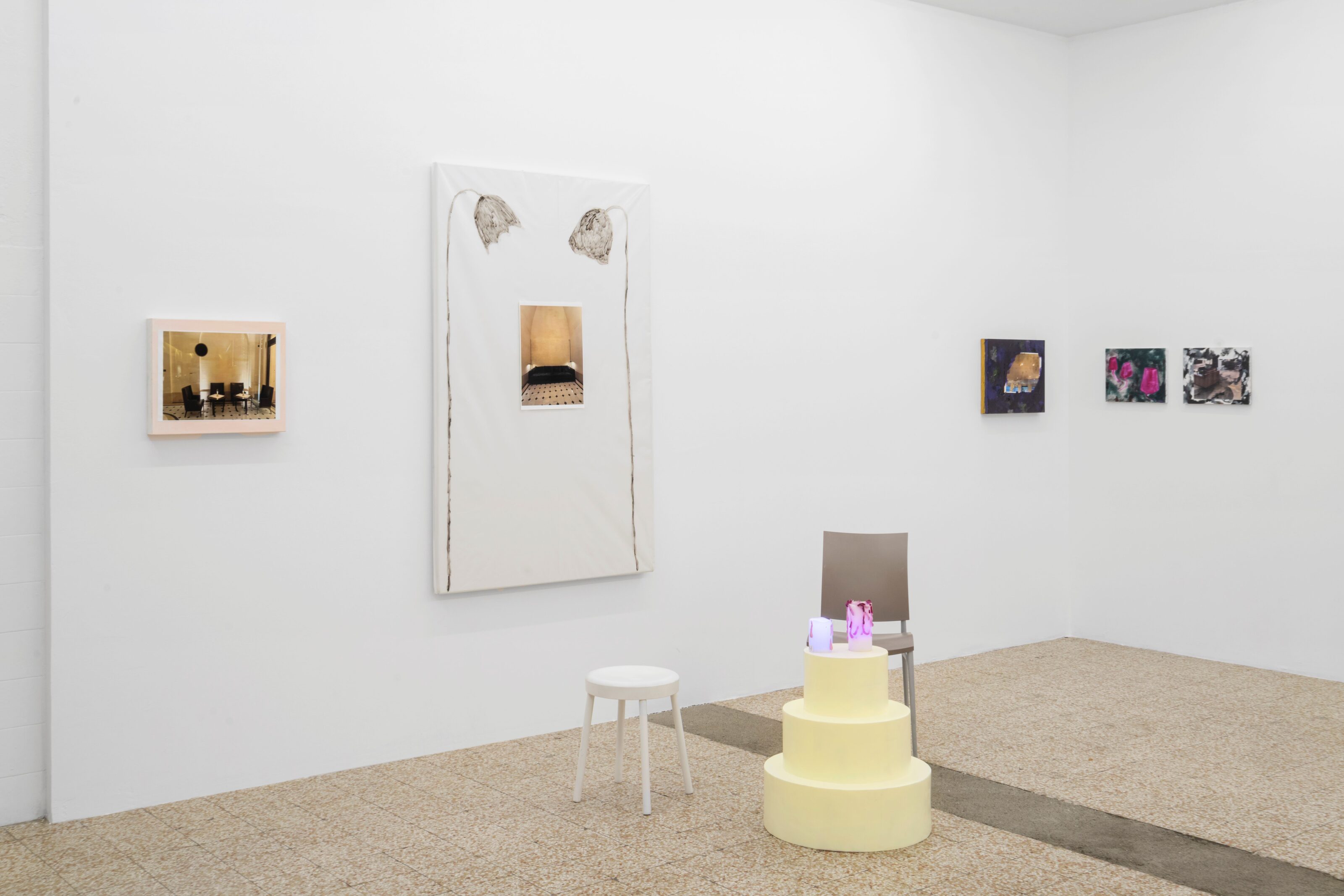
The works originate from photographs Fischli took herself while moving through luxury hotels, primarily in Paris. These interiors are approached as material evidence of a specific historical formation: the aesthetic language developed alongside neoliberal capitalism. Hotels appear here as sites within an economy structured by mobility, financial abstraction, and the management of experience. Their stylistic coherence — neutral tones, curated atmosphere, controlled variation — signals the emergence of a global spatial language designed to circulate seamlessly across cities and cultures.
This focus is also shaped by Fischli’s formation in London in the 2010s, a decade in which the city functioned as both laboratory and showroom for the cultural logic of financial capitalism, and in which the aesthetic of the “global interior” reached a level of saturation and self-confidence that now reads as historically specific. Within these environments, locality dissolves into recognizability. Cultural difference is reformatted as surface. Comfort becomes an economic arrangement rather than a simple promise. Lobbies and lounges operate as transitional architectures within networks of tourism, finance, and investment, producing an atmosphere of smoothness that mirrors idealized economic flows.
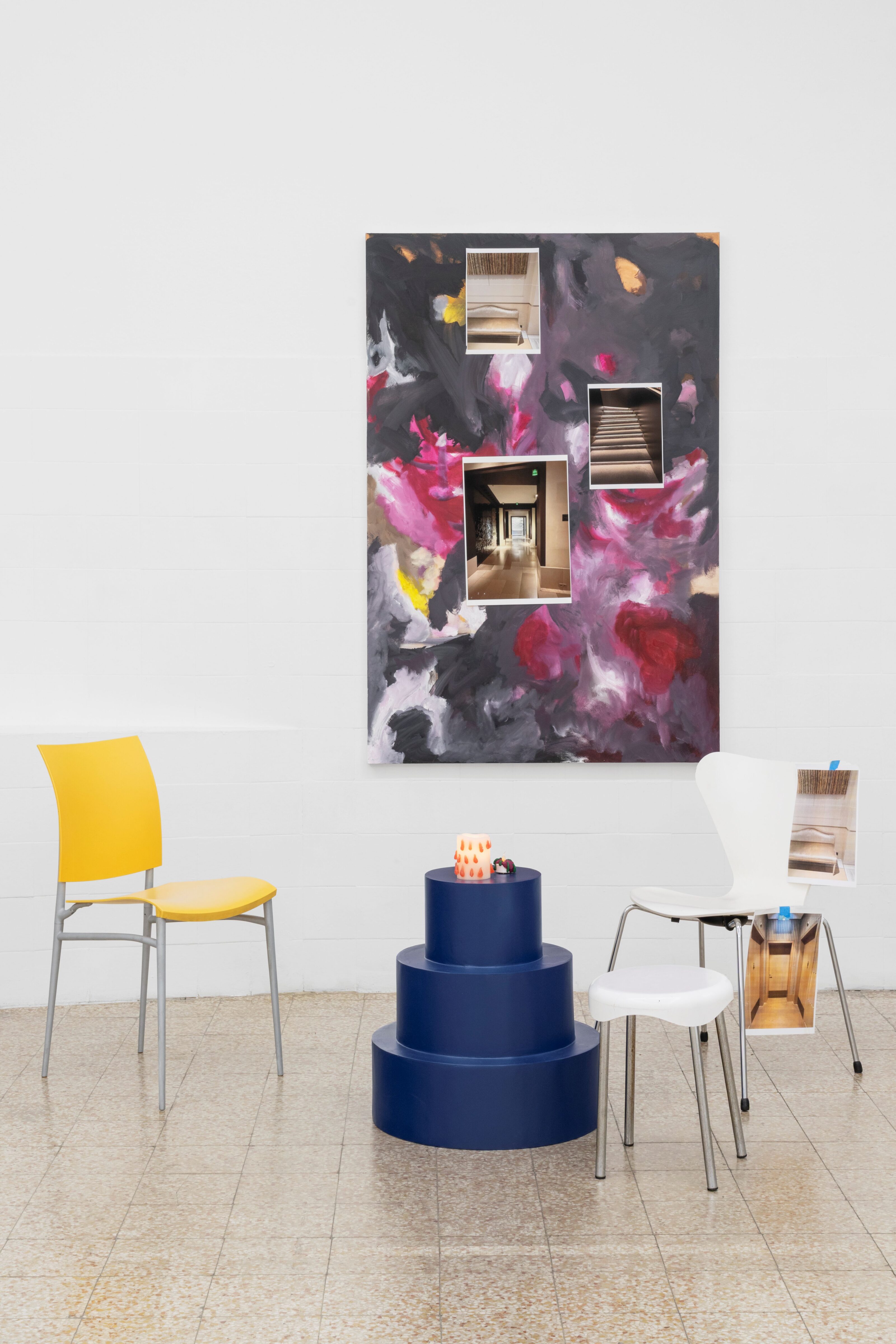
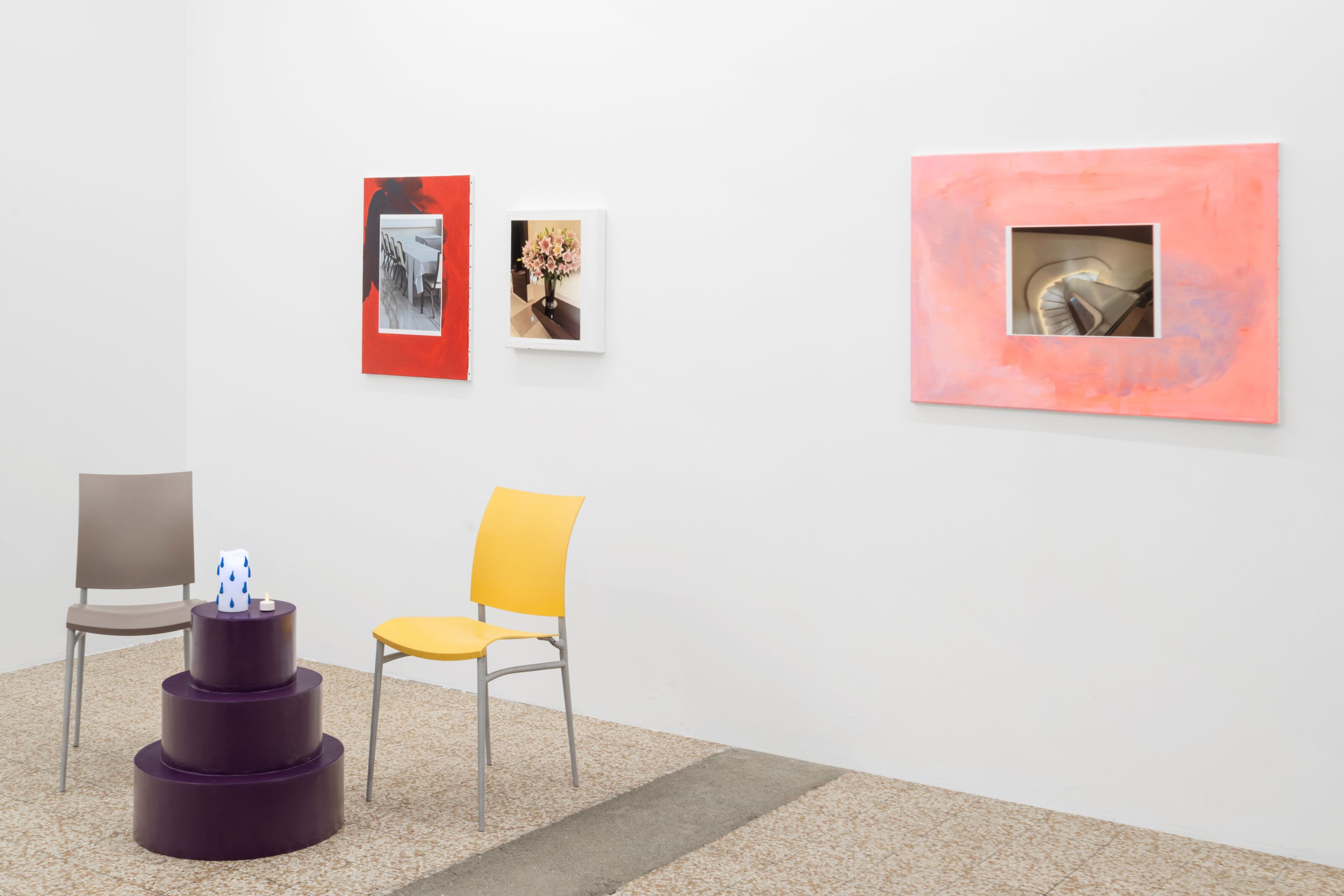
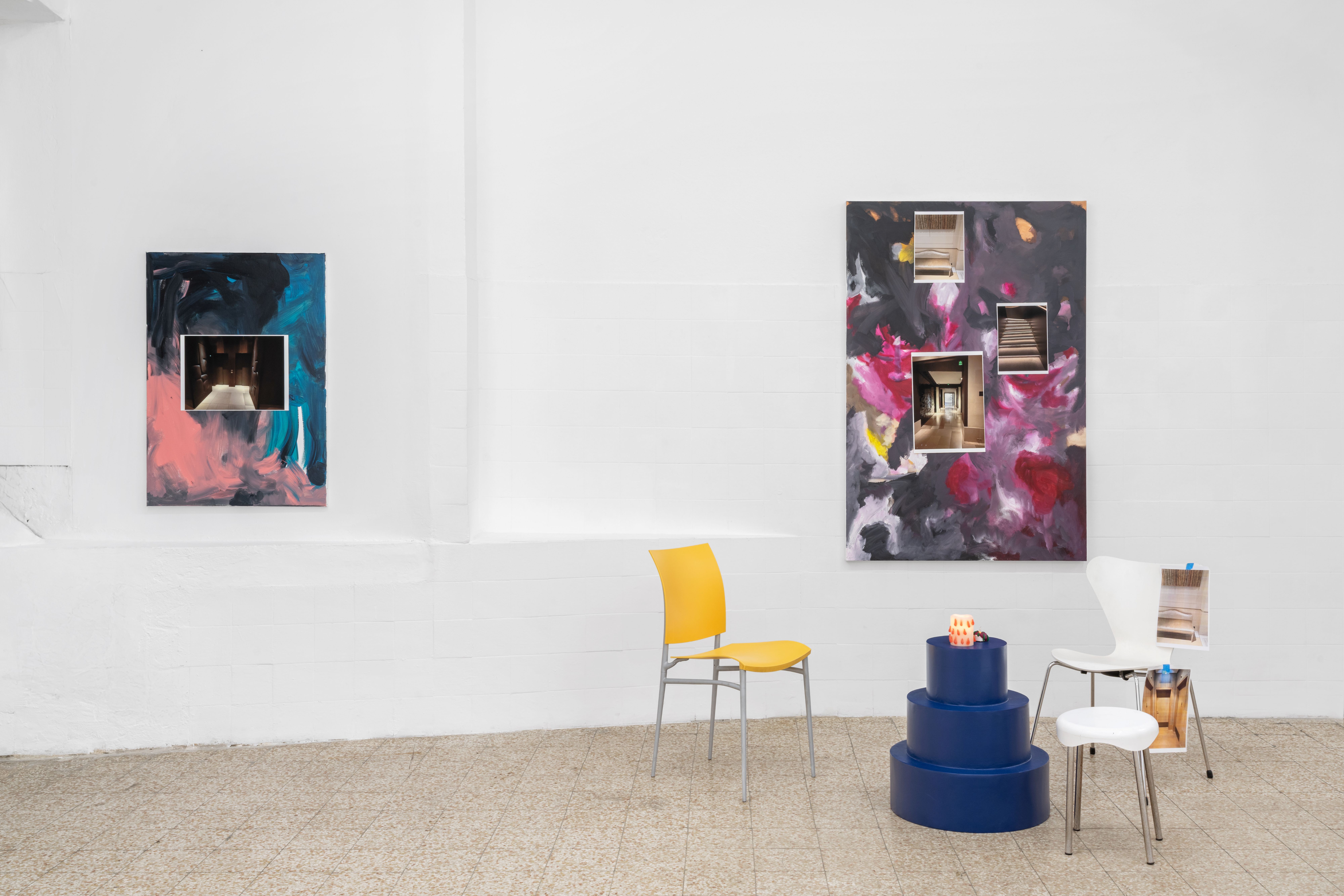
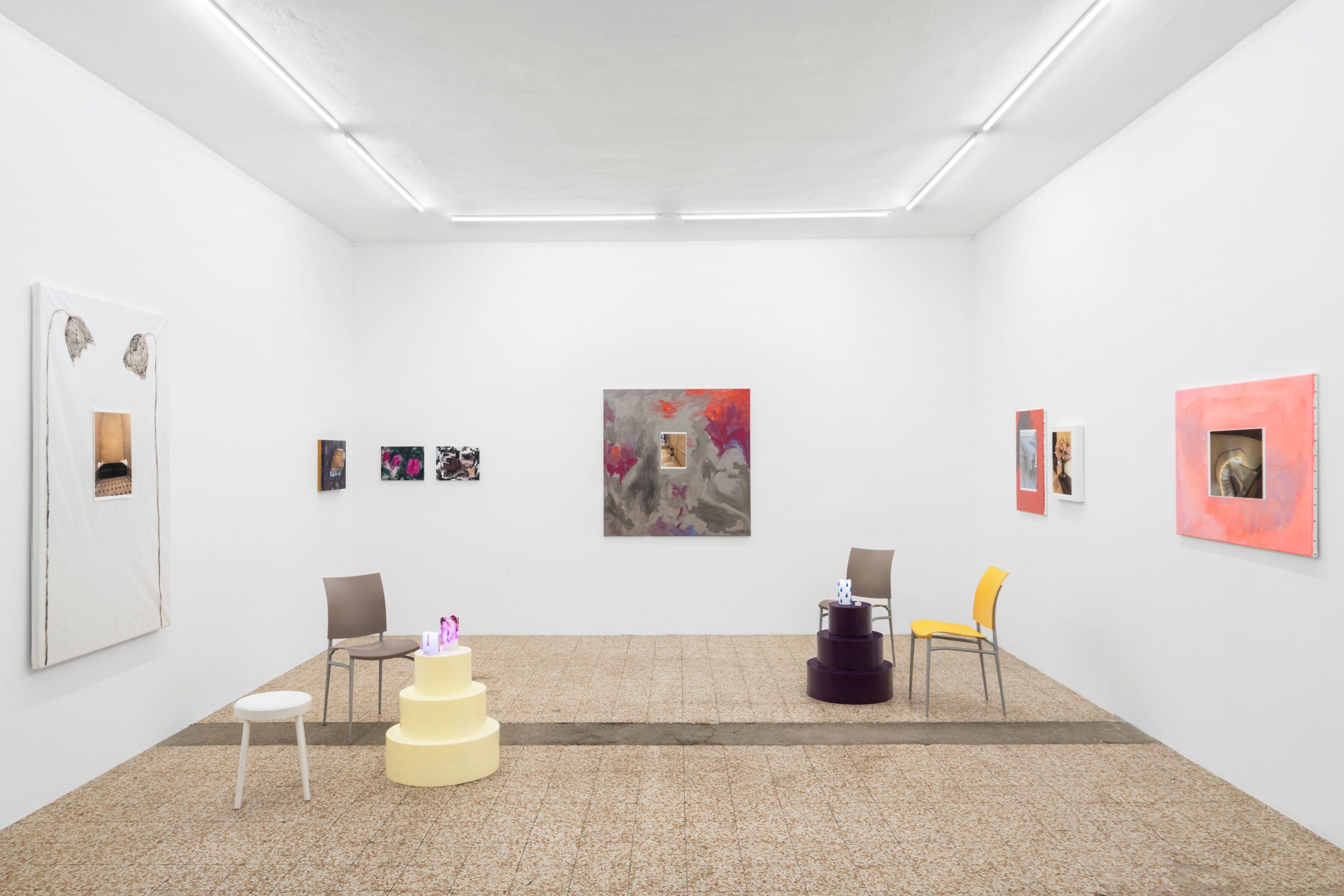
Fischli’s images register these interiors at a moment when the cultural style associated with neoliberalism no longer appears inevitable. What once projected openness and universality now reads as repetition. The global interior begins to reveal itself less as horizon and more as system, its language becoming visible through saturation. This reading is developed through a practice that moves between photographic research and conceptual painting. The photographs were made through direct encounters with these spaces, and the paintings function as expanded frames for those experiences. Painting stretches the photographic image rather than translating it. It introduces delay, inconsistency, and material pressure into a visual field otherwise organized around immediacy and control. Where photography establishes structure, painting redistributes it; where the image stabilizes the interior, paint unsettles its coherence.
The artist has described the photographic elements as behaving like pop-up ads: intrusions into the freedom and apparent innocence of painting that function as a reality check or even a form of memento mori. Photography appears not as illustration but as interruption — a reminder of an external system pressing into the autonomy of the image and disrupting the pictorial surface from within.
Within this process, painting becomes a way of thinking through the conditions that produced the image in the first place. Expressivity operates as analytic friction rather than personal gesture. The works remain embedded in the visual logic they examine, allowing rhythms, textures, and repetitions to surface without resolving into critique from a distance. The exhibition does not propose alternative environments or recover lost models of community. It remains attentive to what these interiors reveal about the conditions under which social life is staged today, and to how images participate in that staging. What emerges is less an argument than a situation — one in which comfort, access, and aesthetic neutrality can no longer be taken at face value, and in which the grammar of the global interior begins to appear as historical rather than natural.