Ana Lupas at P420

P420 is pleased to announce Armature, the first solo show by Ana Lupas (1940, Cluj, RO) in a private gallery. After the major retrospectives at the Stedelijk Museum (2024) of Amsterdam and Kunstmuseum Liechtenstein (2024-2025), this show offers an opportunity to reinterpret the work of one of the most radical figures of the conceptual avant-garde in Eastern Europe.
The title of the exhibition, intentionally in Italian, plays with a fundamental linguistic specificity and a dual semantic value. The term “armatura” simultaneously points to two key concepts for interpretation of the exhibition: that of physical, metal armor, for external protection, and at the same time that of the internal superstructure, that virtual armature that is worn to protect one’s own personality.
The entire show turns around the necessity to support and protect what is fragile. Whether in collective memory or individual identity, Ana Lupas responds to the threat of erasure of the self, with solid, long-lasting devices of protection.
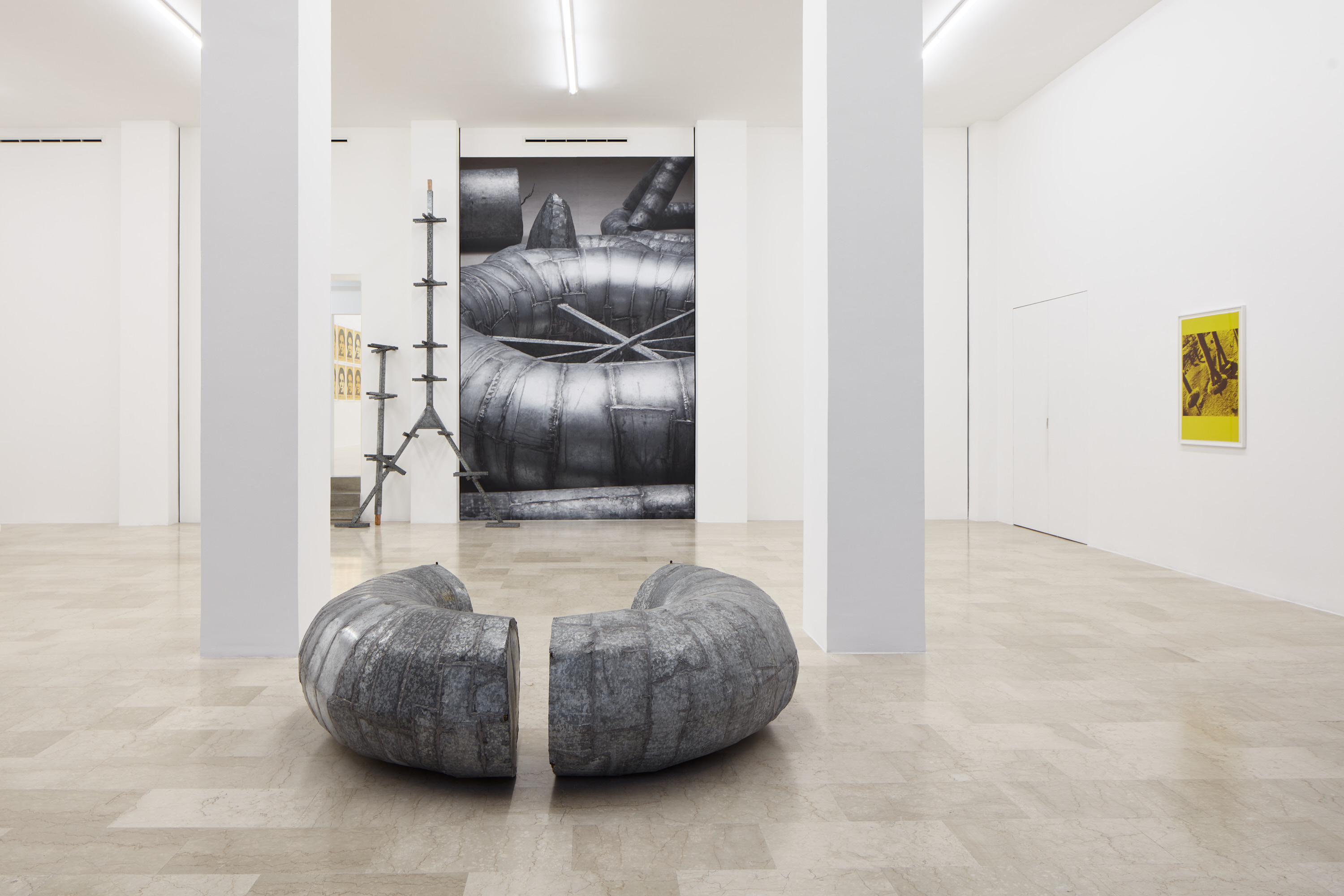
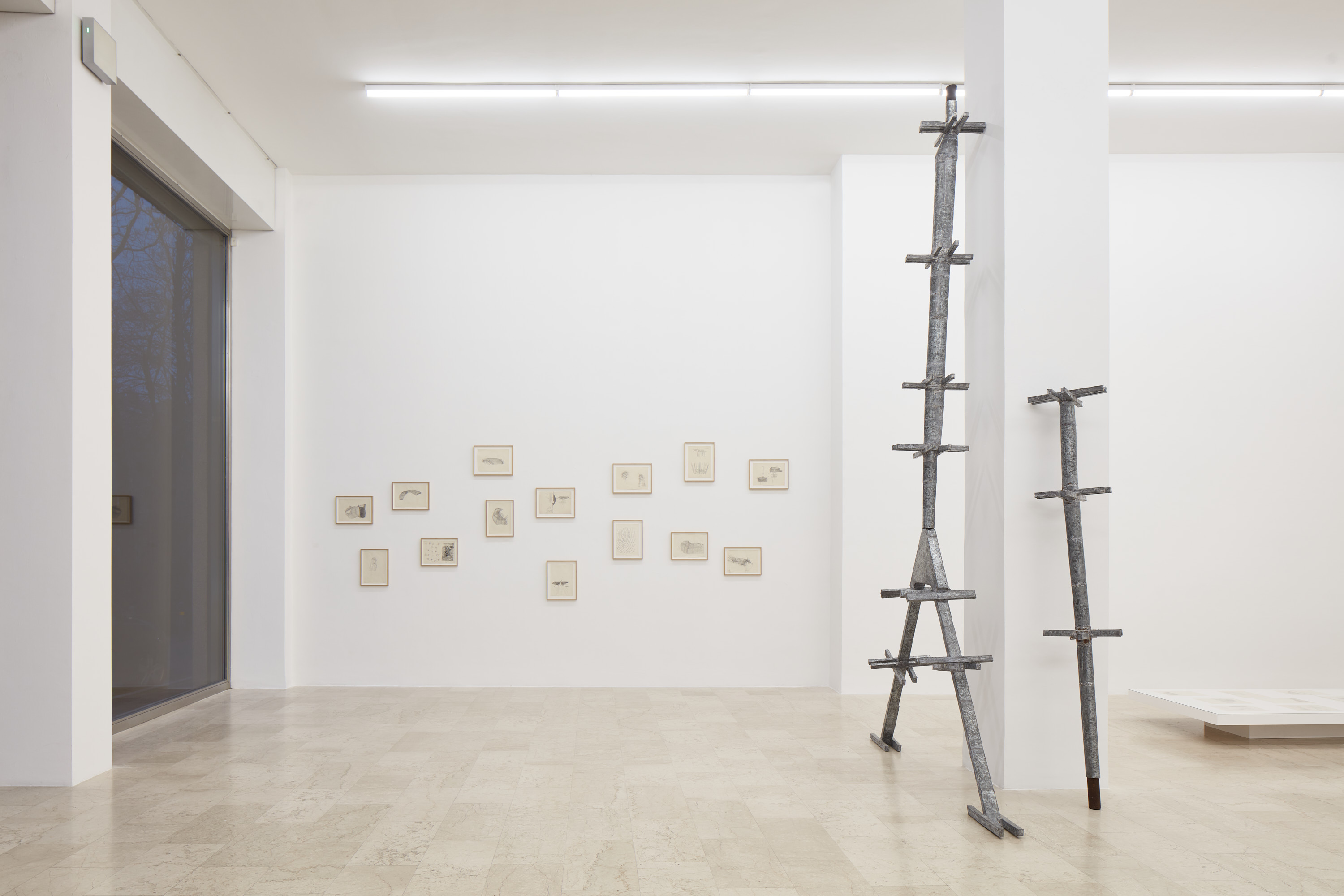
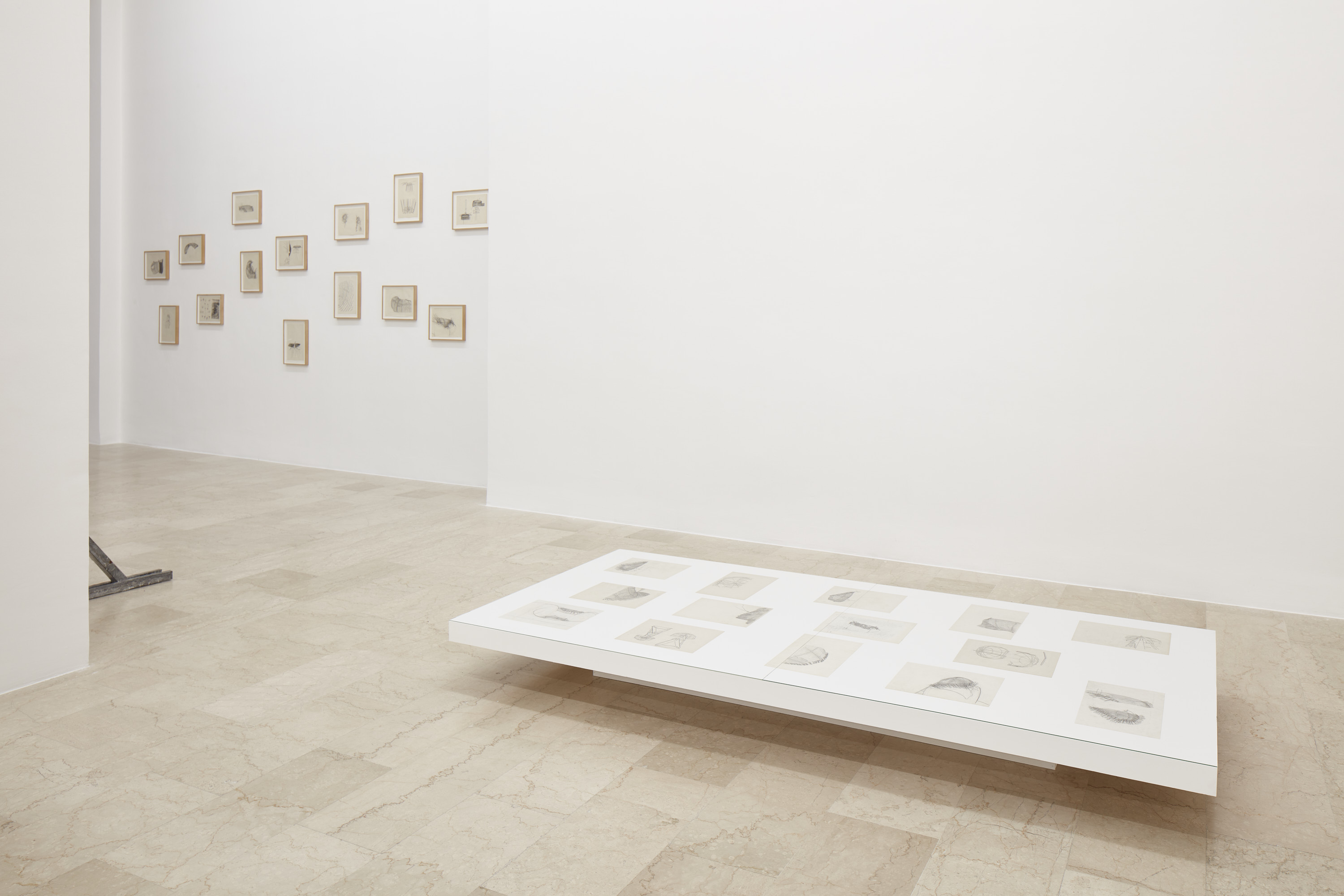
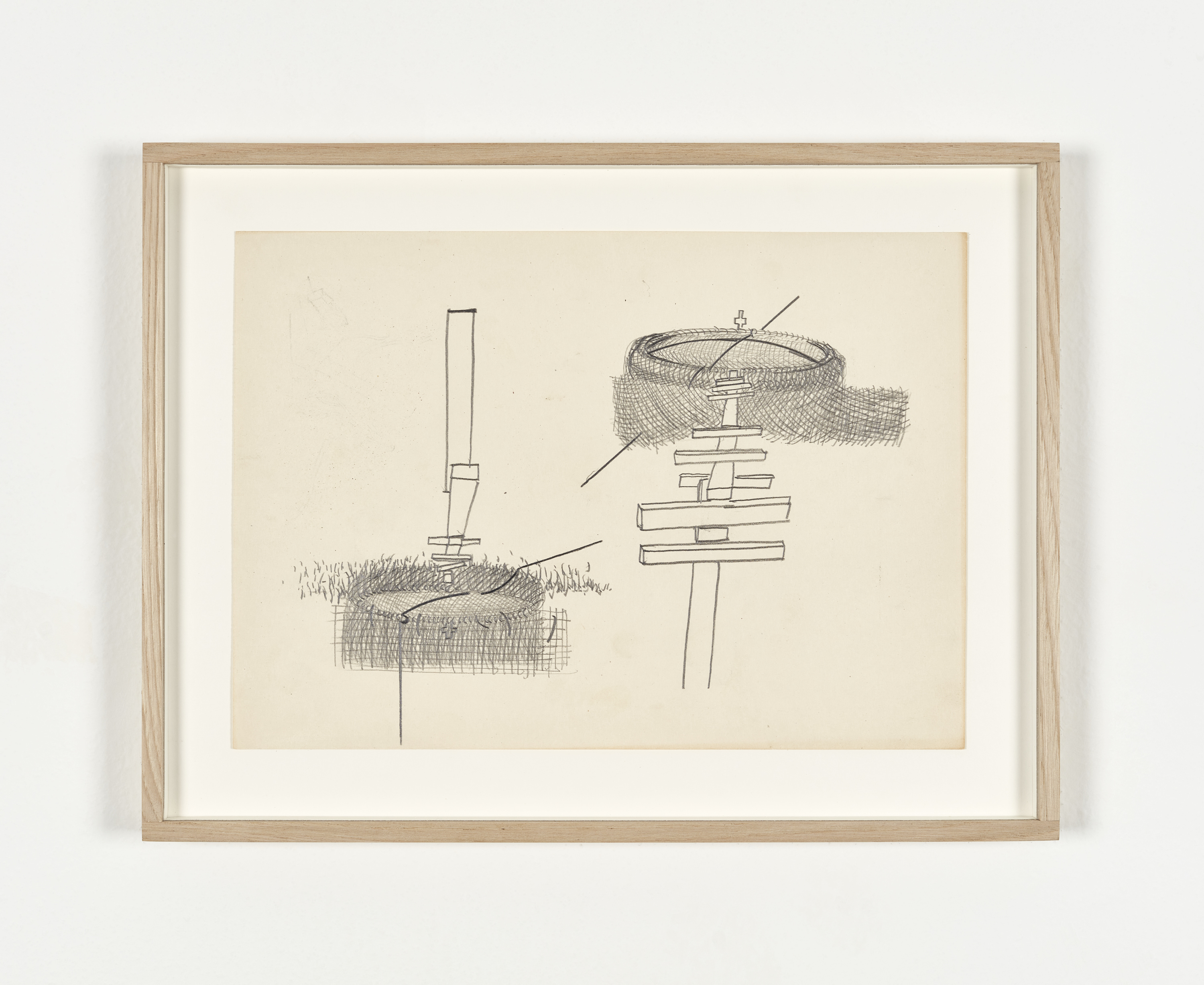
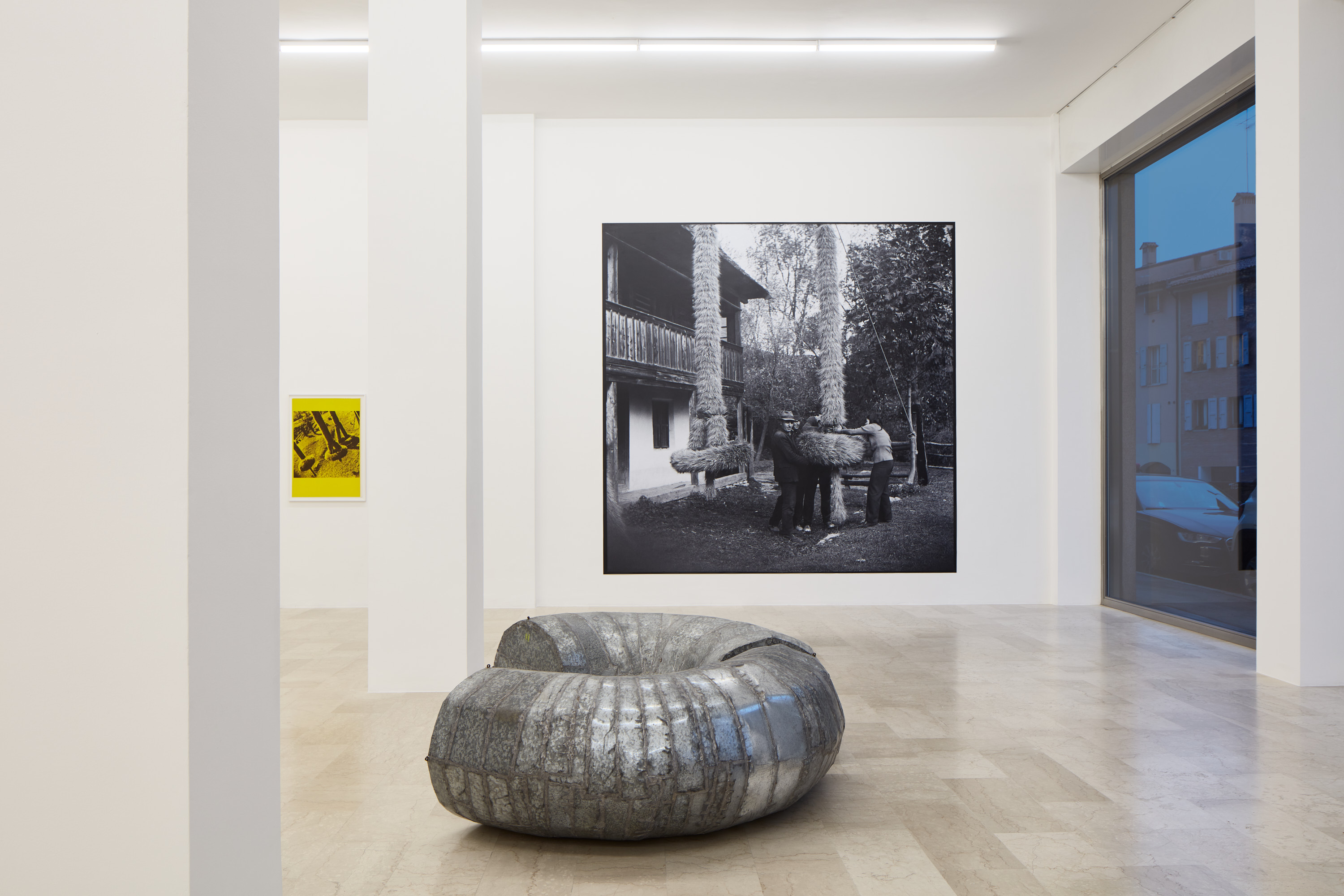
This defensive aspect appears, on the one hand, in monumental works in metal, utilized by Lupas to encapsulate the organic and rural materials she used to produce the sculptures of Wreaths of August (1964-2008), displayed in the first room of the gallery. Here the armature is present as a load-bearing structure, internal – clearly visible in the drawings on view from the series The Solemn Process (1964-2008) – and as an enveloping external metal structure, capable of preserving the ephemeral and transforming the fragile, perishable tradition into an eternal monument.
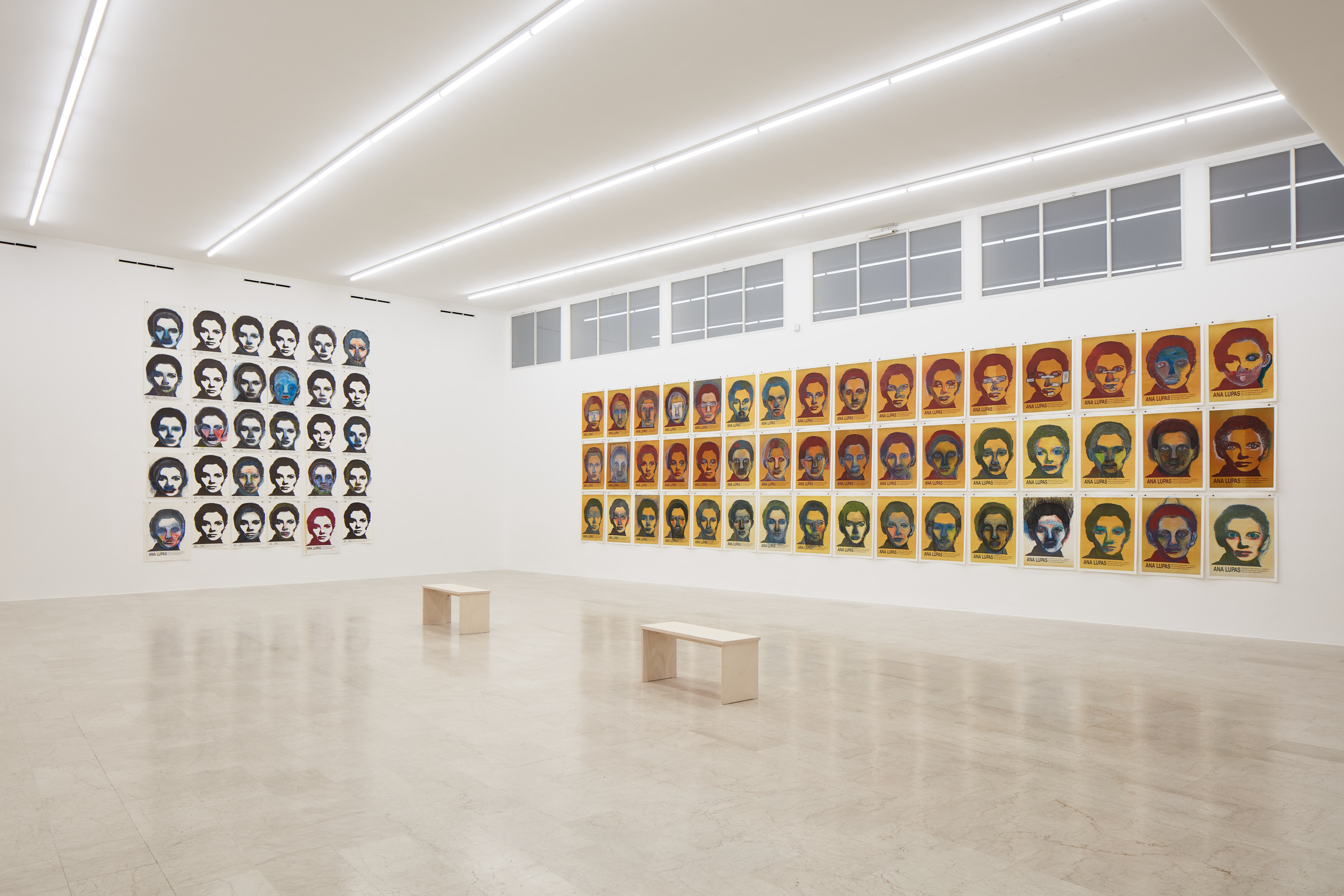
Likewise, in the Self-Portrait series (1998-2000), shown in the second room of the gallery, Lupas graphically intervenes on her own features, altering the mechanical repetition, raising a barrier against regularization. As Sara De Chiara emphasizes in the essay that accompanies the show, “the assertion of the artist’s own individuality in opposition to standardization is a central issue in all of her practice, with the aim of assigning value to the individual element as opposed to seriality, human intervention with respect to mechanical production, aspects that take on particular meaning in the context of a totalitarian regime, under which much of the project was developed.”
––
- Critical essay by Sara de Chiara
The August 1975 issue of the Romanian literary magazine Secolul 20 has a botanical sculpture by Ana Lupas on its cover, with a mysterious form, belonging to the series that inside the publication is defined as the “crowns of August.” Next to a broad selection of photographs of these sculptures, which are the result of a project that combines collective action, rural ritual, happening, installation and Land Art, the short text that describes the artist’s practice begins as follows: “In the rural zones of Transylvania, especially towards the north, one can still breathe the spirit of Dionysus. Now the artist arrives and recreates, relives, consciously, what the tradition has passed down in a sort of subconscious of the place.”
Initiated by Ana Lupas at the start of the 1960s in the vicinity of Săliște and Mărgău, an now known under the title The Solemn Process (1964-2008), the project is a milestone of the works of conceptual/environmental art in Eastern Europe, and has a long, complex history.
The first room of the exhibition Armature conveys this complexity, refining the essential aspects of the work in its various phases, starting from the series of preparatory drawings dating back to 1964-1976: The Solemn Process, Preparatory drawing for wire mesh for wheat; The Solemn Process, Preparatory drawing for jointed skeleton structure (structure built with hammers, pliers, nails…) and The Solemn Process, Preparatory drawing for wire mesh on skeleton. Done mostly in pencil and ink, the drawings accurately illustrate the passages for the making of the wreaths of wheat with circular and cylindrical forms which in olden times were produced in August at the time of the harvest, in rituals enacted by the inhabitants of rural villages. This tradition had been forgotten over time. Ana Lupas revives this neglected knowledge, capturing it in her drawings that are simultaneously an instruction manual and a database of ideas and forms ready for further development, returning knowledge to the inhabitants of this region which World War II, rural industrialization and the communist regime – with its leveling of the individual identities of the countries annexed by the Soviet Union – had relegated to a subconscious status.
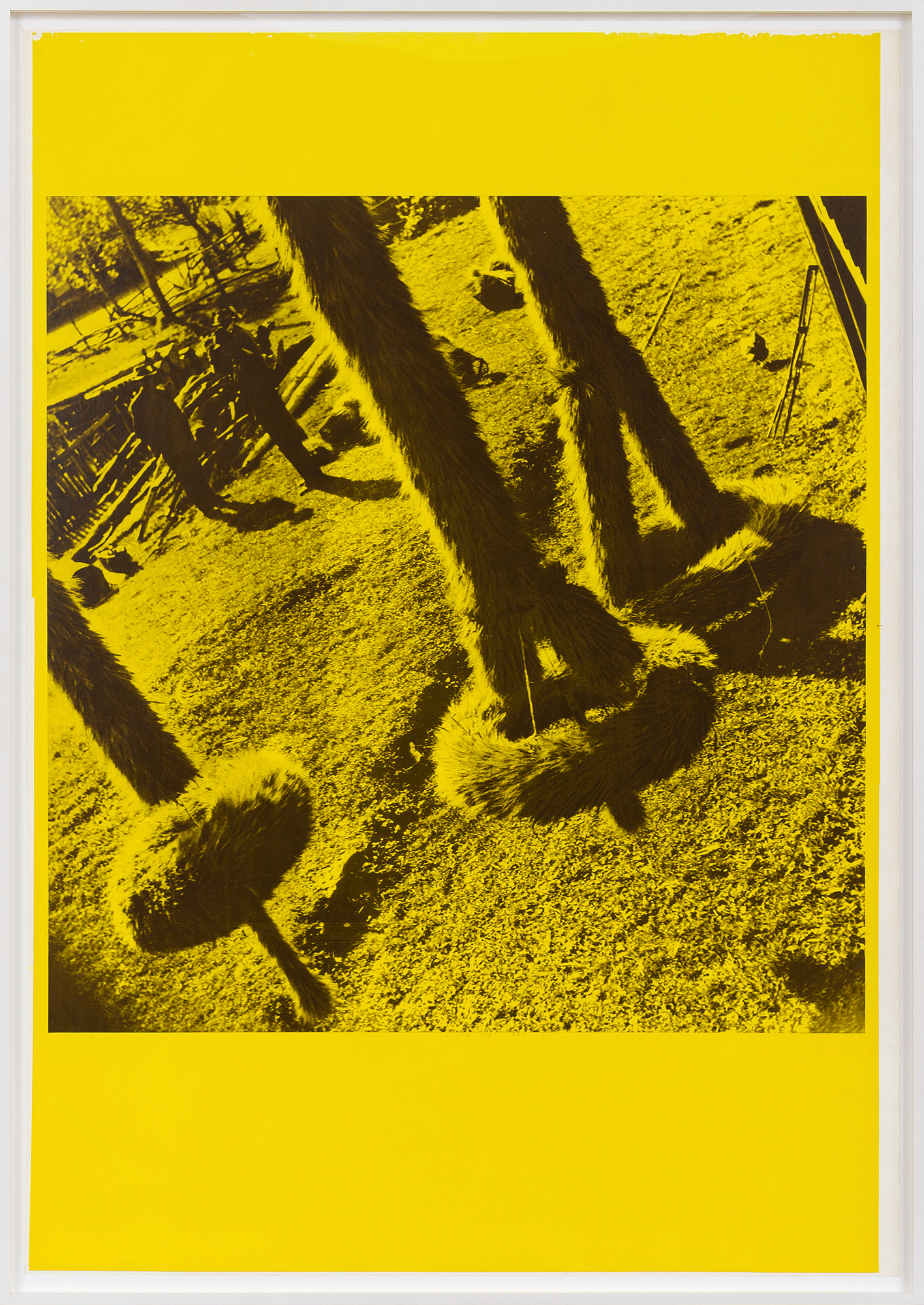
The enlarged photos on view, shot in 1964, bear witness to the collective dimension of the making of the “August wreaths,” seen in the context in which they were generated, inserted in the landscape that has brought them about, and documenting their ephemeral existence in a botanical state. Although in the artist’s intentions the project would have expanded in space and time, involving an ever-increasing number of participants, the political changes in communist Romania made the economic conditions more precarious, and made the interaction of the artist more difficult. The project was suspended for long time periods, and the sculptures began to deteriorate. After an attempt at restoration in the 1980s, Ana Lupas decided to protect the remains of the wreaths of wheat inside a metal covering, which reflects the forms of the individual elements: slim, slender structures for the vertical pieces, rounded ones for the circular pieces. These armature, functioning like armor, have the task of protecting and conserving the perishable plant material, along with fragments of wood, fabric and metal screen originally utilized as armature inside the wreaths, but also a set of ancestral forms of knowledge connected with crops, rituals of transformation and natural cycles. In relation to this work in its final version, developed from 1985 to 2008 and now in the collection of the Tate Modern in London, this exhibition presents a similar piece, Wreaths of August (1964-2008), stemming from the same context.
With The Solemn Process, the artist becomes a resonator for a story that becomes collective rather than personal, narrating – between the lines – a perspective on contemporary Romania. Shortly after her birth, Ana Lupas’s family was forced by the communist regime to leave Cluj and to seek refuge in Brasov, after a stay in Săliște, the hometown of her father’s family and the location of part of The Solemn Process. The reactivation of rituals, forms of knowledge and forgotten gestures existing latently in collective memory links the artist’s recovery of her roots to the need to resist the process of conformity imposed by the regime. The shell that encloses the remains of this experience does not prevent their deterioration, but preserves the memory, the story, the gestures, the genius loci – and potentially guarantees their reactivation. Like a sarcophagus, it houses the wreaths that with their golden weaving celebrated the sun, the harvest, fertility, life, ensuring their survival in other guises, the final stage of their metamorphosis. The artist, who channels an ancient knowledge wafting in the air, embodies the awareness of a people, recovering a mythopoeic capacity, that mystical aura that wraps those who are in communication with a spiritual and secret dimension, and from this dimension transmits and tests practical creative solutions, fundamental for artistic experimentation.
The aura, or perhaps its downfall, can be invoked for the second room of Armature, in which the face of the artist peeks out from over 100 screen-printed posters that form the installation Self-Portrait (2000). Arranged in sequence one beside the other to form a mosaic, a wall of bricks – again suggesting the idea of armor as a shield or cuirass – the posters were originally printed to promote a solo exhibition by Ana Lupas at Székesfehérvár, Hungary in 1998. After the exhibition, the artist intervened with colored pastels and acrylic paint on her own face reproduced on the posters, altering or even obliterating its features.
On every poster the words “nose,” “mouth,” “eyes” were printed at the position of their respective organs, reconnecting this work to a group of small white porcelain sculptures made in the 1980s, portraying faces whose pertinent features have been beveled and replaced by the words that stand for them. If technological reproducibility leads to the demise of the aura of the work (and the artist), the manual intervention, the irruption of variation in repetition prompted by Ana Lupas on her own image is undoubtedly a way of laying claim to her individuality, against standardization. This is a central issue in all of the artist’s practice, aimed at assigning value to individuality rather than seriality, human action as opposed to mechanical reproduction, a problematic zone that takes on particular meaning when its context is a totalitarian regime, as was the case for much of the work’s development. But upon closer examination, the work reveals further complexity, just as all of the work of Ana Lupas is complex and layered, endowed with an ambiguity that is not resolved, but invites us to reflect and to ask ourselves questions, like a mirror of the complexity of the real. The manual intervention on the poster, characterizing the persona in which seems like a celebration of individuality, at the same time alters her features, confuses and conceals them. The artist does not counter serial multiplicity with a fixed personality, but with one that is metaphorical, reaching the point of raising queries like: how can we all be equal if I am never equal to myself? My face and my gesture – which of the two best narrates who I am? At the same time, the grueling repetition, rather than heightening the image of the artist, seems to erase her physiognomy; the face becomes a pattern – is it perhaps an armor, to screen of her own person? And does the mask the artist paints over it hide or reveal the image? Or, writing the names of its parts on the face, isn’t the artist alluding to the fact that we are all human beings, with nose-mouth-eyes, and that we should all have the same rights and be treated with equal dignity?