In Vark, Amba Sayal-Bennett makes recovery a matter of description, not substance. The gallery states that the silver in the show comes from redundant NHS X-rays, so whatever the metal does now, it does as a material that has been described several times over. Three operations organise the room: a trace that outlasts its image, a reclassification that moves matter between statuses, and an ornament that carries it across the gap.
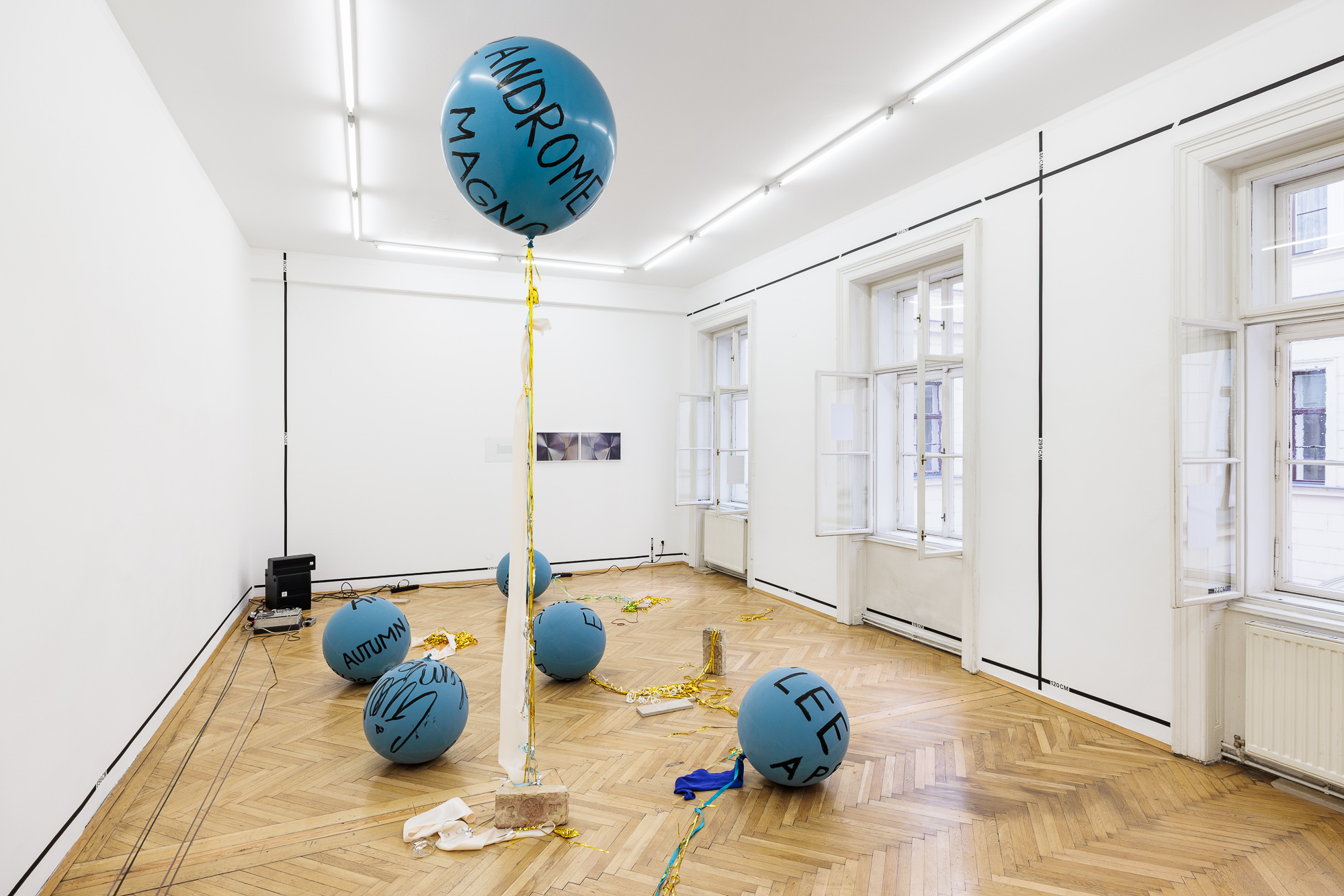
The installation sets this out before any single work is read. A strip of polythene sheeting and brown and white fabric in overlapping layers runs along the floor beside the main wall. Small works rest on it at intervals, Neurite on a folded white sheet, Explant on a square of mirror. Reminiscent of specimens laid out for inspection. A projector stands among them with acetates stacked on its stage, throwing a triangle of light across the room onto a wall, where a sheet stands in the beam. Apparatus and image share the room. Nothing is hidden about how the image is made: light passes through stacked acetates, and the acetates stay on the stage.

A radiograph is silver on a thin support: light passes through a body and leaves a density, recorded in metal. It is an index in the strict sense, a mark made by contact whose authority does not depend on resemblance. Cast into objects, the metal should lose the record, since casting erases a surface and everything on it. The works hold open the possibility that it does not. Explant is a small cast silver face with a pooled, uneven relief, sitting on what reads as a sewing machine’s bobbin case, and the relief invites the eye to read it for an image it cannot supply. The trace survives only as a claim the viewer can neither verify nor dismiss. Elution and Lysis move the problem onto paper: iodine, graphite and marker worked with mylar and ECG paper, a stock manufactured to record a body’s signal now made a component of a drawing. The medium keeps its function after the function has been displaced. Concentric rings and mirrored symmetries in both read as cross-sections, as in a scan.
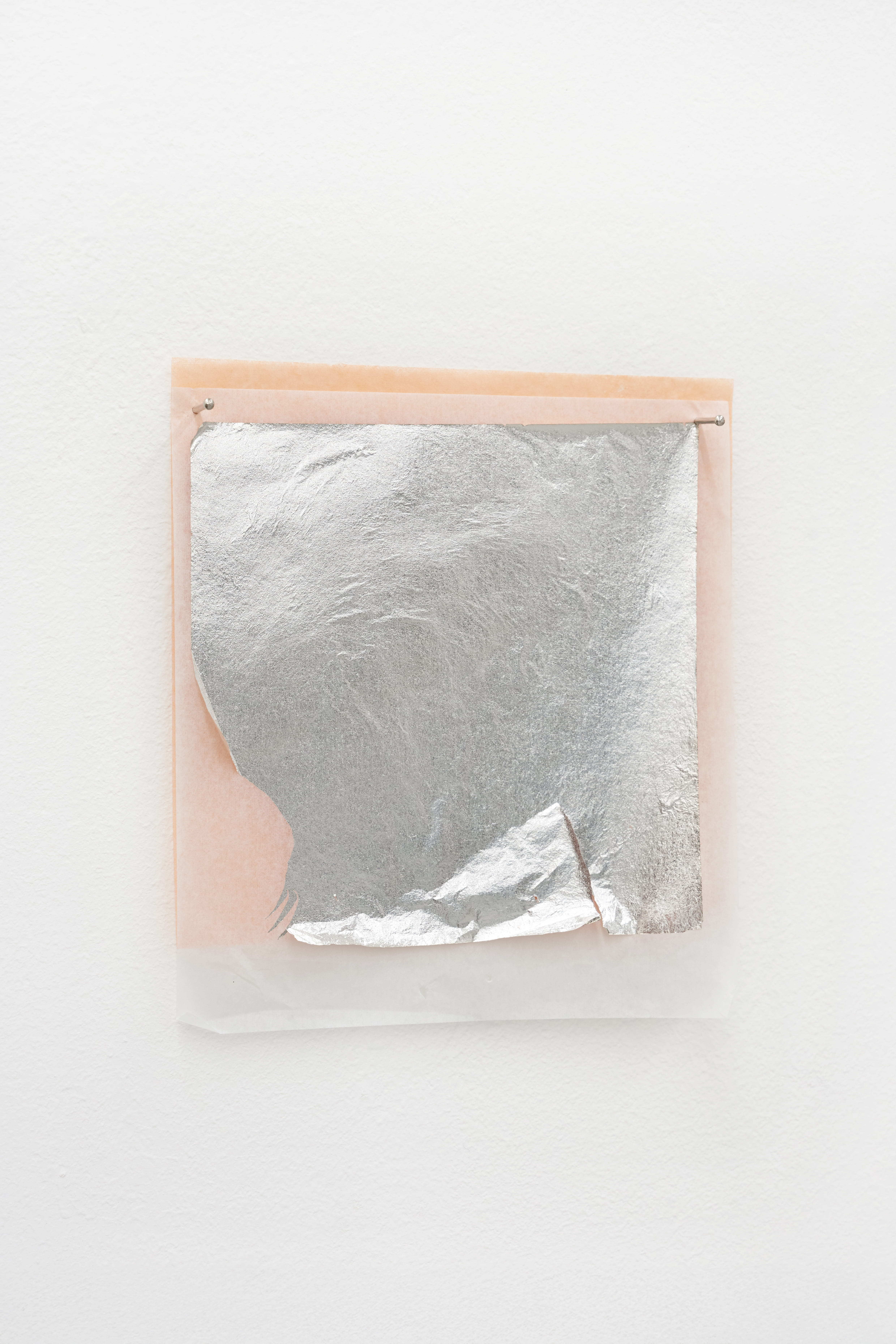
The titles do the reclassifying. An explant is tissue removed from the body and kept alive elsewhere. An ampoule is a sealed vessel for a measured dose. Accession is the entry of an object into a collection, here taken on by two bodies of bone meal and resin clamped in steel fittings. Elution washes a substance out of what held it, and lysis breaks a cell open. Each names a procedure, and each procedure names a change of status. Material arrives in the gallery through such a sequence of redescriptions: evidence, residue, raw material, specimen, accession, art. The silver does not alter. What institutions say it is alters, and value follows the definitions. Matter written off as waste can return as precious, and the works keep both states in view. Bone meal, the one organic material listed, sets the question most bluntly, since the remainder of a body, any body, held as sculptural substance is no longer simply a remainder.
The steel carries a second history. Plated and cast forms are fused to components that read as instruments and machinery. In Neurite, copper arms arch over what reads as a sewing machine’s rotary hook. Ampoule stretches resin and white bronze between two steel tips. Andro trails a long rod and paired legs from a dark plated cluster. A mechanism built to make the same movement a thousand times sits fused to a form that evokes the body it would treat or clothe. The projector extends that logic across the room, repeating one image through acetate after acetate.
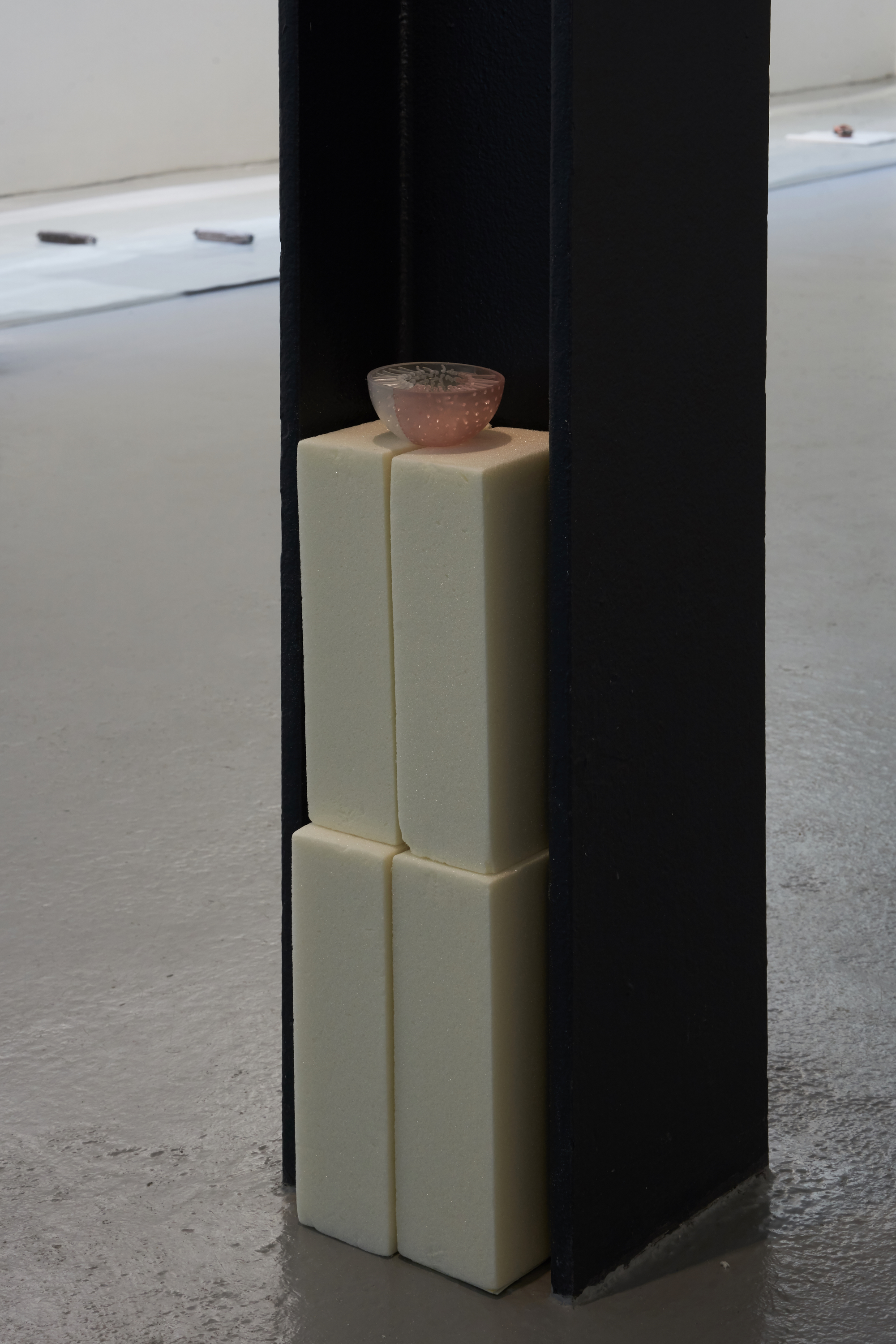
Ornament mediates all of this. Vark names the silver leaf laid over South Asian sweets and ceremonial foods, a skin applied to be eaten. Here the leaf, 13 by 15 cm, rests on peach paper hung from two pins at its top edge, a section missing at its lower left corner and a tear at the lower right. Metal appears as skin throughout: leaf on paper, plated resin, silver cast as the face of a steel part. Ornament in this sense does not sit on an object. It takes the object between registers, so the same silver reads as clinical record, precious metal or food according to where it lands. It acts as a technology, a way of making a surface work on a viewer, and as infrastructure, the layer through which a history stays legible once its purpose has gone. A surface can hold a prior use in view because it no longer has a job to do.

Whether that mediation exposes the passage of this metal and this labour through institutions, or completes the passage by making residue precious, the room does not settle. The leaf puts the question in its plainest form. Silver leaf is made to be used up, laid over a sweet and eaten, its function completed by its disappearance. This one is kept, pinned to a wall and given a name. Keeping is the operation that turns a skin into an object, and it is the one operation the leaf’s use rules out. Whether that preserves the use or cancels it, the exhibition takes the question as its title.
–
Amba Sayal-Bennett (b. 1991, London) lives and works in London. She received her BFA from Oxford University, her MA in Sculpture from the Royal College of Art, and her MA in History of Art from The Courtauld.
Sayal-Bennett makes the migration of form her subject: tracing how modernist architecture, anatomical knowledge and computational representation are translated across bodies, technologies and postcolonial geographies, she reveals abstraction not as universal language but as something continually remade by movement.
Recent exhibitions and fairs include Art Basel, Basel, 2026; Frieze, London, 2026; The 6th Edition of The Sculpture Park, Jaigarh, Jaipur, 2026; Anatomy of parts, Indigo+Madder, London (2025); Drawing Room Invites, Drawing Room, London (2025); Artist’s Rooms, Jameel Arts Centre, Dubai (2024); Geometries of Difference, Somerset House, London (2022); Horror in the Modernist Block, IKON, Birmingham (2022); My Mother Was a Computer, Indigo+Madder, London (2022); and Tomorrow, White Cube, London (2021).