
January in London has a particular texture. The city is still half asleep, shaking off December’s glitter and exhaustion, while the year ahead feels unresolved – unwritten, slightly intimidating. The light is thin and blue. Everything takes a little more effort: getting dressed, crossing bridges, convincing yourself that this is the year you’ll “really cook more.” And yet, every January, something quietly miraculous happens. We start moving again.
Condo London has become one of those rituals that marks the city’s return to itself. Less spectacle than choreography, it pulls you out of hibernation and sends you moving – between neighbourhoods, across bridges, through back streets you forgot you loved. This year, I took on the Condo tour with a few good friends, maps folded into pockets, phones constantly consulted and immediately contradicted. There was a back-to-school energy to it all: colleagues (and their small dogs in weather appropriate outfits) zigzagging across town, chance encounters on pavements, the familiar art-world rhythm of “have you seen…?” followed by “you absolutely have to go,” usually delivered halfway up a hill.
It’s easy to forget how much London needs something like this. Condo doesn’t arrive with the bombast of a fair or the compressed intensity of an opening weekend. Instead, it insists on duration – on attention, on walking. It makes you inhabit your city again. In January, when the streets feel newly bare and the year still malleable, that insistence feels like a gift.
At Sadie Coles HQ, hosting sans titre (Paris) as part of Condo London, these questions took on a distinctly nocturnal charge. The exhibition centred on Zuzanna Czebatul’s monumental inflatable sculpture: a giant, hyperreal ecstasy pill stamped Rush and Revolution. Absurd and oddly tender, it condensed the shared memory of rave culture into a single oversized object – monumental, yes, but clearly temporary. Rooted in Czebatul’s long engagement with Berlin’s club scene, the work treats MDMA not just as a substance but as a cultural form, shaped by regulation, social experiment, and fragile utopian promise. If large-scale political transformation feels increasingly out of reach, the work suggests nightlife still offers smaller, provisional utopias: spaces where bodies gather, hierarchies loosen, and other ways of being together are briefly rehearsed – usually until someone remembers the last train.
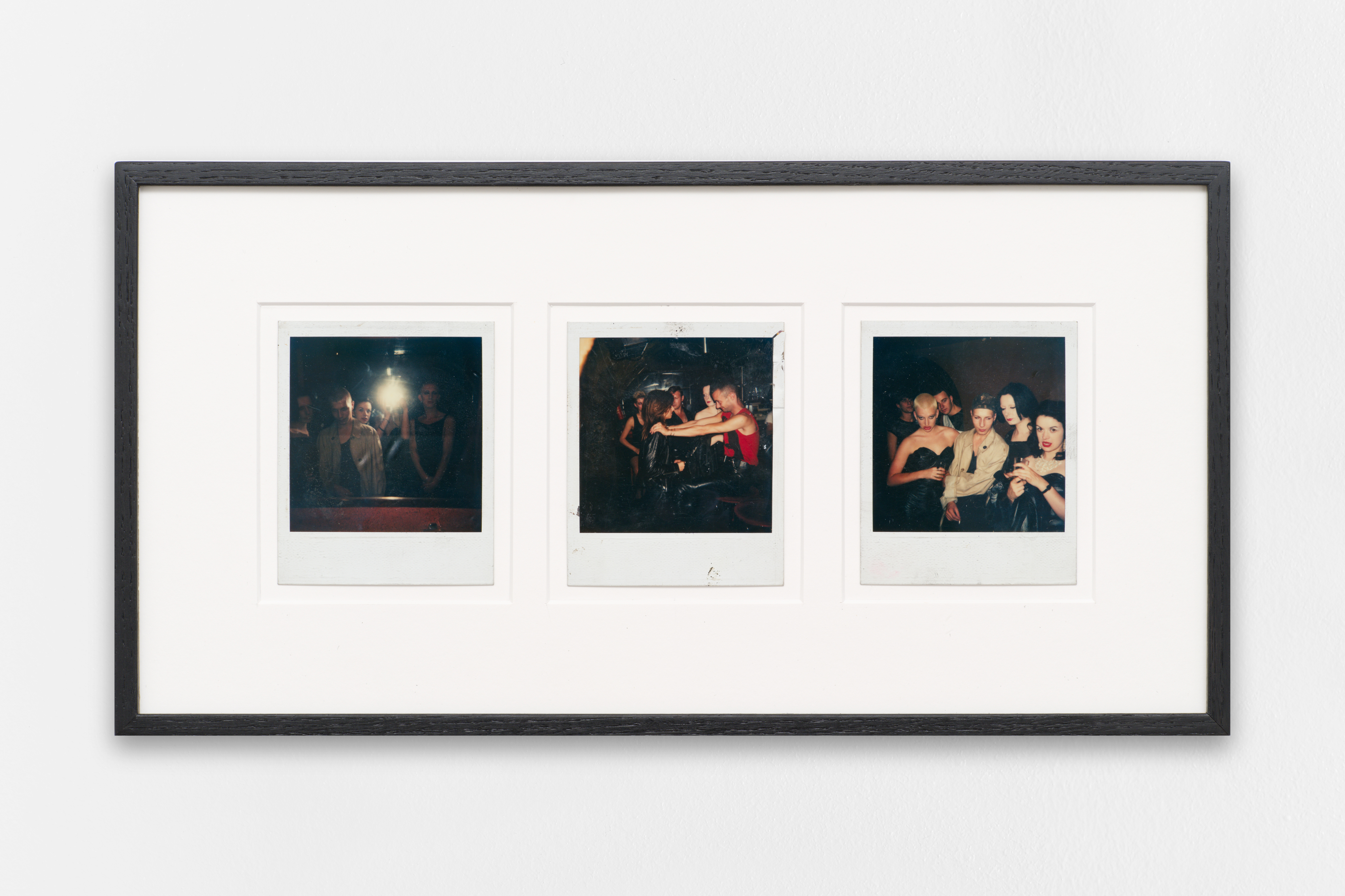
That sense of time folding in on itself continued through Dada Khanyisa’s carved wooden relief The House of Truth and Jill Westwood’s photographs and archival material from London’s early-1980s underground. Khanyisa’s crowded scene, inspired by a 1950s Sophiatown shebeen, collapses different eras into a single space, where gathering becomes an act of continuity rather than escape. Westwood’s polaroids and self-portraits extend this intimacy, foregrounding friendships, collaborations, and shared environments over spectacle. Together, the works frame collective life not as a backdrop to art-making, but as one of its core conditions.
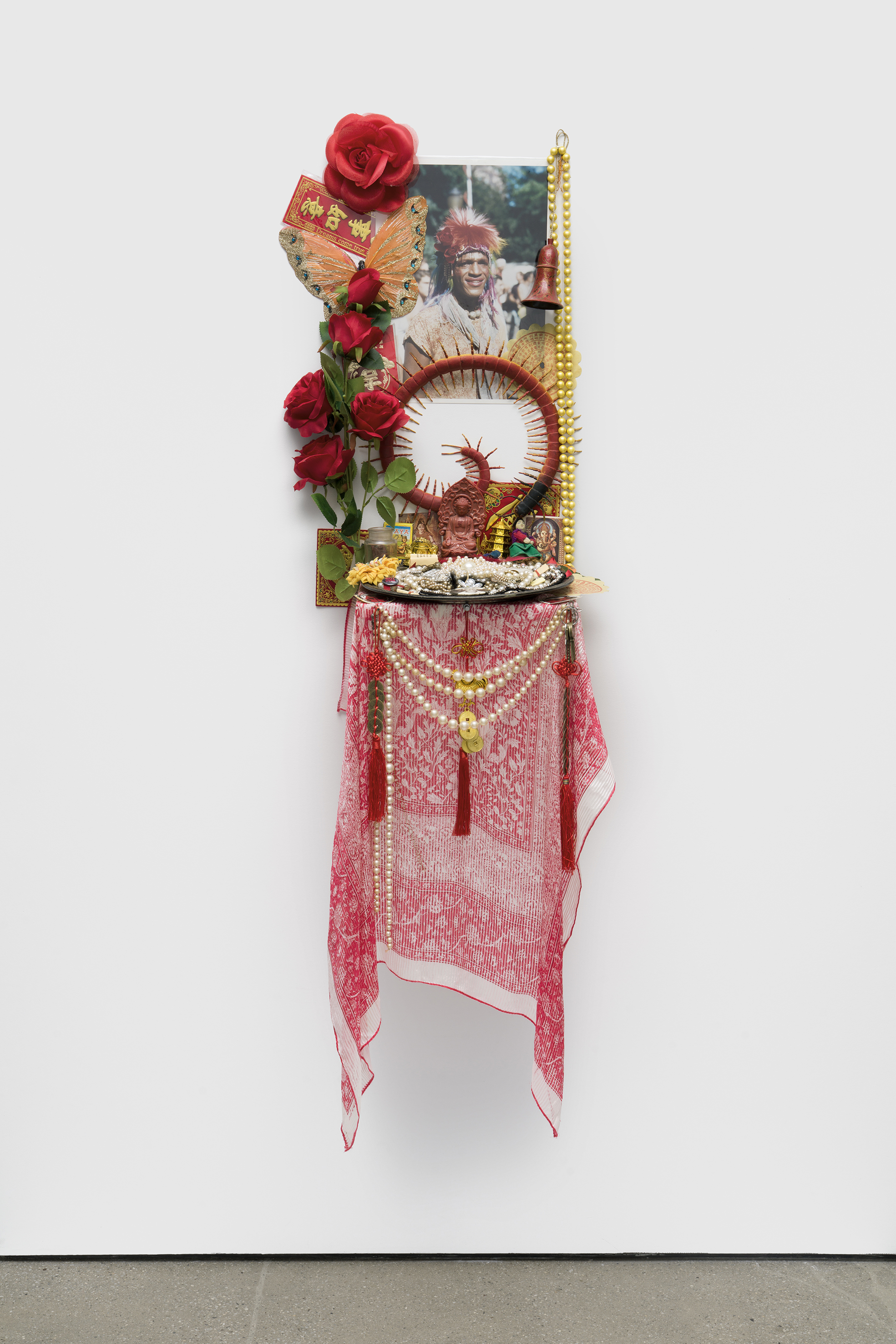
Elsewhere, Condo’s structure of hospitality felt especially resonant at Maureen Paley, hosting Gordon Robichaux, where Agosto Machado’s installation unfolded as something between a shrine, an archive, and a living room you weren’t entirely sure you were allowed to touch. Bringing together Machado’s own works alongside pieces by Sheyla Baykal, Caroline Goe, Peter Hujar and Jack Smith, the exhibition carried a quiet devotional tone. Machado’s practice – shaped by decades of performance, activism, and queer cultural life in New York – frames gathering not as an event, but as a long-term act of care. It wasn’t a show you rushed through; it was one that gently corrected you when you tried.
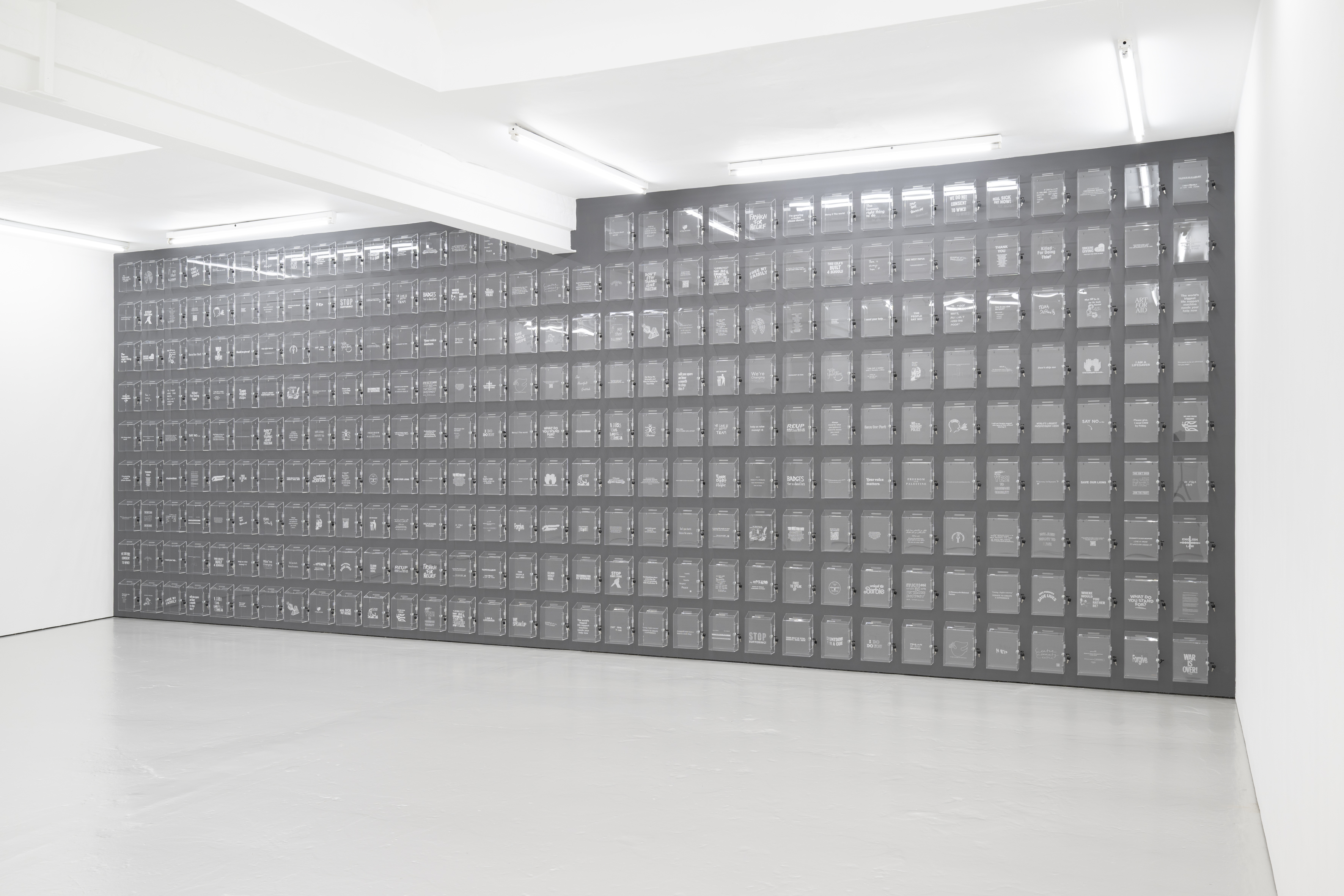
At Carlos/Ishikawa, hosting Lloyd Corporation, urgency took a different form. Screens, text, and image collided in a dense wall-based installation that took over the whole space, and mirrored the rhythms of contemporary political overload – where everything feels pressing, addressed to you personally, and somehow already too late. The work captured that familiar sensation of being constantly implicated while remaining unsure where, exactly, one’s responsibility begins or ends. It was the kind of exhibition that leaves you slightly overstimulated and strangely alert – like checking the news first thing in the morning, but on purpose.
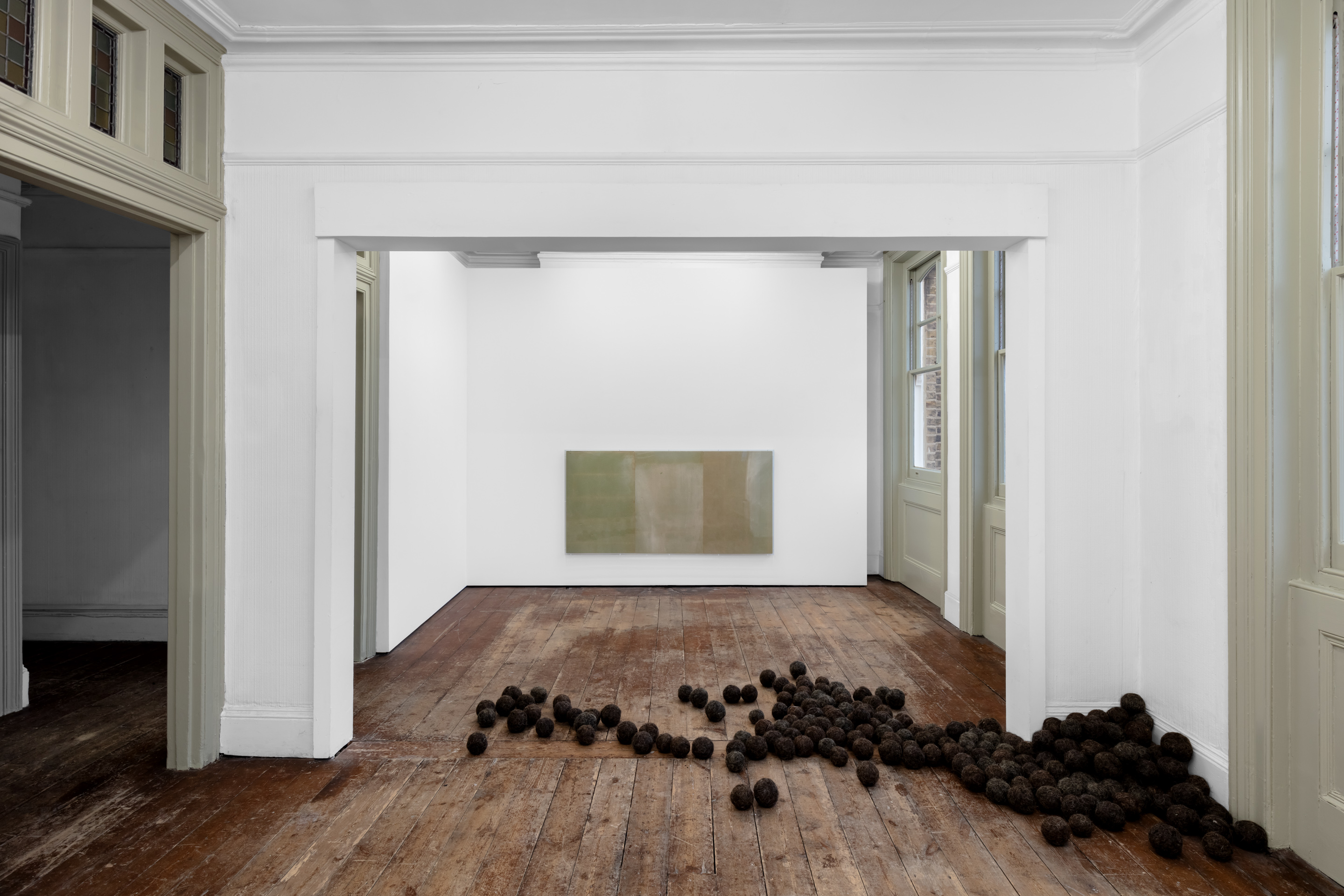
Across town, other Condo presentations echoed this attention to systems – biological, technological, perceptual – that quietly shape how we live and see. At Brunette Coleman, a group exhibition by Paride Maria Calvia, Hubert Duprat and Irene Fenara drew attention to materials and processes that usually remain in the background. Whether through Calvia’s use of byproducts shaped by time and use, Duprat’s long-running collaboration with caddisflies turned unwilling goldsmiths, or Fenara’s reframing of surveillance imagery, the works asked what it means to really notice the structures we tend to accept without question.

At Emalin, hosting Peter Freeman, Inc., the pairing of Anna Clegg and Dan Flavin staged a more inward form of disorientation. Flavin’s fluorescent works reorganised the gallery at the level of light and duration, while Clegg’s paintings hovered in a state of partial withdrawal – images already worn down by memory, circulation, and over-familiarity. Moving through the space, perception felt unstable, negotiated. Seeing became something you had to work at, rather than something you could assume, which, in January, felt oddly appropriate.
—
Originally from Estonia, Lore Alender is a writer and publicist who currently lives in London.


