
This exhibition at two Broadway locations is a coordinated presentation of new works by Machteld Rullens, produced during a recent residency at the Josef & Annie Albers Foundation up in Connecticut. Situated just a few blocks apart in downtown Manhattan, PAGE (NYC) and Andrew Kreps Gallery together host Beacon Road, a substantial body of work that marks Rullens’ second exhibition with PAGE (NYC) and her first with Andrew Kreps Gallery. Based in the Hague, Rullens is known for her deft yet direct engagement with a material that has become an increasingly ubiquitous feature of contemporary life: the cardboard box.
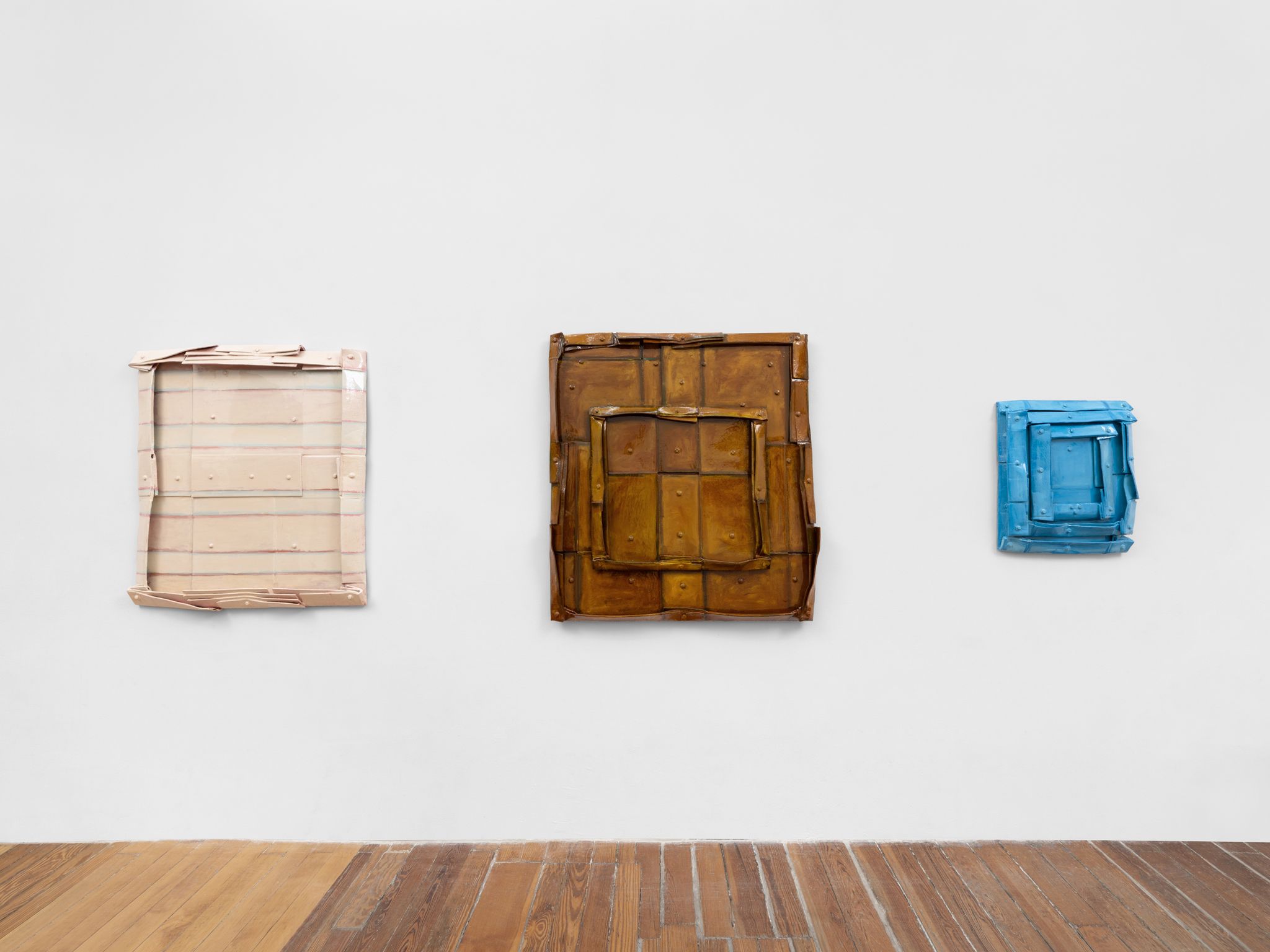
Beacon Road echoes a 2021 project, Full of Emptiness, a book produced with Zolo Press, in which Rullens repurposed the shipping boxes used to distribute the publication into works. Painted and coated with resin, those boxes formed an edition of eight individual pieces. Here, a similar logic of reuse emerged through circumstance: cardboard packaging originally used to ship works from the Albers collection became Rullens’ primary material after discovering that newly sourced Home Depot boxes were of insufficient quality. The solution was both practical and poetic. Full of Emptiness remains an instructive entry point into Rullens’ work. The book interweaves her own analogue photos of what she encounters daily—family, friends, clothing, garden furniture, different containers including boxes and plastic pales, doorways, et cetera—with images of her own works, establishing a visual rhyming between lived experience and formal abstraction.
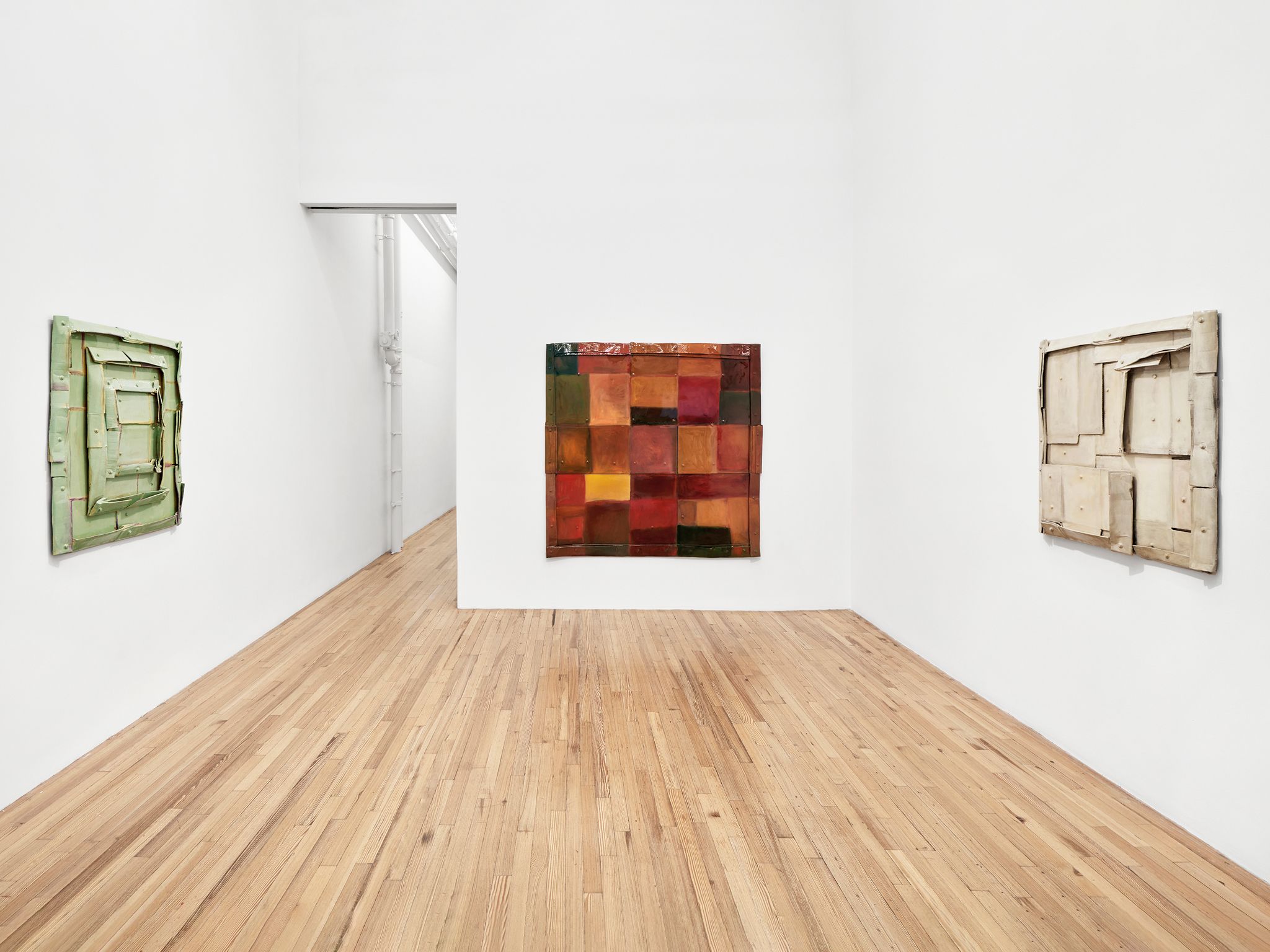
The two New York presentations certainly evince what Rullens describes in Full of Emptiness as a “joy of process.” A typical characteristic of the new works is compression, or flattening: the box material in each work is now often crushed into a plane of thickness. Bolts, functional and exposed, anchor these forms, punctuating the surfaces and emphasising their construction. The cardboard is first sealed with acrylic, then painted with oil, and finally coated with a thick layer of high-gloss resin. The resulting objects retain the worn geometries and traces of previous use even as their surfaces take on an unexpected sheen.
Rullens’ work recalls, or maybe more appositely contrasts, the oeuvre of contemporary Carlos Bunga, or predecessor Lee Bontecou, both of whom transformed modest, industrial materials into wall-mounted works that foreground their own fabrication. Yet Rullens diverges from these precedents through her use of resin. The glossy coating introduces material ambiguity that complicates the openness of process: cardboard begins to resemble ceramic or metal, opposed to the softness and absorbency of cardboard. This metamorphosing of appearance marks an interesting development in her practice.
The different proportions of the two exhibition spaces shape the viewer’s experience. PAGE (NYC)’s fifth-floor space is narrower, emphasising movement and passage past the works, while Andrew Kreps Gallery’s wider layout allows the works to operate more as a constellation. In both gallery spaces, the works are hung at a height that encourages direct, bodily engagement, situating the viewer in a one-to-one relationship with each piece. The reflective surfaces further implicate the surrounding architecture and the viewer’s own presence, folding the exhibition space into the work itself.
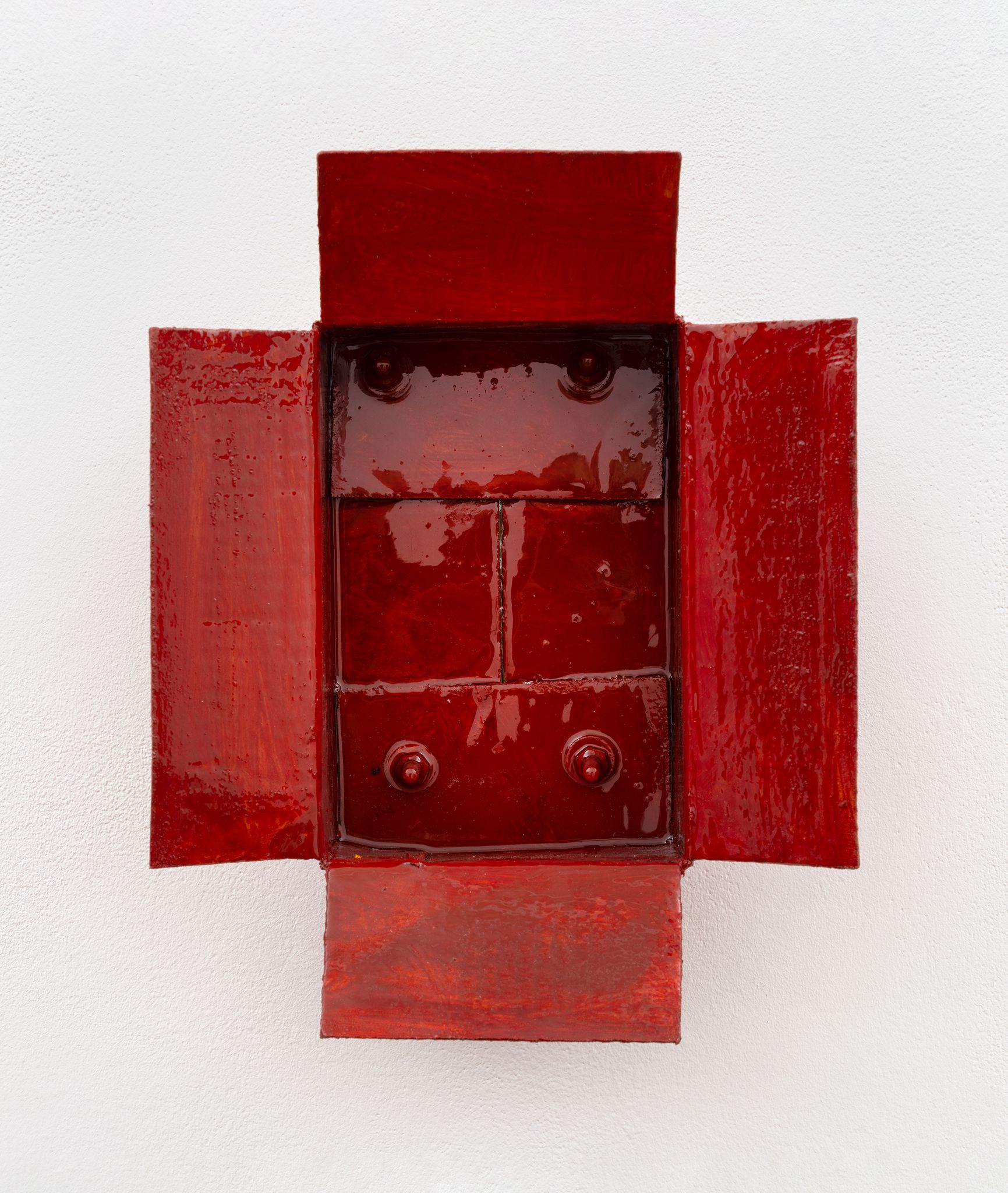
Scale varies throughout the exhibition, shifting the viewer’s reading from relief-like paintings to more overtly architectural or sculptural objects, without needing a specific designation. The fluidity between categories of painting or sculpture feels both natural and deliberate. Take, for example, Tiny Religion (2025), measuring just 12 x 9.5 x 5 inches, one of the more diminutive works at PAGE (NYC). Its opened box form and deep red colour evoke the votive niches found on many Italian streets or within Catholic churches. The gloss and colour itself seem mutable, like liquid or a wet surface, inviting associations that range from blood to rain.
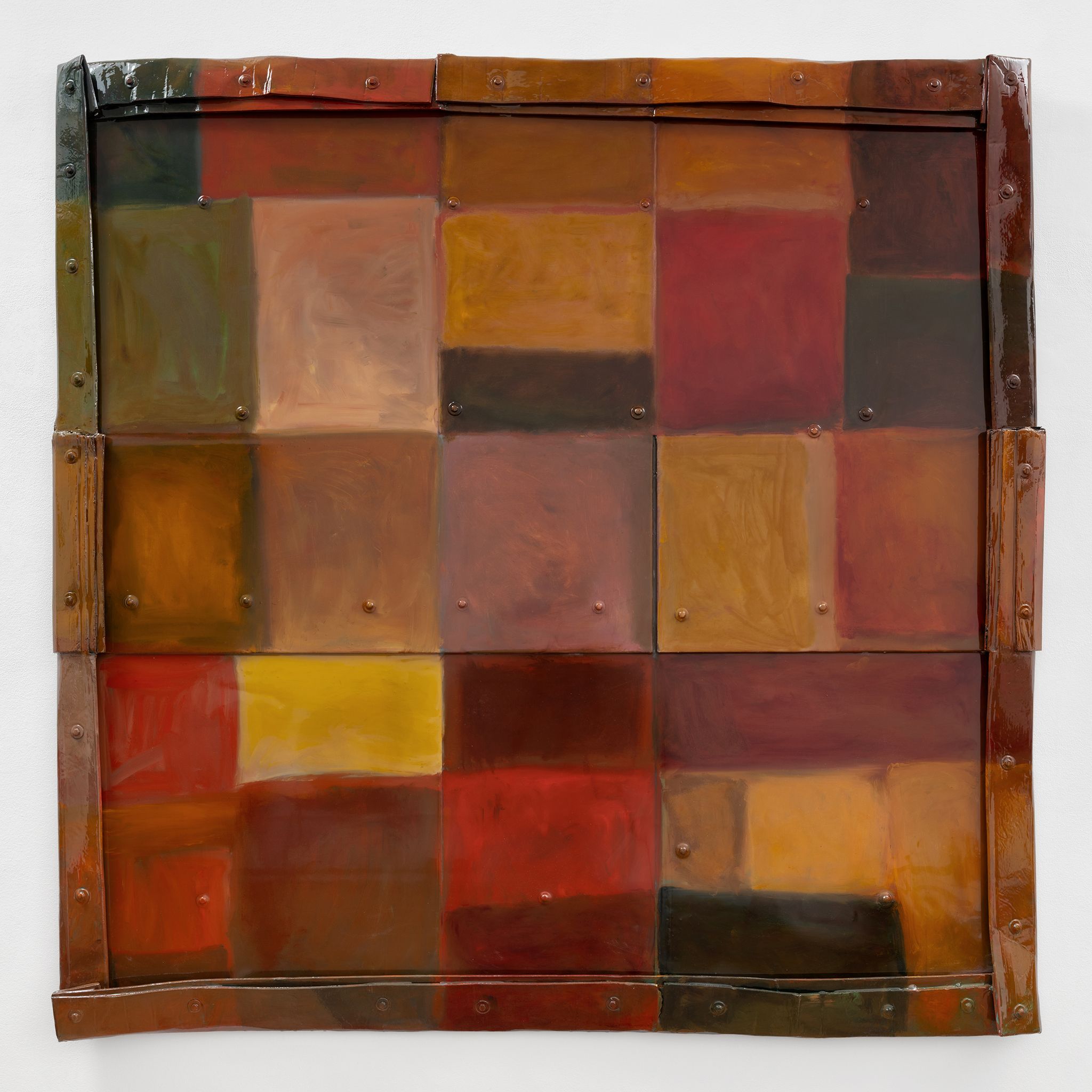
By contrast, Red Barn (2025), a larger piece shown at Andrew Kreps Gallery, appears to reference a rural structure encountered during the Albers Residency. The structure of the material is patterned with holding bolts across the face and around the edge, while folded margins resemble the crimped edge of a pie crust. The overall effect suggests the side of a metal or wooden building, like the barn of the title. The painted grid of rectangles in warm browns, yellows, reds, and black pictorialise the space into a composition that oscillates spatially like a Klee painting. Together, these works demonstrate Rullens’ effortless rigour and sustained pleasure in making, two qualities that define this presentation in New York.
—
Machteld Rullens (1988) lives and works in The Hague. Rullens works with sculptural elements that have a strong link with painting but are rarely applied with a brush. She uses everything that's available and that reflects her basic mood.
David Rhodes is an artist and writer based in New York.


